wayground logo

Free Printable Worksheets

NEW

Font size

S
M
L
XL
Worksheets

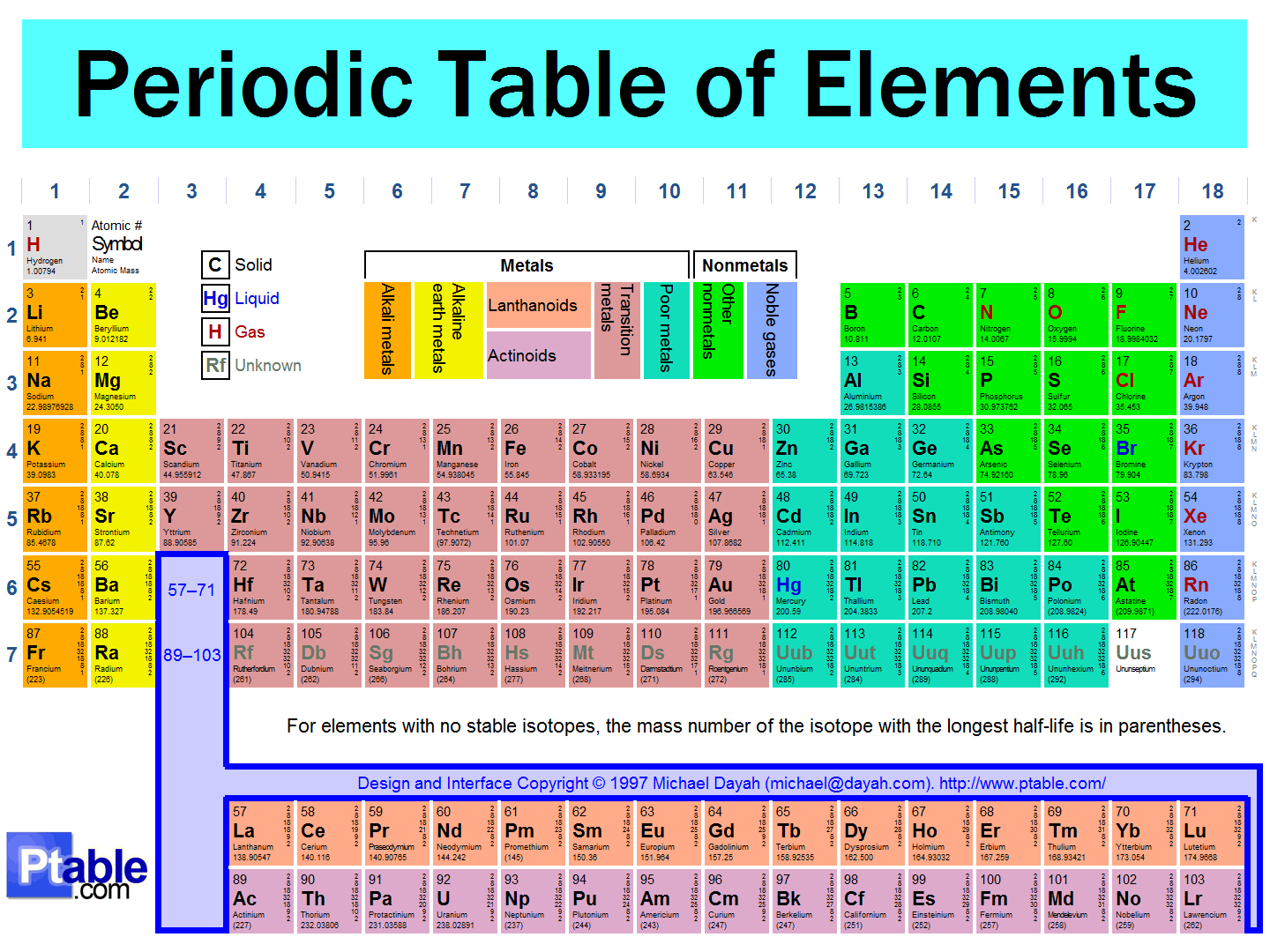
Chemistry: Periodic table

Total questions: 45

Worksheet time: 33mins

Name
Class
Date
1.
Most of the elements on the periodic table are classified as _____.
a)
Metals
b)
Nonmetals
c)
Metalloids
d)
Periods
2.
This class of elements are sometimes called "semiconductors."
a)
Metals
b)
Nonmetals
c)
Metalloids
d)
Groups
3.
These are found on the Periodic Table.
a)
Compounds
b)
Elements
c)
Mixtures
4.

______________ refers to the way a metal can be hammered or rolled into thin sheets.

a)

Luster

b)

Malleable

c)

Metalloids

d)

Solid

5.

There are _________ elements on the periodic table that are classified as metals.

a)

118

b)

nonmetals

c)

metals

d)

88

6.

Metals are found on the ______________ side of the periodic table.

a)

nonmetals

b)

left

c)

right

d)

metals

7.

This group of elements have properties that are opposite those of metals. ______________________

a)

luster

b)

nonmetals

c)

metalloids

d)

metals

8.

This group of elements sit along a stair step line on the periodic table and have properties of both metals and nonmetals. _________________________

a)

luster

b)

metals

c)

nonmetals

d)

metalloids

9.

Copper is a common metal. Which of the following properties does this metal most likely have?

a)

High conductivity, high malleability, and low luster

b)

Low conductivity, low malleability, and low luster

c)

High conductivity, high malleability, and high luster

d)

Low conductivity, high malleability, and high luster

10.
Which of the following is a good conductor of heat?
a)
Metal
b)
Nonmetal
c)
Metalloid
11.

I am a metal


I am in group 2


I am in period 6


I am…

a)

Mo

b)

Re

c)

S

d)

Ba

12.

I am a nonmetal


I am in period 2


I am in group 16/6A

a)

Ba

b)

Si

c)

Ba

d)

O

13.

Who created the periodic table?

a)

John Dalton

b)

Marie Curie

c)

Dmitri Mendeleev

14.

The periodic table is arranged in order of...

a)

increasing atomic number

b)

increasing atomic mass

c)

decreasing atomic mass

d)

decreasing atomic number

15.

The atomic mass of an element is equal to the number of...

a)

protons and neutrons

b)

protons and electrons

c)

protons neutrons and electrons

16.

What is the chemical symbol for iron?

a)

I

b)

Ir

c)

Fe

d)

R

17.

Titanium is in group 4. What period is it in?

a)

2

b)

3

c)

4

d)

5

18.

What is nickel's chemical symbol?

a)

An

b)

N

c)

Nc

d)

Ni

19.

Isotopes of an element have a different number of...

a)

Protons

b)

Neutrons

c)

Electrons

d)

Mass

20.

An isotope has three forms.  10% have a mass of 4 amu, 20% have a mass of 5 amu and 70% have a mass of 6 amu.  

Based on the percentage of abundances above, the average atomic mass will be closest to...

a)

3 amu

b)

4 amu

c)

5 amu

d)

6 amu

e)

None of the above

21.
What is the name of the atom pictured here?
a)
Nitrogen
b)
Nitrogen-15
c)
Nitrogen-7
d)
Nitrogen-8
22.
As you move down a group, atomic radius increases because - 
a)
you add more and more neutrons
b)
you add more and more protons
c)
you add more and more shells (energy levels)
d)
you add more atomic mass
23.
Francium (Fr) has the lowest ionization energy in Group 1 because - 
a)
it has the smallest number of valence electrons
b)
it has the greatest atomic mass
c)
it has the greatest number of protons, so it attracts its electrons the strongest
d)
its 1 valence electron is very far from the nucleus, so little energy is needed to remove it
24.

Which of the following will have a lower ionization energy than Scandium (Sc)?

a)

Helium (He)

b)

Titanium (Ti)

c)

Calcium (Ca)

d)

Magnesium (Mg)

25.

Which of the following will have a higher electronegativity than arsenic (As)?

a)

Carbon (C)

b)

Neon (Ne)

c)

Antimony (Sb)

d)

Germanium (Ge)

26.
The atomic number tells you what?
a)
number of electrons
b)
number of protons
c)
number of neutrons
d)
both electrons and protons in an atom.
27.
Which group of the periodic table is composed of inert (not reactive)  gases?
a)
alkali metals
b)
alkaline earth metals
c)
halogens
d)
noble gases
28.
The atoms along the staircase are called 
a)
metals
b)
nonmetals
c)
metalloids
d)
noble gases
29.
Which is the correct formula for:
one carbon (C)
two oxygen (O)
a)
CO2
b)
CO
c)
C2O
d)
2CO
30.
How many elements are in H2O?
a)
1
b)
2
c)
3
d)
4
31.
The number at the top of each square on the periodic table is the ...
a)
atomic number
b)
atomic mass
c)
Chemical Symbol
d)
Element Name
32.
What is Fe2O3
(rust) made up of?
a)
1 flourine, 2 einsteinium,
3 oxygen
b)
2 fluorine, 3 oxygen
c)
2 iron, 3 oxygen
d)
2 iron, 3 osmium
33.
If you have a material that can conduct electricity well it is probably a...
a)
Metalloid
b)
Matter
c)
Non-metal
d)
Metal
34.

I can be drawn into wires

a)

Malleable

b)

Ductile

c)

Luster

d)

Conductor

35.
________ are the COLUMNS on the periodic table and are organized by similar properties.
a)
Classifications
b)
Groups
c)
Periods
d)
Elements
36.
Where are the nonmetals located on the periodic table?
a)
top left corner
b)
bottom left corner
c)
top right corner
d)
bottom left corner
37.
Fluorine, chlorine, bromine, and iodine are part of a family called
a)
metalloids.
b)
noble gases.
c)
alkali metals.
d)
halogens.
38.
How many electrons do atoms need to be stable?
a)
1
b)
2
c)
6
d)
8
39.

Which family is used to make coins?

a)

cabn family

b)

iron family

c)

copper family

d)

alkali metals

40.

How can elements be broken down?

a)

by chemical forces

b)

by nuclear forces

c)

by physical forces

d)

they cannot be broken down

41.
How many electrons do atoms need to be stable?
a)
1
b)
2
c)
6
d)
8
42.

Which element is not a metal?

a)

Na

b)

Re

c)

Al

d)

B

43.
Which is an alkali metal?
a)
Magnesium
b)
Iron
c)
Sodium
d)
Europium
44.
How would this element be classified?
a)
Metal
b)
Nonmetal
c)
Metalloid
d)
Metamorphic
45.
Silicon is a semiconductor and has properties of both metals and nonmetals. What type of element is Silicon? 
a)
Metal
b)
Nonmetal
c)
Metalloid
d)
Pretty