
 Worksheets
Chemistry: Chemical Formulas
Total questions: 47
Worksheet time: 33mins
What does the subscript in a chemical formula tell you?
How many molecules are present
How many atoms are present
How many elements are present
How many neutrons are present
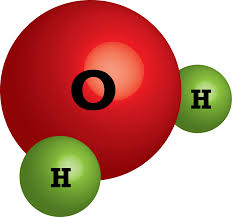
What is the correct chemical formula for the compound pictured?
H2
H2O
O2
H2O2
Lists the "ingredients" of a molecule or compound-- the chemical symbols and numbers of atoms present.
chemical symbol
coefficient
subscript
chemical formula
The basic unit of an element is called ___
atom
element
proton
product
____ is a substance that can't be broken down. It's made of one kind of atom.
atom
element
mixture
product
Which of the models best represents CaCO3?


What molecule is shown?
CO2
NH4
H2O
O2H

What molecule is shown?
NH4
N1H4
N1H3
NH3
Which formulas below have coefficients of 4? Check all that apply.
4CO2
4CH4
4H2O2
4Br3

Which chemical formula below matches the image shown here?
2H2O
H4O2
4H2O
2HO

Which chemical formula below matches the image shown here?
2H2O
H2O2
4H2O
2HO
3H2O
Which image below matches this chemical formula?


Which image below could represent this formula?
2NaCl


This is a Bohr Diagram of Aluminum. How many valence electrons does Aluminum have?
3
4
5
How many valence electrons does Tin (Sn) have?
8
7
5
4
How many valence electrons does Lithium (Li) have?
8
1
5
2
How many valence electrons does Bromine (Br) have?
5
6
7
8
How many electrons can the first shell hold?
2
4
6
8

According to the diagram below, how many bonds will this atom be able to make?

This is a correct dot diagram for neon (Ne)
true
false
Which of these is incorrect?


Which of these is correct?


Why do all bonds form?
to fill the outermost energy level
so an atom can be unstable
so the number of protons and electrons can equal.
so they can gain neutrons.
Valence electrons are found
outermost energy level
innermost energy level
some where in the electron cloud
An atom with 1 valence electron 'needs' a full shell, so it can either gain 7 electrons or lose 1. Which is more likely to occur?
nothing
gain 7
lose 1
How do covalent bonds form?
by sharing electrons between atoms
by donating or receiving electrons
What two types of atoms make a covalent bond?
2 nonmetals
2 metals
1 metal and 1 nonmetal`
How many valence electrons does Boron have?
1
2
3
4
When an atom loses an electron, it becomes a
positive ion
negative ion
Ionic bonds are between
metals and nonmetals
2 metals
2 nonmetals
Atoms are most stable when their outer shell is full or complete.
true
false
How are ionic bonds formed?
transfer of electrons
sharing of electrons
Group numbers on the periodic table help us determine
number of valence electrons
state of the element (solid, liquid, gas)
Water is an example of what?
molecular compound (covalent compound)
ionic compound
Salt is an example of what?
ionic compound
covalent compound
Atoms involved in a covalent bond are not charged, while atoms involved in an ionic bond are charged (negative or positive)
true
false

If an atom has no charge, which of the following must be true?
It has more neutrons than protons or electrons.
There are only neutrons inside the atom.
Its number of protons is equal to its number of electrons.
The neutrons in the atom outnumber the electrons and protons.
Why don't noble gases form bonds?
Noble gases do form bonds
They all have a full octet
They only bond with each other
What charge will a Neon ion have?
+1
-1
-8
Neon does not form ions.

