
NEW
Font size
 Worksheets
Basic Chemistry Review
Total questions: 36
Worksheet time: 20mins

A covalent bond forms
when one or more electrons are transferred from one atom to another.
when electrons are shared between atoms.
When is an ionic bond formed?
when electrons are shared
when protons are shared
when ions of opposite electrical charges attract each other
when a positive hydrogen attracts a negative atom in another molecule
Which two subatomic particles are found in the nucleus of an atom?
Neutrons and Protons
Shells and Electrons
Electrons and Protons
Electrons and Neutrons

An atom becomes a positive ion when it
gains electrons
gains protons
loses electrons
loses electrons or gains protons
Which subatomic part of an atom gives it a positive charge?
Neutron
Proton
Electron
Nucleus
What is the smallest 'building block' of the elements that make up the universe?
An atom
An electron
A proton
A cell
An atom of carbon has 6 protons and 7 neutrons in its nucleus. If the atom is neutral, how many electrons does it have?
0
7
6
13

How many protons are in carbon?
12
6
0
7
Which element ISN'T used by life?
carbon
uranium
hydrogen
oxygen
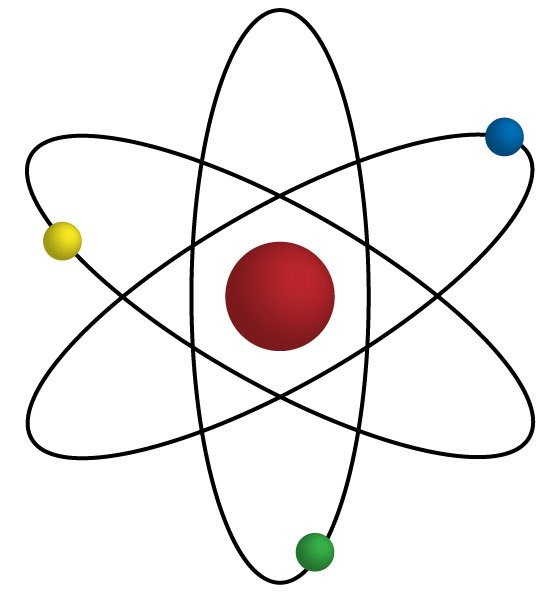
Atomic Mass is the number of
protons and neutrons in the nucleus of an atom
protons and electrons in the nucleus of an atom
neutrons and electrons in the nucleus of an atom
atomic number is
the number of protons
the number of electrons
the number of neutrons
the location of an atom on the periodic table
An elements is
a substance that cannot be split into simpler substances
a substance that can be split into simpler substances
A molecule is
a singular particle of a particular element
another name for an element
2 or more atoms that are combined
What are valence electrons?
sum of the protons and neutrons
protons minus electrons
electrons in the inner shells
electrons in the outer shell
What is Atomic Mass Number ?
Number of Protons
Number of Neutrons
Number of Protons and Neutrons
Number of Protons and Electrons
Which of the following substances is not an element?
Water
Oxygen
Iron
Hydrogen
What is the term which describes the configurations of electrons around a single atomic nucleus?
Shells
Regions
Ions
Bonds
Which type of chemical bond is formed when a positively charged cation interacts with a negatively charged anion?
An ionic bond
A covalent bond
A polar covalent bond
A hydrogen bond
Which of the following groups of elements make up over 95 % of the human body?
O, C, H, and N
N, H, Mg, and K
Na, Mg, P, and K
Ca, C, O, and K
An atom of carbon has 6 protons and 7 neutrons in its nucleus. If the atom is neutral, how many electrons does it have?
0
7
6
13
The characteristic way in which atoms of an element react is most related to the
number of electrons in the outermost shell
number of electrons in the innermost shell
number of neutrons in the outermost shell
number of neutrons in the nucleus
size of the nucleus

How many valence electrons are found in elements of group 2 (the second column)?
8
6
4
2
A certain atom of oxygen contains 8 protons, 8 neutrons, & 8 electrons. Another atom of unknown identity contains 9 protons. Which of the following MUST be true about this unidentified atom?
It has 9 neutrons in its nucleus.
It is an isotope of oxygen.
Its atomic mass is a decimal number.
It cannot be an atom of oxygen.
An atom of iodine has 7 valence electrons. What will an atom of iodine MOST likely do to be stable?
Lose 1 electron
Lost 7 electrons
Gain 1 electron
Neither gain nor lose any valence electrons
According to the Octet Rule, atoms of elements react with each other in order to attain ____ electrons in their outermost energy level or shell.
2
4
6
8
10
Negatively charged ions are known as
cations
anions
Positively charged ions are known as
cations
anions

