
 Worksheets
Cell Organelle
Total questions: 44
Worksheet time: 24mins
Cell membranes are also known as
plasma membranes
cell walls
barrier membranes
thin memranes
These are selectively or semi-permeable because they allow only some materials to pass through.
cell membranes
golgi apparatus
ribosomes
cytoplasm
The function of the cell membrane is to
regulate what goes in and out of the cell
produce ribosomes
provide structure to the plant cell
generate energy for the rest of the cell
Only these kinds of living cells have cell walls
animal cells
plant cells
prisons
viruses
The function of the cell wall is to
maintain rigidity and structure
store water
produce ribosomes
conduct photosynthesis
This organelle is akin to the brain of the cell
nucleus
cell membrane
ribosomes
flagellum
The nucleus
houses the DNA of the cell and controls many of the cell's functions.
is a series of interconnected membranes that store waste.
is responsible for removing waste from the cell.
produces energy known as ATP, for the rest of the cell.
This organelle produces parts of the ribosomes.
nucleolus
ribozoid
smooth ER
lysosome
Synthesised means
to make or produce
to feel bad for
to increase the size or shape of something
to put to sleep
This protects the nucleus
nuclear membrane
nucleoid
nucleolus
The main function of ribosomes is
to make proteins
to add stability to the nucleus
to decorate the smooth ER
to conduct photosynthesis
Proteins are
strings of amino acids folded in a specific way with a specific function
the smallest structure of living things
found only in plant cells because they have a cell membrane
teens that are really good at doing science things
The structure of the rough endoplasmic reticulum is different from the smooth ER because
it is covered in ribosomes
the smooth ER is found only in plants
both of them remove waste from the cell
one is selectively permeable and the other is not
The function of the smooth ER is different from the function of the rough ER because it
produces lipids
produces ribosomes
produces DNA
produces nuclei
Both the smooth and rough endoplasmic reticulums
are a network of passages that transport materials throughout the cell
are outside of the cytoplasm
generate new copies of DNA for the nucleus
are tail-like structures that help the cell to move
This organelle is a jelly-like substance that "fills-in" the space around the other organelles.
cytoplasm
lysosome
water
chloroplast
These organelle sort and package materials into vesicles to send to other parts of the cells or to send outside the cell.
golgi bodies
vesicles
vacuoles
peroxisomes
Vesicles are
tiny sacs that transport materials
barriers around the cell
their own cells
pathways within the cell
The mitochondria is know as the "power house" of the cell because
it produces ATP.
it is made of the strongest material.
it generates electricity.
it contains all other structures within it.
Choose all correct answers. Vacuoles in plant and animal cells are different because
plants have one large central vacuole
in plants, vacuoles conduct cellular respiration
in animal cells there are many, smaller vacuoles
in animal cells they only store proteins
If a plant looks sad and droopy, you might infer that
the vacuoles are not full
the vacuoles are plump and rigid
the vacuoles are full of bacteria
there are many, smaller vacuoles
These organelle are round or rod-shaped with a double membrane.
mitochondria
vacuoles
endoplasmic reticulum
golgi bodies
These organelle convert the chemical energy in sugar into a usable form for the cell.
mitochondria
cell wall
lysosome
peroxisome
What cell structure breaks down nutrients and old cell parts?
lysosomes
peroxisomes
secretory vesicles
hypoxisomes
Human beings are classified as this
multicellular
unicellular
omnicellular
extracellular
What type of cell has a nucleus?
eukaryotic
prokaryotic
neither
both
Plants and animal cells are examples of ___ cells
prokaryotic cells
eukaryotic cells
both eukaryotic and prokaryotic
neither
Prokaryotes do NOT have....
membrane bound organelles
DNA or RNA
Cell membrane
Life
Bacteria are considered what?
Eukaryotes
Prokaryotes
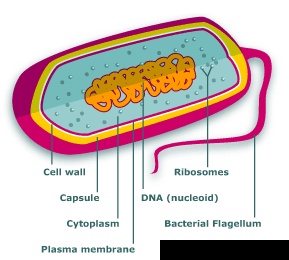
Which cell type tends to be smaller?
Prokaryote
Eukaryote
there is not a size difference
There are three parts to the cell theory. Which is NOT one of those parts?
All organisms are composed of one or more cells.
The cell is the basic unit of structure and organization in organisms.
Cells spontaneously arise from carbon and nutrients carried in the bloodstream.
All cells come from pre-existing cells.
5. In which part of the microscope do we place the slide with the specimen?
Stage
Mirror
Objectives
What is the correct way of carrying a microscope?
Hold the arm by grasping it with one hand and support the base with the other hand
Hold the arm by grasping with one hand and the stage with the other hand
Hold the base by grasping wiyh two hands
Hold the arm by grasping with one hand


What type of cell is this?
plant cell
animal cell

What type of cell is this?
plant cell
animal cell
What type of cell is this?
plant cell
animal cell

Identify letter "a".
mitochondria
lysosome
nucleus
cytoplasm
cell membrane
Identify letter "c".
mitochondria
lysosome
nucleus
cytoplasm
cell membrane
Identify letter "d".
mitochondria
cell wall
nucleus
cytoplasm
cell membrane

Identify letter "d".
chloroplasts
cell wall
mitochondria
cytoplasm
lysosome
Identify letter "e".
chloroplasts
cell wall
mitochondria
cell membrane
lysosome

