
 Worksheets
Unit 3 Mesopotamia
Total questions: 75
Worksheet time: 3hrs 30mins
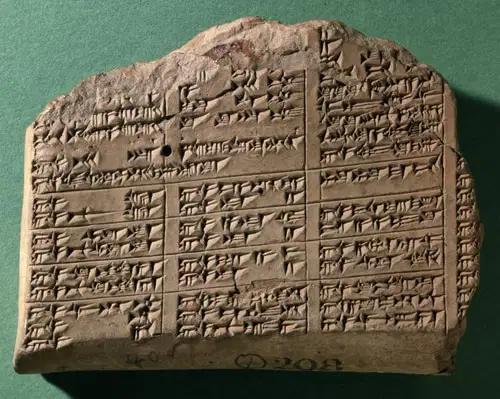
Definition: Cuneiform
Mesopotamia's way of writing using wedge shapes and lines pressed into clay
A system of irrigation used in Eridu
A type of tall temple found in the center of a city-state
A law code written by King Hammurabi

Definition: Deity
A government official who collects taxes
A academic word for a god or goddess
A merchant who travels in donkey caravans
A river that floods regularly

Definition: Empire
A single city that controls the surrounding farmland
A religious ceremony held in a ziggurat
A group of different states or kingdoms ruled by one leader
A specific type of ceramic cup with a checker design
Definition: Fertile
Dry and arid land where nothing grows
A social structure based on wealth and power
A type of stone used for statues
A condition where a lot of life can grow, whether animals or plants
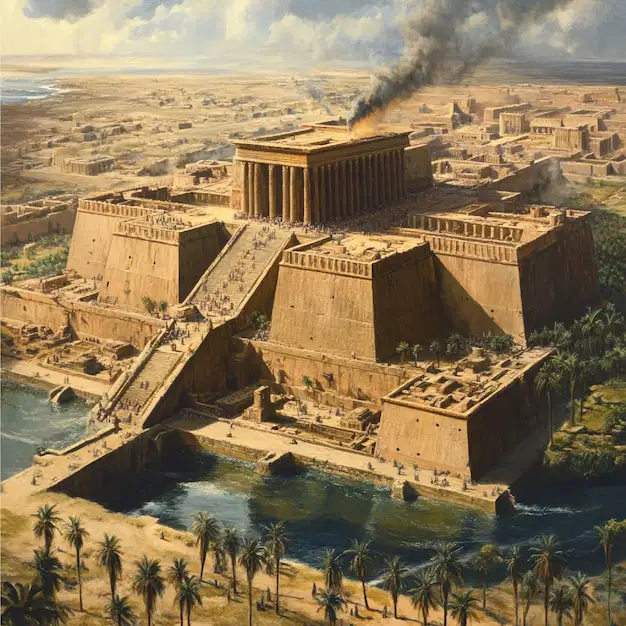
Definition: Hierarchy
How society organizes itself based on status, where some have more power than others
The process of planning and building structures
A belief in only one god
A written contract between two merchants

6.Definition: Literature
The daily records of grain and livestock sales
Written works, such as poems and tales, considered to be of lasting importance
The spoken language used by traders in Kanesh
A list of laws carved onto a stone stele

Definition: Polytheistic
A system of belief that has no gods
A system of government ruled by a king
A system of belief that has more than one god
A system of farming using canals
Definition: Mesopotamia
The land between the mountains
The empire of the sun
The city of ancient laws
The land between the rivers

Definition: Architecture
The process of planning and building structures
The art of writing on clay tablets
The hierarchy of social classes
The religious rituals performed by priests

Definition: Script
A specific type of farming tool
Anything that is written down; any language or alphabet
A large building project like a temple
A statue of a ruler like Gudea
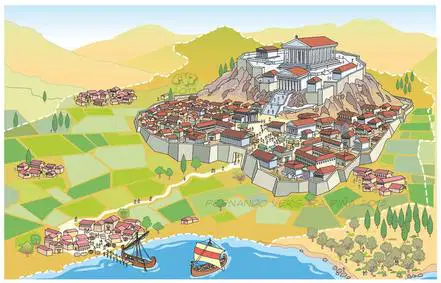
Definition: City-State
A large empire controlling many nations
A small village with no government
An independent state consisting of a city and the area around it
A religious center with no permanent residents

Definition: Status
The amount of grain a farmer grows
The location of a city near a river
The tools used for writing cuneiform
A social position that a person holds in a society

Definition: Bureaucracy
A system of official rules and ways of doing things for a large, complicated government
A religious group that worships many gods
A technique for making ceramic pottery
A network of irrigation canals

Definition: Monument
A small clay token used for counting
A large building project created to serve a community or remind them of someone
A wooden stick used to write cuneiform
A private house made of mud bricks

Definition: Civilization
A nomadic group of people who move constantly
A small farming village with no leaders
A state of human society that is very developed and organized, usually with writing and government
A time period before the invention of tools
Synonym for: Cuneiform
Painting
Sculpture
Alphabet
Wedge-writing
Synonym for: Deity
God/Goddess
King
Priest
Scribe
Synonym for: Empire
Village
Kingdom
Democracy
Tribe
Synonym for: Fertile
Empty
Rocky
Productive
Ancient
Synonym for: Hierarchy
Equality
Freedom
Chaos
Ranking
Synonym for: Literature
Writings
Drawings
Speech
Laws
Synonym for: Polytheistic
Faithful
Multi-god
Single-god
Religious
Synonym for: Mesopotamia
The Sahara
The Indus Valley
The Fertile Crescent
The Nile Delta
Synonym for: Architecture
Crop planting
Law making
Star reading
Building design
Synonym for: Script
Handwriting
Speech
Thought
Action
Synonym for: City-State
Capital
Independent city
Continent
Empire
Synonym for: Status
Job
Name
Rank
Home
Synonym for: Bureaucracy
Anarchy
Farming
Trade
Administration
Synonym for: Monument
Memorial
House
Tool
Toy
Synonym for: Civilization
Wilderness
Advanced society
Small tribe
Jungle
Antonym for: Fertile
Green
Wet
Barren
Rich
Antonym for: Polytheistic
Religious
Ancient
Divine
Monotheistic
Antonym for: Hierarchy
Equality
Slavery
Order
Power
Antonym for: Civilization
City
Tribe
Culture
Government
Antonym for: Empire
Kingdom
Superpower
Independent City-State
Territory
Antonym for: Script
Recorded
Carved
Read
Spoken
Antonym for: Deity
Mortal
Immortal
Spirit
Creator
Antonym for: Bureaucracy
Organization
Chaos
Government
Management
Antonym for: Status
Position
Prestige
Insignificance
Class
Antonym for: Monument (Permanent)
Landmark
Statue
Memorial
Temporary ruin
Antonym for: Architecture (Construction)
Destruction
Design
Planning
Engineering
Antonym for: Cuneiform (Writing)
Scribing
Oral tradition
Clay tablets
Records
Antonym for: Literature (Artistic)
Poetry
Novel
Fact sheet
Epic
Antonym for: City-State
Sovereign nation
Capital city
Urban center
Dependent colony
Antonym for: Mesopotamia (River land)
Dry desert
River valley
Irrigated land
Floodplain
46. King Hammurabi conquered many different cities to create the Babylonian __________; which he ruled as a single leader.
script
empire
deity
monument
47. The region of __________ is named after the Greek words for 'land between the rivers'.
Rome
Egypt
Mesopotamia
Indus
48. To keep track of grain sales and loans; Sumerian scribes developed a system of writing called __________.
hieroglyphs
alphabet
sanskrit
cuneiform
49. The soil in the river valley was very __________; allowing farmers in Eridu to grow enough crops.
fertile
arid
rocky
empty
50. The Stele of Hammurabi is a famous __________ that was placed in public to remind everyone of the king's laws.
house
monument
toy
tool

