
 Worksheets
Chem Tri 1 Units 1-4 Practice Final
Total questions: 170
Worksheet time: 2hrs 13mins
Something that takes up space and has mass.
Volume
Matter
Mass
Density
Tap water (water, salt & minerals) is an example of a(n):
Element
Compound
Homogeneous Mixture
Heterogeneous Mixture
Chicken noodle soup is an example of a(n):
Element
Compound
Homogeneous Mixture
Heterogeneous Mixture
Which of the following is a physical property?
Heat of combustion
Boiling point
Flammability
Reactivity
Which of the following is NOT a sign that a chemical change has occurred?
Change in color
Change in shape
Formation of a gas
Change in odor
Which of the following is an example of a chemical change?
Ripping paper in half
Boiling an egg
Cracking an egg
Dissolving sugar in water
Which of the following is a physical change?
Burning a match
Vinegar reacting with baking soda
Melting butter
Cooking an egg
Which of the following is a physical property?
Combustion
Electronegativity
Color
PH Level
Which of the following is NOT an example of a physical change?
crumpled paper
pencil sharpening
glass breaking
mold growing on cheese

How would you classify the matter in the picture above?
Element
Compound
Homogeneous Mixture
Heterogeneous Mixture

How would you classify the matter in the picture above?
Element
Compound
Homogeneous Mixture
Heterogeneous Mixture


The ___________ of an atom is a unique number that describes how many protons an element has.
atomic number
valence electron
nucleus
electron cloud
A __________ is an electron in the outermost energy level of an atom.
valence electron
proton
neutron
nucleus


1s22s22p63s23p64s23d10
What does Pauli exclusion principle state ?
states that each electron occupies the lowest energy orbital available
states that -no two electrons in the same orbital can have the same spin
states that single electrons electrons with the same spin must occupy each-energy orbital before additional electrons with opposite spins can occupy the same orbitals

How many electrons can the d sublevel(orbital) hold?
8
10
2
4
Long wavelength has _________ frequency and ___________ energy.
High; High
High; Low
Low; Low
Low; High

Which color has the highest energy?
Green
Orange
Yellow
Red
What is the first noble gas before Silicon?
Aluminum
Magnesium
Argon
Neon
The name of FeCl₂ is
iron chloride
iron (II) chloride
iron (I) chloride
iron dichloride
LiBr is called
lithium bromine
lithium (I) bromine
lithium bromide
lithuim (I) bromide
Which of these combinations is an ionic compound made of?
Metal and Metal
Nonmetal and Nonmetal
Metal and Nonmetal
Cation and Cation
Which of the following combinations would need roman numerals in the name?
potassium + fluorine
beryllium + oxygen
boron + iodine
gold + oxygen
When naming a compound, what must the last part be?
the element with "ide" at the end
the element with the ending "ite"
the name of the element
the element with "ide" at the end, unless its a polyatomic ion

The Lewis structure of the CO32- ion is


Resonance structures differ by __________.
number and placement of electrons
number of electrons only
placement of atoms only
number of atoms only
placement of electrons only
Of the possible bonds between carbon atoms (single, double, and triple), _____.
a triple bond is longer than a single bond
a double bond is stronger than a triple bond
a single bond is stronger than a triple bond
a double bond is longer than a triple bond
a single bond is stronger than a double bond
What is a negatively charged atom called?
Anion
Cation
Ion
What is a valence electron?
an electron that is found in the outermost shell of an atom.
an electron found in the innermost shell of an atom.
an electron found in the middle shell.

How many valence electron does Beryllium have?
1
2
0
4
Which subatomic particle has NO CHARGE?
Protons
Neutrons
Electrons
Nucleus
Which subatomic particle has a POSITIVE charge?
Protons
Neutrons
Electrons
Nucleus
Which subatomic particle has a NEGATIVE charge?
Protons
Neutrons
Electrons
Nucleus
Which subatomic particle tells you the identity of the Element?
Protons
Neutrons
Electrons
Nucleus
Which Element has 21 protons?
Carbon
Zinc
Titanium
Scandium
If an element has 11 protons and 12 Neutrons, what is it's atomic mass?
12
11
23
1
A FULL OUTER SHELL has how many electrons? (Not including the first level)
8
7
4
10

What is the name for this group of elements?
Alkali
Halogens
Noble Gases
Alkali-Earth
What are isotopes?
different element with the same number of electrons
same element with a different number of electrons
same element with a different number of neutrons
different element with the same number of neutrons

What are the yellow elements in the following picture?
metals
nonmetals
metalloids
Which element will have a higher electronegativity than Arsenic (As) ?
Carbon
Antimony
Germanium
Neon


How many minutes are in 17 years?
5,256,000min
525,600min
8,935,200min
31,536,000min
How many seconds are in 4 days?
There are only seconds in a minute.
354,600sec
86,400sec
345,600sec


What is the independent variable in the above question?
What is a hypothesis?
A hypothesis is the right answer to an experiment.
A hypothesis is the wrong answer to an experiment.
A hypothesis is an educated guess about what you think will happen.
How close a measurement is to the accepted value is called..
Accuracy
Precision
Significant
Estimate
Students measured length during a science experiment and got 12 cm. But the actual measurement was 14.25 cm. What was the percent error?
15.79%
18.75%
2.25%
18%
Comparing the two numbers written in scientific notation, which number is larger 6.0 X 10 -3 or 6.0 X 10 -2
6.0 X 10 -3
6.0 X 10 -2
both have the same value


Which of the following would be most similar to Phosphorus? (select all that apply)
Nitrogen
Sulfur
Silicon
Germanium
Antimony
Which of these elements are a Non-Metal?
Copper
Gold
Oxygen
Non-metals are insulators, this means electricity ______ flow through them.
can
cannot
Which statement is true?
A proton is the same size as an electron but smaller than a neutron.
An electron is the same size as a proton and bigger than a neutron.
A neutron is the same size as a proton and much bigger than an electron.
A neutron is the same size as a proton but much smaller than an electron.
Which of the following is a chemical property?
Crystal formation
Ductility
Colour
Reaction to heat
Which of the following is a physical property?
Ability to burn
Reaction with acids
Flash point
Solubility
Classify the following example of matter:
Oxygen gas ( O2 )
Element
Compound
Homogeneous mixture
Heterogeneous mixture

1.Particles cannot change position in a ________
solid
liquid
gas
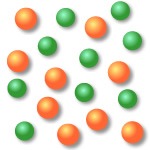
This state of matter has a constant volume, but fits the space of the container holding it.
Solid
Liquid
Gas
Plasma
Atoms or molecules in this state of matter have the lowest energy.
Solid
Liquid
Gas
Plasma
Heating a solid to a high temperature will usually result in this phase change.
Condensation
Melting
Sublimation
Evaporation
Dirt
Heterogeneous
Homogeneous

Are made from a combination of 2 or more elements in a constant ratio...
Atom
Mixture
Compounds
Elements

Type of mixture that DOESN'T HAVE the same composition in every part.
Homogeneous
Heterogeneous
Identify the solvent

What is the Atomic Mass Number of the element mentioned above
12
6
C
16

What is the number of protons in Magnesium atom ?
12
24
23
8
I am a non mental
I am in period 3
I am in group 16
I am...
Ba
P
S
Se
I am a metal
I am in the Alkaline Earth Metals
I am in period 6
I am...
Mo
S
Re
Ba
What is a group
Up and down row on the table
Up and down column on the table
Side to side row on table
Side to side column on the table
What is a period
Up and down row on the table
Up and down column on the table
Side to side row on table
Side to side column on the table
Why are noble gases not reactive
Too few electrons
Too many electrons
They have a full set of electrons
They need more electrons
Actinides are radioactive because
They are so big
They have more protons than electrons
they have more neutrons than electrons
they have more neutrons than protons
What is the average mass of this element?

An element exists as the three isotopes shown. What is the average atomic mass?
20.74 amu
22.56 amu
18.39 amu
24.31
Chlorine has two naturally occurring isotopes, Cl-35 and Cl-37, The atomic mass of chlorine is 35.45. Which of these two isotopes of chlorine is more abundant?
Cl-35
Cl-37
Cannot be determined from the information provided.

