wayground logo

Free Printable Worksheets

NEW

Font size

S
M
L
XL
Worksheets

Natural Selection

Total questions: 20

Worksheet time: 13mins
Name
Class
Date
1.
Which organisms are most likely to survive?
a)
the best adapted
b)
the fastest
c)
the strongest
d)
the most domesticated (tamed)
2.
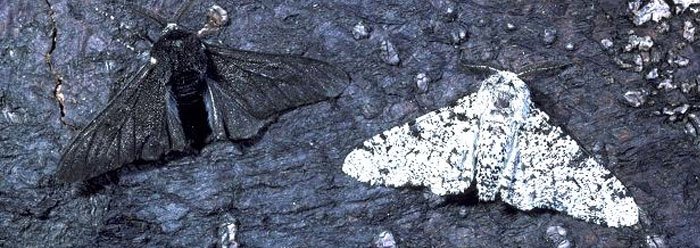
The trees these moths used to live on were white, but have been covered in soot from coal factories. Which moth will be more successful in this environment?
a)
Dark moth
b)
Light moth
c)
Both will be equally successful
d)
Neither will be successful
3.
These moths are all the same species. The differences between their wings is an example of ________________
a)
Natural Selection
b)
Variation
c)
Homeostasis
d)
Extinction
4.
Which of the following explains adaptation.
a)
An individual organism changes to meet its needs in the environment. These changes pass down to their offspring.
b)
The species as a whole changes their characteristics.
c)
Beneficial traits allow organism to survive and pass on those traits
d)
New characteristics arise in a species as needed.  If these traits are helpful, they are passed down.
5.
Evolution works by 
a)
individuals changing to suit their environment
b)
Individuals learned new traits and pass them on
c)
sudden change in the environment cause a species change 
d)
small changes pass down through many generations
6.
Mutations are important because they bring about
a)
death of the organism in which they develop
b)
genetic variation needed for a population to evolve
c)
benefits for the individual, not for the population
d)
Hardey-Weinberg equilibrium within a population
7.
What is another name for natural selection?
a)
survival of the smartest
b)
survival of the fastest
c)
survival of the biggest
d)
survival of the fittest
8.

Natural selection results in change in a population's _____________ traits over time.

a)

inherited

b)

acquired

9.

Charles Darwin observed that finches of different species on the Galápagos Islands have many similar physical characteristics, this supports the hypothesis that these finches

a)

are twins

b)

acquired traits through use and disuse.

c)

all eat the same type of food.

d)

descended from a common ancestor.

10.

What is the process where animals live or die based on their adaptations to their environment.

a)

Genetic Drift

b)

Natural Selection

c)

The Circle of Life

d)

Mammoth

11.

Variations are caused by . . .

a)

Kaleidoscopes

b)

Variety Shows

c)

Mutations

d)

A change in phenotypic expression

12.

What does 'fitness' mean in natural selection?

a)

How fast an animal can run

b)

How much you work out

c)

How well adapted the animal is to their environment

d)

How strong an animal is

13.

Which animal is the most FIT to live in the desert?

a)

Penguin

b)

Bear

c)

Tiger

d)

Lizard

14.

Which animal is most FIT to live in the Antarctic?

a)

Penguin

b)

Bear

c)

Tiger

d)

Lizard

15.

TRUE OR FALSE: All mutations are bad

a)

TRUE

b)

FALSE

16.

TRUE or FALSE: Mutations are random

a)

TRUE

b)

FALSE

17.

TRUE or FALSE: Mutations lead to variation.

a)

TRUE

b)

FALSE

18.

The change in traits over time in a population is known as

a)

Evolution

b)

Mutation

c)

Selection

d)

Traits

19.

What most likely caused the finches on the Galapagos Islands to have beaks that were different from the finches on the mainland?

a)

There were different types of predators on the islands.

b)

The finches on the mainland could not fly high enough.

c)

There was no water on the islands.

d)

There were different food types on each island.

20.

Which of the following is NOT artificial selection:

a)

Orange carrots

b)

Pugs

c)

Polar Bears

d)

Dairy cows