
 Worksheets
States of Matter
Total questions: 50
Worksheet time: 25mins
Which matter has the furthest distance than others?
Solid
Liquid
Gas
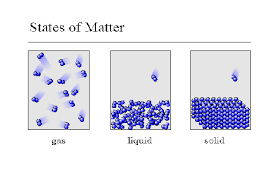
___________ is anything that has mass and takes up space.
Molecules
Matter
Volume
________ is the amount of space an object takes up.
Mass
Matter
Volume
Which state of matter does not have a definite shape but does have a definite volume?
Solid
Liquid
Gas
What is the process called when a solid changes to a liquid?
Freezing
Evaporation
Melting
Condensation
What is the process called when a liquid changes into a gas?
Freezing
Evaporation
Melting
Condensation

What is the state change that occurs, when ice turns into a liquid?
Boiling
Condensation
Melting
Evaporation

Condensation is when
Liquid turns to a solid
Gas turns to liquid
Solid turns to liquid
Liquid turns to a gas

This image is an example of what particle
Solid
Liquid
Gas
Why do solids have a fixed shaped?
The particles vibrate
The particles are fixed in place
The particles are closely packed together
The particles are free moving
When a liquid reaches its freezing point what does it become?
Liquid
Gas
Solid
Plasma

What state of matter is taken place here?
Solid to gas
Solid to liquid
Gas to solid
liquid to liquid
Everything around us is made of matter, from the air we breathe, to the water we drink. Even our bodies.
True
False
Iodine gas particles can change directly to a solid when cooled. What is the name of this change of state?
condensation
deposition
freezing
plasma
A solid is a state of matter that has a(n)
indefinite volume and an indefinite shape
definite volume and a definite shape
definite volume and indefinite shape
indefinite volume and a definite shape
In which state are particles packed tightly together in fixed positions?
Gas
Solid
Liquid
Plasma
Particles of a liquid
Are tightly packed together and stay in a fixed position.
Have no viscosity.
Decrease in volume with increasing temperature.
Are free to move in a container but remain in close contact with one another.
In which states of matter do the particles spread apart and fill all the space available to them?
solid
liquid
gas
plasma
The change from liquid to solid, or the reverse of melting, is called
condensation
boiling
sublimation
freezing
What is vaporization?
A gas becoming a liquid
A liquid becoming a solid
A gas becoming a solid
A liquid becoming a gas
During the process of sublimation,
A solid turns directly into a gas.
A solid turns into a liquid.
A gas turns directly into a solid.
A liquid turns into a gas.
An uncovered pot of soup is simmering on a stove, you cover it and see water droplets on the lid. What sequence can you infer has occured?
melting, then boiling
freezing, then thawing
vaporization, then condensation
condensation, then vaporization.

Iodine gas particles can change directly to a solid when cooled. What is the name of this change of state?
condensation
deposition
freezing
plasma

Number 3 in this picture is showing……
Precipitation
Collection
Condensation
Evaporation
Number 5 in this picture is showing……
Precipitation
Collection
Condensation
Evaporation
Number 4 in this picture is showing……
Precipitation
Collection
Condensation
Evaporation
Precipitation occurs because…….
the droplets evaporate in the air
the droplets are too light for the air to hold
the droplets are too heaavy for the air to hold
When drops of water fall down from the sky…..
Evaporation
Condensation
Precipitation
When water flows back into the ocean it is called….
run-off
transpiration
precipitation
condensation
Forms of precipitation are……
only sleet and snow
only dew, mists, and rain
rain, sleet, snow and hail
only snow and hail
Contract is when the distance between particles become ………..
(a)
Expansion is when the distance between particles become ………..
(a)
How is your feeling today?
:)
:(
:|
<3

