
 Worksheets
MIDTERM EXAM
Total questions: 50
Worksheet time: 46mins

a
b
c
d
The anode is where
electrolyte concentrations are lowest.
electrolyte concentrations are highest.
anions are produced.
oxidation occurs.
All of the following statements concerning voltaic cells are true EXCEPT
a salt bridge allows cations and anions to move between the half-cells.
electrons flow from the cathode to the anode in the external circuit.
oxidation occurs at the anode.
a voltaic cell consists of two-half cells.
The following reaction occurs spontaneously.
2 Fe(s) + 3 Cl2(aq) --> 2 Fe3+(aq) + 6 Cl–(aq)
Write the balanced reduction half-reaction
Fe(s) -> Fe3+(aq) + e–
Fe(s) + 3 e– -> Fe3+(aq)
Fe(s) + 3/2 Cl2(aq) -> FeCl3(aq)
Cl2(aq) + 2 e– -> 2 Cl–(aq)
The following reaction occurs spontaneously.
2Al(s) + 6H+(aq) -> 2Al3+(aq) + 3H2(g)
Write the balanced oxidation half-reaction
Al(s) -> Al3+(aq) + 3e-
Al3+(aq) + 3e- -> Al(s)
H2(g) -> 2H+(aq) + 2e-
2H+(aq) -> H2(g) + 2e-
Given the following half-reactions,
Pb(s) + 2I-(aq) -> PbI2(s) + 2e-
I2(aq) + 2e- -> 2I-(aq)
write the balanced overall reaction.
Pb(s) + I2(aq) + 2e- -> PbI (s) + I-(aq)
Pb(s) + I2(aq) -> PbI2(s)
Pb(s) + Cl2(aq) -> Pb2+(aq) + 2I-(aq)
2Pb(s) + 4e- -> 2PbI(s) + I2(aq)
Given the following half-reactions
2IO3-(aq) + 12H+(aq) + 10e- -> I2(s) + 6H2O(l)
Fe2+(aq) -> Fe3+(aq) + e-
write the balanced overall reaction.
2IO3-(aq) + 10Fe2+(aq) -> I2(s) + 10Fe3+(aq)
2IO3-(aq) + 12H+(aq) + Fe2+(aq) -> FeI2(s) + 6H2O(l)
2IO3-(aq) + 12H+(aq) + Fe2+(aq) -> I2(s) + Fe3+(aq) + 6H2O(l)
2IO3-(aq) + 12H+(aq) + 10Fe2+(aq) -> I2(s) + 10Fe3+(aq) + 6H2O(l)
Write a balanced net ionic equation for the overall reaction represented by the cell notation below.
Ag | AgI | I– || Fe2+, Fe3+ | Pt
Fe3+(aq) + Ag(s) + I–(aq) -> Fe2+(aq) + AgI(s)
Fe2+(aq) + Ag(s) + I–(aq) -> Fe3+(aq) + AgI(s)
Fe3+(aq) + 2I–(aq) -> Fe2+(aq) + I2(s)
Fe2+(aq) + AgI(s) -> Fe3+(aq) + Ag(s) + I–(aq)
What is the correct cell notation for the reaction below?
Cd2+(aq) + Ni(s) -> Cd(s) + Ni2+(aq)
Cd2+ | Cd || Ni | Ni2+
Cd | Cd2+ || Ni2+ | Ni
Ni | Ni2+ || Cd2+ | Cd
Cd2+ | Cd || Ni | Ni2+

Write the overall chemical reaction and calculate E° for the following reduction and oxidation half-reactions.
Zn2+(aq) + H2(g) -> Zn(s) + 2H+(aq) E° = +0.381 V
Zn2+(aq) + H2(g) -> Zn(s) + 2H+(aq) E° = -0.762 V
Zn(s) + 2H+(aq) -> Zn2+(aq) + H2(g) E° = +0.762 V
Zn(s) + 2H+(aq) -> Zn2+(aq) + H2(g) E° = -0.381 V

Given the following two half-reactions, write the overall balanced reaction in the direction in which it is spontaneous and calculate the standard cell potential.
2Ga3+(aq) + 3Sn2+(aq) -> 2Ga(s) + 3Sn4+(aq) E° = +0.68 V
3Ga3+(aq) + 2Sn2+(aq) -> 3Ga(s) + 2Sn4+(aq) E° = –1.89 V
2Ga(s) + 3Sn4+(aq) -> 2Ga3+(aq) + 3Sn2+(aq) E° = +0.68 V
2Ga(s) + 3Sn4+(aq) -> 2Ga3+(aq) + 3Sn2+(aq) E° = +1.89 V
cathode is the electrode where
reduction takes place
oxidation takes place
either reduction or oxidation
none of these
in electrochemical cell anode is
positive
negative
neutral
none
Al(s) + Zn(NO3)2(aq) → Al(NO3)3(aq) + Zn(s)
How is the alpha particle written in a nuclear equation?
(1) 42He
(2) 24He
(3) 0-1e
(4) 00γ
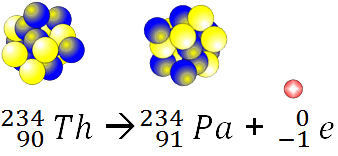
85209At = ___ + 24He
(option 1)
83205Bi
(option 2)
86209Rn
(option3)
81207Tl
(option 4)
85208At
614C = ___ + -10e
(option 1)
410Be
(option 2)
714N
(option 3)
210He
(option 4)
613C
Has the lowest penetrating power. Can only penetrate 0.05 mm into the body and can be stopped by the skin.
Electron capture


What is the correct # of protons, electrons, and neutrons for Cobalt - 59?
27 protons, 59 electrons, & 27 neutrons
59 protons, 59 electrons, & 86 neutrons
27 protons, 27 electrons, & 32 neutrons
27 protons, 32 electrons, & 27 neutrons
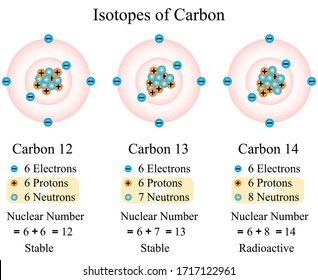
What is an isotope?
Atoms of the same element with different masses.
Atoms of the same element with different # of protons.
Atoms of the same element with different atomic numbers.
Atoms of the same element with the different # of electrons.
146C --> 0-1e + ________
(option 1)
145B
(option 2)
146C
(option 3)
147N
(option 4)
42He
In the symbol 167N what the 7 stand for?
Mass number
Atomic number
Atomic mass
Number of neutrons
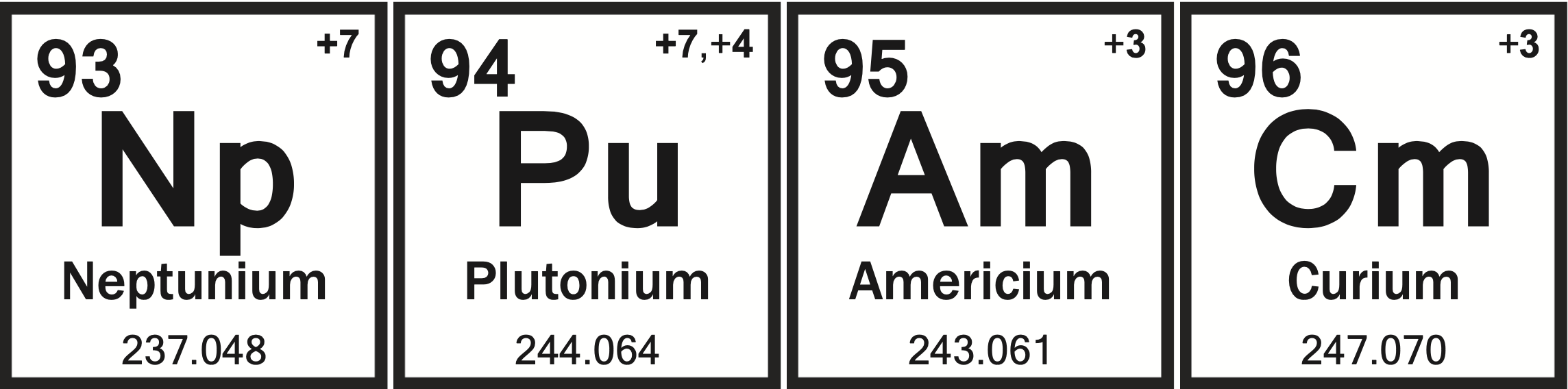
If an atom of Americium-231 (Am) goes through alpha decay, what would you have at the end?
Neptunium-227
Neptunium-234
Plutonium-231
Curium-247
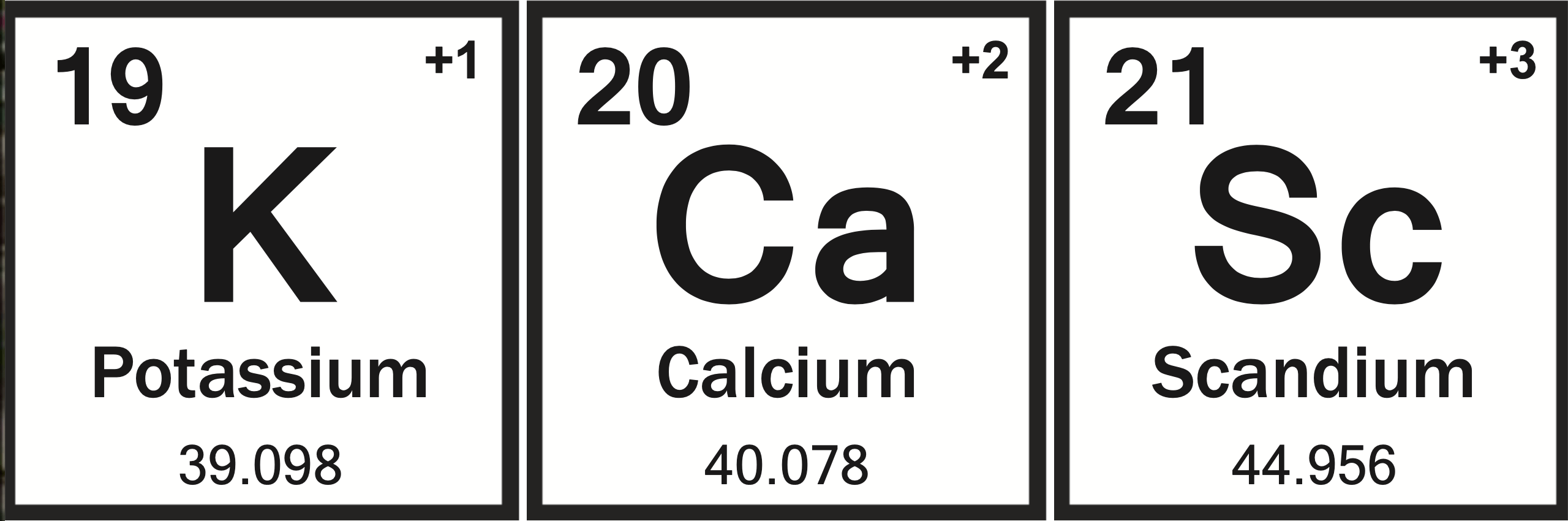
If an atom of potassium-40 (K) goes through gamma decay, what would you have at the end?
Potassium-40
Calcium-40
Argon-35
Potassium-39

Complete the following nuclear decay reaction
(option 1)
21786Rn
(option 2)
21788Ra
(option 3)
21792U
(option 4)
22586Rn
What nucleus decays by beta emission to produce antimony-121?
(option 1)
12050Sn
(option 2)
12251Sb
(option 3)
12150Sn
(option 4)
12553I
What element is produced by the alpha decay of 21083Bi?
(option 1)
21081Tl
(option 2)
20879Au
(option 3)
20681Tl
(option 4)
20681Bi
(option 1)
168O + 0+1e --> 169F
(option 2)
168O --> 42He + 126C
(option 3)
168O --> 0-1e + 169F
(option 4)
168O --> 0+1e + 167N
What is Combustion?
reaction between substance (fuel, wood, paper clothes etc) and oxygen that releases Carbon dioxide and Water, with lots of energy.
reaction between substance (fuel, wood, paper clothes etc) and carbon dioxide that releases oxygen and Water, with lots of energy.
reaction between substance (fuel, wood, paper clothes etc) and water that releases Carbon dioxide and oxygen with lots of energy.
Carbon dioxide is what we breathe out
Natural gas containing 80% C2H6, 15% C3H8, 5% C4H10, is burnt with 50% excess air. Assuming that 90% of the carbon in the hydrocarbons are converted to CO2 and the rest to CO. Calculate the total atom of Carbon
2.52 mol
2.25 mol
5.22 mol
2.15 mol
Natural gas containing 80% C2H6, 15% C3H8, 5% C4H10, is burnt with 50% excess air. Assuming that 90% of the carbon in the hydrocarbons are converted to CO2 and the rest to CO. Find the total number of atoms of Hydrogen.
6.50 mole
6.40 moles
6.05 mole
5.04 mole
Natural gas containing 80% C2H6, 15% C3H8, 5% C4H10, is burnt with 50% excess air. Assuming that 90% of the carbon in the hydrocarbons are converted to CO2 and the rest to CO. The amount of carbon dioxide produced is:
2.250 moles
2.520 moles
2.025 moles
2.205 moles
Natural gas containing 80% C2H6, 15% C3H8, 5% C4H10, is burnt with 50% excess air. Assuming that 90% of the carbon in the hydrocarbons are converted to CO2 and the rest to CO. Calculate the amount of CO produced.
2.52 mole
0.252 mole
0.522 mole
0.225 mole
Natural gas containing 80% C2H6, 15% C3H8, 5% C4H10, is burnt with 50% excess air. Assuming that 90% of the carbon in the hydrocarbons are converted to CO2 and the rest to CO. Find the amount of water produced.
3.520 mole
3.250 mole
3.205 mole
3.502 mole
Natural gas containing 80% C2H6, 15% C3H8, 5% C4H10, is burnt with 50% excess air. Assuming that 90% of the carbon in the hydrocarbons are converted to CO2 and the rest to CO. Calculate the amount of O2 used by hydrocarbon.
3.7625 mole
3.2531 mole
3.5213 mole
3.2135 mole
Natural gas containing 80% C2H6, 15% C3H8, 5% C4H10, is burnt with 50% excess air. Assuming that 90% of the carbon in the hydrocarbons are converted to CO2 and the rest to CO. What is the amount of theoretical O2 needed?
3.758 mole
3.578 mole
3.785 mole
3.875 mole
Natural gas containing 80% C2H6, 15% C3H8, 5% C4H10, is burnt with 50% excess air. Assuming that 90% of the carbon in the hydrocarbons are converted to CO2 and the rest to CO. How much O2 entering the system?
5.8125 mole
5.2581 mole
5.2185 mole
5.5218 mole
Natural gas containing 80% C2H6, 15% C3H8, 5% C4H10, is burnt with 50% excess air. Assuming that 90% of the carbon in the hydrocarbons are converted to CO2 and the rest to CO. How much N2 is entering the system?
21.668 mole
26.816 mole
21.866 mole
28.616 mole
Natural gas containing 80% C2H6, 15% C3H8, 5% C4H10, is burnt with 50% excess air. Assuming that 90% of the carbon in the hydrocarbons are converted to CO2 and the rest to CO. How much O2 is in the Flue gas?
5.20 mole
5.02 mole
2.50 mole
2.05 mole
A material such as coal, gas, or oil that is burned to produce heat or power:
Oxygen gas
kerosene
Flue Gas
Fuel
Which of these is NOT needed for a fire?
Heat
Fuel
Oxygen
Friction
Which poisonous gas is formed as a result of incomplete combustion?
Coal gas
carbon monoxide
carbon dioxide
nitrogen oxide
Which one of the following gases is used in combustion?
CO
Carbon dioxide
Oxygen
Nitrogen

