
 Worksheets
Chemical bonding 2 (Termizi 2021)
Total questions: 50
Worksheet time: 2hrs 40mins
What is the exception to octet rule for CCl4
Incomplete octet
Expanded octet
Odd electron
obey octet rule
Two carbon atoms form a linear shaped ethene, C2H4, molecule when bonded with four other hydrogen atoms. Prior to bonding, the carbon atom
does not hybridise
undergoes sp hybridisation
undergoes sp2 hybridisation
undergoes sp3 hybridisation
The molecule that uses sp3d hybrid orbital on the central atom is
BCl3
NCl3
ICl3
PCl3
The hybridisation of the central atom in the following molecules is same EXCEPT
NH3
H2O
AlCl3
C2H6
Which of the following hybrid orbitals is used by the central atom for bonding in CO32-?
sp2
sp3
sp3d
sp3d2
What is the hybridisation of sulphur in SF4 molecule?
sp2
sp3
sp3d
sp3d2
What is the hybrid orbital used by the central atom in SF6
sp2
sp3
sp3d
sp3d2
What is the hybridisation for central atom in IF4-?
sp2
sp3
sp3d
sp3d2
What is the hybridisation of carbon atom in hydrogen cyanide, HCN?
sp
sp2
sp3
sp3d
Molecule CO2
undergoes sp2 hybridisation
has 2 σ bond and 2 π bond
undergoes sp3d hybridisation
is trigonal planar molecule
The central atom that has a hybrid orbital of sp3 is
PCl3
BCl3
H2O
BeH2
What is the exception to octet rule for BF3
Incomplete octet
Expanded octet
Odd electron
obey octet rule
What is the exception to octet rule for BF3
Incomplete octet
Expanded octet
Odd electron
obey octet rule

Why does the melting point of metals increase across period 3, from Sodium (Na) to Aluminium (AI)?
Size of atoms gets smaller
Attraction force between nuclei and free electron increases
Increased space between the valence electrons in the "sea"
Increased number of valence electrons contributed to the "sea"
Metals are malleable, what does this mean?
They can be bent or dented
They can be pulled into long and thin wires
They heat up quickly
They can be taken apart
Which of the following species has only one lone pair electrons at central atom?
BF3
SO2
H2O
Cl2
Choose a species which is a polar compound
SF6
AlCl3
CH3Cl
SnCl4
Choose a species which is a non-polar compound
HCl
PH3
HBr
CO2
What is the exception to octet rule for BF3
Incomplete octet
Expanded octet
Odd electron
obey octet rule
Which group of elements has similar bonds and is arranged in order of increasing melting point?
Na. Mg, Al
Li, K, Na
Pb, Si, C
Cl, S, P
What type of bond is responsible for intermolecular forces in liquid silicon tetrachloride, SiCl4?
hydrogen bonds
permanent dipole-permanent dipole attractions
induced dipole-induced dipole attractions
coordinate covalent bonds
Which physical properties characterises elements with metallic bonds most accurately?
They are highly electropositive
They have high melting point
They are good conductors of electricity in solid state
They are very hard
Which of the following elements forms an ionic hydride?
Silicon
Chlorine
Sodium
Phosphorus
Which of the following compounds has two lone pair of electrons at central atom?
BCl3
HF
SO2
H2O
Which one of the following structure is linear structure?
OCl2
SCl2
CO2
SnCl2
The shape of NH4+
Tetrahedral
square planar
Trigonal planar
Trigonal pyramidal
The hybrid orbitals in C2H2 is
sp2
sp
sp3
sp3d
Which of the species given below does not have coordinate dative bond?
Al2Cl2
[Cu(H2O)]2+
NH4+
BF3
Determine the compound which not obey the octet rules
CO2
SF4
SO42-
H2O
The basic ideas and uses of VSPER is to
Predicting electronegativities
Predicting bond angles
Predicting dipole moment
Predicting bond-length
What is the molecular shape of ClF3?
Trigonal planar
Trigonal bypiramidal
Trigonal pyramidal
T-shaped
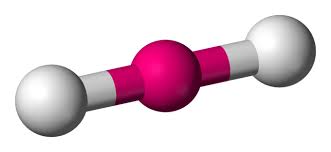
What is the hybridization of a linear molecule?
sp
sp2
sp3
sp3d
What is the hybridization of a linear molecule?
sp
sp2
sp3
sp3d

The hybridisation of the carbon atom is?
sp
sp2
sp3
sp3d
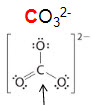
The hybridisation of the carbon atom is?
sp
sp2
sp3
sp3d
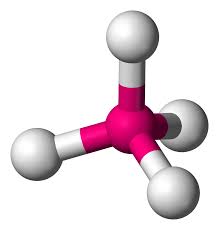
What is the hybridization of this molecule shown.
sp
sp2
sp3
sp4
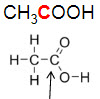
What is the hybridization of the Carbon atom indicated by the arrow?
sp hybridization
sp2 hybridization
sp3 hybridization
dsp3 hybridization

The hybridisation of the carbon atom is?
sp hybridization
sp2 hybridization
sp3 hybridization
sp3d hybridization

Which geometric molecular shape is shown?
bent
trigonal planar
trigonal pyramidal
tetrahedral
Which of the following metals has the lowest boiling point?
Aluminium
Copper
Potassium
Sodium
The van der waals forces play an important role in influencing the physical properties of
CO2
Mg
NH3
SiO2
The melting point of magnesium is higher than that of sodium because
the relative atomic mass of sodium is less than that of magnesium
the metallic bonding in magnesium is stronger than that in sodium
the atoms in magnesium are packed more closely than the atoms in sodium
the atomic size of magnesium is larger than that of sodium
Element X and Y form the ionic compound, XY. Which of the following are the electronic configurations of X and Y
X : 1s1 ; Y : 1s2 2s2 2p6 3s2 3p5
X : 1s2 2s2 2p6 3s1 ; Y : 1s2 2s2 2p6 3s2 3p4
X : 1s2 2s2 2p5 ; Y : 1s2 2s2 2p6 3s2 3p5
X : 1s2 2s2 2p5 3s2 ; Y : 1s2 2s2 2p6 3s2 3p4
Which combination of elements will form an ionic bond?
Boron-chlorine
Carbon-flourine
Lithium-oxygen
Phosphorus-oxygen

