wayground logo

Free Printable Worksheets

Font size

S
M
L
XL
Worksheets

Mexico and brazil review

Total questions: 120

Worksheet time: 1hrs 3mins

Name
Class
Date
1.
Northern Mexico has a ________ climate.
a)
tropical
b)
subtropical
c)
dry
2.
Of what precious mineral is Mexico the leading producer of?
a)
silver
b)
mercury
c)
gold
3.
In Mexico, many people live with their _______, which includes different generations of a family, as well as cousins and other relatives.
a)
blended family
b)
heterogamous family
c)
extended family
4.
Mexico City's geography makes air pollution a greater problem because it is located
a)
on a mountainside, where the air is thinner
b)
in a valley, which often traps carbon emissions
c)
on a plain, so there is little wind to disperse the pollution
5.
What early civilization in Mexico engaged in long-distance trade and built huge stone cities that had been abandoned by the time the Spanish arrived?
a)
the Olmec
b)
the Aztec
c)
the Maya
6.
Mexico's location on the Gulf of Mexico enabled a large __________ industry to develop.
a)
fishing
b)
ship-building
c)
textile
7.
Because of its typical climate pattern, ranchers who graze cattle on the Northern Plateau anxiously await __________ each year.
a)
rain
b)
El Nino
c)
the Santa Ana winds
8.
In semi-arid regions of Mexico, global climate change has caused
a)
increased cloud cover
b)
more violent thunderstorms
c)
increase desertification
9.
During the colonial period, a blending of indigenous beliefs and Catholicism occurred in Mexico in a process called
a)
symbiosis
b)
symbolism
c)
syncretism
10.
What is the largest natural lake in Mexico?
a)
Lake Catemaco
b)
Lake Chapala
c)
Lake Texcoco
11.
__________ is technological and economic growth that does not deplete the human and natural resources of a given area.
a)
Sustainable development
b)
Ecotourism
c)
Syncretism
12.
What separates the Baja Peninsula from the northern coast of Mexico
a)
Gulf of Mexico
b)
Gulf of California
c)
Gulf of Tonkin
13.
Precious mineral of which Mexico is the world's leading producer
a)
gold
b)
mercury
c)
silver
14.
Body of water that forms Mexico's east coast
a)
Gulf of California
b)
Gulf of Aden
c)
Gulf of Mexico
15.
What product fuels most of Mexico's power plants?
a)
petroleum
b)
coal
c)
renewable energy
16.
What biome of northern Mexico in which cacti, shrubs, and shrub oak grow?
a)
chaparral
b)
desert
c)
tundra
17.

What is the world's 2nd longest river?

a)

White

b)

Amazon

c)

Nile

d)

Mississippi

18.

Much of the Amazon Basin is covered by ____.

a)

Monkeys

b)

Railroad Tracks

c)

Rain forest

d)

Farms

19.

What is Brazil's main export?

a)

Coffee

b)

Oranges

c)

Oil

d)

Soybeans

20.

By 1820, nearly ___ of Brazil's total population consisted of enslaved people.

a)

1/3

b)

1/2

c)

1/5

d)

2/3

21.

___ is the predominant religion in Brazil.

a)

Islam

b)

Buddhism

c)

Protestant

d)

Roman Catholic

22.

What agricultural product is Brazil the world's largest supplier?

a)

Coffee

b)

Oranges

c)

Oil

d)

Beef

23.

What form of government did Brazil adopt when it gained its independence in the 1820s?

a)

Republic

b)

Democracy

c)

Constitutional Monarchy

d)

Independent

24.

What is Brazil's most popular sport?

a)

Baseball

b)

Volleyball

c)

Basketball

d)

Soccer

25.

After the end of slavery, what immigrant group did Brazil's coffee growers depend on to pick their crops?

a)

Portuguese

b)

Japanese

c)

Lebanese

d)

Italians

26.

Which event helped draw European immigrants to Brazil in the 1720s?

a)

The king's desire to convert native peoples to Christianity

b)

the discovery of diamonds in Brazil's interior

c)

widespread famine throughout Europe

d)

the discovery of oil off Brazil's Atlantic coast

27.

Which of the following describes the native peoples known as the Tupi?

a)

They were mainly farmers.

b)

They lived as nomads.

c)

They lived in the lowlands

d)

They did NOT fish.

28.

Which Portuguese commander claimed the land of Brazil for Portugal?

a)

Getulio Vargas

b)

Pedro Cabral

c)

King John III

d)

Christopher Columbus

29.

Which set of attitudes would Brazilians call the "Brazilian Way"?

a)

controlling, scheming, calculating

b)

rude, distant, impolite

c)

efficient, fast, energetic

d)

friendly, easygoing, laid back

30.

What was one major consequence of the construction of the Transamazonica Highway?

a)

increased destruction of the Amazon rain forest

b)

widespread emigration out of Brazil

c)

de-emphasis on agriculture and mining

d)

the collapse of Brazil's logging industry

31.

The slums of Brazil are called

a)

maquiladoras

b)

favelas

c)

tenements

d)

Brasilia

32.

This country colonized Brazil in the 1500s

a)

Spain

b)

Portugal

c)

England

d)

Columbia

33.

Most people in Brazil live in cities.

a)

True

b)

False

34.

The dominant language of Brazil is

a)

Portuguese

b)

Spanish

c)

English

d)

Brazilian

35.

Brazil makes up almost half of South America

a)

True

b)

False

36.

The act of clearing a wide area of trees so the area can be used for other purposes is

a)

deforestation

b)

urbanization

c)

climatization

37.

The dominant religion in Brazil is

a)

Islam

b)

Hinduism

c)

Catholicism

38.

Ethnically, most people in Brazil have a mixed heritage. They call themselves

a)

mestizo

b)

hispanic

c)

pardo

d)

none are true

39.

This region of Brazil is famous for its biodiversity and fresh water.

a)

Congo

b)

Amazon

c)

Serengeti

d)

Patagonia

40.

A somewhat recent discovery of _________ offers a lot of promise for the economic future of Brazil.

a)

Gold

b)

Diamonds

c)

oil

d)

natural gas

41.

Which country has a larger population?

a)

Brazil

b)

Mexico

42.

Which of the following cities in Brazil is the largest?

a)

Sao Paulo

b)

Rio de Janeiro

c)

Brasilia

43.

Which of the following cities in Brazil is the capital?

a)

Sao Paulo

b)

Rio de Janeiro

c)

Brasilia

44.

The famous statue that sits high above Rio de Janeiro is called

a)

Statue of Liberty

b)

Colossus of Brazil

c)

Christ the Redeemer

45.

The sport that most Brazilians are passionate about is

a)

soccer

b)

baseball

c)

cricket

d)

basketball

46.

This festival is celebrated throughout the country, but the celebration in Rio de Janeiro is known as “the world’s largest party.”

a)

Carnival

b)

Cinco de Mayo

c)

Mardi Gras

47.

Using the map, find the Tropic of Capricorn. Which city is the line closer to?

a)

Brasilia

b)

Rio de Janeiro

48.

Which line of Longitude is closer to Brasilia?

a)

40˚ W

b)

50˚ W

49.

Does the Equator pass through Brazil?

a)

Yes

b)

No

50.

Looking at the map, which of the following cities is furtherest West? (Gotta use your noggin.)

a)

Sao Paulo

b)

Rio de Janeiro

51.

Which city is located about 3˚ S and 60˚ W?

a)

Sao Paulo

b)

Manatus

c)

Maraba

52.

Find Brasilia on the map. Which of the following coordinates are closest to its location?

a)

23˚ S and 48˚ W

b)

16˚ S and 58˚ W

c)

16˚ S and 48˚ W

d)

16˚ S and 38˚ W

53.

What would you find at about 0˚ N and 52˚ W?

a)

Atlantic Ocean

b)

Brasilia

c)

Macapa

54.

What country would you find at about 15˚ S and 72˚ W?

a)

Brazil

b)

Peru

c)

Bolivia

55.

The longest river in South America and the second longest in the world is

a)

Nile

b)

Amazon

c)

Rio de la Plata

56.

The longest river in South America and the second longest in the world is

a)

Nile

b)

Amazon

c)

Rio de la Plata

57.
Which of the following is contributing to desertification in northern Mexico?
a)
an increase in drought in recent years
b)
the increasing demands for water in southern Mexcio
c)
the clear-cutting of the rainforests of northern Mexico
58.
Northern Mexico has a ________ climate.
a)
tropical
b)
subtropical
c)
dry
59.
Of what precious mineral is Mexico the leading producer of?
a)
silver
b)
mercury
c)
gold
60.
Mexico is also a leading ________ producer, which is used to produce much of Mexico's power supply.
a)
coal
b)
petroleum
c)
hydrogen-cell
61.
Southern Mexico is part of a _________ that connects North America and South America.
a)
crossroads
b)
peninsula
c)
land bridge
62.
The mayor of Mexico City launched programs to reduce pollution in the city by
a)
banning the burning of fossil fuels within city limits
b)
requiring commuters to carpool, or ride-share
c)
encouraging the use of bicycles
63.
People whose ancestry includes both indigenous and Spanish heritage are
a)
mestizos
b)
indios
c)
peninsulares
64.
In Mexico, many people live with their _______, which includes different generations of a family, as well as cousins and other relatives.
a)
blended family
b)
heterogamous family
c)
extended family
65.
Which of the following are two causes of deforestation in Mexico?
a)
corporate logging and the clearing of land for agriculture
b)
corporate logging and the acid rain
c)
acid rain and a growing population
66.
Mexico City's geography makes air pollution a greater problem because it is located
a)
on a mountainside, where the air is thinner
b)
in a valley, which often traps carbon emissions
c)
on a plain, so there is little wind to disperse the pollution
67.
Foreign-owned factories located in Mexico along the border with the United States are called
a)
encomiendas
b)
haciendas
c)
maquiladoras
68.
What early civilization in Mexico engaged in long-distance trade and built huge stone cities that had been abandoned by the time the Spanish arrived?
a)
the Olmec
b)
the Aztec
c)
the Maya
69.
Mexico's location on the Gulf of Mexico enabled a large __________ industry to develop.
a)
fishing
b)
ship-building
c)
textile
70.
Because of its typical climate pattern, ranchers who graze cattle on the Northern Plateau anxiously await __________ each year.
a)
rain
b)
El Nino
c)
the Santa Ana winds
71.
Diego Rivera was a Mexican artist who
a)
carved huge statues in the tradition of the Olmec.
b)
painted murals, often depicting political and historical themes
c)
was a pioneer in the abstract expressionism movement
72.
In semi-arid regions of Mexico, global climate change has caused
a)
increased cloud cover
b)
more violent thunderstorms
c)
increase desertification
73.
During the colonial period, a blending of indigenous beliefs and Catholicism occurred in Mexico in a process called
a)
symbiosis
b)
symbolism
c)
syncretism
74.
When a large urban area such as Mexico City dominates the country's political, cultural, and economic affairs, it is called a 
a)
primate city
b)
world city
c)
megacity
75.
What is the largest natural lake in Mexico?
a)
Lake Catemaco
b)
Lake Chapala
c)
Lake Texcoco
76.
__________ is technological and economic growth that does not deplete the human and natural resources of a given area.
a)
Sustainable development
b)
Ecotourism
c)
Syncretism
77.
What separates the Baja Peninsula from the northern coast of Mexico
a)
Gulf of Mexico
b)
Gulf of California
c)
Gulf of Tonkin
78.
Precious mineral of which Mexico is the world's leading producer
a)
gold
b)
mercury
c)
silver
79.
Body of water that forms Mexico's east coast
a)
Gulf of California
b)
Gulf of Aden
c)
Gulf of Mexico
80.
What product fuels most of Mexico's power plants?
a)
petroleum
b)
coal
c)
renewable energy
81.
What biome of northern Mexico in which cacti, shrubs, and shrub oak grow?
a)
chaparral
b)
desert
c)
tundra
82.

La capital de México es...?

a)

Mexicale

b)

Guadalajara

c)

Ciudad de México (Mexico City)

d)

Veracruz

83.

The____________________music is typical of Mexico

a)

Flamenco

b)

Tango

c)

Cumbia

d)

Mariachi

84.

A famous mexican painter is...

a)

Pablo Picaso

b)

Diego Rivera

c)

Salvador Dalí

d)

Fernando Botero

85.
The most important river in Mexico
a)
Rio Gusto
b)
Rio Bravo del Norte
c)
Tierra fria
d)
Chihuahua
86.
A narrow peninsula separated from the rest of Mexico.
a)
Tierra fria
b)
Baja California
c)
Yucatan Peninsula
d)
Megacity
87.

fiesta

a)

a wide brimmed Mexican hat

b)

a Spanish word meaning party or festival

c)

a spicy sauce of tomatoes, onions and other seasonings

d)

a Spanish word for culture

88.

guacamole

a)

a wild untamed horse

b)

a Spanish word meaning party or festival

c)

a dip made of mashed avacados, tomatoes, onions and other seasonings.

d)

a delicious seafood and rice dish

89.

sombrero

a)

a wide brimmed Mexican hat

b)

a popular hot pepper

c)

a wild untamed horse

d)

a dip made from mashed avocados, tomatoes, onions and other seasonings
90.
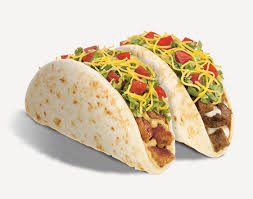
The flat bread made from corn that is eaten by Mexicans is called a ________.
a)
Tortilla
b)
Chip
c)
Taco
91.
Mexico is on the continent of _______.
a)
North America
b)
Asia
c)
South America 
92.
Most Mexicans speak _______.
a)
French
b)
Spanish
c)
Cantonese 
93.
Mexico celebrates their Independence Day on _______
a)
January 1st 
b)
September 16th
c)
November 3rd 
94.
The Mexican flag is red, white, and ________.
a)
green
b)
blue
c)
orange 
95.
The ______________ borders Mexico to the north.
a)
Canada
b)
Guatemala
c)
United States
d)
Europe
96.
The official language of Mexico is _________________.
a)
Native languages
b)
English
c)
Spanish
d)
Mexican
97.
a)

Tacos

b)

Churros

c)

Ensalada

d)

Tortillas

98.
a)

Churros

b)

Burritos

c)

Tamales

d)

Pinguinos

99.
What color is this 
a)
Rojo
b)
Amaranjado
c)
Azul 
d)
Amarillo
100.
What color is this
a)
Anaranjado
b)
Rojo
c)
Azul
d)
Verde
101.

La moneda (currency) que se usa en México es

a)

peso

b)

dólar

c)

euro

102.

Where do most people in Mexico live?

a)

In the North

b)

Near the Coast

c)

On the Central Mexican Plateau

d)

In the desert

103.
How did the Spanish conquer Central America and Mexico?
a)
Through military force
b)
By providing food
c)
Using magic
d)
By improving the economy
104.

Mexico City was once

a)

The Aztec capital

b)

The Maya capital

c)

A volcano

d)

On a glacier

105.
The narrowest point in Central America is in what country?
a)
Panama
b)
Mexico
c)
Guatemala
d)
Nicaragua
106.
Coffee and sugar cane are examples of 
a)
cash crops
b)
fattening foods
c)
illegal substance
d)
crops grown for personal use
107.
Most tourists like Central America and the Caribbean because of 
a)
the casinos
b)
the snow skiing
c)
the climate and beaches
d)
the famous people
108.

Which civilization developed a 365 day calendar?

a)

Maya

b)

Aztec

c)

Arawak

d)

Iroquois

109.
When did most Central American countries gain independence?
a)
1820's
b)
1920's
c)
1420's
d)
1620's
110.
 Slaves working in the sugar industry in the 1700's were part of
a)
Triangular Trade
b)
capitalist economy
c)
communism
d)
socialism
111.
Cuba's government is  
a)
Communist
b)
Democracy
c)
Monarchy
112.
What country?
a)
Panama
b)
Guatemala
c)
Honduras
d)
Costa Rica
113.
What country?
a)
Panama
b)
Guatemala
c)
Honduras
d)
Costa Rica
114.
What country?
a)
Mexico
b)
Honduras
c)
Guatemala
d)
Panama
115.
What country?
a)
Nicaragua
b)
Honduras
c)
Guatemala
d)
Panama
116.
What country?
a)
Nicaragua
b)
Honduras
c)
Guatemala
d)
Panama
117.
What country?
a)
Nicaragua
b)
Honduras
c)
Guatemala
d)
Panama
118.
What country?
a)
Cuba
b)
Puerto Rico
c)
Jamaica
d)
Haiti
119.
What country?
a)
Cuba
b)
Puerto Rico
c)
Jamaica
d)
Haiti
120.
What country?
a)
Cuba
b)
Puerto Rico
c)
Jamaica
d)
Haiti