
 Worksheets
Electricity Unit Test Review
Total questions: 72
Worksheet time: 1hrs 8mins
Which of the following materials will be attached to a magnet?
Gold
Silver
Copper
Iron
To which of the following purposes would a magnet be best suited?
Heating the water in a pot
Sorting a mixture of iron shavings and black pepper
Powering an electronic device
Conducting electrical charge
When two magnets are brought close together, their magnetic __________ interact.
fields
poles
force
True or False: Like poles attract and opposite poles repel each other.
TRUE
FALSE
Do all magnets have a north and south pole?
YES
NO
The north and south poles of two magnets will _______ each other.
attract
repel
_________ is the ability of a material to be attracted by a magnet and to act as a magnet.
Magnetism
Electromagnetism
Magnetic domains
Magnetic domains are regions in a material where the north and south poles of atoms are all lined up in the ______ direction.
Same
Opposite
Magnetism is due to the movement of ________
protons
electrons
neutrons
True or False: Paper clips can be turned into temporary magnets.
TRUE
FALSE
Why is iron a suitable material for the core of a transformer?
A. It is a metal
B. It will not get hot
C. It is easily magnetized
D. It is an electrical conductor
What characteristics do magnetic substances have?
A. They can give a “shock” when you touch them.
B. They can push or pull objects they are not touching.
C. They are always black and cold to touch.
D. They fall faster than other objects when you drop them
What must happen for an electromagnet to have a magnetic field?
A. It must be heated.
B. It has to be touching another magnet.
C. It must be lined up with Earth’s magnetic field.
D. It must be connected to an electrical source.
What is our best evidence that Earth has a magnetic field?
A. All things fall toward Earth’s center.
B. A compass needle lines up with it.
C. Winds blow from east to west.
D. Earth’s oceans all have currents.

The drawing shows a compass.
In which direction is the compass needle pointing?
North
South
East
West

The drawing shows an electromagnet. The strength of an electromagnet can be changed
How can we increase the strength of the electromagnet? Choose 3 answers.
Increase the current flowing through the wires.
Add more coils
Spread the coils out more
Use a wooden core
Use an iron core

Which diagram shows the shape of the magnetic field of a bar magnet
A
B
C
D

the positively charged particle in an atom, never leaves the nucleus, determines the element
proton
neutron
electron
The movement of _______ is what causes an ELECTRIC CURRENT
protons
electrons
neutrons
squirrels
_____ electricity, travels through a conductor- like a wire
static
chemical
dynamic
special
Metals are good __________, which means they transfer electrons and heat easily.
food
chemicals
insulators
conductors
Plastics, rubber, and glass are good __________, which means they do not transfer electrons or heat well.
chemicals
insulators
conductors
food

What kind of charge does this balloon in this picture have?
neutral
positive
negative
not enough information

What type of charge does the balloon in this picture have?
neutral
positive
negative
not enough information

What would happen to the balloon and the cloth in this picture if they were close to each other?
they would attract
they would repel
they would dance like wild chickens
nothing

What is the power source in these systems?
outlet
wires
battery
lightbulb
What could fill in the question mark in the circuit?
a sweater
a plastic spoon
a metal spoon
green
If we add an object to the ? spot, why might the bulb still not light?
it is an insulator
it is a conductor
the battery is too good
purple
Which of these is a closed circuit?
A (the left)
B (the right)
What other device could NOT take place of the bulb?
a motor
a buzzer
a fan
another battery
What would make the bulb in circuit A brighter? (the left)
taking out the battery
add another light bulb
add a battery
changing the direction of the battery

What is the purpose of the rubber or plastic coating on a wire?
it closes the circuit
It serves as an insulator for protection
It serves as a conductor
It prevents the lightbulb from using too much energy

What is NOT required to make a working circuit that does a task?
light bulb, fan, motor etc.
battery
wires
Switch
A circuit is OPEN when...
the switch is closed and completes the circuit
the circuit is incomplete
the bulb is lit
a motor is used instead of a lightbulb
What does an ammeter measure?
Current, the flow of electricity in a circuit
voltage - the measure of difference in potential
the power
the lightbulb

Why is electrical wiring usually made from copper?
Because copper is shiny
Because copper conducts electricity
Because copper is not magnetic
Because copper insulate electricity
A material that does NOT let electricity pass through it is called ...
An electrical conductor
An electrical insulator
An electrical source
An electric appliance
Which of the following materials is an electrical conductor?
Plastic spoon
Silver-colored plastic spoon
copper spoon
wooden spoon

What is a circuit with several paths for electricity to flow?
conductor
series circuit
parallel circuit
open circuit

What is a circuit that only has ONE path for electricity to flow?
series circuit
closed circuit
parallel circuit
light bulb

To complete the circuit, a wire should be placed from —
Current is...
how fast the electrons are moving
the flow of electrical charge
the power source
the amount of energy gained/lost across two points
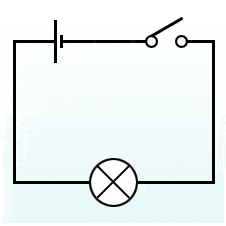
Batteries are devices that store ___________ energy and convert it to ____________ energy.
mechanical, chemical
electrical, chemical
chemical, electrical
radiant,electrical
True or False:
It is a great idea to throw dead batteries in the trash.
TRUE
FALSE
Batteries have 3 parts; ______, _______ and ________
chemicals, electricity and light
cathode, anode, electrolyte
metal, radiant energy and plastic
static, dynamic and electron
________ build up to create a potential difference in batteries
neutrons
protons
electrons
chemicals
The electrons build up in the________ of a battery
anode
cathode
electrolyte
wire
True or False:
The electrons in the anode are attracted to the protons in the cathode
True
False
____________ is the flow of electrons.
mechanical
chemical
radiant
electricity
Electrons in the anode need a ________ such as _______ to travel to the cathode.
insulator, plastic
conductor, metal wire
superman, krypton
food path, cheese
What causes batteries to work?
chemical reaction
radiation
water flowing
electrolytes
________ is the pressure from an electrical circuit's power source that pushes electrons through.
electrolyte
power
electricity
voltage
There are two types of batteries we learned about; __________ and ___________.
hyper and slow
wet and dry cell
round and square
silent and loud
Which battery would have more "push" to move electrons and power something on its circuit better?
1.5 volt
6 volt
9 volt
12 volt
In a _______ a spinning turbine moves magnets which generates an electric current.
Motor
Generator
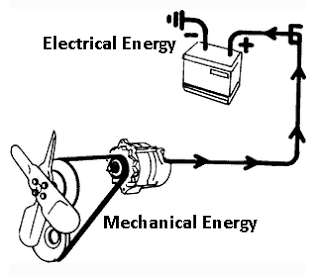
a motor converts electrical current into
chemical energy
chemical force
mechanical force
mechanical life
electric generators converts mechanical force into
mechanical energy
magmatism
electric current
electric energy
Which statement best explains the flow of energy through a motor?
battery-->electrical current-->copper wire rotor -->magnet--> mechanical energy
battery--> magnet--> electrical current--> copper wire rotor--> mechanical energy
magnet--> mechanical energy--> copper wire rotor--> battery--> electrical current
magnet--> copper wire rotor--> mechanical energy--> battery--> electrical current

