
 Worksheets
Finals Review
Total questions: 113
Worksheet time: 1hrs 25mins
What is kinetic energy?
motion
position (staying in one spot)
plug it in
food, batteries, burning logs
What is potential energy?
motion
position (staying in one spot)
plug it in
food, batteries, burning logs
What is electrical energy?
motion
position (staying in one spot)
plug it in
food, batteries, burning logs
What is chemical energy?
motion
position (staying in one spot)
plug it in
food, batteries, burning logs
Anytime you see wheels so a car, bus, rollercoaster, or skateboard what are you supposed to think?
motion
electrical
friction so thermal energy
friction so chemical energy
Will you ever say energy changes?
Yes
NO
Does energy ever get greater?
NO
YES
What are the three types of heat transfer?
conduction
convection
radiation
thermal
Conduction means
touch
Move (hot up and cold down)
Sun or fire
Convection means
touch
Move (hot up and cold down)
Sun or fire
Radiation means
touch
Move (hot up and cold down)
Sun or fire
Heat transfer goes from
cold to hot
hot to cold
High specific heat means pick the
big number on the chart
small number on the chart
Low specific heat means pick the
big number on the chart
small number on the chart
What is gravity?
8
9.8
10
If I touch something hot what is that?
conduction
convection
radiation
Does weight ever change?
yes
no
Does mass ever change?
yes
no
Is free fall balanced or unbalanced
balanced
unbalanced

You push against a wall and the wall is pushing back on you.
Newton's 1st Law
Newton's 2nd Law
Newton's 3rd Law

The harder you hit a baseball, the faster it accelerates.
Newton's 1st Law
Newton's 2nd Law
Newton's 3rd Law
Terminal velocity is when you are at
zero
Any number
negative
positive
Anytime you see the word distance what do you do?
Add
subtract
multiply
divide
Anytime you see the word speed, velocity, or acceleration what do you do?
add
subtract
multiply
divide
True or false. If you change ONLY the direction of an object, you have then changed its velocity.
True
False
In the equation f=ma, what does the "m" stand for
acceleration
matter
mass
force

What is the total distance traveled by the car?
60 m
20 m
0 m
80 m
What is the total displacement of the car?
60 m
20 m
0 m
80 m
Scott drives a Jeep 12 km east, then 4 km north, then finally 3 km west. He traveled a total distance (distance means add) of:
5 km
10 km
13 km
19 km
A ping-pong ball rolls forward 6 meters, and bounces backward 3 meters. It traveled a total distance (distance means add) of:
9 meters
6 meters
3 meters
0 meters
If you want to keep your food warm what do you want
High specific heat
Low specific heat
If you want to keep your food cold what do you want
High specific heat
Low specific heat
Short wavelength means
lower frequency
higher frequency
High frequency waves transfer
MORE energy than a low frequency wave.
the same amount of energy as a low frequency wave.
LESS energy than a low frequency wave.
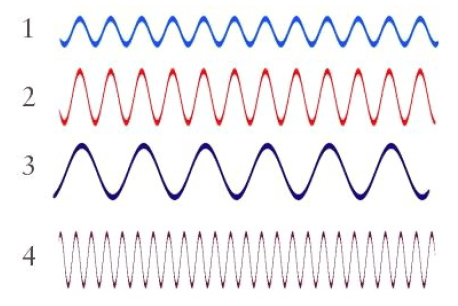
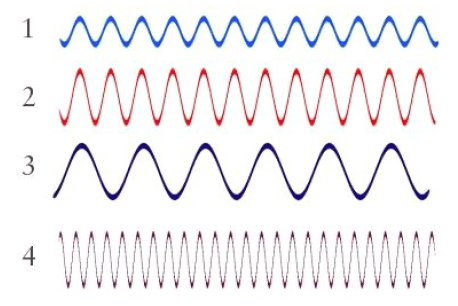

True or False: Both waves A and B have the same frequency.
True
False
True or False: Both waves A and B have the same wavelength.
True
False
Which wave has a less amplitude?
A
B

True or False: Waves A and B have the same amplitude.
True
False

Which wave has a lower frequency?
A
B

Which wave has a higher frequency?
A
B

The __________ of a wave is the distance between one point on a wave and the nearest point just like it. In a transverse wave, this is the is the distance from crest to crest or trough to trough.
amplitude
wavelength
frequency
baseline

Which wave has a shorter wavelength?
A
B

Which wave has a longer wavelength?
A
B

The lowest part of a wave.
Wave
Amplitude
Wave Crest
Wave Trough
Wave Height


High pitched waves would have wavelengths that are...
at a rarefaction
far apart
close together
at the trough


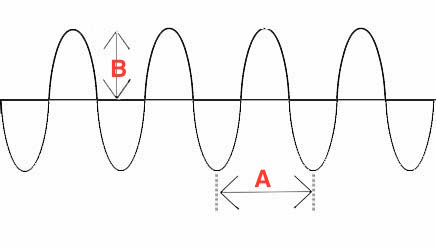
Waves that can travel through a vacuum and do no require a medium are called?
Transverse Waves
S-Waves
Mechanical Waves
Electromagnetic Waves
What is the crest of a transverse wave?
the lowest point of the wave
the middle of a wave
the highest point of a wave
nothing
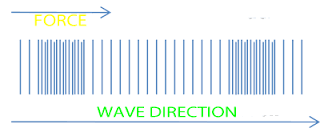
What type of waves have compressions?
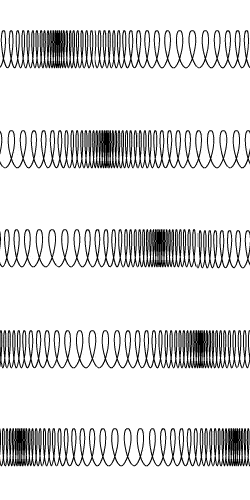
Mechanical waves that travel through a medium moving perpendicular to the motion of the wave.
Transverse wave
Surface wave
Longitudinal wave
medium
The top of something; sometimes called a "peak"
trough
amplitude
compression
crest

Red has the __________ frequency.
high
low

Red has the _________ wavelength
shortest
longest

Violet has the __________ wavelength
shortest
longest

Violet has the __________ frequency.
low
high
What would produce the least amount of energy: ___________ wavelength and _____________ frequency.
longest wavelength and low frequency
shortest wavelength and low frequency
longest wavelength and high frequency
shortest wavelength and high frequency
What do you change to make a sound wave louder?
pitch
sound
amplitude
crest
How do you change the pitch?
sound
pitch
amplitude
frequency
Sound waves are longitudinal or transverse waves?
longitudinal
transverse
Light waves are longitudinal or transverse waves?
longitudinal
transverse
Sound waves are mechanical or electromagnetic waves?
mechanical
electromagnetic
Light waves are mechanical or electromagnetic waves?
mechanical
Electromagnetic

What wave interaction?
reflection
refraction
diffraction
interference

What is the wave interaction?
reflection
refraction
diffraction
interference

What type of wave interaction?
reflection
diffraction
constructive interference
destructive interference

What type of wave interaction?
reflection
refraction
diffraction
interference
Which wave is the faster? ALWAYS
mechanical
electromagentic
same
Electromagnetic waves do not need a ______
sound
medium
place
energy
Electromagnetic and mechanical waves travel at
same speed
different... electromagnetic waves are faster
different .... mechanical waves are faster

Wave 1 is a _________
Microwave
Sound wave

Sound waves will travel the fastest through _________
Human fat
Gold
ice
air
Electromagnetic waves move _____________ when going from gases to liquids to solids
slowly
faster
Electromagnetic waves move _____________ when going from gases to liquids to solids
slowly
faster
Why does an ambulance sound louder as it approaches you? This has nothing to do with wavelengths. ONLY FREQUENCY
The ambulance compresses air in front of it as it moves causing sound waves with a lower observed frequency.
The ambulance compresses air in front of it as it moves causing sound waves with a higher observed frequency.
The ambulance compresses air in front of it causing sound waves with longer observed wavelengths.
The ambulance compresses air in front of it causing sound waves with shorter observed wavelengths.

Why do the sound waves in the front look different than the sound waves in the back? NOTHING TO DO WITH WAVELENGTH
The observed waves in front have a longer wavelength and produce a higher pitch.
The observed waves in front have a shorter frequency and produce a higher pitch.
The observed waves in front have a longer wavelength and produce a lower pitch.
The observed waves in front have a higher frequency and produce a higher pitch.
What is the KE formula
KE = mv2
KE = 21mv2
KE = mgh
KE = 21mv
What is PE formula?
PE = mgh
PE = mh
PE = 21mv2
PE = mgv
What does "c" stand for in the following equation - Q = mcΔT
Heat
mass
specific heat
speed

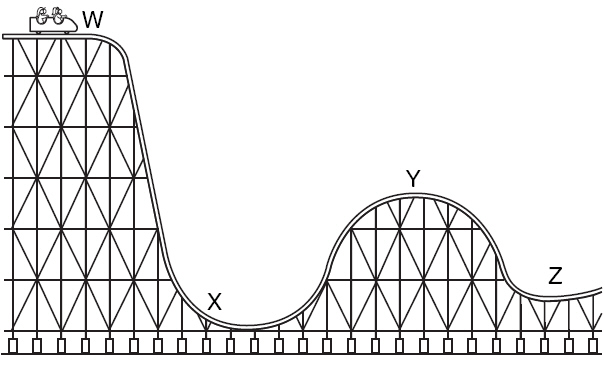

Use the table provided to answer the following question.
Which material would take the most amount of energy to heat up by 10 degrees?
Ice
Copper
Liquid Water
Iron
Use the table provided to answer the following question.
Which material would heat up the fastest?
Ice
Copper
Liquid Water
Iron

Which will heat up faster?
copper
granite
iron
basalt

Which will heat up slower?
water
lead
granite
iron
How does the chemical energy stored in a log compare to the energy produced by burning the log?
Chemical energy is EQUAL
Chemical energy is LESS
Chemical energy is MORE
Chemical energy STAYS the SAME
If ONLY energy leaves a system then...
Open system
Closed System
If Mrs. Hertlein throws a ball that is twice as fast as Dr. Garcia. How much faster is Mrs. Hertlein's ball?
twice as fast
four times as fast
Same amount of energy
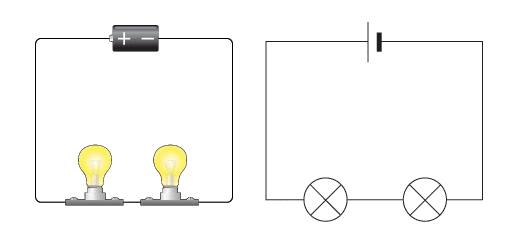

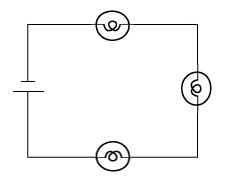
When only one lightbulb blows out, an entire string of decorative lights goes out. The lights in this string must be connected in
series with multiple current pathways
series with one current pathway
parallel with multiple current pathways
parallel with one current pathway
AC stands for __________ current.
alternating
Adjusting
Alarmed
Additional
DC stands for __________ current.
deviating
default
diverging
direct
An electric current flowing in one direction only
voltage
parallel current
direct current
electric current
A battery produces ____.
an alternating current
a direct current
both direct and alternating current
the same current that a generator produces

