
 Worksheets
Winter Benchmark Review Set #2 (Water and Carbon Cycle)
Total questions: 40
Worksheet time: 39mins

Water particles evaporate when they gain kinetic energy. What is the energy source that causes drives the water cycle and evaporation?
The moon
The heat from our home in the winter all around the world
The sun
The heat generated soley from the core of the earth
Oceans, the atmosphere, and groundwater are all ________ in the water cycle.
Nodes
Sinks
Reservoirs
Stations

The graphic shows that only 3% of the Earth's water is fresh water. The graphic also shows that of this 3%, almost all of it is contained in two reservoirs. What are the two reservoirs that contain almost all of Earth's fresh water?
glaciers and groundwater
streams and estuaries
marshes and swamps
lakes and rivers

What characteristic is shown in the image?
Polarity
Hydrogen Bonds
Cohesion
Adhesion

This individual is ice fishing. They cut through the top layers of ice to reach the water and fish below. What property of water allows for this to happen?
Expansion Upon Freezing
Universal Solvent
Ability to Moderate Temperature
Cohesive Behavior

How would the geosphere be affected by snow melting?
the water would erode mountains and soil
the snow would evaporate into gasses
the water would over water plants and trees
the water would cause rivers to flood
How would the atmosphere be affected by a forest fire?
the soil would burn
the plants and animals would be burned
smoke and ash would go into the air
ash would fall into the lakes and rivers
Which spheres would be affected from a volcanic eruption?
geosphere and biosphere
hydrosphere and atmosphere
geosphere and atmosphere
ALL OF THEM
Match the following terms to their examples
precipitation
rain
evaporation
steam
condensation
water droplets on a glass
transpiration
water evaporating from a leaf
sublimation
water evaporating directly off of ice
Match the following spheres to their best description:
hydrosphere
water
biosphere
life
geosphere
landforms & soil
atmosphere
gases

Based on the table, the activity shows the result of deposition are on numbers ….
1 and 2
2 and 3
3 and 4
1 and 4

Match the following terms to their correct location on the water cycle image:
4
condensation
3
evaporation
5
precipitation
1
sun's energy
2
accumulation
The process by which organisms use oxygen to release the energy in food and carbon dioxide and water
photosynthesis
cellular respiration
chemosynthesis
metabolism
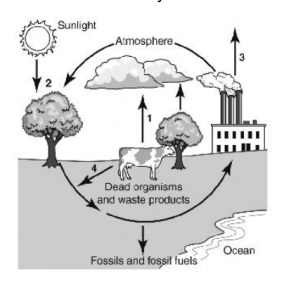
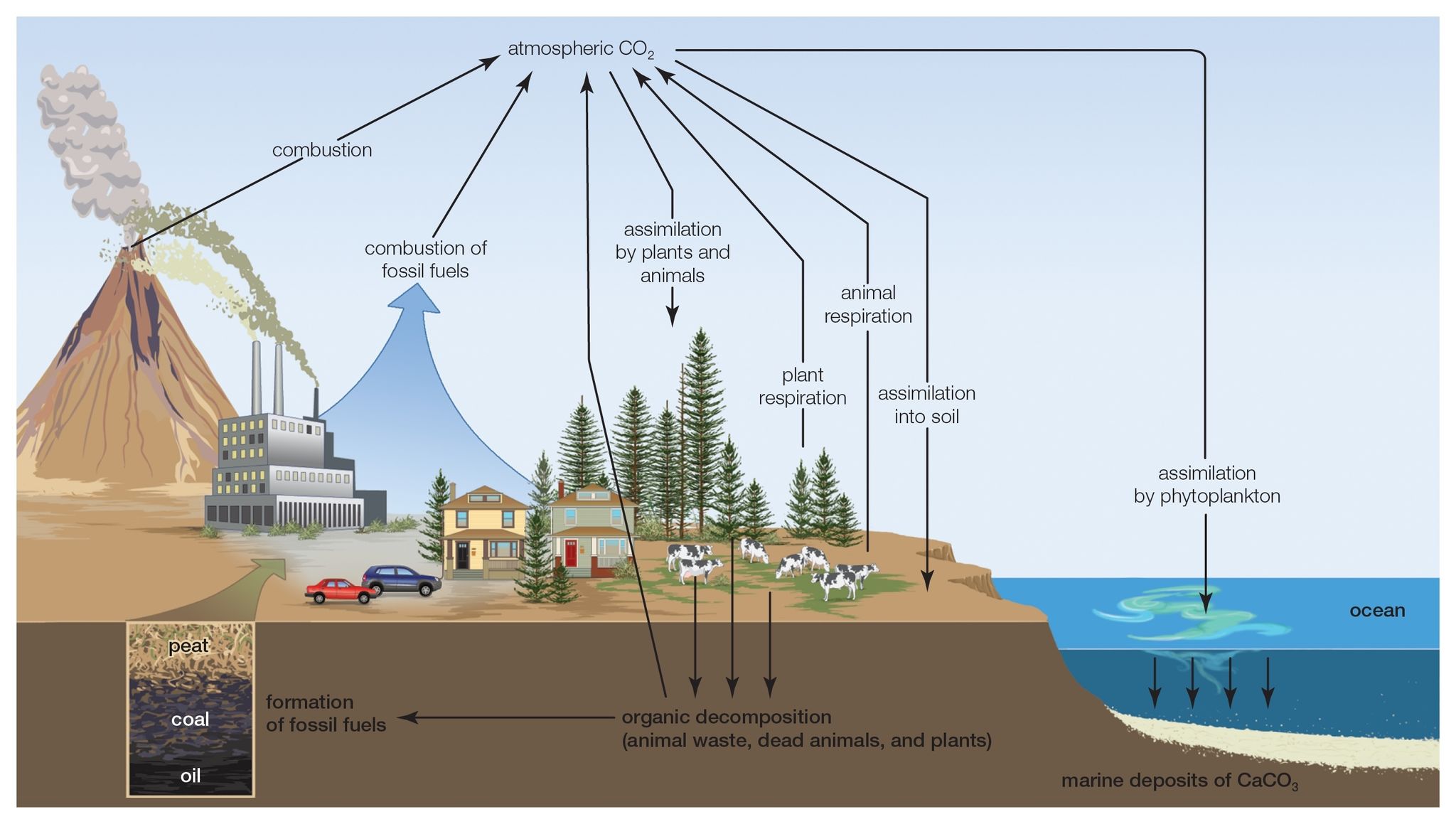
Why does too much carbon dioxide in the atmosphere cause climate change?
It cools our planet.
Blocks out UV rays.
Lets light escape.
Traps heat and warms the planet.
What does the Xylem transport?
Water and Minerals
Glucose
Blood
Chlorophyll

How many total POTASSIUM (K) atoms are in this formula?
8
2
4
12
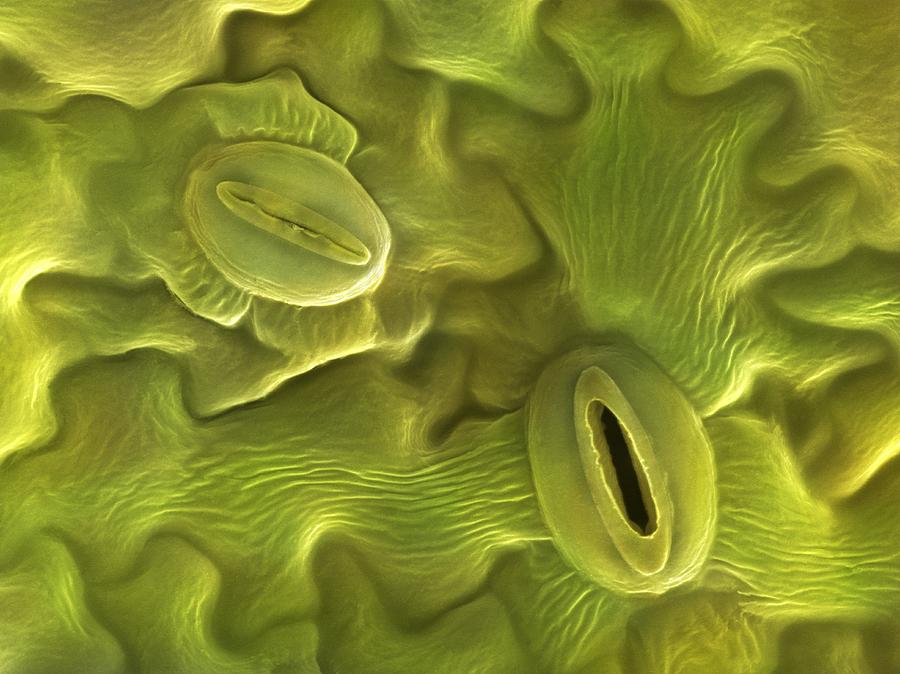
CO2 + light + H2O --> O2 + Sugar
CO2 + sugar + H2O --> O2 + light
CO2 + O2 + H2O --> Light+ Sugar
O2 + light + H2O --> CO2 + Sugar

Match the following products and reactants of photosynthesis and respiration:
products of Cellular Respiration
oxygen and water as waste, ATP energy
reactants of Cellular Respiration
glucose found in food, oxygen in air
products of Photosynthesis
glucose stored in cells and oxygen waste
reactants of Photosynthesis
carbon dioxide in air and water in soil
Match the following Macromolecules with their use:
Carbohydrates
fast energy
Lipids
energy storage
Nucleic Acids
DNA, RNA
Proteins
repair/build tissue

The graph shows us that
the earth temperature is always increasing
the earth's temperature has steadily increased since 1900
the earth's temperature has steadily rising since the 1960s
the earth's temperature decreased during the 19th and 20th centuries

A principle that states that matter can be transformed but cannot be created or destroyed
Law of conservation of energy
Law of conservation of momentum
Law of conservation of mass
Law of conservation of matter
What is one disadvantage of renewable resources such as wind and solar power?
They are worse for the environment.
They are expensive to set up.
They create greenhouse gases.
They will eventually run out.
What is one DISADVANTAGE of using fossil fuels?
Fossil fuels will never run out.
Fossil fuels are very efficient forms of energy and are readily available, making them cheaper.
Burning fossil fuels contributes to the greenhouse effect which causes global warming.
Fossil fuels are better for the environment.
Match the following ADVANTAGES to their corresponding Natural Energy Source
Fossil Fuels
Fast, quick electrical energy and can be transported
Nuclear
largest amount of electrical energy from a single atom
Hydropower
relies on the natural movement of water from a local source and releases NO CO2
Solar
uses radiation from the sun and releases NO CO2
Biomass
uses scraps & waste from farming; can easily regrow trees on land; can be transported

What effect do cows and other livestock have on global warming? Choose the best answer.
They eat trees and grass, which adds to global warming
Their digestive systems produce methane, a powerful greenhouse gas
Humans use lots of fossil fuels to cook the meat they produce, adding to global warming
Livestock have high body temperatures and emit infrared radiation, adding to global warming
What might happen if the greenhouse effect didn't exist?
It would be too cold for humans to survive on the Earth
The Earth's temperature would be much more comfortable
The Sun's rays would never reach the surface of the Earth
The Earth wouldn't have gravity
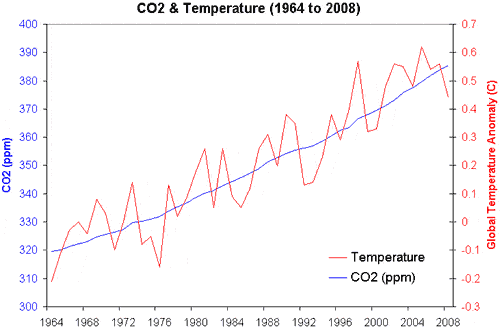
The graph below shows CO2 emissions and temperatures from 1984 to 2009. What conclusion is best supported by the graph?
There is no relationship between carbon dioxide concentrations and temperatures
As carbon dioxide concentrations increase, temperatures increase
As carbon dioxide concentrations increase, temperatures decrease
Match the following RENEWABLE resources with the correct descriptions
Hydropower
uses water to turn a turbine for electricity
Wind
uses wind to turn a turbine for electricity
Geothermal
uses heat from within earth to boil water, which will evaporate & turn a turbine for electricity
Solar
uses sun's radiation to generate electricity
Biomass
burns organic matter to boil water, which will evaporate & turn a turbine for electricity
Match the following types of energies with their BEST Disadvantage:
Requires a large area of land and releases CO2 when burned
Biomass
practical only in locations near volcanoes or earthquakes and water waste can damage soil
Geothermal
can disrupt wildlife, such as bird migration patterns
Wind Turbine
Can cause flooding upriver and harm wildlife
Hydropower
What is one DISADVANTAGE of using renewable resources?
They are not as efficient as burning fossil fuels.
They will eventually run out.
They are cheaper and better for the environment.
After rain precipitates down to Earth's surface it can slowly (a) into the soil then (b) slowly by passing through soil and permeable rock layers in the ground into an (c) .
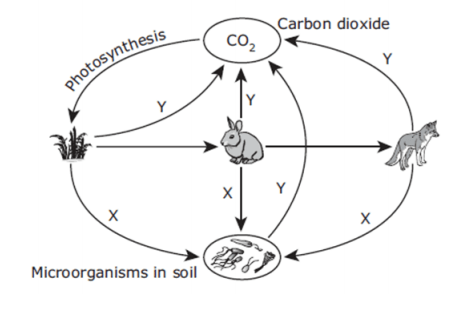
Y : Predation
Y : Decomposition
Y : Nitrogen Fixation
Y : Respiration

