wayground logo

Free Printable Worksheets

Font size

S
M
L
XL
Worksheets

Natural Selection

Total questions: 21

Worksheet time: 14mins

Name
Class
Date
1.

What word describes a trait that helps an organism survive in its environment?

a)

natural selection

b)

mutation

c)

camouflage

d)

adaptation

2.

How do you "win" at natural selection?

a)

survive

b)

go extinct

c)

survive & reproduce

3.
Which organisms are most likely to survive?
a)
the best adapted
b)
the fastest
c)
the strongest
d)
the most domesticated (tamed)
4.
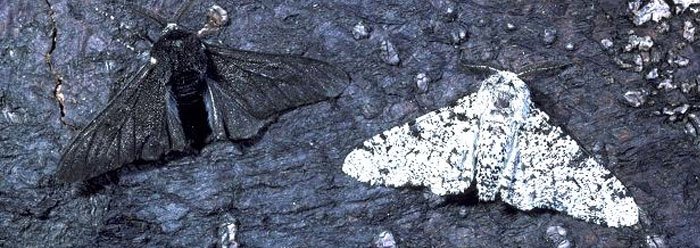
The trees these moths used to live on were white, but have been covered in soot from coal factories. Which moth will be more successful in this environment?
a)
Dark moth
b)
Light moth
c)
Both will be equally successful
d)
Neither will be successful
5.
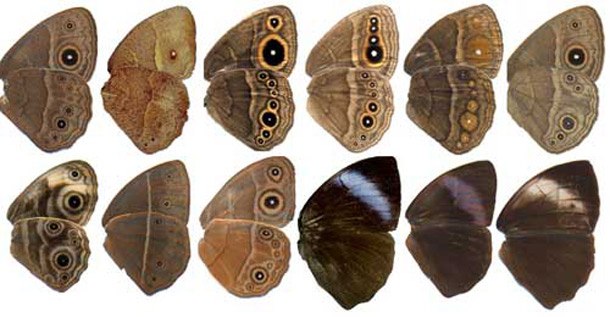
These moths are all the same species. The differences between their wings is an example of ________________
a)
Natural Selection
b)
Variation
c)
Homeostasis
d)
Extinction
6.
When an environment changes faster that an species can adapt, the most likely outcome is...
a)
...biological evolution.
b)
...voluntary mutation
c)
...species extinction
d)
...selective breeding
7.
Which of the following explains adaptation.
a)
An individual organism changes to meet its needs in the environment. These changes pass down to their offspring.
b)
The species as a whole changes their characteristics.
c)
Beneficial traits allow organism to survive and pass on those traits
d)
New characteristics arise in a species as needed.  If these traits are helpful, they are passed down.
8.
Evolution works by 
a)
individuals changing to suit their environment
b)
Individuals learned new traits and pass them on
c)
sudden change in the environment cause a species change 
d)
small changes pass down through many generations
9.
Mutations are important because they bring about
a)
death of the organism in which they develop
b)
genetic variation needed for a population to evolve
c)
benefits for the individual, not for the population
d)
Hardey-Weinberg equilibrium within a population
10.

Natural selection results in change in a population's _____________ traits over time.

a)

inherited

b)

acquired

11.

Individuals undergo evolution.

a)

True

b)

False

12.

Charles Darwin observed that finches of different species on the Galápagos Islands have many similar physical characteristics, this supports the hypothesis that these finches

a)

are twins

b)

acquired traits through use and disuse.

c)

all eat the same type of food.

d)

descended from a common ancestor.

13.

What does 'fitness' mean in natural selection?

a)

How fast an animal can run

b)

How much you work out

c)

How well adapted the animal is to their environment

d)

How strong an animal is

14.

TRUE OR FALSE: All mutations are bad

a)

TRUE

b)

FALSE

15.

TRUE or FALSE: Mutations are random

a)

TRUE

b)

FALSE

16.

TRUE or FALSE: Mutations lead to variation.

a)

TRUE

b)

FALSE

17.

When every organism of a species has died

a)

Evolution

b)

Natural Selection

c)

Extinction

d)

Artificial selection

18.

Animals may fight, make threatening sounds, and act aggressively toward members of the same species. These behaviors usually occur as the result of:

a)

Adaptation

b)

Evolution

c)

Competition

d)

Variation

19.

Bird's beaks evolve mainly due to the type of _______ available

a)

food

b)

water

c)

shrubs

d)

mates

20.

Organisms with differences/variations that are helpful will...

a)

live longer

b)

become extinct

c)

show no change

21.

In a cold environment, what would be some adaptaive traits?

Select all that apply

a)

Thick blubber

b)

Thick fur

c)

Thin fur

d)

Weak muscles