
 Worksheets
Intramolecular & Intermolecular Forces
Total questions: 211
Worksheet time: 5hrs 39mins

The atoms in a molecule of water adopt what kind of molecular geometry?
Linear
Tetrahedral
Bent
Trigonal planar


The geometry of a molecule with 4 bonded pairs of electrons and 0 lone pairs of electrons, AB4
Tetrahedral
Trigonal Planar
Bent
Trigonal Pyramidal
Linear

What is molecular shape for this shape?
Tetrahedral
Trigonal planar
Trigonal bipyramidal
Trigonal pyramidal
What molecular geometry would PH3 have?
Trigonal Pyramidal
Trigonal Bipyramidal
Bent
Linear
How many lone pairs of electrons are on the P atom in PF3?

The acronym VSEPR stand for
very strong electron pair repulsion.
varied symmetry electrostatic proton reaction.
venomous snakes enjoy pink ribbons.
valence shell electron pair repulsion.
VSEPR theory is used to predict
the number of unshared pairs of electrons in a Lewis structure.
the number of multiple bonds in a Lewis structure.
the three-dimensional geometry of a molecule.
the three-dimensional crystal lattice structure of ionic compounds.
Molecules such as boron trichloride that have three bonded atoms and no unshared pairs have what shape?
trigonal planar
trigonal pyramidal
trigonal bipyramidal
tetrahedral

Ethanol is...
polar
nonpolar

Butane is...
polar
nonpolar

CF4 is...
polar
nonpolar

What is the BOND and MOLECULE polarity of SiI4
Bond: Polar
Molecule: Polar
Bond: Polar
Molecule: Nonpolar
Bond: Nonpolar
Molecule: Nonpolar
Bond: Nonpolar
Molecule: Polar

What is the BOND and MOLECULE polarity of H2O
Bond: Polar
Molecule: Polar
Bond: Polar
Molecule: Nonpolar
Bond: Nonpolar
Molecule: Nonpolar
Bond: Nonpolar
Molecule: Polar
Electronegativity _______ across a period and ______ down a group.
increases, increases
increases, decreases
decreases, increases
decreases, decreases
Which of these atoms is the most electronegative?
Bromine
Fluorine
Hydrogen
Potassium
The electrons in a polar covalent molecule are shared...
Evenly
Unevenly
Electrons are not shared
None of the Above
In a nonpolar covalent bond, the electrons gather around...
The atom with the Greatest Electronegativity
The atom with the Lowest Electronegativity
Each atom Equally
None of the Above
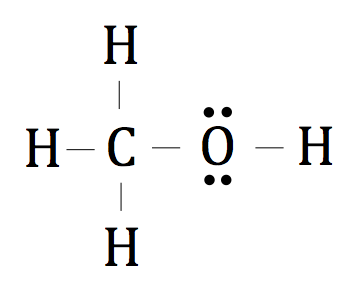
Is the following molecule polar or non-polar?
polar
non-polar

Partial charges like the ones shown here are called:
dipoles
deltas
ions
magnetic poles

In this Lewis structure, the symbol above F means...
electrons are being transferred to Fluorine
electrons are less attracted to F than H
electrons are more attracted to F than H
Fluorine has formed an anion
Identify the strongest IMF exist in CH4
dipole-dipole forces
london forces
ion-dipole forces
hydrogen bonding
Identify the strongest IMF exist in NH3
london dispersion forces
ion-dipole forces
dipole-dipole forces
hydrogen bonding
Identify the strongest IMF exist in HBr
london dispersion forces
hydrogen bonding
dipole-dipole forces
ion-dipole forces
To form a hydrogen bonding, Hydrogen needs to attract to the highly electronegative elements such us _____, _____, and ____
chlorine, fluorine, and oxygen
fluorine, oxygen, and sulfur
fluorine, bromine, and oxygen
fluorine, oxygen, and nitrogen
Forces that holds atoms together within the molecule
intermolecular forces
intramolecular forces
Hydrogen bonding is a special case of __________.
london dispersion
ion-dipole
dipole-dipole
The weaker the intermolecular forces of a substance the _____________ the boiling point
higher
lower
Anything that has mass and takes up space.
Matter
Atom
Pure Substance
Element
Which phase of matter has no definite shape or volume?
Solid
Liquid
Gas
All of the above
Order the following intermolecular forces from strongest to weakest
Hydrogen Bonds
Dipole-Dipole
London Dispersion
Order the following intermolecular forces from weakest to strongest
London Dispersion Forces
Dipole-Dipole
Hydrogen Bonds
London Dispersion Forces are the result of
Permanent Dipoles
Temporary dipoles
No Dipoles
Hydrogen bonds
Dipole-Dipole interactions occur between both nonpolar and polar molecules
True
False
Which of the following elements does NOT form hydrogen bonds?
Oxygen
Fluorine
Carbon
Nitrogen
pairs of electrons are shared between two non-metal atoms.
two non-metal atoms are attracted to each other by opposite charges.
Identify the following compound as ionic or covalent: SO2
ionic
covalent
Identify the following compound as ionic or covalent: Ca(OH)2
ionic
covalent
dinitrogen pentoxide
N2O5
NO5
N5O2
N2O6
P₄S₁₀
tetrapotassium decasulfide
phosphorus decasulfide
tetraphosphorus decasulfide
phosphorus (X) sulfide
SO₃
sulfate
sulfur oxide
sulfur trioxide
monosulfur trioxide
tetraphosphorus heptoxide
K₄O₁₀
P₄O7
KO
P₁₀O₄
chlorine dioxide
ClO2
ClO
ClO3
HClO2
hexaboron monosilicide
B6Si
BSi
BSi6
B6Si6
What two types of atoms make a covalent bond?
2 non-metals
1 metal and 1 non-metal
2 metals
What type of bond involves the sharing of electrons between atoms?
covalent bond
ionic bond
metallic bond
transfer bond
pairs of electrons are shared between two non-metal atoms.
two non-metal atoms are attracted to each other by opposite charges.
Identify the following compound as ionic or covalent: SO2
ionic
covalent
Identify the following compound as ionic or covalent: Ca(OH)2
ionic
covalent
What is the chemical formula for dinitrogen tetraphosphide?
NP
N4P2
N2P4
N2P3
What is the correct molecular formula for the compound tetraphosphorus trisulfide?
P3S4
K4S3
P4S3
PS
What is the correct name for the compound, S2F10?
sodium fluoride
disodium decafluoride
sulfur fluoride
disulfur decafluoride
What is the name of the following compound: CS2?
Carbon Sulfide
Monocarbon Sulfide
Monocarbon disulfide
Carbon disulfide
A covalent bond is made of the 2 following kinds of elements:
Metal and metal
Nonmetal and nonmetal
Metalloid and Metalloid
Metal and nonmetal
What is the correct Lewis Dot Structure for ammonia NH3


What is the correct Lewis Dot Structure for ammonia NH3
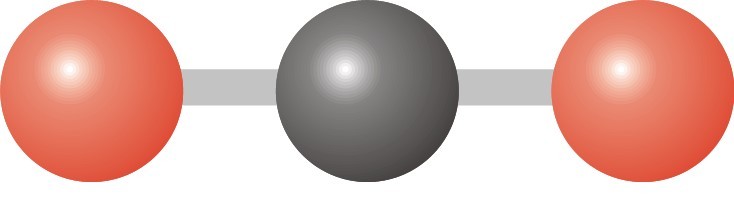
Which is the correct molecular structure for carbon dioxide?


NH3 has how many lone pairs?
0
1
2
3
CCl4 has how many double bonds?
0
1
2
3
3. Which is a correct Lewis structure for hydrogen cyanide, HCN?


Why is this Lewis Structure incorrect? Choose all that apply.
There are too many bonds around Si.
There should only be single bonds in this Lewis Structure.
The Structure is missing a triple bond.
Chlorine only has 6 electrons surrounding it.
CO2 has how many lone pairs?
0
1
2
3
4
Carbonate (CO32-) has how many double bonds?
0
1
2
3

What is a cation?
a metal with a negative (-) charge that gains electrons
a non-metal with a negative (-) charge that loses electrons
a metal with a positive (+) charge that loses electrons
a non-metal with a positive (+) charge that loses electrons
What is a anion?
a metal with a negative (-) charge that loses electrons
a non-metal with a negative (-) charge that gains electrons
a metal with a positive (+) charge that gains electrons
a non-metal with a positive (+) charge that loses electrons
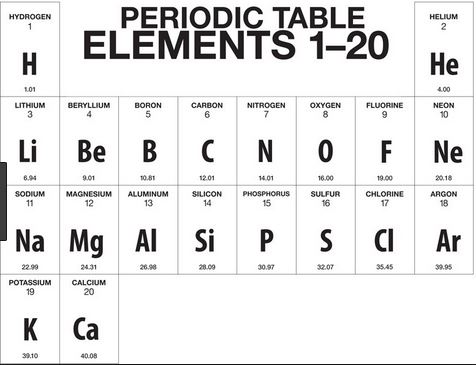
How many valence electrons does Silicon Have?
1 Valence electron
2 Valence electron
3 Valence electron
4 Valence electron
5 Valence electron
How many valence electrons does Phosphorus Have?
1 Valence electron
2 Valence electron
3 Valence electron
4 Valence electron
5 Valence electron
How many valence electrons does Potassium Have?
1 Valence electron
2 Valence electron
3 Valence electron
4 Valence electron
5 Valence electron
If the charge becomes 2+ what does that indicate about an ion?
It is stealing 2 electrons
It is losing 2 electrons
It is in period 2
It has an atomic # of 2
Na1+ F1-
What is the overall charge of the ionic compound NaCl
+1
+2
+3
0
What kind of Ion does Aluminum form?
Al+3
Al−3
Al−1
Al+2
Anions...
lose electrons
lose protons
gain electrons
gain protons
Key properties of ionic bonds are (choose all that apply)
Thermal conductivity
Electric conductivity
high melting point
low boiling point
Cations...
lose electrons
lose protons
gain electrons
gain protons
For an ionic compound formula, write
Metal first
Non-Metal first
Cation first
Anion first
Losing electrons makes an atom
a loser
positively charged
negatively charged
happy
Gaining electrons make an atom
a hustler
negatively charged
atomic
positively charged
Which two elements would NOT form an ionic bond?
calcium and lithium
calcium and oxygen
lithium and oxygen
calcium and carbon
A sodium ion has a charge of
-1
-2
+1
+2
True or False: Sodium and Chloride ions have equal but opposite charges
True
False
Cr3+ O2-
K1+ S2-
Al3+ O2-
Name for NaH
sodium hydrogen
potassium hydride
sodium hydride
potassium hydrogen
Name for SrBr2
strontium bromine
strontium bromide
strontium dibromide
strontium dibromine
Why don't noble gases form bonds?
Noble gases do form bonds
They all have a full octet
They only bond with each other
What charge will a Neon ion have?
+1
-1
-8
Neon does not form ions.

Is this the correct Lewis Dot Structure for phosphorus?
Yes
No

When you have Br-Br, what is the polarity?
Polar
nonpolar
Ionic

When you have Li-O, what is the polarity?
nonpolar
polar
ionic

When you have H-Cl, what is the polarity?
nonpolar
polar
ionic
When you have Ga-Se, what is the polarity?
nonpolar
polar
ionic
When you have I2, what is the polarity?
nonpolar
polar
ionic
The correct formula for copper (II) nitride is:
CuN
CuN2
Cu3N2
Cu2N3
The correct name for CaCl2 is:
calcium chlorine
calcium chloride
calcium dichloride
calcium (II) chloride
The correct formula for beryllium fluoride is:
BeF
BF2
Be2F
BeF2
Name the following ionic compound: BeCl2
beryllium chlorine
beryllium II chloride
beryllium chloride
beryllium dichloride
Name the following ionic compound: Cs2S
cesium sulfide
cesium sulfate
cesium II sulfate
cesium II sulfide
Which of these combinations is an ionic compound made of?
Metal and Metal
Nonmetal and Nonmetal
Metal and Nonmetal
Cation and Cation
When naming a compound, which of these is written first?
Metal
Nonmetal
Anion
Cation
When naming a compound, what must the last part be?
the element with "ide" at the end
the element with the ending "ite"
the name of the element
the element with "ide" at the end, unless its a polyatomic ion
What is the name of the compound Na2(SO4)?
Sodium sulfate
Sodium sulfide
Sodium sulfite
Sodium sulfuroxide
The name of the compound Ca3(PO4)2
calcium phosphate
tricalcium diphosphate
calcium phosphorus oxide
calcium phosphide
LiBr is called
lithium bromine
lithium (I) bromine
lithium bromide
lithuim (I) bromide
A chemical bond where electrons are taken/stolen
Ionic Bond
James Bond
Covalent Bond
Polar Bond
When two or more different elements are chemically combined.
Mixture
Element
Solution
Compound
Name the following compound: Zn3N2
zinc nitride
trizinc dinitride
zinc (III) nitride
zinc (II) nitide
zinc nitrogen
Name the following ionic compound: Li(NO3)
lithium nitrate
lithium III nitrate
lithium nitride
lithium oxide
What is the name of the following compound: NaCl
sodium chloride
sodium (I) chloride
sodium chlorine
sodium (I) chlorine
How many bonds can Carbon make in covalent bond?
1
2
3
4
Which substances, in general, have the higher melting point?
Metal
Non-Metals

How many electrons are in Aluminium?
40
27
13
14

How many neutrons are in Magnesium?
36
12
24
6

How many protons are in Sodium?
11
22
12
33

How many protons are in Chlorine?
35
18
17
52

How many electrons are in Sulfur?
32
16
48
8
Metals are hard because metals have a
sea of electrons that tightly hold the nuclei together
they form triple bonds
low melting point
high luster
Why do metals have high melting points?
Metallic bonds are weak and metals have a simple structure
Metallic bonds are strong and metals have a lattice structure
Metallic bonds are strong and metals have a simple structure

What is the name for the electrostatic force of attraction between the particles shown in the image?
covalent bond
dative covalent bond
metallic bond
ionic bond
A temporary electrical charge imbalance that causes molecules to attract is called...
Hydrogen Bond
London Dispersion Force
Dipole-Dipole Forces
Covalent Bond

What type of force is labeled as "1" in the following picture? (choose the best answer)
London Dispersion
Dipole-Dipole
Hydrogen Bond
Ion-Dipole
True or False: Intermolecular forces are weaker than intramolecular forces
True
False
Dipole-Dipole forces are stronger than _______ and weaker than _________ interactions.
london dispersion, hydrogen bonding
hydrogen bonding, london dispersion
ion-dipole, london dispersion
Which of these has ONLY London forces?
I2 (nonpolar)
NH3 (polar)
OCl2 (polar)
HCl (polar)
Which substance would have the weakest intermolecular forces of attraction?
CH4
NaCl
H2O
MgF2

Intermolecular forces for: NH3
dispersion forces only
dispersion forces and hydrogen bonding
dispersion forces, dipole-dipole forces, and hydrogen bonding
hydrogen bonding only
Intermolecular force(s) present in HCl?
dispersion forces and dipole-dipole forces
dispersion forces only
hydrogen bonding only
dispersion forces, dipole-dipole forces, and hydrogen bonding
Which substance has the weakest intermolecular forces?
Substance A, boiling point of 75 °C
Substance B, boiling point of 105 °C
Substance C, boiling point of 25 °C
Substance d, boiling point of 45 °C
The weaker the intermolecular forces of a substance the _____________ the boiling point
higher
lower

Intermolecular forces for: CO2
Dispersion Force only
dispersion forces and dipole-dipole forces
dipole-dipole forces only
dispersion forces, dipole-dipole forces and hydrogen bonding
Intermolecular force due to the formation of temporary dipole moments in molecules.
dispersion forces
dipole-dipole forces
hydrogen bonding
Intermolecular force resulting from the attraction of partial positive and negative charges on polar molecules.
dispersion force
dipole-dipole force
hydrogen bonding
Intermolecular force resulting from the interaction of a large partial positive charge on a hydrogen that is attached to a N, O, or F atom with a lone pair of electrons on a nearby N, O, F atom.
dispersion force
dipole-dipole force
hydrogen bonding

Which inter-molecular force of attraction is responsible for the chemical bonding formed by AlCl3?
Dispersion force
Ion-dipole
Hydrogen bonding
Metallic bonding
Which of the following will NOT have hydrogen bonding?


Define electronegativity.
Ability of atom,ion or molecules to attract electron
Ability of atom,ion or molecule to donate electron
What could make London Dispersion Forces stronger?
Heating up the molecules
Heavier molecules
Molecules with more electrons
Which of these forces is always the strongest?
Hydrogen bonds
Dipole Dipole force
London Dispersion force
Ionic bonds
What type of bond only conducts electricity when dissolved in water?
Covalent Bond
Ionic Bond
Metallic Bond
Hydrogen Bond
What type of bond conducts electricity as a solid?
Covalent Bond
Ionic Bond
Metallic Bond
Hydrogen Bond
What type of bond does not conduct electricity as a solid or when dissolved in water?
Covalent Bond
Ionic Bond
Metallic Bond
Hydrogen Bond
What type of bond conducts electricity as a solid?
Covalent Bond
Ionic Bond
Metallic Bond
Hydrogen Bond
What type of bond only conducts electricity when dissolved in water?
Covalent Bond
Ionic Bond
Metallic Bond
Hydrogen Bond
What type of bond does not conduct electricity as a solid or when dissolved in water?
Covalent Bond
Ionic Bond
Metallic Bond
Hydrogen Bond

The image shows what type of compound?
Ionic compound due to the alternating positive and negative ions in a crystalline structure
Metallic compound due to the sea of electrons
Covalent Compound due to the alternating positive and negatively charged ions

The image shows what type of compound?
Ionic compound due to the alternating positive and negative ions in a crystalline structure
Metallic compound due to the sea of electrons
Covalent Compound due to the alternating positive and negatively charged ions

Which of the images shows a mixture?
Left
Middle
Right

The image shows which of the following
Mixture
Pure Substance
Compound

The image shows which of the following?
Pure Substance
Compound
Mixture
If two elements have similar electronegativities they bond will be ________
Ionic
Metallic
Nonpolar Covalent
Polar Covalent
Which of the following is NOT a property of metals?
Hard
Can conduct electricity
Very brittle (breaks easily)
Malleable (can bend without breaking)

What do we call electrons that move freely in a metallic bond?
sea of electrons
lone electrons
unpaired electrons
covalent electrons
The more electrons present, the stronger the london dispersion forces
True
False
Which has stronger london dispersion forces?
F2
Cl2
When changing states between solid, liquid, and gas molecules break apart into their respective elements
True
False

