
Font size
 Worksheets
Early Humans Part 1 Review
Total questions: 44
Worksheet time: 44mins


5. the artifacts tell us nice stories about the past
Agree
Disagree

The hardened remains of a living thing that died long ago.
fossil
extinct
endangered
minerals
What needs to happen FIRST for a fossil to form?
A plant or animal must be covered by sediment.
A plant or animal must die and decompose.
Sediments fill a a mold to form a cast.
An earthquake shifts the land up.


What is the name of our earlier ancestors who are no longer living?
Hominins
Homo sapiens
Chimpanzees
Orangutans
What allowed hominins to adapt to their new environments?
They developed stone tools
The domestication of animals
New farming techniques
Mining for precious metals
About 2 million years ago, which hominin group became the first to migrate out of Africa?
Homo habilis
Homo erectus
Homo neanderthalensis
Homo sapiens
Our own species emerged in Africa about 200,000 years ago. What is the name of it?
Homo sapiens
Homo neanderthalensis
Homo habilis
Homo naledi
According to the video, why were Homo sapiens able to quickly fill nearly every geographic niche (area) of the world?
They were stronger than all other hominins
They were more adaptable than all other hominins
They were smarter than all of the other hominins
They got lucky


What is a primary source?
A primary source is a document or artifact that was created by someone who is not an expert in the field being studied.
A primary source is an original document or artifact that was created during the time period being studied.
A primary source is a secondary document or artifact that was created after the time period being studied.
A primary source is a fictional document or artifact that was created for entertainment purposes.
Which of the following is an example of a primary source?
A fictional novel set during World War II
A textbook written by a historian
An article summarizing research findings
A diary written by a soldier during World War II
What is a secondary source?
A secondary source is a document or recording that provides biased information about an event, person, or topic.
A secondary source is a document or recording that provides incorrect information about an event, person, or topic.
A secondary source is a document or recording that provides information about an event, person, or topic, but is not directly from that event, person, or topic.
A secondary source is a document or recording that provides information about an event, person, or topic, and is directly from that event, person, or topic.
Which of the following is an example of a secondary source?
Autobiography
Diary
Novel
History textbook
What is the main difference between primary and secondary sources?
Primary sources are secondary materials or second-hand accounts, while secondary sources are original materials or first-hand accounts.
Primary sources are sources that are not reliable, while secondary sources are sources that are reliable.
Primary sources are interpretations or analyses of original materials, while secondary sources are first-hand accounts.
Primary sources are original materials or first-hand accounts, while secondary sources are interpretations or analyses of primary sources.
I was looking in the attic for information about my great, great grandfather. I found his birth certificate, his high school diploma, some letters he wrote during World War II, his uniform, his wedding ring and his marriage certificate to my great, great grandmother.
Primary
Secondary
My great grandfather sang a song on old recorder. The museum has the audio tape of his singing. On the tape his says the year is 1935 and then he sings his old French song.
Primary
Secondary
Your teacher told the class stories about World War II.
Primary
Secondary
President Obama wrote a book about the Civil War.
Primary
Secondary
How did Lucy get her name?
The Beatles' song playing during the discovery
Named after a famous scientist
Randomly chosen by a group of researchers
Named after the lead researcher's daughter
This hominin group was the first to walk on two feet.
Handy Man
Wise Man
Upright Man
Lucy and Her Relatives
Neanderthal Man
How did tools effect early humans?
Increased Chance of survival
Decreased chance of survival
No effect
Allowed them to travel easier
to move from one geographic region to another
migrate
hominids
anthropologist
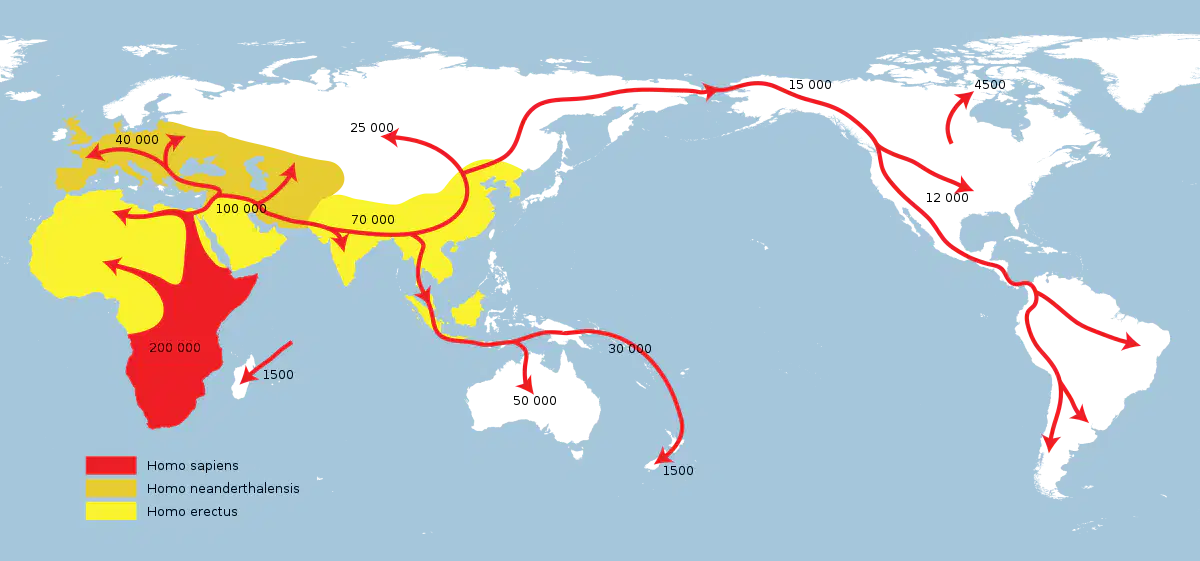
It is widely believed that human life began in___.
Iraq
Africa
Australia

How tall was Lucy?
Taller than Mr. Kirshen
3-4 feet tall
6 feet tall
5 feet tall

Early humans who moved from place to place in search of food. They would often follow herds and gather plants along the way.
hunter-gatherers
stone age
paleolithic
ice age

Which 2 groups did NOT use fire?
Homo Habilis
Homo Sapiens Sapiens
Homo Erectus
Australopithecines


Which two groups of hominids have the biggest brains?
Homo Habilis & Homo Erectus
Neanderthal & Homo Sapien Sapiens
Homo Habilis & Neanderthal
Homo Erectus & Homo Sapiens

What does AD stand for?
Before Christ
Anno Domini
After Death
Common Era
A way of telling the age of a once living thing is by____________ which is measuring the amount of C14 of it.
Cotton Dating
Carton Dating
Corbin
Carbon Dating

