
 Worksheets
Fall Practice Final
Total questions: 101
Worksheet time: 25hrs 15mins
a total of 40g of products
a total of 10g of products
a total of 80 g of products
a total of 20g of products

The nucleus of an atom contains which subatomic particles?
protons and electrons
protons and neutrons
electrons and neutrons
protons, electrons, and neutrons
negatrons
electrons
neutrons
protons
the number of protons only
the number of neutrons only
the total number of protons and neutrons
the number of protons neutrons and electrons

Positive
Negative
Neutral
Invinsible
a quantum
an isotope
an ion
an multivalent
When an atom loses an electron, it becomes a
positive ion
negative ion
neutral ion
neutral atom
Protons are
Negative
Positive
No charge
Neutrons have
Negative
Positive
No charge
Electrons are are
Negative
Positive
No charge
What is true about the isotope nitrogen-15? (check all that are true)
It has 7 protons
It has 7 electrons
It has 7 neutrons
It has a mass number of 15
It is the most common isotope of N.
A negative ion is called a(an) _______. It is the result of an atom ______ electrons.
(a)
The ion Sr2+ has:
88 neutrons
36 electrons
40 electrons
38 electrons

number of neutrons
atomic number
number of electrons
mass number
In a correctly written symbol what would be located in the "Z" position?
number of neutrons
atomic number
number of electrons
mass number
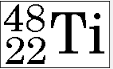
48
22
26
70

8
3
4
5
1s22s22p63s23p64s23d10
Zinc
Copper
Nickel
Germanium
1s22s22p63s2
Neon
Magnesium
Aluminum
Potassium
[Ar] 3p4
[He] 3s23p4
[Ne] 3s23p4
[Na] 3s23p3
What atom matches this electron configuration?
[Xe] 6s24f145d9
Mercury
Gold
Platinum
Thallium
2
8
6
18
4
6
8
2

true
false

Mg
Cl
C
O
What are valence electrons?
The total number of electrons in an atom
The number of electrons in the outermost shell
The number of electrons in the second shell
The number of protons in the outermost shell
What group is the most reactive non metals?
1
17
2
1
What group is the most reactive metals?
2
18
1
16
Sodium is less electronegative than potassium.
Sodium has fewer energy levels than potassium.
Sodium has a larger ionic radius than potassium.
Sodium has lower ionization energy than potassium.
H
N
Cl
Cs
Atomic radii decrease from left to right across a period and decrease from top to bottom in a group.
Atomic radii increase from left to right across a period and increase from top to bottom in a group.
Atomic radii decrease from left to right across a period and increase from top to bottom in a group.
Atomic radii increase from left to right across a period and decrease from top to bottom in a group.
fluorine
chlorine
bromine
iodine
beryllium, Be
potassium, K
titanium, Ti
yttrium, Y

Alkali metals
Halogens
Noble Gases
Alkali Earth Metals
Which of the following will have a lower ionization energy than Ca?
Magnesium (Mg)
Beryllium (Be)
Strontium (Sr)
potassium
rubidium
francium
cesium
The atoms have more mass.
The atoms have more protons.
The atoms have more energy levels
The atoms have more neutrons
Li
Ca
Fr
Cs
Argon (Ar) belongs to which family?
alkali metal
alkaline earth metal
halogen
noble gas
1
2
7
8
1
2
7
8
The is family has properties of both metals and nonmetals.
Alkali
Halogens
Nonmetals
Metalloids
Ions are formed when atoms...
lose or gain electrons
lose or gain protons
lose or gain neutrons
split in two
Ionic bonds are the _____ between positive and negative ions.
covalent bonds
metallic bonds
polar bonds
electrostatic attraction
Many ionic compounds are soluble in water.
True
False
Ionic compounds conduct electricity only when molten or dissolved because...
electrons are free to move
water is free to move
molecules are free to move
ions are free to move
covalent
ionic
cooperative
lewis
When a nonmetal gains electrons, it becomes this type of ion.
Anion
Cation
When a metal loses electrons, it becomes this type of ion.
anion
cation
negative
neutral (no charge)
positive

Is this compound ionic or covalent?
Ionic
Covalent

Is this compound ionic or covalent?
ionic
covalent

What will this atom do to become stable?
Gain 7 electrons
Lose 1 electrons
Nothing, it is already stable

What will this atom do to become stable?
Lose 2 electrons
Gain 6 electrons
Gain 8 electrons
Lose 1 electron
Nothing, it is already stable

The following properties are all characteristics of ionic compounds EXCEPT
high melting and boiling points
soft
crystal lattice structure
conduct electricity when dissolved in water
high melting point
soft
malleable
liquid at room temperature
Why do all bonds form?
for atoms to become stable
so an atom can be unstable
so the number of protons and electrons can equal.
so they can gain neutrons.
How many electrons are shared in a double bond?
2
4 pairs
6
4
How many electrons are shared in a single bond?
2 pairs
4
2
1
Matter cannot be gained or lost in a chemical reaction.
Matter can only be lost in a chemical reaction.
Matter can only be gained in a chemical reaction.
Matter can be gained and lost in a chemical reaction.
3
6
12
24
H2SO4
6
5
7
3
105 J
10.5 J
1.05 J
418 Joules
209 J
83 J
4.18 J
True
False
Water has a specific heat of 4.184 J/gºC. Wood has a specific heat of 1.760 J/gºC. What material needs more energy to raise the temperature 1ºC
Wood
Water
Both are the same
Always from cold to warm
Always from warm to cold
Both warm to cold & cold to warm
It depends on the temperature
A pot of 2400g of water at a temperature of 25˚C is heated on a stove until the water boils (100˚C). The specific heat of water is 4.184 J/(g˚C). Determine the heat energy needed to heat the water in the pot to boiling.
133.76J
43,062.2J
753,120J
1,003,200J
Potential
Energy
Kinetic
Friction
more
less
none of the above
all of the above
Potential
Kinetic
None of the above
All of the above

Potential
Kinetic
Both potential and kinetic energy
none of the above

Potential
Kinetic
Both potential and kinetic energy
none of the above
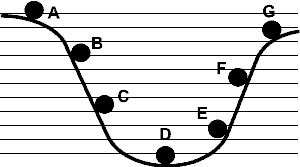
G
f
b
a
Which best describes temperature?
It is equal to the heat difference between two objects
It is proportional to the total energy in an object
It is the measurement of the average kinetic energy of particles in an object
It is equal to an object's specific heat capacity
What type of heat transfer?
Water that is boiling
Conduction
Convection
Radiation
What type of heat transfer?
A pan heating on a stove
Conduction
Convection
Radiation
What type of heat transfer?
Moves as a current
Conduction
Convection
Radiation
What type of heat transfer?
Sun rays reaching earth
Conduction
Convection
Radiation
What type of heat transfer?
Heat transfer through a solid
Conduction
Convection
Radiation
What units are used to measure heat and energy?
meters or kilometers
joules or calories
kelvin or celsius
liters or kiloliters
What does heat do when convection currents are moving?
Sinks
Rises
Stays in place
Rises
Sinks
stays in the same place
Convection currents occur when ______________________ energy transfers between a fluid.
potential
kinetic
thermal/heat
electric
Convection currents in the Earth's mantle are caused by:
Less dense hot magma moving downward
Less dense hot magma moving upward
Tectonic plate movement
More dense cooler magma moving upward
Earth's MANTLE is solid, but also fluid.
True
False
The OUTER CORE is the only truly liquid layer inside the Earth.
True
False

Where do convection cycles happen?
inner core
mantle
crust
crust, outer core, inner core, mantle
mantle, outer core, inner core, crust
crust, mantle, outer core, inner core
outer core, inner core, crust, mantle
Which is a stronger bond?
Ionic
Covalent
What is the cause of the various periodic table trends (ionization energy, electronegativity & atomic radius)
The atomic mass
the positive/negative attraction between protons and electrons
the number of neutrons of an atom
the type of element/atom
taken in
given out
In an endothermic reaction, heat is ...
taken in
given out
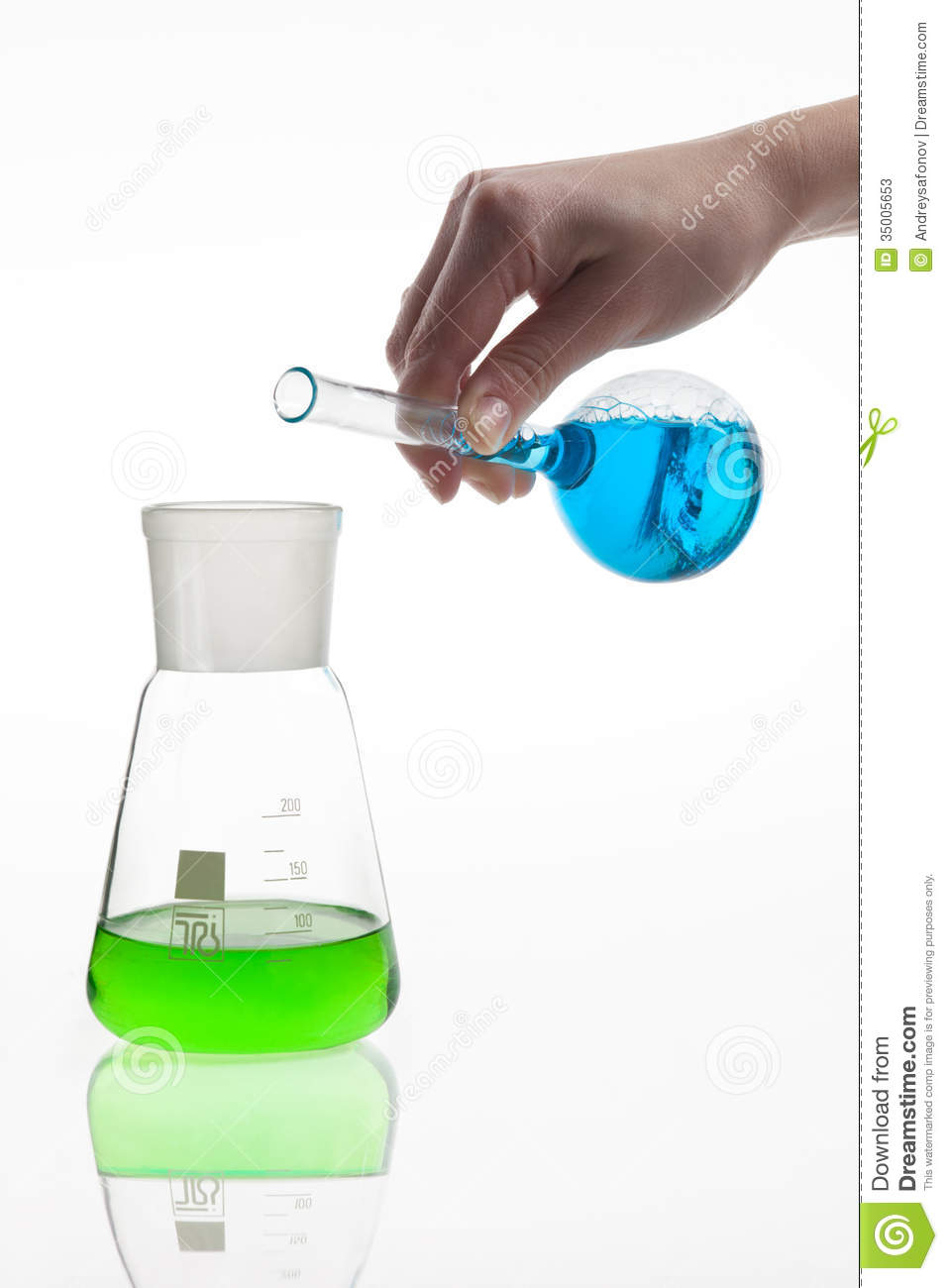
A student mixed two chemicals to allow them to react. The temperature before the reaction was 25 ° C. The temperature after the reaction was 18° C. Which of the following is true?
It is an exothermic reaction
It is an endothermic reaction

What type of reaction is this?
Exothermic
Endothermic
Kinetic
Potential
Q= m c ∆T
The units for specific heat are:
g /J C
°C/g J
kJ/g
J/g°C
0.111 J/g°C
1.29 J/g°C
0.129 J/g°C
22225.85 J
When atoms _____________ energy, their electrons move to higher energy levels. These electrons _____________ energy by emitting light when they return to lower energy levels.
lose, absorb
absorb, lose
lose, lose
absorb, absorb

Emission spectra (bright line spectra) are created when electrons relax from ___.
higher to lower energy levels.
lower to higher energy levels.
s orbitals to p orbitals.
one atom to a different atom.
In which state does an electron have the least amount of energy?
Excited state
Ground state
Orbital
Bohr model
What drives convection currents?
thermal energy & density
radiation energy
conduction energy
wind patterns and radiation

