wayground logo

Free Printable Worksheets

Font size

S
M
L
XL
Worksheets

Midterm Review 2

Total questions: 222

Worksheet time: 8hrs 3mins

Name
Class
Date
1.

What is an example of kinetic energy?

a)

A bird sitting in a tree

b)

A bouncy ball on the table

c)

A car driving on the highway

d)

A book on shelf

2.

What is an example of potential energy?

a)

A bowling ball rolling down a lane

b)

A car parked in a lot

c)

An apple falling from a tree

d)

Sunlight heating up the atmosphere

3.

Energy cannot be created or destroyed.

a)

True

b)

False

4.

What is an example of sound energy?

a)

A thermometer heating up

b)

Solar panels generating electricity

c)

A guitar string being plucked

d)

A machine in an assembly line

5.

What is nuclear energy?

a)

Energy in the nucleus of an atom

b)

Energy in the particles of an object

c)

Energy that is carried by electromagnetic waves

d)

Energy in a system of objects

6.

Which of the following show a change from kinetic energy to potential energy?

a)

A sled sliding up a hill

b)

A ball that is thrown into the air

c)

A car driving down a hill

d)

A rubber band being stretched

7.

Which of the following describes an energy transformation?

a)

When energy is lost due to friction

b)

An electric motor moving a car

c)

A solar panel powering a home

d)

A television projecting a show

8.

What transformation occurs in a toaster?

a)

Electrical to radiant

b)

Electrical to thermal

c)

Thermal to mechanical

d)

Solar to electrical

9.

What type of energy transformation occurs when a piece of wood burns?

a)

Electrical energy is released as radiant energy

b)

Stored chemical energy is released as thermal energy

c)

Mechanical energy is stored as chemical energy

d)

No transformation occurs

10.

Energy can be transformed into many different forms:

a)

True

b)

False

11.
Energy due to motion is ____________ energy. 
a)
Potential 
b)
Energy
c)
Kinetic
d)
Friction
12.
The faster an object moves, the ________ kinetic energy it has. 
a)
more
b)
less
c)
none of the above
d)
all of the above 
13.
What kind of energy is in a rock at the edge of a cliff?
a)
Potential
b)
Kinetic
14.
What kind of energy is in a moving skateboard?
a)
Potential
b)
Kinetic
15.
What kind of energy is in a stretched rubber band?
a)
Potential
b)
Kinetic
16.
What kind of energy is in a waving hand?
a)
Potential
b)
Kinetic
17.
At which point is kinetic energy greatest? 
a)
W
b)
X
c)
Y
d)
Z
18.

Batteries have _________ energy.

a)

mechanical

b)

thermal

c)

chemical

19.

The law of conservation of energy says that energy cannot be created or destroyed.

a)

False

b)

True

20.

Work is done ___________

a)

only when force is applied

on an object

cause the object to move

into the opposite direction

as applied force.

b)

only when force is applied

on an object

cause the object to move

into the same direction

as applied force.

21.

Formula of work:

a)

W = F x t

b)

W = F + t

c)

W = F / d

d)

W = F x d

22.

There are two condition of work to be done....

a)

Constant applied force on the object

b)

Object travel a distance in the same direction of force

c)

Both

23.

The Unit of force is ______________

a)

Kilogram (kg)

b)

Newton(N)

24.

Power =

a)

Work + time

b)

Work / time

c)

Work x time

25.

Unit of power is:

a)

Meters (m)

b)

Watt (W)

c)

Joules (J)

26.

Mechanical Efficiency =

a)

"Output work" / "Input work"   x 1%

b)

"Output work" / "Input work"   x 10%

c)

"Output work" / "Input work"   x 100%

27.

Efficiency is always _____________

a)

less than 1%

b)

more than 100%

c)

less than 100

d)

less than 100%

28.

A heat engine gives out 500 J of heat energy as useful work. Determine the energy supplied to it as input if its efficiency is 40%.

a)

1250 J

b)

456 890 J

29.

It took 50 Joules to push a chair 5 meters across the floor. With what force was the chair pushed?

a)

10 N

b)

0.1 N

c)

250 N

d)

1 N

30.

If 40 N of force is applied to a 10 kg cart over a distance of 50 meters, how much work is done?

a)

8000 J

b)

8000 N

c)

4000 J

d)

2000 J

31.
You do 90 joules of work in 30 seconds. How much power have you generated?
a)
30 watts
b)
3 watts
c)
120 watts
d)
270 watts
32.
If 68 Joules were necessary to move a 4 Newton crate, how far was the crate moved?
a)
272 m
b)
17 m
c)
4.05 m
d)
272 cm 
33.
If 150 Joules of work is needed to move a box 10 meters, what force was used? 
a)
1500 N
b)
15 N
c)
1.5 N
d)
150 N
34.
How much work is being done with 200 N of force over 426 meters?
a)
85,200 J
b)
45,620 J
c)
90,480 J
d)
62,329 J
35.
If 150 Joules of work is needed to move a box 10 meters, what force was used? 
a)
1500 N
b)
15 N
c)
1.5 N
d)
150 N
36.
Work is done when a weightlifter holds a barbell still above his head.
a)
True
b)
False
37.
The amount of work done in a certain amount of time is known as 
a)
work
b)
effort force
c)
resistance force 
d)
power
38.
You do 90 joules of work in 30 seconds. How much power have you generated?
a)
30 watts
b)
3 watts
c)
120 watts
d)
270 watts
39.

How much power is required to do 40.2 J of work in 3.3 s?

a)

12.18 W

b)

132.66 W

c)

43.5 W

d)

0.08 W

40.

You move a 8 N object five meters in 4 seconds. How much power have you generated?

a)

160 watts

b)

10 watts

c)

6.4 watts

d)

17 watts

41.

The purpose of a simple machine is to make work easier by allowing for a push or pull to occur over an increased distance.

a)

True

b)

False

42.

Which simple machine consists of a sloping surface, used for raising heavy objects, or sliding objects down?

a)

Wedge

b)

Inclined Plane

c)

Pulley

d)

Screw

43.

Which simple machine is an inclined plane that is wrapped around a pole?

a)

Screw

b)

Pulley

c)

Wedge

d)

Wheel-and-axle

44.

Which simple machine is this?

a)

Pulley

b)

Wheel-and-axle

c)

Inclined Plane

d)

Lever

45.

A seesaw is an example of a

a)

wedge

b)

lever

c)

inclined plane

d)

pulley

46.
Name this simple machine. 
a)
Wheel and Axle
b)
Lever
c)
Pulley
d)
Wedge
47.

The wheel and rope make up which simple machine?

a)

pulley

b)

lever

c)

wheel and axle

d)

inclined plane

48.

The Mechanical Advantage (MA) of a simple machine makes work

a)

Easier

b)

Harder

c)

No difference to the work done

d)

None Of the above

49.

You apply a force of 18 N on to the end of a lever to open a paint can lid. The

resistance of the lid is 9 N. Calculate the MA.

(a)  

50.

How can you decrease the effort force needed to push a weight to the top of the ramp?

a)

cover the surface with carpet

b)

increase the length of the ramp

c)

increase the height of the ramp

51.

Jeff is a landscaping contractor and lifts a rock weighing 600 pounds by wedging a board under the rock. Jeff weighs 150 pounds and puts all of his weight on the lever. How much mechanical advantage did the lever provide to Jeff in lifting the rock?

a)

0

b)

2

c)

4

d)

8

52.

A machine with a 5-N input force and a 25-N output force has a mechanical advantage of?

a)

2

b)

5

c)

20

53.

the force YOU exert on the machine

a)

Input

b)

output

c)

mechanical advantage

54.
The efficiency of a machine can be increased by reducing __________________________. 
a)
effort
b)
resistance friction
c)
fulcrum
d)
friction
55.

The _________ of a machine is always less than 100%.

a)

mechanical advantage

b)

friction

c)

force

d)

efficiency

56.
3. Which type of lever is this?
a)
First Class Lever
b)
Second Class Lever
c)
Third Class Lever
57.
6. What kind of lever is this?
a)
First Class Lever
b)
Second Class Lever
c)
Third Class Lever
58.
A wheelbarrow is an example of a:
a)
1st class lever
b)
2nd class lever
c)
3rd class lever
59.

What class of lever is a fishing rod?

a)

First class lever

b)

Second class lever

c)

Third class lever

60.
What class of lever is this?
a)
1st class
b)
2nd class
c)
3rd class
d)
None of the above
61.

What class lever is a nutcracker?

a)

1st

b)

2nd

c)

3rd

62.

A wedge has an output force of 25 N when given an input force of 5 N. What's the wedge's mechanical advantage?

a)

0.2

b)

5

c)

20

d)

30

63.
If the weight of the block is 10N, how much force does one have to apply to lift it using this pulley (MA=2)?
a)
2N
b)
5N
c)
10N
d)
15N
64.
What is the mechanical advantage of this pulley system?
a)
2
b)
3
c)
4
d)
5
65.

Using a lever, Joe is able to lift a 10,000 N car off of the ground with a force of 1000 N. What is the mechanical advantage of the lever (MA=Output Force/Input Force)?

a)

1

b)

10

c)

100

d)

1000

66.

What is the efficiency of the pulley with no oil?

a)

82.5%

b)

85.8%

c)

88.3%

d)

91.7%

67.

What is the mechanical advantage of the hammer in this image?

a)

3

b)

35

c)

70

d)

105

68.

To lift a refrigerator, you apply 80 N of force to a wedge. The wedge applies 1,280 N of force to the refrigerator. What is the mechanical advantage of the wedge?

a)

12

b)

14

c)

16

d)

18

69.
How can you decrease the effort force needed to push a weight to the top of the ramp? 
a)
cover the surface with carpet
b)
increase the length of the ramp
c)
increase the height of the ramp
d)
decrease the length of the ramp
70.

This 2000 N weight is raised 1 meter by pulling 4 meters of rope. What force was required to pull the rope?
a)
500 N
b)
1000 N
c)
2000 N
d)
8000 N
71.

A particular lever is 90.0% efficient. If 50.0 J of work are done on the lever, then how much work does the lever do on its load?

Efficiency = output J/ input J

a)

45 J

b)

50 J

c)

1.8 j

d)

.55 j

72.

A washing machine uses 250J of electrical energy to produce 125J of useful energy. How efficient is it?

a)

5%

b)

50%

c)

55%

d)

100%

73.

Total energy = 200J
Useful energy = 20J

Workout the efficiency of this lightbulb.
efficiency = useful enegytotal energy in ×100efficiency\ =\ \frac{useful\ enegy}{total\ energy\ in}\ \times100  

a)

100%

b)

80%

c)

40%

d)

10%

74.

If it requires 5 pounds of force to move the 16 pound weight, what is the efficiency of the system?

Effieciency = AMAIMA×100%Effieciency\ =\ \frac{AMA}{IMA}\times100\%  

a)

3.2

b)

80%

c)

0.80%

d)

125%

75.

What is the formula for kinetic energy?

a)

distance / time

b)

mass x acceleration

c)

velocity / time

d)

½(mass) x (velocity)2

e)

(mass) x (acceleration of gravity) x (height)

76.

What is the formula for gravitational potential energy?

a)

distance / time

b)

mass x acceleration

c)

velocity / time

d)

½(mass) x (velocity)2

e)

(mass) x (acceleration of gravity) x (height)

77.

How much gravitational potential energy does a 100kg (220lb.) skydiver have if they jump from 4000 meters?

a)

3920000 J

b)

294 J

c)

180000 J

d)

1225 J

78.

A 6kg cat misjudges a jump and falls 5 meters. How much gravitational potential energy does the cat have? (The cat is fine by the way.)

a)

294 J

b)

180000 J

c)

1225 J

d)

3920000 J

79.

What is the kinetic energy of a 1,600kg Mustang travelling at 15 m/s (33mph)

a)

180000 J

b)

294 J

c)

1225 J

d)

3920000 J

80.

A 50kg (100lb) person is running at 7m/s (about 16 mph). How much kinetic energy do they have?

a)

1225 J

b)

180000 J

c)

294 J

d)

3920000 J

81.

A 2kg television falls from 1 meter. How much energy does it have?

a)

19.6 J

b)

196 J

c)

2 J

d)

9.8J

82.

_____is the joining of atomic nuclei

a)

Fusion

b)

chain reaction

c)

Photosynthesis

d)

Fission

83.

_______is the splitting of atomic nuclei

a)

Fission

b)

nuclear reaction

c)

Fusion

d)

bayler reaction

84.

Which process occurs naturally in the centre of stars like the Sun

a)

Bi-multiple reaction

b)

Fission

c)

chemical

d)

fusion

85.

How is the alpha particle written in a nuclear equation?

a)

42He

b)

24He

c)

0-1e

d)

00γ

86.
Which type of nuclear radiation is being emitted here?
a)
Alpha
b)
beta
c)
gamma 
d)
none
87.
Solve this equation for alpha decay.
85209At = ___ + 24He
a)
83205Bi
b)
86209Rn
c)
81207Tl
d)
85208At
88.

Gamma rays have

a)

no mass

b)

a huge mass

c)

a small mass

d)

an average mass

89.
Solve this equation for beta decay.
614C = ___ + -10e
a)
410Be
b)
714N
c)
210He
d)
613C
90.
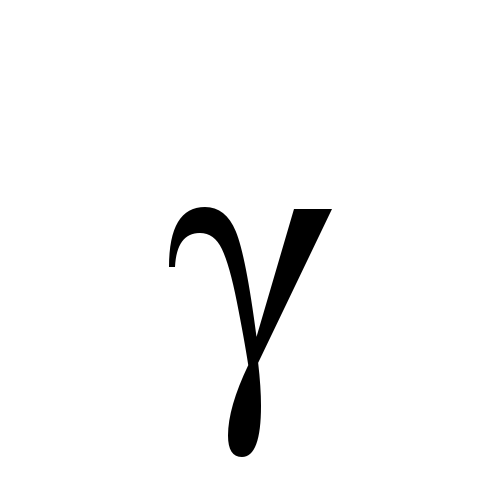
Has the symbol
a)
Alpha
b)
Beta 
c)
Gamma
91.
Has the highest penetrating power.  Can penetrate our body.  Even several cm thick of lead or several meters thick of concrete cannot stop all of it.
a)
Alpha
b)
Beta
c)
Gamma
92.

Has the lowest penetrating power.  Can only penetrate 0.05 mm into the body and can be stopped by the skin.

a)
Alpha
b)
Beta
c)
Gamma
d)

Electron capture

93.
Uranium-238  decays into  Thorium-234  by emitting .........
a)
an alpha particle
b)
a beta particle
c)
gamma rays
d)
visible light
94.
Radioactive materials have unstable...
a)
electrons
b)
protons
c)
nuclei
d)
neutrons
95.
In a correctly written symbol what would be located in the "A" position?
a)
number of neutrons
b)
atomic number
c)
number of electrons 
d)
mass number
96.
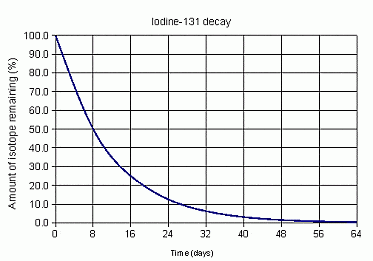
What is the half-life of iodine-131?
a)
32 days
b)
8 days
c)
16 days
d)
24 days
97.

The % of the parent isotope remaining after 2 Half Lives.

a)

50%

b)

25%

c)

12.5%

d)

6.25%

98.
What is Half-life?
a)
The amount of time it takes for some of the nuclei in a sample of the isotope to decay
b)
The amount of time it takes for half the electrons in a sample of the isotope to decay
c)
The amount of time it takes for half the nuclei in a sample of the isotope to decay
d)
the amount of time it takes to double the nuclei in a sample of the isotope to decay
99.

Which type of nuclear radiation is this?

a)

alpha emission

b)

beta emission

c)

gamma emission

d)

electron capture

100.
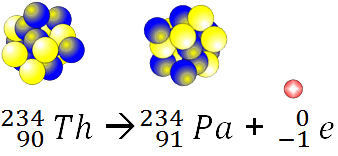
What particle completes this reaction?
a)
alpha particle
b)
beta particle
c)
gamma particle
d)
neutron
101.

A radioactive nuclide has a ____ stable nucleus than a non-radioactive nucleus of the same element.

a)

more

b)

less

c)

identical

d)

small

102.
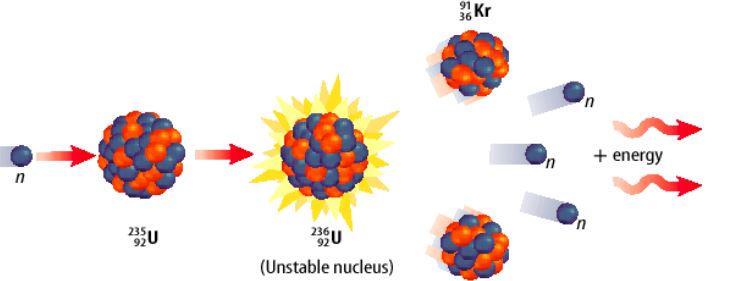
This is an example of...
a)
Fission  reaction
b)
Fusion reaction
c)
Decomposition reaction
d)
Decay
103.

What occurs in both fusion and fission reactions?

a)

Small amounts of energy are converted into large amounts of matter.

b)

Small amounts of matter are converted into large amounts of energy.

c)

Heavy nuclei are split into lighter nuclei.

d)

Light nuclei are combined into heavier nuclei.

104.

Which reaction represents fusion?

a)
b)
c)
d)
105.

Which reaction represents fission?

a)
b)
c)
d)
106.

Identify the type of nuclear decay shown here

21483Bi 0-1e + 21484Po

a)

alpha

b)

beta

c)

gamma

107.

Solve this equation.

85209At = ___ + 24He

a)

83205Bi

b)

86209Rn

c)

81207Tl

d)

85208At

108.

What type of nuclear decay is shown here

13756Ba →→ 13756Ba + γ rays

a)

alpha

b)

beta

c)

gamma

109.

What type of decay is shown here

23892U ---> 23490Th + 42He.

a)

alpha

b)

beta

c)

gamma

110.

Solve this equation for.

614C = ___ + -10e

a)

410Be

b)

714N

c)

210He

d)

613C

111.
What is the half-life of iodine-131?
a)
32 days
b)
8 days
c)
16 days
d)
24 days
112.

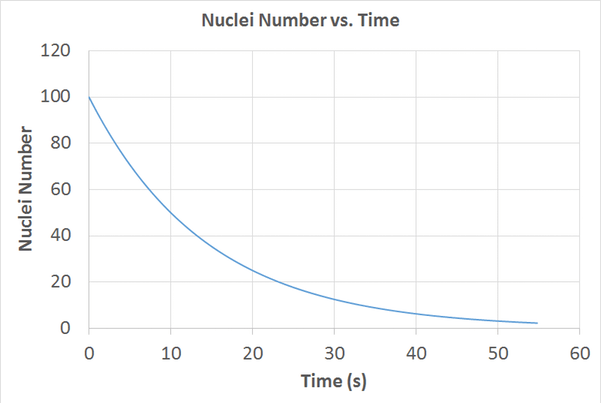
What is the Half life of this isotope?

a)

5 seconds

b)

10 seconds

c)

15 seconds

d)

20 seconds

113.

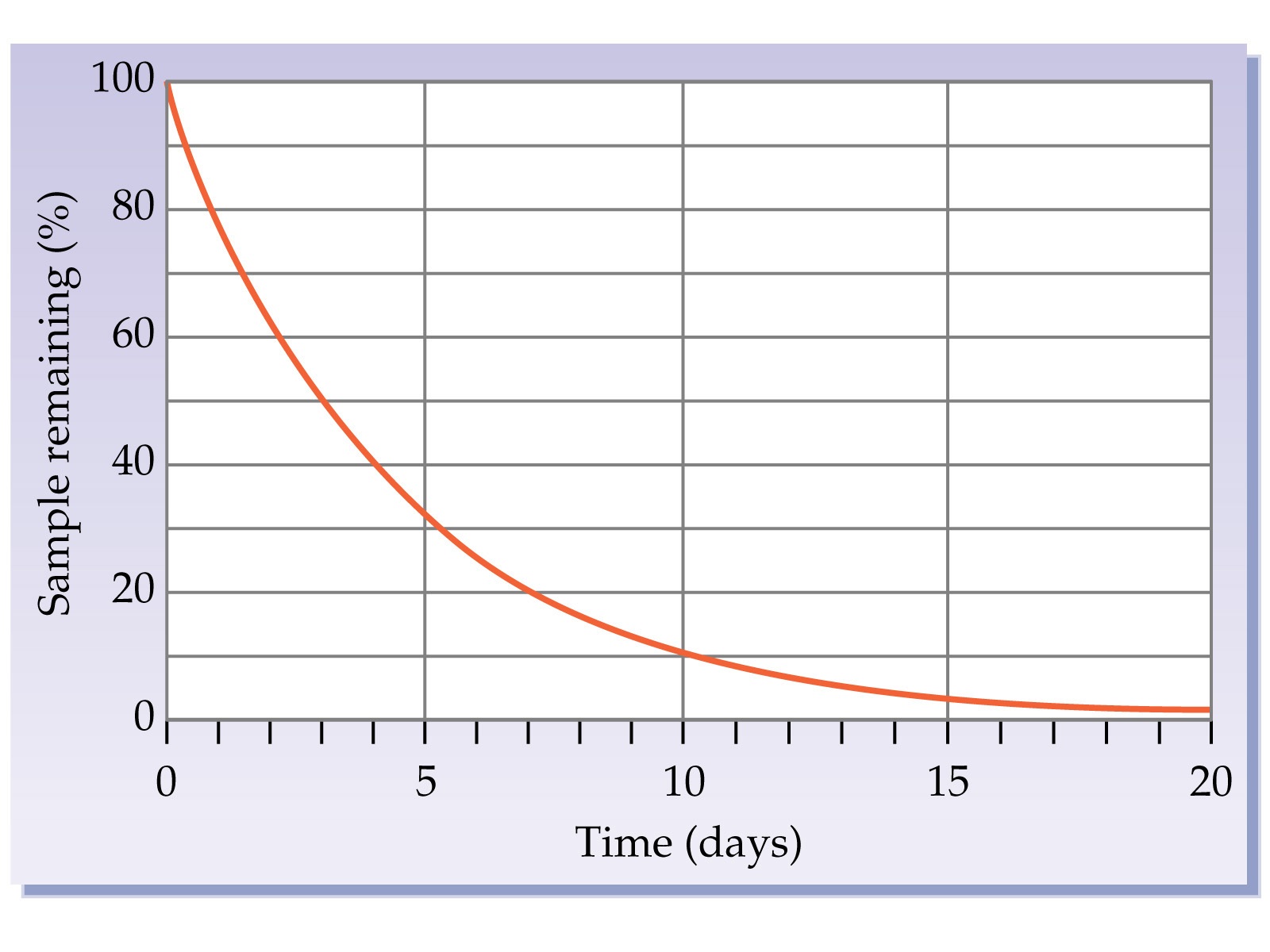
What is the Half Life of this isotope?

a)

3 days

b)

5 days

c)

8 days

d)

10 days

114.
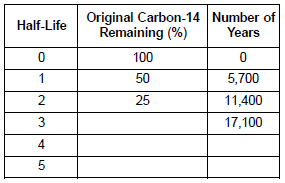
If one-fourth of the carbon-14 is remaining then how many half-lives have passed?
a)
1
b)
2
c)
3
d)
4
115.

After 22,800 years, approximately what percentage of the original carbon-14 remains?

a)

15%

b)

12.5%

c)

6.25%

d)

3.125%

116.
If 10 mg of iodine 131 is given to a patient, how much is left after 24 days? The half-life of iodine-131 is 8 days.
a)
1.25mg
b)
1.25g
c)
10g
d)
10mg
117.
The half-life of strontium-90 is 25 years. How much strontium-90 will remain after 100 years if the initial amount is 4.0 g?
a)
3.0g
b)
0.25mg
c)
0.3g
d)
0.25g
118.

After 24.0 days, 2.00 milligrams of an original 128.0 milligram sample remain. What is the half-life of the sample?

(a)  

119.

100.0 grams of an isotope with a half-life of 36.0 hours is present at time zero. How much time will have elapsed when 6.25 grams remains?

(a)  

120.

How much time will be required for a sample of H-3 to lose 75% of its radioactivity? The half-life of tritium is 12.5 years.

(a)  

121.

Scott travels north 5 miles and then goes west 3 miles before coming straight back south 2 miles. What is his DISTANCE?

a)

10 mi

b)

7 mi

c)

8 mi

d)

6 mi

122.

Distance and direction of an object's change in position from a starting point (HINT: Direct path from starting point to end point)

a)

displacement

b)

distance

c)

motion

d)

reference point

123.

Jasmine runs exactly 3 laps around a 400 meter track. What is the DISPLACEMENT?

a)

800 m

b)

400 m

c)

0 m

d)

1200 m

124.

David walks 3 km north, and then turns east and walks 4 km. What is the DISTANCE?

a)

7 km

b)

3 km

c)

4 km

d)

1 km

125.

What does magnitude mean?

a)

amount or size

b)

vector

c)

frame of reference

d)

motion

126.

Displacement is a vector because it has magnitude and ______________:

a)

meters

b)

direction

c)

motion

d)

frame of reference

127.
A scalar is a magnitude _____.
a)
With direction.
b)
Without direction.
128.

How do scalars and vectors differ?

a)

scalers have units

b)

scalers have direction

c)

vectors have units

d)

vectors have direction

129.

If you walk across town, taking many turns, your displacement is the

a)

total distance that you traveled.

b)

distance and direction of a straight line from your starting point to your ending point.

c)

distance in a straight line from your starting point to your ending point.

d)

direction from your starting point to your ending point.

130.

You travel 30 km West of your home and then turn around and go East for 10 km. What is your displacement from your home.

a)

20 km

b)

20 km, West

c)

40 km

d)

40 km, West

131.

Vocabulary Check:

What is the difference between speed and velocity

a)

Speed is based on time and velocity is not

b)

Velocity has distance and speed does not

c)

Speed has direction

d)

Velocity has direction

132.

Juan ran 72 m across the football field in 8 seconds. What was his speed?

a)

8 m/s

b)

576 m/s

c)

7 m

d)

9 m/s

133.

Steve runs 20 m North in 4 seconds. What is his velocity

a)

5 m/s

b)

4 m/s south

c)

5 m/s south

d)

5 m/s north

134.

If a car is going 125 m/s for 13 seconds, how far does it go?

a)

9.61 meters

b)

1625 meters

c)

1562 seconds

d)

138 m/s

135.

A boat is going 87 m/s. How long will it take him to go 1 km? (Hint: convert km to meters)

a)

.087 seconds

b)

11.49 seconds

c)

.0087 seconds

d)

87,000 seconds

136.
What does this graph represent?
a)
Constant Speed
b)
Acceleration
c)
Deacceleration
d)
Not moving
137.
What two measurements are necessary for calculating speed?
a)
Mass and time
b)
Temperature and mass
c)
Mass and distance
d)
Distance and time
138.

How long does it take a car to travel 40m at 12m/s?

a)

4.8 s

b)

480 s

c)

3.33 s

d)

33.3 s

139.
Which graph shows: a car slowing down and coming to a stop.
a)
A
b)
B
c)
C
d)
D
140.

the unit of acceleration is

a)

(m/s2)

b)

jouls

c)

m

d)

s

141.

A negative acceleration means that your object is  

a)

constant

b)

speeding up

c)

at rest

d)

slowing down

142.

A positive acceleration means that your object is

a)

at rest

b)

speeding up

c)

moving

d)

slowing down

143.

When is an object under uniform acceleration?

a)

none of the following

b)

when the direction is straight

c)

when the velocity change is constant per unit time

d)

when the time is constant

144.

A bus starts from rest and accelerates to 14 m/s in 4 s. What is the average acceleration of the bus?

a)

3.5 m/s2

b)

5.9 m/s2

c)

10.5 m/s2

d)

24 m/s2

145.

What is the acceleration during the first 5 seconds?

a)

2 m/s2

b)

4 m/s2

c)

5 m/s2

d)

10 m/s2

146.

A change in speed and/or direction...

a)

Speed

b)

Velocity

c)

Acceleration

d)

Force

147.

Speed in a given direction...

a)

Speed

b)

Velocity

c)

Acceleration

d)

Nebula

148.

At what speed would a car have to move in order to travel 20 kilometers in 2 hours.

a)

5 km/hr

b)

10 km/hr

c)

20 km/hr

d)

40 km/hr

149.

A helicopter flies west 200 miles in 2 hours. What is its velocity?

a)

99 mph

b)

100 mph south

c)

400 mph south

d)

297 mph south

150.

Using the graph, which person finished the race first?

a)

Biker

b)

Runner

c)

Walker

d)

All of these finished at the same time.

151.

Using which point shows the object at speeding UP?

a)

from A to B

b)

from C to D

c)

from D to E

d)

from E to F

152.

As the ball falls towards the ground, its velocity

a)

zero

b)

decreases

c)

at rest

d)

increases

153.

Which of the following objects is accelerating?

a)

A car driving in a northwest at a constant speed of 35 mph.

b)

A car driving southwest at a constant speed of 35 mph.

c)

A car driving in a circle at a constant speed of 35 mph.

Back

d)

A car driving south at a constant speed of 45 mph.

154.

What is Newton's 1st Law?

a)

For every action there is an equal and opposite reaction.

b)

An object at rest will stay at rest, an object in motion will stay in motion, unless an unbalanced force acts upon it.

155.

Which of the following is an example of balancing forces?

a)

A Book resting on the table.

b)

A pencil is knocked off the desk.

156.

What is Newton's 2nd Law?

a)

For every action there is an equal and opposite reaction.

b)

Acceleration depends on two variables, the mass of the object and the amount of force.

157.

What explains why objects resist changes in their state of motion?

a)

gravity

b)

inertia

c)

force

d)

friction

158.

Newton's first law states that an object must travel at a constant speed and in ___________, unless an unbalanced force acts on it.

a)

in a circle

b)

a wave like manner

c)

the same direction

159.

Looking at the image. Decide if this is balanced or unbalanced.

a)

Unbalanced

b)

Balanced

160.

Looking at the image. Decide if this is balanced or unbalanced.

a)

Unbalanced

b)

Balanced

161.

The force that prevents a ball rolling on the ground from continuing on it's path forever is...

a)

Friction

b)

Gravity

c)

Inertia

162.
An empty truck and a fully loaded truck are next to each other at a traffic light. When the light turns green, the lighter truck increases speed more quickly. Which of these best explains this situations
a)
Newton's first law
b)
Newton's second law
c)
Newton's third law
d)
Conservation of momentum
163.
The combination of all the forces acting on an object is the...
a)
net force
b)
action force
c)
reaction force
d)
balance force
164.

A ______ is a push or pull on an object.

a)

force

b)

speed

c)

acceleration

d)

velocity

165.
F=MA
If you are pushing a 1000 kg car at 0.5 m/s2, how many newtons would that be? 
a)
2000 N
b)
60N
c)
500 N
d)
12 N
166.
What Unit do we Measure Force in? 
a)
Newtons
b)
Joules
c)
Force
d)
Don't know
167.
F=MA 
Going down a hill a 12 kg sled has a force of 36 N. What is it's acceleration? 
a)
2 m/s2
b)
3 m/s2
c)
432 m/s2
d)
0.33 m/s2
168.
F=Ma
An object of mass 300 kg is observed to accelerate at the rate of 4 m/s2.  Calculate the force required to produce this acceleration. 
a)
75 N
b)
.013 N
c)
1200 N
d)
2 N
169.
F=Ma
A force of 200 N is exerted on an object of mass 40 kg that is located on a sheet of perfectly smooth ice.Calculate the acceleration of the object. 

a)
5 m/s2
b)
8000 m/s2
c)
0.2 m/s2
d)
1.32 m/s2
170.
What is the net force?
a)
40 N left
b)
0 N Balalnced
c)
400 N right
d)
40 N right
171.
The momentum of an object depends upon the object's ___________&_____________.  
a)
size and shape
b)
mass and speed
c)
mass and veloctiy
d)
mass and energy
172.
The equation to calculate momentum is
a)
p=mv
b)
p=1/2mv2
c)
p=mgh
d)
p=mg
173.
Which has more momentum: a car stopped at a red light or a bike moving at 15 mph?
a)
car
b)
bike
c)
they are equal
d)
cannot determine using the info provided
174.
Momentum is a ____________________ quantity
a)
science
b)
scalar
c)
vector
d)
energy
175.
In any collision (crash) the ______ is ALWAYS constant
a)
Total Momentum
b)
total speed
c)
total Velocity
d)
Energy
176.
When two objects collide, the Pbefore is ____________ the Pafter.
a)
more than 
b)
less than 
c)
equal to
d)
unrelated to
177.
When the speed of an object is doubled, its momentum
a)
remains unchanged in accord with the conservation of momentum.
b)
doubles
c)
quadruples
d)
decreases
178.
What is the unit for momentum?
a)
m/sec
b)
kg/sec
c)
kg/m
d)
kg m/sec
179.
A 50 kg ball rolls down the street at 5 m/s. Calculate the momentum of the ball. 
a)
55 kg*m/s
b)
100 kg*m/s
c)
250 kg*m/s
d)
500 kg*m/s
180.
A 2.5 kg ball moving at 5 m/s collides with a 2.5 kg stationary ball in a perfectly elastic collision.  What is the velocity of the second ball after the collision? 
a)
5 m/s
b)
2.5 m/s
c)
10 m/s
d)
7.5 m/s
181.
A 9300 kg railroad car traveling at a velocity of 5 m/s strikes a second boxcar that weighs 5000 kg at rest. At what speed will the second boxcar move?
a)
18.6 m/s
b)
9.3 m/s
c)
7.5 m/s
d)
1.86 m/s
182.
Which object listed below has the greatest momentum?
a)
A 0.05 kg object rolling at 0.2 m/s.
b)
A 0.15 kg object rolling at 2 m/s.
c)
A 0.15 kg object rolling at 1 m/s
d)
A 0.4 kg object rolling at 2 m/s.
183.
Determine the momentum of 1000-kg car moving northward at 20 m/s......... 
a)
20000 N
b)
20000 Joules
c)
20000 Kg * m/s
d)
20000 kg * m/s north
184.
A 0.250 kg cart moving at 0.400 m/s has how much momentum?
a)
0.1 kg-m/s
b)
1 kg-m/s
c)
10 kg-m/s
d)
100 kg-m/s
185.
Two football players with mass 75 kg and 100 kg run directly toward each other with speeds of 6 m/s and 8 m/s respectively. If they grab each other as they collide, the combined speed of the two players just after the collision would be:
a)

2 m/s 

b)

3.4 m/s 

c)

4.6 m/s 

d)

7.1 m/s

186.
A biker with a mass of 75 kg moves along the path with a constant velocity of 5 m/s. What is the biker's momentum?
a)
25 m/s
b)
375 m/s
c)
25 kg m/s
d)
375 kg m/s
187.
In a physics experiment, two carts of mass 1.5 kg each are rolled towards each other.  The orange cart has a velocity of 2 m/s and the blue cart has a velocity of -1m/s.  The carts stick together when they collide.  Calculate their final speed.
a)
0.5 m/s
b)
1.0 m/s
c)
0.33 m/s
d)
0.67 m/s
188.
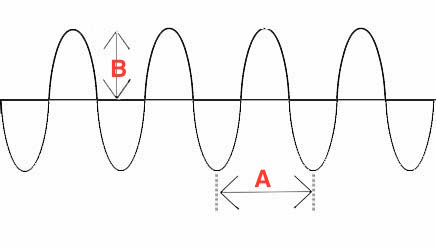
What property of this wave is represented by the letter "A"
a)
amplitude
b)
crest
c)
trough
d)
wavelength
189.
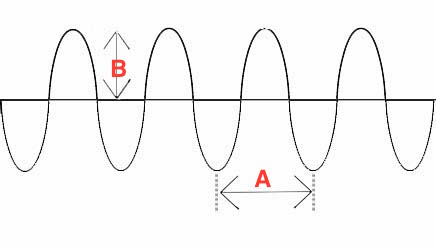
What property of the wave is represented by the letter "B"?
a)
amplitude
b)
crest
c)
trough
d)
wavelength
190.
The highest point on a wave is:
a)
the crest
b)
the trough
c)
the top
d)
the coast 
191.
The lowest point on a wave is the:
a)
Amplitude
b)
Crest
c)
Trough
d)
Wavelength
192.
The type of waves that require medium to pass:
a)
Mechanical Waves
b)
Electromagnetic Waves
193.
What types of waves carry energy at a right angle or perpendicular to the direction of the energy flow?
a)
Longitudinal waves
b)
Transverse waves
c)
Sound waves
d)
P-waves
194.
What do waves carry from place to place?
a)
Energy, but not matter or particles
b)
Energy and matter or particles
c)
Matter or particles but not energy
d)
Neither energy nor matter or particles
195.
The most dense part of a longitudinal wave.
a)
Density
b)
Compression
c)
Rarefaction
d)
Amplitude
196.
What are the parts of a longitudinal wave?
a)
Compressions and rarefactions
b)
Crests and troughs
c)
Compressions and crests
d)
Rarefactions and troughs
197.
Which wave is pictured?
a)
Transverse
b)
Longitudinal
c)
Both
d)
Neither
198.
Sound is an example of which type of wave?
a)
Transverse
b)
Longitudinal
c)
Both
d)
Neither
199.
How would you describe the movement of a transverse wave?
a)
Up and down
b)
Back and forth
c)
In zigzags
d)
Linear
200.
Light is an example of which type of wave?
a)
Transverse
b)
Longitudinal
c)
Both
d)
Neither
201.
Which wave travels parallel in relation to a medium?
a)
Transverse
b)
Longitudinal
c)
Both
d)
Neither
202.
Sound needs a medium to travel through.  What is a medium?
a)
solid, liquid, gas
b)
open space
c)
waves
d)
nothing
203.
Constructive interference will cause the wave to 
a)
Increase its displacement
b)
Decrease its displacement 
c)
Make its displacement stay the same
204.
A standing wave appears to be staying in one place.
a)
True
b)
False
205.
Destructive interference is 
a)
When the two waves affect  each other in a negative way 
b)
The two waves add together and produce a single wave of greater amplitude
c)
Are in phase 
206.
Constructive interference is
a)
When two waves affect one another in  a positive way.
b)
Produce a single wave of greater amplitude (add together)
c)
Both
207.
What is interference?  
a)
occurs when two or more waves overlap and combine 
b)
occurs when two or more waves combine and neutralize each other 
c)
when one waves travels alone
208.
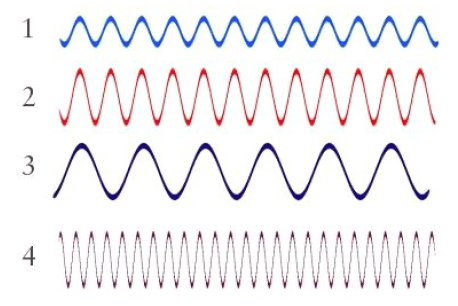
Which wave in the diagram has the greatest wavelength?
a)
1
b)
2
c)
3
d)
4
209.
Which wave behavior do noise cancelling headphones use?
a)
diffraction
b)
refraction
c)
constructive interference
d)
destructive interference
210.
The high or low pitch of a sound is related to the ___________ of the wave
a)
decibel
b)
amplitude
c)
frequency
d)
rest position
211.
How loud or soft a sound is, is related to the _____________ of the wave
a)
amplitude
b)
frequency
c)
wave length
d)
rest position
212.
If two sound waves differ in intensity, the wave that is more intense sounds________
a)
softer
b)
louder
c)
higher pitch
d)
lower pitch
213.
The changing pitch of a police siren as the car moves past you
a)
sound interfernce
b)
doppler effect
c)
constructive interference
d)
destructive interference
214.
In a standing wave, destructive interference creates points of zero amplitude called nodes. Which letters represent this.
a)
A,E,F
b)
B,D,F
c)
B,C,D
d)
A,C,F
215.
In a standing wave, constructive interference creates larger amplitudes.  The points of maximum amplitude are antinodes.  The letters for these are?
a)
B,C,D
b)
A,E,F
c)
A,C,F
d)
B,D,E
216.
Resonance occurs when
a)
an object is forced to vibrate at its natural frequency.
b)
sound changes speed in going from one medium to another.
c)
the amplitude of a wave is amplified.
d)
sound makes multiple reflections
217.
The medium (or tension) through which a wave travels affects its...
a)
Wavelength
b)
Speed
c)
Amplitude
218.
Choose the word that belongs in the sentence. A sound wave is a type of ______________ wave.
a)
parallel
b)
transverse
c)
longitudinal
d)
perpendicular
219.
A guitarist strums two strings on a guitar. The first string vibrates more quickly than the second string. What is true about the pitch of the string?
a)
The first string has a higher pitch than the second string
b)
The second string has a higher pitch that the first string.
c)
The first string and the second string have the same pitch.
d)
The pitch of the second string depends on the pitch of the first string.
220.
Sound travels fastest through what type of medium?
a)
pond water
b)
cold air
c)
iced tea
d)
wooden desk
221.
What is "?" ?
a)
rarefaction
b)
compression
c)
expansion
d)
reflection
222.
The image describes what kind of interference?
a)
constructive 
b)
destructive 
c)
both, resulting in a beat
d)
none, resulting in a beat