Wayground logo

Free Printable Worksheets

Font size

S
M
L
XL
Worksheets

Semester 1 Exam

Total questions: 101

Worksheet time: 2hrs 41mins

Name
Class
Date
1.

What piece of equipment do you need each time you work with acids, bases, and open flames?

a)

Beaker

b)

Electronic balance

c)

Safety goggles

d)

Buret

2.
a)

beaker

b)

cylinder

c)

funnel

d)

florence flask

3.

The (image) may be used as a beaker cover or evaporating very small amounts of liquids.

a)

glass plate

b)

evaporating dish

c)

mortar

d)

watch glass

4.

What is the name of this piece of glassware laboratory equipment.

a)

erlenmeyer flask

b)

bunsen flask

c)

wide-mouth bottle

d)

florence flask

5.
Jill is getting ready to do a science experiment with some other students. Jill wants to be safe during the experiment. Which of these should Jill not do?
a)
tie her loose hair back
b)
take off her long necklace
c)
make sure she is wearing shoes that completely cover her feet
d)
get a snack ready to eat during the experiment
6.
What is the best way to make sure a measurement is accurate (correct)?
a)
make a good estimate
b)
have someone else measure for you
c)
take the measurement several times
d)
compare your guess with your measurement
7.
What process to smell chemicals is this person doing
a)
sniffing 
b)
snorting 
c)
wafting 
d)
wifting 
8.
If you think glassware is HOT:
a)
You should touch it to check
b)
You should put it in cold water
c)
You should throw it away
d)
You should never touch it to check
9.
Which instrument is not a tool to measure capacity of a liquid?
a)
graduated cylinder
b)
beaker
c)
measuring cup
d)
thermometer
10.

If glass breaks in the lab you should...

a)

clean it up and put it in the trash can

b)

just leave it and walk away

c)

tell the teacher so they can clean it up

d)

blame it on your friend and laugh at them

11.

The number of significant figures in the measurement 0.000305 kg is

a)

two.

b)

three.

c)

seven.

d)

six.

12.

Written in scientific notation, the measurement 0.000065 cm is

a)

65 x 10-4cm.

b)

6.5 x 10⁻⁵cm.

c)

6.5 x 10⁻⁶ cm.

d)

6.5 x 10⁻⁴ cm.

13.

To determine the number of significant digits in a measurement, follow the rule that

a)

all zeros are significant.

b)

all nonzero digits are significant.

c)

zeros between digits are not significant.

d)

final digits less than 5 are not significant.

14.

The measurement 0.0255 g, rounded off two significant figures, would be

a)

0.02 g.

b)

0.025 g.

c)

0.026 g.

d)

2.5 x 10² g.

15.

What is the product of 100.0 g and 0.010 g expressed in scientific notation and written with the correct number of significant figures?

a)

10001 x 10-2 g

b)

1.0 x 10² g

c)

1.000 x 10² g

d)

1.00 x 10² g

16.

Which of the following is the shortest length?

a)

1m

b)

1 mm

c)

1cm

d)

1km

17.

How many significant figures are in 5.00 ?

a)

1

b)

2

c)

3

d)

4

e)

5

18.

The density of an object is 2.88 g/cm3 . The volume is 5.66 ml. What is the mass of the object?

a)

1.97 g

b)

1.97 ml

c)

16.3 g

d)

16.3 ml

19.

An irregularly shaped object is placed in a graduated cylinder filled with 25 ml of water. The water rises to 34 ml. What is the volume of the solid.

a)

25 ml

b)

34 ml

c)

9 ml

d)

There is no way to tell.

20.

A 35 ml sample of a liquid has a mass of 70 g. What is the density?

a)

2 g/ml

b)

0.5 g/ml

c)

105 g/ml

d)

35 g/ml

21.

Which phrase best describes a compound?

a)

A substance made of two or more elements that are chemically bonded.

b)

A molecule formed by atoms of the same element.

c)

Another word for atom.

d)

Any substance that can be split apart.

22.

Which of these shows SI unit prefixes arranged in order from smallest to largest?

a)

centi, milli, kilo

b)

milli, centi, kilo

c)

kilo, milli, centi

d)

kilo, centi, milli

23.

The SI base unit for mass is the

a)

gram

b)

cubic centimeter

c)

meter

d)

kilogram

24.

Convert 0.5 kg to g.

a)

0.0005

b)

0.005

c)

500

d)

5000

25.

How many centimeters are in a meter?

a)

1000

b)

10

c)

100

d)

1

26.

In division and multiplication, the answer should have the same number of significant figures as the

a)

number in the calculation with the fewest significant figures.

b)

number in the calculation with the most significant figures.

c)

average number of significant figures in the calculation.

d)

total number of significant figures in the calculation.

27.

The dimensions of rectangular solid are measured to be 1.27 cm, 1.3 cm, and 2.5 cm. The volume should be recorded as

a)

4.128 cm3.

b)

4.12 cm3.

c)

4.13 cm3.

d)

4.1 cm3.

28.

Expressed in scientific notation, 0.0930 m is

a)

93 X 10-3 m.

b)

9.3 X 10⁻³ m.

c)

9.30 X 10⁻² m.

d)

9.30 X 10⁻⁴ m.

29.
240 cm = ___________ m
a)
2400
b)
24
c)
2.4
d)
0.24
30.
15.6 L = ___________ mL
a)
15,600
b)
156,000
c)
1,560,000
d)
15,600,000
31.
55 mm = ___________ cm
a)
0.55
b)
5.5
c)
550
d)
5,500
32.

Use the conversion chart in your notes: (1 yard =3 feet)

39 yd = _____ft

a)

13 ft

b)

117 ft

c)

1,131 ft

d)

3.5 ft

33.

The backyard is 27 feet wide. How many yards wide is the backyard?

conversion factor is 1 yard = 3 feet

a)

81 yd

b)

30 yd

c)

24 yd

d)

9 yd

34.

Jimmy jogged for a total of 6.8 miles last week. How many feet did Jimmy jog last week? (1 mile - 5,280 feet)

a)

35,804 feet

b)

35,376 feet

c)

3,590 feet

d)

35,904 feet

35.
A solid is
a)
a substance that does not have a definite shape or volume
b)
a substance with a definite volume, but no definite shape
c)
a substance with a definite shape and volume
d)
a substance whose particles glide past one another
36.
Combination of two or more pure substances that are not chemically combined
a)
compound          
b)
atom
c)
mixture 
d)
element
37.

A pure substance that cannot be broken down into other substances by chemical or physical means.

a)

compound

b)

molecule

c)

mixture

d)

element

38.
A mixture that is uniform and well mixed is _____.
a)
homogeneous
b)
hetergeneous
c)
pure substance
d)
compoud
39.
A student added sugar to a cup of water and stirred with a spoon.  After 10 minutes you could not see the sugar anymore.  What happened to the sugar?
a)
the sugar evaporated
b)
the sugar dissolved
c)
the sugar was magnetic
40.
Which property of matter does this wire represent?
a)
Density
b)
Solubility
c)
Melting Point
d)
Ductility
41.
The ability of a substance to dissolve in a liquid, such as water.
a)
Conductivity
b)
Ductility
c)
Solubility
d)
Boiling point
42.
Which of the following tells you that a chemical change may have occurred?
a)
Change Shape
b)
Melting
c)
Vaporizing
d)
Change in color
43.
What happens in ALL chemical changes?
a)
Change in state of matter
b)
A new substance is formed
c)
Bubbles are produced
d)
An explosion
44.

Which one is a chemical property?

a)

flammability

b)

combustibility

c)

ability to rust

d)

all of the above

45.
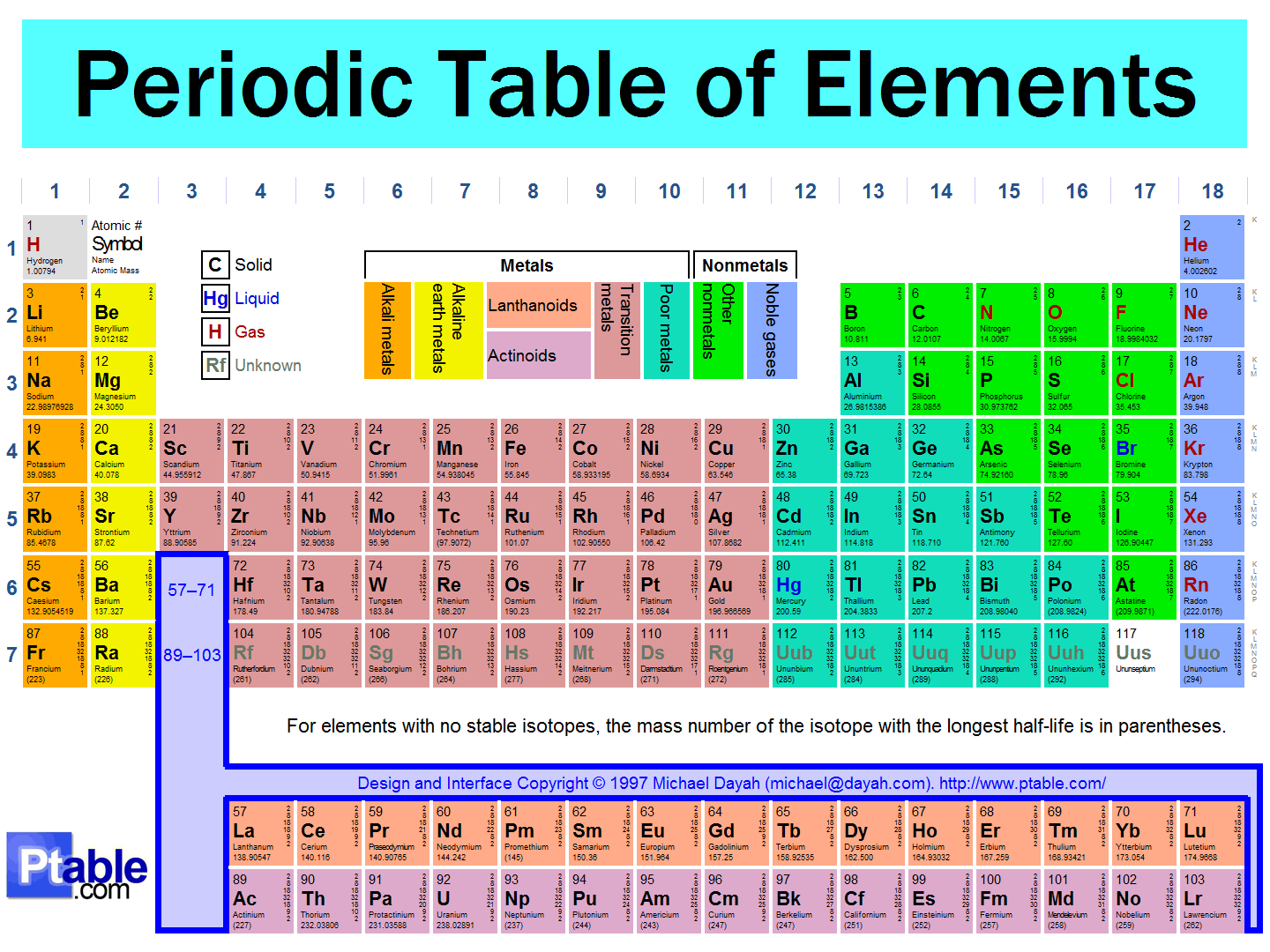
The horizontal row on the periodic table is called a
a)
group
b)
family
c)
period
d)
atomic number
46.
A vertical column is called...
a)
group
b)
tower
c)
period
d)
crew
47.
What is the chemical symbol for Lithium?
a)
H
b)
He
c)
Li
d)
N
48.
Pure forms of these elements are stored in oil so they won't react with oxygen and water in the air.
a)
Alkali Metals
b)
Alkaline-earth metals
c)
Halogens
d)
Noble Gases
49.
Most of the elements on the periodic table are classified as _____.
a)
Metals
b)
Nonmetals
c)
Metalloids
d)
Periods
50.
The atomic number tells you what?
a)
number of electrons
b)
number of protons
c)
number of neutrons
d)
both electrons and protons in an atom.
51.
How many protons are in Beryllium?
a)
4
b)
9
c)
5
d)
2
52.
Why is water NOT on the periodic table?
a)
It is naturally occuring
b)
It is a compound, not an element
c)
It exists as a solid, a liquid, and a gas
d)
Its chemical formula doesn't fit
53.
What is the heaviest gas on the periodic table?
a)
Hydrogen
b)
Argon
c)
Neon
d)
Radon
54.
What is the atomic mass of Neon?
a)
10
b)
20.18
c)
10.18
d)
20.18
55.
How many neutrons are in a Gold atom?
a)
79
b)
196
c)
118
d)
275
56.
What's a valence electron?
a)
electrons in the second energy level
b)
electrons in the outermost energy level
c)
the atomic number
d)
electrons in the first level
57.
How many electrons do atoms need to be stable?
a)
1
b)
2
c)
6
d)
8
58.
How many electrons does potassium K contain? (click to see image)
a)
19
b)
39
c)
20
d)
40
59.

JJ Thomson was credited for the discovery of the:

a)

Center of the universe

b)

Proton

c)

Electron

d)

Neutron

60.

The first universally accepted theory on atoms was proposed in 1803 by:

a)

Winston Churchill

b)

John Dalton

c)

James Bond

d)

J J Thomson

61.

Which two subatomic particles can be found in the nucleus of an atom?

a)

Ribosomes and endoplasmic reticulum

b)

Neutrons and protons

c)

Electrons and protons

d)

Protons and alpha particles

62.
What scientist is best known for his "Plum Pudding" model of the atom?
a)
J.J. Tomson
b)
Ernest Rutherford
c)
John Dalton
d)
Democritus
63.

Rutherford discovered this part of the atom:

a)

Nucleus

b)

Neutron

c)

Proton

d)

Electron

64.

How do you calculate the number of neutrons? *

a)

Mass = Atomic number - Neutrons

b)

Mass - Atomic number = Neutrons

c)

Atomic number = Neutrons

65.
Which is a halogen?
a)
Helium
b)
Chlorine
c)
Oxygen
d)
Neptune
66.
Which is an alkali metal?
a)
Magnesium
b)
Iron
c)
Sodium
d)
Europium
67.
As you move across the periodic table from left to right, the atomic radius decreases.  This is because - 
a)
the number of protons increases, so attraction to electrons increases
b)
the number of energy levels increases
c)
the number of electrons increases
d)
the atomic mass increases
68.
Francium (Fr) has the lowest ionization energy in Group 1 because - 
a)
it has the smallest number of valence electrons
b)
it has the greatest atomic mass
c)
it has the greatest number of protons, so it attracts its electrons the strongest
d)
its 1 valence electron is very far from the nucleus, so little energy is needed to remove it
69.
How do the following two elements bond together?
Cr3+  O2-         
a)
CrO
b)
Cr3O2
c)
Cr2O3
d)
CrO3
70.
What is the formula for magnesium chloride?
a)
MgCl
b)
Mg2Cl
c)
MgCl2
d)
Mg(ClO3)2
71.
What is the formula for copper(I) sulfate?
a)
Cu(SO3)
b)
Cu(SO4)
c)
Cu2(SO3)
d)
Cu2(SO4)
72.
nitrous acid
a)
H2NO3
b)
HNO3
c)
HNO2
d)
H2NO2
73.
H2SO3
a)
sulfuric acid
b)
hydrosulfuric acid
c)
sulfurous acid
d)
persulfuric acid
74.
What is the name of the compound Li(OH)?
a)
lithium hydrogen oxide
b)
lithium hydroxide
c)
lithium hydride
d)
lithium oxide hydride
75.
Name this compound: 
Ca(CO3)
a)
Calcium carbon oxide
b)
Calcium (II) carbonate
c)
Calcium carbonate
d)
Carbonate (I) calcide
76.
The name of FeCl₂ is
a)
iron chloride
b)
iron (II) chloride
c)
iron (I) chloride
d)
iron dichloride
77.
The name of Cu₃N₂ is
a)
copper (III) nitride
b)
copper (II) nitride
c)
copper nitride
d)
tricopper dinitride
78.
What is the formula for Copper II Sulfide?
a)
CuS
b)
Cu₂S
c)
CuS₂
d)
CuSO₃
79.
Name the Compound:
SnO2
a)
tin(II) oxide
b)
tin(IV)oxide
c)
tin(II)oxegen 
d)
tin oxide
80.
Name that Compound:
Phosphorous trichloride
a)
PCl3
b)
P3Cl
c)
P3Cl3
d)
PCL
81.
What is the molar mass of NaCl?
a)
58.45g/mol
b)
28g/mol
c)
12g/mol
d)
6.02 x 10²³
82.
What would be the mass of 1.5mol H2O
a)
20
b)
27
c)
32
d)
40
83.
How many molecules are in 32.4 grams of phosphorous pentoxide?
a)
1.76 x 10²³ molecules
b)
0.29 moles
c)
1.76 x 10²² molecules
d)
0.29 molecules
84.

How many grams of carbon dioxide are in 0.5 mol of carbon dioxide?

a)

11 g

b)

44.009 g

c)

22.005 g

d)

88.018 g

85.

How many moles of Francium (Fr) are in 7.4 x 1026 atoms?

a)

1.23 moles

b)

44.56 x 1049 moles

c)

87 moles

d)

1.23 x 10³ moles Fr

86.

The vertical (up and down) columns in the Periodic Table are called

a)

groups

b)

towers

c)

periods

d)

atomic numbers

87.

Elements in a .................. have similar chemical properties.

a)

period

b)

group

c)

row

88.

Which group of the periodic table is composed of inert (not reactive) gases?

answer choices

a)

alkali metals

b)

alkaline earth metals

c)

halogens

d)

noble gases

89.
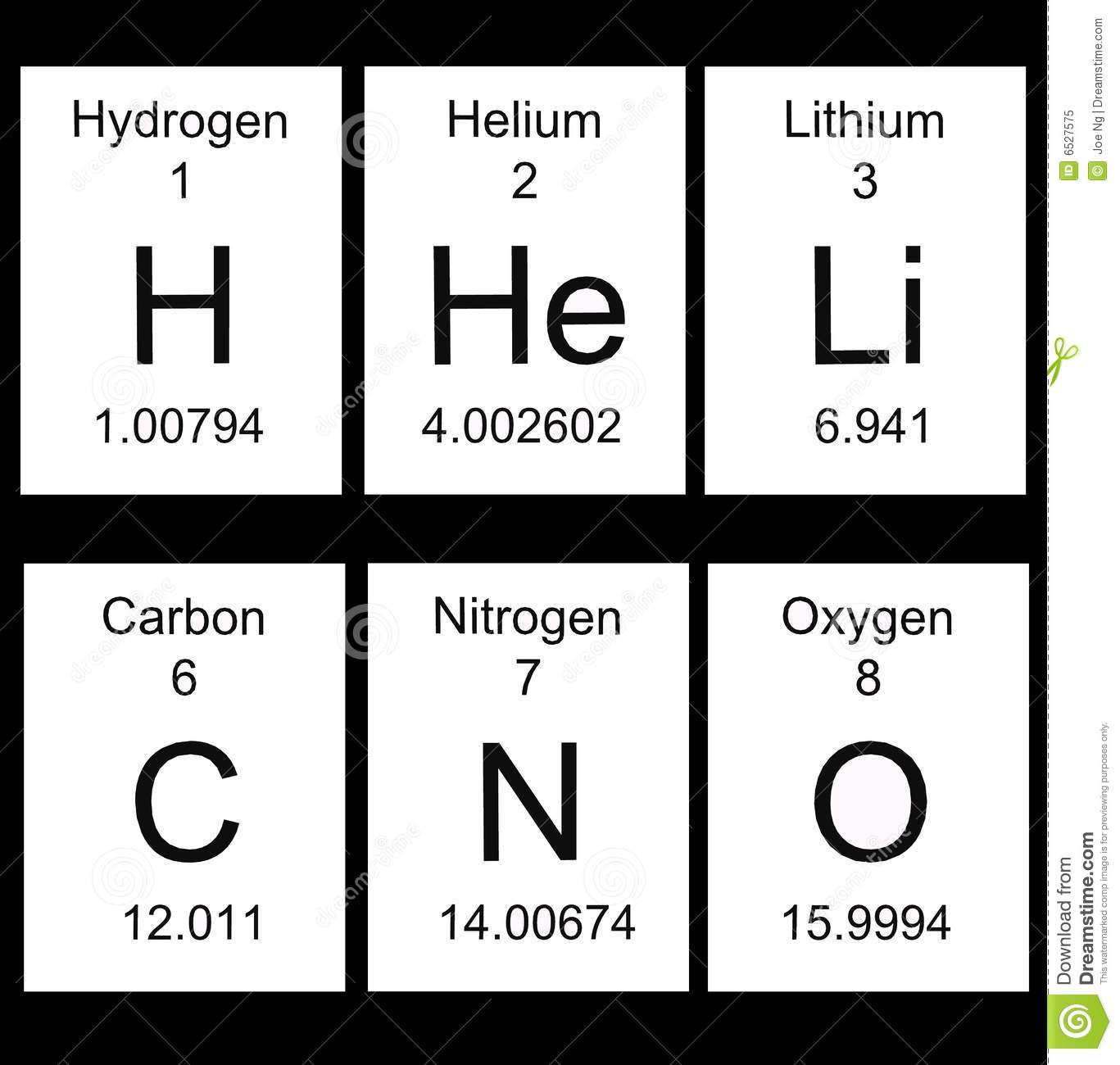
What does the 1.00794 stand for?
a)
Hydrogen
b)
atomic number
c)
atomic mass
d)
atomic explosion
90.
As you move down the periodic table atoms get bigger.  This is because ____________.
a)
The atoms have more mass.
b)
The atoms have more protons.
c)
The atoms have more energy levels
d)
The atoms have more nuetrons
91.
Electronegativity is...
a)
how good an atom is at attracting electrons
b)
the ability of an atom to lose electrons
c)
the energy required to remove an electron from a specific atom
d)
how easy it is to make friends. 
92.

Who developed the Periodic Table?

a)

Mendeleev, who was a chemist and teacher

b)

Pavlov, who was a teacher and physchologist

c)

Ladahoff, who was a teacher and biologist

93.
The minimum energy required to remove an electron from the ground state of an atom
a)
electron configuration
b)
energy levels
c)
ionization energy
d)
ionic bond
94.
As you move across the periodic table atoms tend to get smaller because, ______________.
a)
the atoms have more mass.
b)
the atoms have less mass
c)
the atoms have more protons.
d)
the atoms have less electrons.
95.
Name Al2S3
a)
Aluminum sulfide
b)
Dialuminum trisulfide
c)
ammonium sulfide
d)
aluminum (II) sulfice
96.
Which is a transition metal?
a)
cesium
b)
iron
c)
helium
d)
tellurium
97.
What is the name for the NO3- ion?
a)
nitrate ion
b)
nitrite ion
c)
nitrogan ion
d)
nitride ion
98.
Name the compound NH4OH
a)
ammonium hydroxide
b)
ammonia oxyhydride
c)
mononitrogen tetraoxihydride
d)
hydrogen nitrate
99.
What is the formula for lead (II) carbonate?
a)
PbCO3
b)
Pb2CO3
c)
Pb(CO3)2
d)
Pb(CO)4
100.
How many molecules are in 32.4 grams of phosphorous pentoxide?
a)
1.76 x 10²³ molecules
b)
0.29 moles
c)
1.76 x 10²² molecules
d)
0.29 molecules
101.

How many moles are in 4.5x1024 Silver atoms?

a)

0.747 particles

b)

0.747 mol

c)

2.71x1047 mol

d)

2.71x1047 particles