Wayground logo

Free Printable Worksheets

Font size

S
M
L
XL
Worksheets

US Constitution Final CFA #Educreatord12

Total questions: 36

Worksheet time: 37mins

Name
Class
Date
1.

The word _____ means "to change or to improve."

a)

government

b)

amend

c)

change

d)

justice

2.
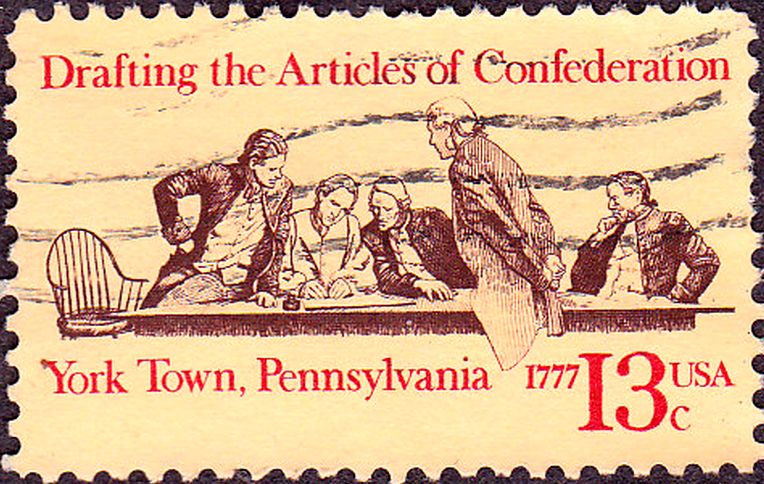
The Articles of Conderation created a ______central government. 
a)
Weak
b)
Strong
c)
Stable
d)
Big
3.
Which of the following correctly describes the Three-Fifths Compromise?
a)
Slaves count as 3/5th of a person for population and representation in congress. 
b)
The Virginia Plan and New Jersey plan would combined to form a bicameral legislature.
c)
The Bill of Rights appeased the Anti-Federalists.
d)
The preamble states "we the people" evidence of popular sovereignty.
4.
Why did the Anti-Federalists demand that a bill of rights
a)
They wanted to keep the government small
b)
They wanted to keep the government big and strong
c)
They wanted a provision for Taco Tuesday
d)
They wanted to make sure individual and state rights were protected
5.
These were men opposed to the constitution
a)
Federalist
b)
Anti-Federalists
c)
Loyalists (There were Americans against the Declaration of Independence... so not them.)
d)
Cripus Atticus (He was an African American who died at the Boston Massacre). 
6.
After Shay's rebellion, America decided that--
a)
They needed a stronger national government
b)
Give farmers more money
c)
They needed a weaker national government
d)
farmers need more land
7.
The Great Compromise was a compromise between--
a)
Mass. Plan and New Jersey Plan
b)
Virginia Plan and New Jersey Plan
c)
Virginia Plan and New York Plan
d)
Virginia Plan and Delaware Plan
8.
The Virginia Plan wanted representation based on--
a)
population
b)
equality for every state
c)
state size
d)
money
9.
The New Jersey Plan wanted representation in government based on--
a)
population
b)
equality for every state
c)
state size
d)
money
10.

How many votes did the states need to ratify (or pass) a law under the Articles of Confederation?

a)

Majority rule

b)

9 out of 13 states

c)

10 out of 13 states

d)

13 out of 13 states

11.
What is the purpose of the Electoral College?
a)
Elect school board members.
b)
Provide opportunities for kids to attend school.
c)
Elect the President of the United States.
d)
Select a baseball team to play in the College World Series.
12.

Power of the president to refuse (forbid) a bill

a)

veto

b)

executive order

c)

table

d)

pigeonhole

13.

The president's role as leader of the nation's armed forces...

a)

Chief of the Armed Forces

b)

Supreme Leader of the Armed Forces

c)

Chief Commander

d)

Commander in Chief

14.

As Chief Executive, it is the president's job to...

a)

MAKE laws

b)

ENFORCE laws

c)

INTERPRET laws

d)

none of the given

15.
The division of power between a central government and state governments is called
a)
The United States
b)
the Supremacy Clause
c)
the Necessary and Proper Clause
d)
federalism
16.

What does it mean to formally approve a plan or agreement?

a)

federalism

b)

ratify

c)

bicameral

d)

unicamerial

17.

This term means that the legislative body is made up of only 1 house or chamber.

a)

unicameral

b)

bicameral

c)

veto

d)

ratify

18.

This Branch of government carries out/enforces the laws.

a)

Judical

b)

Executive

c)

Legislative

d)

Congress

19.

This term means that the legislative body is made up of 2 houses or chambers.

a)

unicameral

b)

bicameral

c)

veto

d)

ratify

20.
The main job of the legislative branch
a)
determine if laws are unconstitutional
b)
veto laws
c)
make laws
d)
approve laws made by the President
21.
Role of the judicial branch
a)
make laws
b)
interpret laws
c)
enforce laws
d)
impeach a president
22.

Which Founding Father was known as the “Father of Our Country”

a)

George Washington

b)

Thomas Jefferson

c)

John Adams

d)

James Madison

23.

What do we call the people who helped to form our government?

a)

Founding Fathers

b)

Delegates

c)

Constitutional Convention

d)

Helpers

24.
What is the name of the first written plan of government in America?
a)
Constitution
b)
Treaty of Paris
c)
Declaration of Independence
d)
Articles of Confederation
25.
Under the Articles of Confederation, most of the power was where?
a)
Legislative branch
b)
the president
c)
the states
d)
national government
26.

Which was NOT a weakness of the Articles of Confederation?

a)

It could not tax states

b)

Had a unicameral congress

c)

No Supreme Court

d)

Could declare war

27.

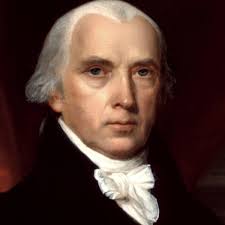
Who is known as the "Father of the Constitution"?

a)

George Washington

b)

Alexander Hamilton

c)

James Madison

d)

Benjamin Franklin

28.

The ___________ are for the ratification (approval) of the U.S Constitution.

a)

Federalists

b)

Anti-Federalists

c)

Whiggs

d)

Representatives

29.

The ___________ are NOT for the ratification (approval) of the U.S Constitution.

a)

Anti-Federalists.

b)

Federalists.

c)

Whiggs.

d)

Supreme Court Justices.

30.

Which freedom protects your right to rally in public places?

a)

Freedom of Speech

b)

Freedom of Religion

c)

Freedom of the Press

d)

Freedom of Assembly

e)

Freedom to Petition the Government

31.

Which freedom protects your right to choose your own faith and follow it how you choose?

a)

Freedom of Speech

b)

Freedom of Religion

c)

Freedom of the Press

d)

Freedom of Assembly

e)

Freedom to Petition the Government

32.

Freedom of Assembly allows for people to gather

a)

inside private businesses

b)

even if they block traffic or entrances

c)

in public locations such as parks and public sidewalks

d)

All of the above

33.

This means that the government is divided into three separate branches.

a)

Checks and Balances

b)

Separation of Powers

c)

Federalism

d)

Articles of Confederation

34.

This system prevents one branch of government from over powering the other two.

a)

Checks and Balances

b)

Federalism

c)

Separation of Power

d)

Ratification

35.

How many states had to sign the Constitution for it to be ratified?

a)

All 13

b)

Half

c)

7

d)

9

36.

Government plan in which citizens elect leaders to represent them

a)

a democracy

b)

a representative

c)

a monarchy

d)

a republic