
 Worksheets
Atoms/ Electricity Quiz Practice
Total questions: 24
Worksheet time: 18mins
What are the 3 subatomic particles of an atom?
carbon atom, proton, electron
quarks, neutrons, protons
nucleus, protons, electrons
protons, neutrons, electrons
Which subatomic particle has a negative charge?
proton
neutron
electron
Which subatomic particle has a positive charge?
proton
neutron
electron
Which subatomic particle has a neutral or no charge?
proton
neutron
electron
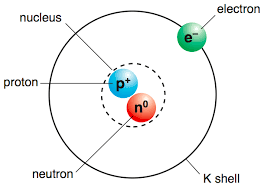
Which subatomic particles contribute the least to the mass of an atom?
Neutrons
Protons
Electrons
Which subatomic particles contribute the most to the mass of an atom?
Protons and Neutrons
Protons only
Electrons only
He believed that matter is made of small solid objects that cannot be divided, created, or destroyed called atomos.
Aristotle
Democritus
Dalton
Bohr
What are the three properties of an electric circuit?
Current, Voltage, Power
Current, Voltage, Resistance
Power, Voltage, Resistance
Current, Power, Resistance
What is the unit for current
Watts
Ohms
Volts
Amperes
What is the unit for voltage
Watts
Ohms
Volts
Amperes
What is the unit for resistance
Watts
Ohms
Volts
Amperes
What is the symbol for resistance
𝝮
A
V
W
What is the symbol for voltage
𝝮
A
V
W
What is current?
Flow of electrical charge
Pressure from power to push electrons
Limits the flow of electrons
What is resistance?
Flow of electrical charge
Pressure from power to push electrons
Limits the flow of electrons
What is voltage?
Flow of electrical charge
Pressure from power to push electrons
Limits the flow of electrons

