wayground logo

Free Printable Worksheets

Font size

S
M
L
XL
Worksheets

8th Grade History Midterm Exam STUDY GUIDE

Total questions: 150

Worksheet time: 1hrs 15mins

Name
Class
Date
1.
Which colonial region contained rocky soil and cold climate, thus making agriculture difficult?
a)
New England
b)
Middle
c)
Southern
d)
Backcountry
2.
Which are the Middle Colonies?
a)
Main, New Hampshire, and Rhode Island
b)
Georgia, South Carolina, and Virginia
c)
Pennsylvania, New York, and New Jersey
d)
Florida, Georgia, Massachusetts
3.
Which colonial region was known as the "Bread Basket"?
a)
New England
b)
Middle
c)
Southern 
d)
Western
4.
Which one of the following is NOT a colony?
a)
Delaware
b)
New Hampshire
c)
Florida
d)
Maryland
5.
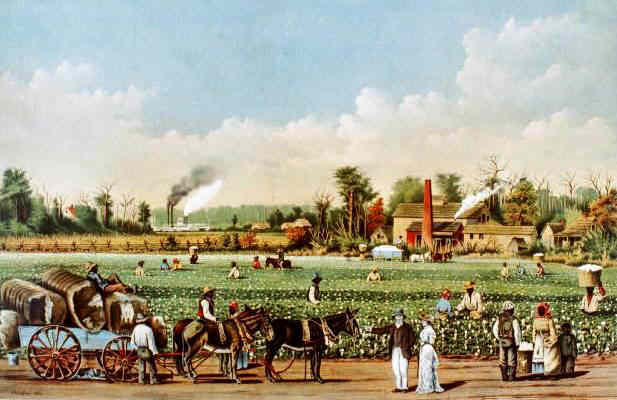
Which group are the Southern colonies?
a)
Connecticut 
New Hampshire
Rhode Island
Massachuttes
b)
North Carolina
South Carolina
Virginia
Maryland
Georgia
c)
Pennsylvania
Delaware
New York
New Jersey
d)
Florida
Georgia
Louisiana
Alabama
6.

The southern colonies produced cash crops which brought in a lot of money. What was a direct result of the high demand for these cash crops?

a)

Not a lot of money was made

b)

Plantation owners relied more and more on slave labor to grow the crops

c)

People began to work alongside Native Americans on the plantations

d)

Plantations started to lose land to Native Americans

7.
Which are the Middle Colonies?
a)
Maine, New Hampshire, North Carolina, Rhode Island
b)
Georgia, South Carolina, and Virginia
c)
Delaware, Pennsylvania, New York, and New Jersey
d)
Ohio, Massachusetts, Indiana, Florida
8.
The first inhabitants of North America were nomadic. This means...
a)
they grew crops, like maize
b)
they followed rivers to get from place to place
c)
they followed wildlife (plants & food) in order to survive
d)
they had a special hunting ceremony
9.
Where did the colonists come from?
a)
Spain
b)
Mexico
c)
France
d)
England
10.
Who was the King of England during the time of the French & Indian War?
a)
King Ferdinand and Queen Isabella
b)
King Henry VIII
c)
Queen Elizabeth
d)
King George III
11.
Who won the French and Indian War?
a)
England
b)
France
c)
Indians
d)
Spain
12.
What was a major outcome for the colonists at the end of the French & Indian War?
a)
The French killed all Native Americans
b)
The colonists welcomed the Native Americans into their society 
c)
Great Britain was in debt and owed a lot of money
d)
The Spanish gave the colonists all of their land
13.
All Native American tribes had a deep connection and dependence on...
a)
buffalo
b)
nature
c)
trading with the French
d)
dancing and using war paint
14.
Which Native American tribe lived in igloos?
a)
Southwest
b)
Northwest
c)
Arctic
d)
Mound Builders
15.
Which Native American tribe participated in a special buffalo ritual?
a)
Hopi
b)
Southwest
c)
Great Plains
d)
Eastern Woodland
16.
Which tribe lived in multi-level homes made of dirt, rocks and straw called pueblos?
a)
Southwest
b)
Mound Builders
c)
Arctic
d)
Great Plains
17.
The Adena and Hopewell are best remembered for what unique aspect of their culture?
a)
They were strong warriors who conquered other tribes.
b)
They were nomadic
c)
They created totem poles to record their history.
d)
They built large mounds.
18.
This man made his military debut during the French & Indian War.
a)
King George V
b)
King Anasazi
c)
Abraham Lincoln
d)
George Washington
19.
Which of the following was NOT a pull factor (reason) for people coming to America?
a)
Religious freedom
b)
Escaping debt
c)
Being far from the king's rule
d)
Lack of available land
20.

King George III sent ________________ to the colonies to enforce his laws

a)

Princes of Parliament

b)

Royal Governors

c)

Royal Officers

d)

Masters of Mercantilism

21.
Which of the following was NOT a colonial region?
a)
Western
b)
New England
c)
Middle
d)
Southern
22.
These colonies belong to what region?
a)
New England
b)
Middle
c)
Southern
d)
Western
23.
These colonies belong to what region?
a)
New England
b)
Middle
c)
Southern
d)
Western
24.
These colonies belong to what region?
a)
New England
b)
Middle
c)
Southern
d)
Western
25.
This was the land that was fought over in the French & Indian War.
a)
Ohio River Valley
b)
Appalachian Mountains
c)
Florida
d)
Canada
26.

George Washington was a leader for which country during the French & Indian War.

a)

Great Britain

b)

France

c)

America

d)

Confederate Army

27.
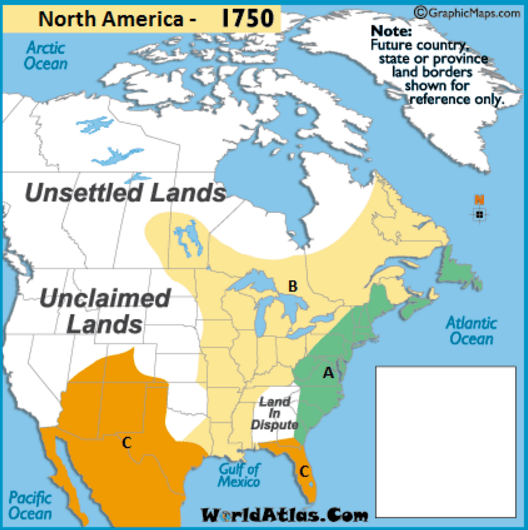
Which European power controlled territory A?
a)
England
b)
France
c)
Spain
28.
Which European power controlled territory B?
a)
England
b)
France
c)
Spain
29.
Both French & British wanted this land because of it's rich soil.  It led to conflict and the French & Indian War.
a)
Ohio River Valley
b)
Appalachian Mountains
c)
Florida
d)
Gulf of Mexico
30.

The French and Indian War ended with the signing of the Treaty of Paris 1763.

a)

True

b)

False

31.
What was the main cause of the French and Indian War?
a)
The French and British claimed the same land.
b)
The French and Indians claimed the same land.
c)
The Indians and British claimed the same land.
d)
The Indians wouldn't sell their land.
32.
What act does this image represent?
a)
Tea Acts
b)
Navigation Acts
c)
Native American Trading Act
d)
Paris Treaty Act
33.
What event does this image show?
a)
The Pilgrim's on the Mayflower
b)
The murder of Native Americans
c)
The hanging of King George III's wife
d)
The Salem Witch Trials
34.
Why did European countries mainly want to control territory in the New World?
a)
To profit from trade with Natvie Americans
b)
To seek protection from Native American attacks
c)
To gain access to the large supply of land and raw materials
d)
To allow equality to thrive in the new land
35.

Mrs. Schultz has a joke... If April showers bring May flowers, what do May flowers bring?

a)

Pilgrims. The answer is Pilgrims.

b)

Why are you making me do this?

c)

Seriously Mrs. Schultz...? Seriously...?

d)

Oooh cringe. That's not pun-ny.

36.

What did the Hopewell and Adena have in common?

a)

They both built large and elaborate earth mounds

b)

They both lived in the mountains, in caves

c)

They both hunted buffalo

d)

They both lived within the arctic region

37.

Many historians believe that the first inhabitants of North America crossed a land bridge from Asia around 13,000 years ago. If this theory is correct, which statement best describes the earliest Americans?

a)

They were nomadic and moved from place to place in search of animals to hunt and plants to gather

b)

They domesticated animals, such as sheep, to provide milk and food for their people

c)

They relied heavily on fishing alone to provide food for their society

d)

They lived in settled communities and established a thriving agricultural system

38.

King George III created the Navigation Acts. These Acts stated that…

a)

Colonies could not trade with any other European countries

b)

All trade had to go through Great Britain first.

c)

Great Britain got to collect taxes on the goods that came in and left the country

d)

European countries could trade with whoever they wanted

39.

_____________ is the explorer credited with discovering the "New World" (the Americas) that many European countries eventually lay claim to and establish colonies.

a)

Christopher Columbus

b)

Mrs. Schultz

c)

King George III

d)

Alexander Hamilton

40.
Who led the Boston Tea party?
a)
Native Americans
b)
Loyalists
c)
British soldiers
d)
Sons of Liberty
41.

How was the Tea Act of 1773 different from the Stamp Act?

a)

It taxed Native Americans too

b)

It did not increase prices

c)

It did not have a tax

d)

It did not affect merchants

42.
What was the main effect of the Intolerable Acts on the colonies? 
a)
Colonists grew discouraged and stopped boycotting British goods
b)
Trade increased between Great Britain and the colonies
c)
More colonists became convinced that Great Britain was treating them unfairly 
d)
More colonists began to work for Parliament 
43.
This act put a tax on tea, lead, glass, and paint. 
a)
The Tea Act
b)
The Stamp Act
c)
The Townshend Acts
d)
The Intolerable Acts
44.

Why did the British create the Proclamation of 1763?

a)

to gain more land and resources

b)

to pay off debts from the French & Indian War

c)

to create peace between the Native Americans and colonists

d)

to increase British trade with colonists

45.

Which places these events in the proper sequence (order) from first to last?

A. Boston Tea Party

B. Stamp Act

C. Boston Massacre

a)

A, B, C

b)

B, C, A

c)

C, B, A

d)

B, A, C

46.
What is a boycott?
a)
refusal to buy a good or service
b)
a citizen-led meeting to protest a law
c)
a punishment in public
d)
repealing a law becuase of protest
47.
Who was the leader of the Sons of Liberty?
a)
John Adams
b)
George Washington
c)
Paul Revere 
d)
Samuel Adams
48.
What phrase became more popular after the passage of the Stamp Act?
a)
"The rights of Englishmen"
b)
"No taxation without representation"
c)
"Give me liberty or give me death"
d)
"Life, liberty, and the pursuit of happiness"
49.
He was the King of Great Britain during the time of the American Revolution.
a)
King George III
b)
King George V
c)
King Geoffry
d)
King Adam
50.
Colonists were angry that they were being taxed without representation - meaning they wanted to have ___________ in Parliament.
a)
50 men work
b)
a voice
c)
no votes
d)
few taxes
51.
The Quartering Act stated that colonists had to... 
a)
pay for taxes using quarters
b)
pay British soldiers taxes
c)
work for Parliament for at least a quarter (1/4) of the year
d)
house and care for British soldiers
52.

This company worked alongside Great Britain in order to monopolize the sale of tea in the colonies.

a)

East England

b)

West India

c)

East India

d)

West England

53.
Which two countries claimed the Ohio Valley territory, leading to a war over land?
a)
France & Spain
b)
France & England
c)
Spain & England
d)
The U.S. and France
54.
The Boston Massacre was a clash between __________ & ______________. 
a)
British soldiers and French soldiers
b)
John Adams and Paul Revere
c)
British soldiers and colonists
d)
British soldiers and Redcoats 
55.
Why were British soldiers marching to Lexington, Massachusetts?
a)
To seize weapons and rebel leaders John Hancock & Samuel Adams
b)
To end the rumors that British officers were "Lobsterbacks"
c)
To arrest Benjamin Franklin and seize his weapon inventions
d)
To collect unpaid taxes from colonists 
56.
Which colonist decided to defend the British soldiers involved in the Boston Massacre?
a)
John Hancock
b)
John Adams
c)
Samuel Adams
d)
George Washington
57.
The shot heard round the world occurred in __________________, Massachusetts and it was the event which marked the beginning of ________________. 
a)
Lexington; the Boston Massacre
b)
Lexington; the American Revolution 
c)
Boston; the American Revolution
d)
Boston; the Boston Tea Party
58.

A major effect in the colonies after the French and Indian War was that colonists were...

a)

able to settle on all land out west

b)

becoming friends and allies with all Native Americans

c)

being taxed to help pay off the debt from the war

d)

becoming allies with France, allowing trade to flourish

59.
The Sons and Daughters of Liberty were organized to...
a)
protest British policies
b)
help Britain defeat France
c)
protest the Boston Tea party
d)
create goods for British soldiers
60.
The Townshend Acts put a tax on all of the following EXCEPT 
a)
glass
b)
paper
c)
tea
d)
wax
61.
When the Sons of Liberty boarded the British tea ships, they were dressed as
a)
British soldiers
b)
minutemen
c)
Native Americans
d)
tea merchants
62.
The main goal of the Tea Act of 1773 was to
a)
stop colonists from drinking tea
b)
help a British company make money
c)
raise the price of tea
d)
punish the colonists 
63.
Which event came immediately before the Intolerable Acts?
a)
The Sugar Act
b)
Boston Tea Party
c)
Boston Massacre
d)
Battles of Lexington & Concord
64.
How did colonists show their unhappiness with British taxes?
a)
They boycotted British goods
b)
They settled out west
c)
They staged the Boston Massacre
d)
They passed the Intolerable Acts
65.
In which colony did the conflict between Britain and colonists grow violent?
a)
Massachusetts
b)
Virginia
c)
Pennsylvania
d)
New York
66.

What was the main reason the American colonies were unhappy with Great Britain?

a)

They wanted their own king

b)

They felt they had outgrown the British Empire and would do better without them

c)

They didn't like the people of Britain and wanted nothing to do with them

d)

They felt like they were not being represented in Britain's government

67.

Mrs. Schultz has a joke... What kind of tea did the American colonists thirst for...?

a)

Liber-tea ..... the answer is Liberty. : )

b)

Oh no, not again... (don't pick this one)

c)

Mrs. Schultz, why? Why?! (don't pick this one)

d)

#BestTeacherJokeOfTheYear (don't pick this one)

68.

"No taxation without representation" means?

a)

Colonists shouldn't be taxed if they had no one representing them in Parliament

b)

The representative can tax me

c)

Seize weapons right away

d)

Vote for me and there will be no taxes

69.

________ and _________ took a midnight ride and are famous for the quote, "The Regulars are coming!" CHOOSE ALL THAT APPLY:

a)

Paul Revere

b)

John Hancock

c)

William Dawes

d)

Samuel Adams

70.

What is the name of colonists who favor the king?

a)

Unionist

b)

Sons of Liberty

c)

Loyalist

d)

Patriot

71.
What was this poster's meaning?
a)
The Colonies needed to be united
b)
Serpents can grow back together
c)
Colonies need to be independent
d)
Ben Franklin didn't know why he made this
72.
This type of colonist was ready for rebellion and the fight for independence.
a)
Loyalist
b)
Patriot
c)
Neutral
d)
British 
73.

Why did King George III tax the colonists so heavily?

a)

He hated the colonist

b)

He wanted more money for himself

c)

The national debt increased from the French and Indian War

d)

To make money for the colonies

74.
What is another name for British soldiers?
a)
Redcoats
b)
Patriots
c)
Minutemen
d)
Continental Soldiers
75.

Why was it called the "Shot heard around the world"

a)

It was really loud and could be heard across the world

b)

It was just a nickname for the event

c)

News traveled quickly around the world as to what happened in the British colonies

76.

What is a minuteman?

a)

a man who works for one minute at a time

b)

a volunteer soldier who could be ready to fight at a minute's notice

c)

a nickname for a loyalist

d)

a nickname for a British soldier

77.

Who fired first in Lexington, which became known as The shot heard round' the world?

a)

The American colonists

b)

The British soldiers

c)

It's unknown

d)

Alaska

78.

The Sons of Liberty were most successful with boycotting British goods, but they were also known for this violent act...

a)

tar & feather

b)

killing British soldiers at the Boston Massacre

c)

stopping the Boston Tea Party

d)

signing petitions

79.

How many colonists died (within the first few days) as a result of the Boston Massacre?

a)

Five

b)

None

c)

One

d)

Three

80.

What battle convinced the French to form an alliance with the Americans?

a)

Ft. Ticonderoga

b)

Bunker Hill

c)

Trenton

d)

Saratoga

81.

Even though it was a British victory, the Battle of Bunker Hill proved that the Colonial militia could...

a)

outnumber the British solders.

b)

stand up and actually fight the British soldiers.

c)

replace government officials in Parliament.

d)

lose the war.

82.

Soldiers battled harsh winter conditions here during the American Revolution.

a)

Paris

b)

Valley Forge

c)

Rio Grande Valley 

d)

Yorktown 

83.
The "shot heard 'round the world" was which battle?
a)
Battle of Bunker Hill
b)
Battle of Saratoga
c)
Battle of Trenton
d)
Battle of Lexington & Concord
84.

Which battle is considered the Turning Point of the American Revolution where France decided to become allies with the Americans?

a)

Battle of Trenton

b)

Battle of Saratoga

c)

Lexington & Concord

d)

Battle of Bunker Hill

85.

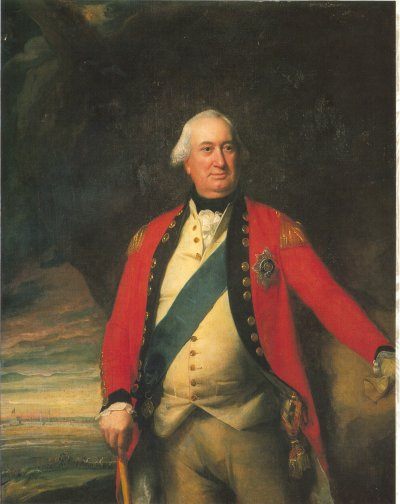
General Cornwallis surrenders (but not in person) to General Washington during this battle 

a)

Yorktown

b)

Lexington and Concord

c)

Saratoga

d)

Bunker Hill

86.
Which country supported the Americans in the fight for Independence
a)
Portugal 
b)
France
c)
Germany
d)
Holland
87.
George Washington was appointed as the ____________ during the American Revolution.
a)
Father of the US Navy
b)
British General
c)
Colonial Spy
d)
Commander of the Continental Army
88.
Who was the volunteer from France who became Washington’s trusted aide?
a)
Benjamin Franklin
b)
Francis Marion
c)
Marquis de Lafeyette
d)
Thomas Pain
89.

What document officially ended the war?

a)

Treaty of Paris 1783

b)

Boston Tea Party

c)

Common Sense

d)

Declaration of Independence

90.

What was the first American victory where Ethan Allen conducted a surprise attack at a British run fort?

a)

Battle of Trenton

b)

Battle of Ticonderoga

c)

Battle of Quebec

d)

Battle of Kings Mountain

91.

What was the result of the Battle of Bunker Hill?

a)

The Americans lost the battle, but the British lost more men.

b)

The Patriots won, but lost more men.

c)

The British retreated but the Patriots lost more men.

d)

The British retreated and lost more men.
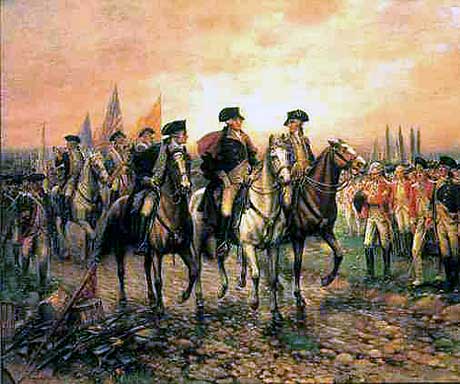
92.
Which battle ended the American revolution?
a)
Battle of Lexington and Concord
b)
Battle of Saratoga
c)
Battle of Yorktown
d)
Battle of Trenton
93.
What was the nickname given to the militia due to their speed in assembling 
a)
Hourmen
b)
Secondmen
c)
Minutemen
d)
Daymen
94.

Who were the Hessians?

a)

Women who disguised themselves as men to fight in the war

b)

The cooks in the Military

c)

German mercenaries who fought for the British

d)

Another name for American soldiers

95.
What is the definition of alliance?
a)
A battle against an enemy
b)
An agreement to work together
c)
A document asking for something
d)
A massive, sudden change
96.
In what chronological order did the battles occur?
a)
Valley Forge, French & Indian War, Battle of Saratoga, Battle of York Town
b)
Lexington & Concord, Battle of Saratoga, Valley Forge, Battle of Yorktown
c)
Battle of Saratoga, Valley Forge, French & Indian War, Lexington & Concord
d)
Yorktown, French & Indian War, Saratoga, Valley Forge
97.

Which event occurred as a result of General Cornwallis's surrender at the Battle of Yorktown?

a)

France recognized American Independence and declared war again Great Britain

b)

The Second Continental Congress agreed to the Articles of Confederation

c)

Great Britain and the United States Signed the Treaty of Paris 1783

d)

The Second Continental Congress sent the Olive Branch Petition to King George the III.

98.

Why was Geography an important feature in the American Revolution?

a)

The British knew the land better than the Patriots.

b)

The Patriots knew the land better than the British Army, which gave them an advantage.

c)

They used mountains as places to move to when the British won the war.

d)

They used rocks as weapons.

99.

At Valley Forge, George Washington brought in a Prussian General, who specialized in training soldiers. What was the result of using this leaders specializations?

a)

The Continental Army lost many soldiers to the harsh winter.

b)

The Continental Army improved their ability to fight the British.

c)

The Continental Army increased their chances of being attacked by the British.

100.

What was one of George Washington's toughest challenges as a leader during the American Revolution?

a)

to run for President of America

b)

to create a skillful army from small, state militias

c)

to stop the fighting between the large states and small states

101.

Which side fired the first shots of the war?

a)

British

b)

Patriots

c)

No one knows.

102.
When did Washington cross the Delaware River to attack the Hessians at Trenton?
a)
Thanksgiving Evening
b)
New Year's at Midnight
c)
Easter in the Afternoon
d)
Christmas Night
103.
What did James Armistead pretend to be in order to get British war secrets?
a)
The Spanish Governor of the Louisiana Territory
b)
A Hessian
c)
A loyalist from the colonies
d)
A runaway slave
104.
Who taught the Continental troops to march and drill?
a)
George Washington
b)
James Armistead
c)
Friedrich von Steuben
d)
King George III
105.
Lexington and Concord marked the _____ of the _____.
a)
end; French and Indian War
b)
beginning; French and Indian War
c)
beginning; American Revolution
d)
end; American Revolution
106.
"Do not fire until you see the whites of their eyes."
At what battle was this famous quote said?
a)
Bunker Hill
b)
Yorktown
c)
Trenton
d)
Lexington and Concord
107.

Why did Benedict Arnold become a traitor and fight for the British during the American Revolution?

a)

He blamed the Patriots for the destruction for his farm during the Battle of Saratoga.

b)

He was originally from England and his family convinced him to stay loyal to the king

c)

He was captured by the British who offered to free him if he would act as a spy for them

d)

He felt disrespected by the Continental Army and the British offered him money and respect.

108.

What was in the treaty that ended the American Revolution? Choose all that are correct:

a)

England officially recognized that the “United States” were “free Sovereign and independent States.” 

b)

England did not recognize that America was established as a separate country

c)

England gave up claim to the Ohio Valley

d)

The agreement that America would leave Britain alone. 

109.

Which best describes Nathan Hale?

a)

First spy for America.

b)

Posed as a runaway slave in order to spy on the British.

c)

Was a tailor who joined the sons of liberty and spied on the British

d)

Was a traitor to the United States during the Revolution.

110.

Which influential pamphlet, written by Thomas Paine, encouraged American independence?

a)

Common Sense

b)

The Federalist Papers

c)

Poor Richard's Almanack

d)

The Rights of Man

111.

Who was the commander-in-chief of the Continental Army during the American Revolution?

a)

Thomas Jefferson

b)

John Adams

c)

George Washington

d)

Alexander Hamilton

112.

Who was the primary author of the Declaration of Independence?

a)

George Washington

b)

Benjamin Franklin

c)

Thomas Jefferson

d)

John Adams

113.

What was the first battle of the American Revolution?

a)

Guilford Courthouse

b)

Trenton

c)

Yorktown

d)

Lexington & Concord

114.
This patriot made a daring ride to warn colonists that British soldiers were approaching.
a)
Patrick Henry
b)
Paul Revere
c)
Phillis Wheatley
d)
Samuel Adams
115.

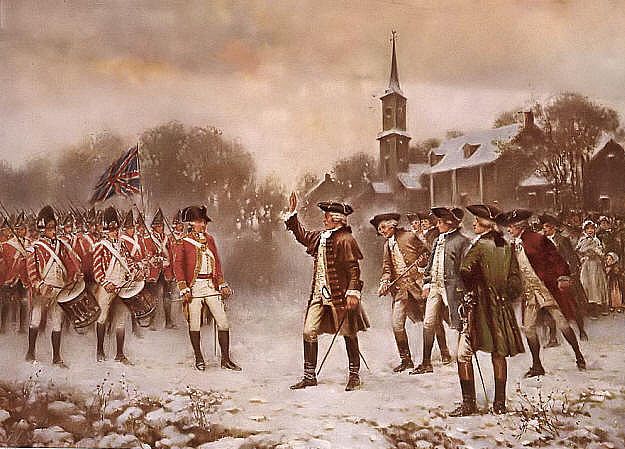
What event is depicted in this image?

a)

Battle of Bunker Hill

b)

Boston Massacre

c)

Boston Tea Party

d)

Lexington and Concord

116.

The American Revolution was between

a)

French & the Native Americans

b)

British & the Colonists

c)

Spain & Australia

117.

This image is most likely depicting

a)

the Boston Tea Party

b)

a ride to Valley Forge

c)

George Washington crossing the Delaware.

d)

Paul Revere's midnight ride.

118.
Location of winter encampment of the Continental Army which was a low point during the war.
a)
Valley Forge
b)
Monmouth
c)
Saratoga
d)
New York
119.
Thousands of people died during the Boston Massacre.
a)

True

b)
False
120.

Young, French leader in the American Revolution. Became a major-general in the Continental Army. Helped get supplies for America.

a)
Bernanrdo de Galvez
b)
Marquis de Lafayette
c)
Haym Salomon 
d)
John Paul Jones
121.
Who was the main author of the Declaration of Independence?
a)
Benjamin Franklin
b)
Samuel Adams
c)
Thomas Jefferson
d)
Paul Revere
122.

Why was this document written?

a)

The Native Americans wanted their land back

b)

The colonists didn't want to pay taxes on tea

c)

The colonists wanted to break free from British control

d)

Great Britain wanted to break free from the colonists

123.
Jefferson stated that people have the rights to life, ________, and the pursuit of happiness.
a)
Love
b)
Liberty
c)
Learning
d)
A great cup of coffee
124.
How many people signed the Declaration?
a)
25
b)
56
c)
105
d)
65
125.

Why is July 4th a significant date to the Declaration of Independence?

a)

The document was officially accepted and approved by the Continental Congress

b)

It was when they started writing the document

c)

It was Jefferson's birthday

d)

It was the day the King told the colonists to leave the country

126.

Why was signing the Declaration considered dangerous?

a)

If they signed their name the French would start a war with them

b)

If they signed their name the British would see them as traitors and they could be hanged

c)

If they signed their name, the Native Americans would form alliances with Britain

d)

If they signed their name people would see their messy handwriting was not as nice as Jefferson's

127.

Why did John Handcock sign his name in the middle and in large print?

a)

He felt he was the most important person to sign

b)

He was the one who wrote the document

c)

He wanted to make sure the king knew that he signed the document

d)

Writing the Declaration of Independence had been his idea

128.

How many grievances were listed in the Declaration of Independence?

a)

10

b)

27

c)

82

d)

56

129.

What is the first line in the Preamble of the Declaration?

a)

When in the course of human history it becomes necessary to absolve the outer space rock bands which have binded them to one another for thousands of years....

b)

When in the course of human beings historical events it becomes necessary to solve the political rock bands that have caused issues with your land lords over time.....

c)

The unanimous Declaration of the thirteen United States of America, When in the course of human events, it becomes necessary for one people to dissolve the political bands which have connected them to one another....

d)

I would like to order a venti chai latte with one pump cinnamon and three pumps mocha, with skim milk, and a caramel drizzle on top.....

130.
The Preamble is...
a)
in the beginning of the Declaration...
b)
the conclusion.
c)
in the middle.
d)
not in the Declaration.
131.
According to the Declaration of Independence, what truth was "self-evident"?
a)
All men are created equal
b)
Rights are given by good kings
c)
Government exists to protect us from ourselves
d)
Only a democracy can protect our rights
132.
The words self-evident means what?
a)
confusing
b)
obvious
c)
wrong
d)
self-aware
133.
To Great Britain, the signing of the Declaration of Independence was
a)
an act of loyalty.
b)
an act of treason.
c)
an act of bravery.
d)
an act of insanity.
134.
Which statement best describes the role of government according to the Declaration of Independence?
a)
“The main purpose of government is to expand and glorify the state”
b)
“The main purpose of government is to protect the unalienable rights of individuals”
c)
“The main purpose of government is to protect the rights and privileges of His Majesty, the King”
d)
“The main purpose of government is to promote the general welfare of the community by taking steps toward social equality”
135.
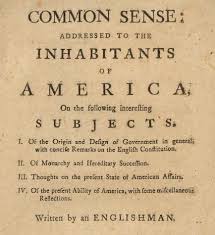
Who wrote a pamphlet called "Common Sense"?
a)
George Washington
b)
Thomas Paine
c)
Thomas Jefferson
d)
Patrick Henry
136.

Which the meaning of Grievances?

a)

Virtues

b)

Complaints

c)

Boycotts

d)

Answers

137.
According to the Declaration of Independence, where does government get its power?
a)
From the King
b)
From the Supreme Court
c)
From God
d)
From the people
138.

The List of Grievances were the part of the Declaration that

a)

detailed the colonists' complaints with King George III.

b)

listed a man's natural rights.

c)

introduced the Declaration.

d)

concluded the Declaration, declaring America a free country.

139.
What is the connection between natural rights and government? 
a)
government is meant to provide services 
b)
people have the right to alter government 
c)
people have certain unalienable rights
d)
government is meant to protect rights
140.
What effect did Common Sense have in the colonies?
a)
It persuaded many colonists that America should be independent.
b)
It instilled fear of war in the colonies.
c)
It convinced the colonies to remain loyal to Great Britain.
d)
It petitioned the king to end the quarrel between the colonies and Great Britain.
141.
What country did The United States declare independence from?
a)
Britain
b)
France
c)
Spain
d)
Belgium
142.
The Declaration states that all men are created ___________.
a)
Just
b)
Equal
c)
the same
d)
Free
143.
What did the declaration of independence NOT include?
a)
List of grievances
b)
preamble
c)
56 signatures of Congress members
d)
George Washington's signature
144.

When the Declaration mentions" Life, liberty and the Pursue of Happiness" What are these?

a)

Natural Rights

b)

Demands for the colonists

c)

Petitions to King George

d)

Parts of the document mentioned

145.

The Declaration of Independence has four part; they are:

a)

Introduction, preamble, middle and conclusion

b)

Beginning, explanations, resolution, absolution

c)

Preamble, Natural Rights, Grievances and Resolution

d)

Preamble, Articles, Amendments and Resolutions

146.

How many days did it take to write the Declaration of Independence?

a)

4 days

b)

11 days

c)

17 days

d)

33 days

147.

Which BEST describes the Declaration of Independence?

a)

a breakup letter from the American colonies to Great Britain

b)

a document that created laws in America

c)

a contract between redcoats and colonists

d)

a list of complaints King George III wrote about the colonists

148.

What does the conclusion/resolution basically say?

a)

we are breaking up with you

b)

you have abused us

c)

we, as men, need certain things

d)

we want free religion

149.
Which would be the BEST title for this picture?
a)
"Electing the First President"
b)
"Writing the Emancipation Proclamation"
c)
"Approving the Louisiana Purchase"
d)
"Writing the Declaration of Independence"
150.

What are the 3 Natural Rights written in the Declaration of Indpendence?

a)

Life

b)

Work

c)

Liberty

d)

Pursuit of Happiness

e)

Guaranteed Happiness