
 Worksheets
Benchmark 2 Review PART 1
Total questions: 56
Worksheet time: 36mins

Distributing political power among the branches of government, giving each branch specific responsibilities
separation of powers
judicial review
legislative process
Powers of government are balanced between the branches and each branch watches the others
checks and balances
judicial review
executive order
Executive (carries out the laws) President
Judicial (interprets the laws) Supreme Court and lower courts
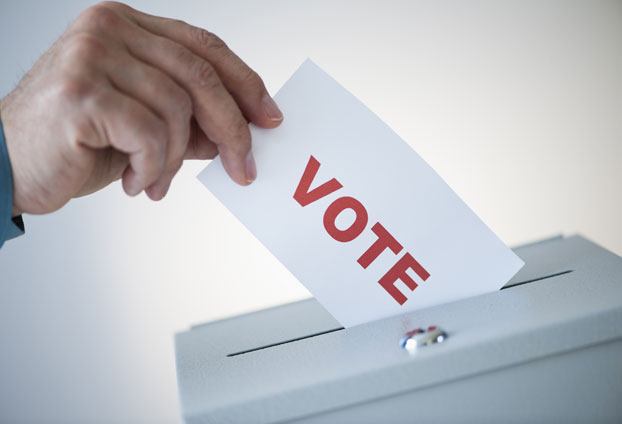
Popular Sovereignty
Judicial Review
Government officials are limited to only certain powers as stated in the Constitution.
The introductory statement in the Constitution begins with "We the People..."
What is this introduction called?
Declaration of Independence
Preamble
Presidential Oath of Office
Emancipation Proclamation
How many houses does our bicameral legislature have?
one
two
three
The Preamble sets up the purpose of government, including to "insure domestic tranquility," which means..
make sure things are peaceful in our country
provide for our needs
control the people & keep them in line
protect us from invasion by a foreign country
The concept of "Separation of Powers" refers to..
dividing the gov't into multiple branches so no one has total control
separating power within Congress
dividing the country up into separate states
dividing the judicial branch into various court systems

People = source of Gov’t Power
Gov’t exists only w/consent of People


What was the solution to the representation debate in the Constitutional Convention?
Quadricameral legislature
Unicameral legislature
Bicameral legislature
Tricameral legislature
Which house of the legislature was based on population?
House of Representatives
Senate
House of Lords
House of Commons
Who were the leaders of the Federalists?
Alexander Hamilton, James Madison, John Jay
Patrick Henry, George Mason, Samuel Adams
Thomas Jefferson, Benjamin Franklin, John Adams
George Washington, Thomas Paine, John Hancock
What was the name of the series of essays defending the Constitution written by the Federalists?
Common Sense
Brutus and Federal Farmer
Declaration of Independence
Federalist Papers
What did the Anti-Federalists advocate for?
Bill of Rights
Decentralized government
States' rights
Strong central government
Who were the leaders of the Anti-Federalists?
Thomas Jefferson, Benjamin Franklin, John Adams
Patrick Henry, George Mason, Samuel Adams
George Washington, Thomas Paine, John Hancock
Alexander Hamilton, James Madison, John Jay
What was the main concern of the Anti-Federalists?
Potential tyranny
Standing army
Anarchy
Centralized power
What did the Federalists argue for the need of?
Strong central government
Standing army
Decentralized government
Bill of Rights
What did the Federalists believe provides stability?
Decentralized government
Centralized power
Anarchy
Tyranny
What did the Anti-Federalists want to protect individual freedoms?
Bill of Rights
Strong central government
Decentralized government
Standing army
What did the Federalists fear?
Standing army
Anarchy
Potential tyranny
Centralized power
What did the Anti-Federalists prefer?
Strong central government
Decentralized government
Bill of Rights
States' rights
What did the Federalists support?
Tyranny
Decentralized government
Centralized power
Anarchy
What did the Great Compromise resolve?
Conflict between Congress and President
Conflict between Federalists and Anti-Federalists
Conflict between North and South
Conflict between large and small states

The right to bear arms is protected by amendment number
2
3
4
5

This amendment protects freedom of speech.
1
2
3
4


Who was Daniel Shays?
A former soldier and farmer who was worried about losing his farm, so he started a rebellion
A tax collector from Massachusetts who had to go and collect money from the poor
He was the Governor of Massachusetts at the time of a huge rebellion by farmers
What did Daniel Shays' and his men do?
Burned down government buildings all over Massachusetts
Took over courthouses to stop the courts from meeting
Paid Native Americans to raid the houses of the wealthy and powerful
Challenged the US military to a battle
Why didn't the Articles of Confederation stop the rebellion sooner?
They were afraid of the militia and didn't want to make it worse
The militia was too well trained and had the support for the French military
They didn't have a military or the authority to stop it
They didn't want it to end, they supported what Shays and is men were doing
What did Shays' rebellion reveal about the Articles of Confederation?
That it was too similar to the British system
That it was too weak to succeed
That it was strong and resilient
That it was a successful model of government
What is popular sovereignty?
The idea that the government's authority comes from the people
The idea that the government's authority comes from foreign powers
The idea that the government's authority comes from the wealthy elite
The idea that the government's authority comes from the military
How do citizens express their will in a popular sovereignty system?
Through financial contributions to political parties
Through direct control of government decisions
Through voting in elections for public officials
Through violent protests and demonstrations
What are individual rights?
Restrictions imposed on individuals by the government
Rights that are only applicable to certain groups of people
Privileges granted to government officials by the Constitution
Protections and liberties guaranteed to individuals by the Constitution
Which document enumerates individual rights such as freedom of speech and religion?
The Declaration of Independence
The Articles of Confederation
The Bill of Rights
The Constitution
What is limited government?
The concept that the government is controlled by foreign powers
The concept that the power of the government is restricted by the Constitution
The concept that the government has unlimited power over its citizens
The concept that the government can change the Constitution at will
What outlines specific powers granted to the government?
The Constitution
The Bill of Rights
The Declaration of Independence
The Articles of Confederation
What emphasizes limits on government actions?
The Articles of Confederation
The Constitution
The Declaration of Independence
The Bill of Rights
In a limited government system, the power of the government is restricted by:
The Constitution
The President's authority
The Supreme Court's decisions
The military's control

