wayground logo

Free Printable Worksheets

Font size

S
M
L
XL
Worksheets

Unit 3A Review

Total questions: 56

Worksheet time: 40mins

Name
Class
Date
1.
Rutherford's gold foil experiment provided evidence that...
a)
negative and positive charges are spread evenly throughout the atom.
b)
alpha particles have a positive charge.
c)
gold is not a dense as previously thought.
d)
there is a dense positively charged nucleus at the center of an atom.
2.

Potassium (K)

a)

Element

b)

Compound

c)

Homogenous Mixture

d)

Heterogeneous Mixture

3.

This is a combination of elements:

a)

Compound

b)

homogeneous mixture

4.

Matter is anything that...

a)

Takes up space

b)

Has mass

c)

Takes up space AND has mass

d)

None of these

5.

What is a substance that cannot be broken down into simpler substances?

a)

Compound

b)

Element

c)

Mixture

d)

Polyatomic Ion

6.

What is the smallest unit of matter that has properties of that element?

a)

Molecule

b)

Compound

c)

Mixture

d)

Atom

7.

Elements and compounds are examples of...

a)

Pure Substance

b)

Mixture

c)

Both

d)

None of these

8.

What method is used to obtain copper(II) sulfate crystals from its solution?

a)

Crystallisation

b)

Evaporation to dryness

c)

Paper chromatography

d)

Fractional distillation

9.

Phase changes in matter occur when _____________ is either released or absorbed.

a)

Plasma

b)

Liquid

c)

Mass

d)

Energy

10.

Which of the following is not an example of a chemical property?

a)

Flammability

b)

Odor

c)

Reactivity

d)

Toxicity

11.

The combination of two or more substances that are NOT chemically combined is called a ___________________.

a)

Compound

b)

Pure Substance

c)

Mixture

d)

Element

12.

Which of the following is an example of a physical change in matter?

a)

Two substances produce heat when mixed

b)

Smash a watermelon with a hammer

c)

Digestion of food

d)

Cooking a waffle

13.

Which of the following is a sign that a chemical change has occurred?

a)

Change in shape

b)

Melting

c)

Produces a gas

d)

Dissolving

14.

Helium (He)

a)

Element

b)

Compound

c)

Homogenous Mixture

d)

Heterogeneous Mixture

15.

Salt and Pepper

a)

Element

b)

Compound

c)

Homogenous Mixture

d)

Heterogeneous Mixture

16.

What is observed or measured without changing the substance?

a)

Physical property

b)

Chemical change

c)

Chemical property

d)

Physical change

17.
Filtration can be used to separate...
a)
an insoluble solid from a solution
b)
a soluble solid from a solution
c)
a dissolved solid from a solution
18.

Hydrogen peroxide (H2O2)

a)

Element

b)

Compound

c)

Homogenous Mixture

d)

Heterogeneous Mixture

19.
How many protons does Pb-209 have?
a)
127
b)
209
c)
82
d)
291
20.

To separate a mixture of salt and water what separation method is used?

a)

Filtration

b)

Distillation

c)

Chromatography

d)

Evaporation to dryness

21.
Water and alcohol are easily separated by distillation because of their
a)
different densities
b)
different boiling points
c)
different colours
d)
different melting points
22.

Which property of matter can only be observed while the substance is changing?

a)

Physical

b)

Chemical

c)

Both

d)

Neither

23.

Element is a:

a)

Pure Substance

b)

Molecule

c)

Mixture

d)

Compound

24.

Dyes in water soluble markers may be separated by means of

a)

Simple distillation

b)

Crystallisation

c)

Chromatography

d)

Filtration

25.

Milk is:

a)

A Homogeneous Mixture

b)

A Heterogeneous Mixture

26.
Atoms are made up of three basic parts, which are -
a)
Protons, neutrons, electrons
b)
neutrinos, protons, neutrons
c)
quarks, protons, electrons
d)
electrons, neutrons, and quarks
27.

Which part of the atomic theory did Niels Bohr prove?

a)

there are electrons

b)

there is a nucleus

c)

electrons are in energy levels

d)

gold foil experiment

28.
Which scientist developed the atomic theory
a)
Aristotle
b)
Dalton
c)
Democritus
29.
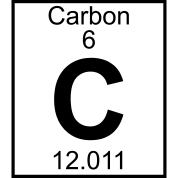
What does the 6 represent?
a)
atomic mass
b)
atomic number
c)
element name
d)
chemical symbol 
30.
Group Name and Number for Magnesium
a)
Alkaline Earth Metals 2 or 2A
b)
Noble Gases 18 or 8A
c)
Halogens 17 or 7A
d)
Alkali Metals 1 or 1A
31.

Soil

a)

Element

b)

Compound

c)

Heterogeneous Mixture

d)

Homogenous Mixture

32.
The nucleus is made up of -
a)
neutrons and electrons
b)
protons and neutrons
c)
protons and electrons
d)
electrons and quarks
33.
Protons have this charge -
a)
positive
b)
negative
c)
neutral
d)
no charge
34.
Electrons have this charge - 
a)
positive
b)
negative
c)
neutral
d)
no charge
35.
Neutrons have this charge -
a)
positive
b)
negative
c)
neutral
d)
They don't exist
36.
What scientist is best known for his "Plum Pudding" model of the atom?
a)
J.J. Tomson
b)
Ernest Rutherford
c)
John Dalton
d)
Democritus
37.
An atom's overall charge is ________.
a)
positive 
b)
depends
c)
neutral 
d)
negative 
38.

Which part of the atomic theory did JJ Thomson prove?

a)

there are electrons

b)

electrons are in energy levels

c)

there is a nucleus

d)

cathode ray tube

39.
Atoms with similar properties are most likely located...
a)
in the same period.
b)
in the same group.
c)
in different periods.
d)
to the right and left of each other.
40.
What does 12.011 represent?
a)
atomic mass
b)
atomic number
c)
element name
d)
chemical symbol 
41.
How many neutrons would Fe-56 have?
a)
56
b)
26
c)
30
d)
33
42.
Who first developed the Periodic Table?
a)
Mendeleev
b)
Mosely
c)
Mendella
d)
Murphy
43.

Which of the following is a physical property of matter?

a)

Viscosity

b)

Density

c)

Conductivity

d)

All of these

44.
Which of the following could have 14 neutrons?
a)
Al-27
b)
Si-29
c)
Mg-25
d)
Na-22
45.
How many protons does P-30 have?
a)
30
b)
16
c)
12
d)
15
46.
What element has 42 protons?
a)
Ca
b)
Mo
c)
Zr
d)
Po
47.
If an atom of nickel has a charge of +3, how many electrons does the atom have?
a)
28
b)
25
c)
26
d)
31
48.
What is the mass number of an atom of gold with 117 neutrons?
a)
117
b)
196
c)
196.97
d)
197
49.
If an atom of oxygen has a charge of -2, how many electrons does the atom have?
a)
18
b)
6
c)
8
d)
10
50.
What does the C represent?
a)
atomic mass
b)
atomic number
c)
element name
d)
chemical symbol 
51.
Which is an alkali metal?
a)
Magnesium
b)
Iron
c)
Sodium
d)
Europium
52.
Which is a halogen?
a)
Helium
b)
Chlorine
c)
Oxygen
d)
Neptune
53.
If an atom had the same properties as fluorine (F), it would probably be located in
a)
period 1.
b)
period 2.
c)
group 2.
d)
group 17.
54.

Which of the below statements about molecules and compounds is true?

a)

Molecules are formed when two or more atoms are joined together

b)

Compounds consist of at least two different elements

c)

Compounds are a type of molecule but all molecules are not necessarily compounds

d)

None of these are true

e)

All of these are true

55.
Group Name and Number for Neon
a)
Alkaline Earth Metals 2 or 2A
b)
Noble Gases 18 or 8A
c)
Halogens 17 or 7A
d)
Alkali Metals 1 or 1A
56.
Group Name and Number for Flourine
a)
Transition Metals 3-12
b)
Noble Gases 18 or 8A
c)
Halogens 17 or 7A
d)
Alkali Metals 1 or 1A