
 Worksheets
PharmaBot LAB FINAL EXAM_draft
Total questions: 158
Worksheet time: 2hrs 33mins

Look at the picture. What is the type of leaf vein?
web-veined leaf
parallel-veined leaf
net-veined leaf
parachute-veined leaf

This is a (a) leaf.
Which of the following plants has net-veined leaves?


This plant has (a) -veined leaves.

This plant has (a) -veined leaves.

This plant has (a) -veined leaves.

This plant has (a) -veined leaves.

This plant has (a) -veined leaves.
Name one example of plant that has net-veined leaves.
Name one example of plant that has parallel-veined leaves.
What part of plants helps with reproduction by attracting flying insects?
Flowers
Leaves
Stem
Roots
Where would you see a lot of really tall trees?
rainforest
grasslands
desert
the Arctic

Storing water has allowed dessert plants to __________________.
limit use of sunlight
never get thirsty
adapt to their environment
Most of the chloroplast cells are found in the
upper epidermis
mesophyll layer
lower epidermis
stomata
The majority of the stomata of a leaf can usually be found within the
guard cells
upper epidermis
lower epidermis
cuticle
As the day's temperature increases the rate of phtosynthesis decreases. What causes this change?
The plant opens it's stoma allowing CO2 to escape.
The plant opens its stoma allowing water vapor to escape.
The plant closes its stoma stopping CO2 from entering the leaf..
The plant closes its stoma stopping water vapor from entering the leaf.
What time of the day are stoma typically open?
nighttime
daytime
This layer of cells is where photosynthesis occurs within the leaf; there are air spaces within this layer, it's called.
spongy mesophyll
palisade mesophyll
chloroplast
upper epidermis
The column-like cells that lie directly underneath the epidermis makes up the
stoma
palisade mesophyll
cuticle
epidermis
Reticulate venation is characteristic of ______________________.
Pteridophytes
Gymnosperms
Monocotyledons
Dicotyledons

The image shows (a) leaf.
Leaf are of
Same colour
same shape
different colours
different shapes, size , colour and texture
Leaf are of
Same colour
same shape
different colours
different shapes, size , colour and texture
The leaf is used in mouthwash
Neem
Banana
Mint
Tulsi
It is good for cough and cold
Basil leaf
Neem leaf
Coriander leaf
Curry leaf
Coriander and mint leaves are used
as a vegetable
for garnishing
We can protect our clothes from insects by putting———- leaves
Mint
Banana
Neem
Tulsi
Almost every Indian family has this plant in their courtyard
Banana
Guava
Basil
Rose
Dried and fallen leaves are
Made into compost
Burnt
used for puja
Useless
We see leaf design on
Sarees
Sofa cover
Rangoli
all of the above
Leaf blade is also called
Lamina
Mid rib
Latina
vein
It Is a hygienic, Eco friendly plate
melamine plate
thermocol plate
glass plate
banana plate
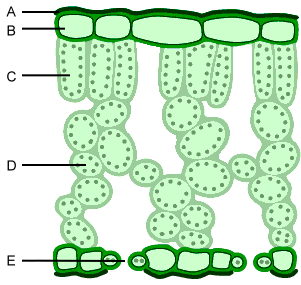
What is letter "A" pointing to?
cuticle
upper epidermis
lower epidermis
palisade mesophyll
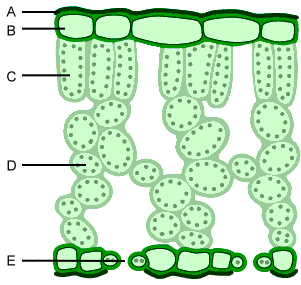
What is letter "D" pointing to?
upper epidermis
palisade mesophyll
spongy mesophyll
bundle sheath
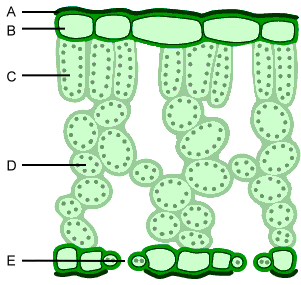
Which of the following is pointing to the "guard cell"?
B
C
D
E

Identify structure 3 in the diagram
Waxy cuticle
Palisade mesophyll
Upper epidermis
Guard cell

leaf
tree
environment
shrub

branch
plant
trunk
root

root
moss
flower
leaf

stem
plant
soil
trunk

How do you call the part that is the tip of the leaf?
Leaf apex
Leaf margin
Vein
Mid vein
Leaf blade

How do you call the part that is responsible for gas exchange and transpiration?
Leaf apex
Leaf margin
Vein
Mid vein
Leaf blade

How do you call the part that joins the leaf to the stem?
Leaf margin
Petiole
Vein
Mid vein
Leaf blade

How do you call the part that is the central rib of the leaf?
Leaf margin
Petiole
Vein
Mid vein
Leaf blade

How do you call the part that is the edge of the leaf?
Vein
Petiole
Leaf margin
Mid vein
Leaf blade

How do you call the part that transports water, minerals and food to the rest of the plant?
Vein
Petiole
Leaf margin
Mid vein
Leaf blade

Number 1 is...
Node
Internode
Petiole
Axillary bud

Number 2 is ...
Node
Internode
Petiole
Axillary Bud

Number 3 is...
Node
Internode
Petiole
Axillary Bud

Number 4 is...
Node
Internode
Petiole
Axillary Bud

Number 5 is...
Blade
Margin
Midrib
Serrate

What number is the midrib
5
4
3
2
1

#1 - outermost layer and not made of cells; helps regulate water loss.
Epidermal cells
Palisade cells
Xylem cells
Waxy cuticle
#2 & #5 - outermost layer of cells; provides protection from outside elements.
Epidermal cells
Palisade cells
Phloem cells
Waxy cuticle
#3 - layer of tall, columnar cells that contain many chloroplast for photosynthesis
Epidermal cells
Guard cells
Pallisade mesophyll
Spongy mesophyll
#4 - layer of irregular cells with space in between the cells
Pallisade mesophyll
Phloem
Spongy mesophyll
Xylem
#6 - porous opening in the bottom of the leaf that allows for gaseous exchange
Pallisade mesophyll
Spongy mesophyll
Stomata
Vein
#7 - two cells that surround each porous opening; regulates gaseous exchange by opening and closing the pore.
Epidermal cells
Guard cells
Stomata cells
Xylem cells
#8 - Cell tissue that makes up part of each vein that transports glucose and nutrients throughout the plant
Epidermal cells
Guard cells
Phloem cells
Xylem cells
#9 - Cell tissue that makes up part of each vein that transports water throughout the plant
Epidermal cells
Guard cells
Phloem cells
Xylem cells
The outermost layer of CELLS of the leaf is the
cuticle
epidermis
spongy mesophyll
bundle sheath
What's the main function of the leaf?
Absorb Sunlight
Make Food
Attract Insects
Move Water and Minerals
In which organelle does photosynthesis occur?
Cell Wall
Chlorophyll
Chloroplast
Cytoplasm
What are the end products of photosynthesis?
Carbon Dioxide and Water
Glucose and Carbon Dioxide
Oxygen and Glucose
Water and Glucose
Which of the following are reactants of photosynthesis?
CO2 and H2O
O2
H2O and Glucose
None of the above
a single leaf blade with a bud at the base of the leaf stem
Simple
Compound
Both
_________is where photosynethesis actually occurs
mesothelioma
mesophyll
metophyll
a leaf with more than one blade.
simple
compound
both
which is not a type of compound leaf?
Pinnate
Dividenly
Doubly
Palmate

The following is what type of leaf arrangement?
opposite
alternate

The following is which type of leaf arrangement?
opposite
alternate
MANY LATERAL BRANCHES ARE KNOWN AS ?
LEAF
VEINS
LAMINA
PETIOLE
IN A _____________ LEAF, THE LEAF BLADE IS CLEARLY DIVIDED INTO MANY DISTINCT PARTS.
COMPUND LEAF
SIMPLE LEAF

WHICH TYPE OF VENATION IS IT ?
PARALLEL
RETICULATE
LEAF
LAMINA
THE ARRANGEMENT OF A LEAF ON A STEM IS CALLED ?
LEAF
ALTERNATE
PHYLLOTAXY
OPPOSITE
____________ IS A FLAT,THIN EXPANDED PART OF A LEAF
PETIOLE
LAMINA
ROOT
SHOOT
ALL FLOWERING PLANTS HAVE A ROOT SYSTEM AND A SHOOT SYSTEM
FALSE
TRUE
WHO FORMS A NETWORK IN A VENATION ?
PARALLEL
RETICULATE
THE SMALL SWOLLEN PART AT THE END OF THE PETIOLE IS KNOWN AS ?
LEAF
LEAF BASE
MIDRIB
LAMINA
(NERIUM OLEANDER) IS AN EXAMPLE OF ?
OPPOSITE ARRANGEMENT
WHORLED ARRANGEMENT
ALTERNAT ARRANGEMENT
What is the stalk?
the flat part of the leaf
attaches the leaf to the plant
a central vein on the blade
provides support for the leaf
What is the midrib?
attaches the leaf to the plant
a central vein on the blade from which smaller veins grow
provide support for the leaf and transport or carry nutrients and water
the flat part of the leaf

Name the part of the leaf labeled number 1.
blade
midrib
side veins
stalk

Name the part of the leaf labeled number 2. (There can be more than one answer )
stalk
midrib
main vein
blade

Name the part of the leaf labeled number 3.
midrib
leaf blade
stalk
veins

Name the part of the leaf labeled number 4.( there can be more than one answer)
blade
petiole
stalk
veins
the part of the stem between two successive nodes is called as
(a)

what type of leave is this ?
simple leaf
compound leaf

what is the shape of this leaf?
Needle shaped
Oval shaped
Oblong shaped
Tapering shaped

what is the shape of this leaf?
Needle shaped
Oval shaped
Tapering shaped
Circular shaped

What type of leaf margin is shown in the picture?
Complete
Toothed
Wavy
Spinous
The arrangement of the leaves on a stem or its branch is called (a) -

What type of leaf phyllotaxy is shown in here?
opposite
alternate
whorled

what is the type of leaf venation is shown here in this picture?
(a)


Many plants have bright, sweet smelling flowers. How would this adaptation help the plant?
It warns away predators
It attracts bees and other pollinators
It helps the plant store water
It gives the plant shade.
Helps the plant to anchor to the soil and get water and nutrients.
Leaves
Stems
Roots
Odd shapes


An adaptation that helps a cactus live in the desert is its
wide, flat leaves to catch water
bright green color
thin, spiny needles
tall stems
Can we make paper out of trees?
Yes
No

Aloe Vera is an example of a medicinal plant.
True
False

We can also make clothes from plants like cotton.
True
False

Lavender is an example of a medicinal plant.
True
False
Plants give us
Food
Wood
Medicine
All of the above
________ act as air purifiers.
Sun
Human
Plants
Moon
Garlic and ginger plants are used to make ___________.
Medicines
Oils
Perfumes
Spices
The parts of plants that are edible are:
Seeds
Leaves
Roots
All of the above

What part of the tomato plant do we eat?
Leaves
Roots
Stem
Fruit

What part of the plant do you eat in lettuce?
Flower
Leaves
Root
Stem

What part of the plant do you eat in carrots?
Stem
Root
Flower
Leaf
When plants lose all of their leaves they are-
Hibernating
Migrating
Taking a break
Dormant
The following are leaf adaptations for photosynthesis EXCEPT
Thin
Contains Chlorophyll
Contains Root Hair
Contains Stoma and Guard Cells
The part of the leaf that enables it to hold water by stopping water from escaping through evaporation
Cuticle
Palisade Cells
Xylem
Epidermis
Part of the leaf which allows the diffusion of gases to occur
Palisade Cells
Spongy Mesophyll Cells
Epidermis
Phloem
This ion is needed for the creation of chlorophyll
Magnesium
Iron
Phosphate
Sulphate
The following ions are necessary for the plants to absorb EXCEPT
Nitrate
Phosphate
Magnesium
Manganese
The following compounds goes in and out of the stoma EXCEPT
Oxygen
Glucose
Carbon Dioxide
Water
Which type of plant produces a flower?
angiosperm
gymnosperm
both
Which type of plant lives the longest?
annual
biennial
perennial
All plants
make sugar
have roots
make flowers
have stems
What structure protects the surface of the leaf?
cambium
phloem
cuticle
front
A frond is a leaf from a
fern
pine tree
moss
This structure holds nonvascular seedless plants into the ground
roots
saprophyte
rhizoid
cones
The plant kingdom is organized into
divisions
phyla
Angiosperms produce from
rhizoids
cones
fruit and flowers
Gymnosperms reproduce with
cones
fruit
flowers
An oak tree is an example of a (an)
angiosperm
gymnosperm
Both angiosperms and gymnosperms have leaves, stems, and seeds
true
false
Which plant has very soft stem?
Mango
Neem
Marigold
Babool
Which plant has hard stem?
Neem
Tulsi
Rose
Marigold
Which plant has very big leaf?
Guava
Sheesham
Banana
Sunflower
Which plant has very small leaf?
Neem
Rose
Tamarind (imli)
Hibiscus

These are the leaves of - - - - - plant.
Banana
Guava
Pea
Mango

Which plant is this?
Marigold
Rose
Hibiscus
Sunflower
Which is a herb?
Tulsi
Neem
Sheesham
Apple
Which is a tree?
Wheat
Rose
Mango
Potato

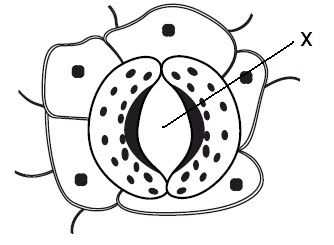

Why would a plant have thick, waxy leaves?
to move water up the plant
to help store water
to help it float
Which part of the plant is responsible for transporting water and nutrients throughout the leaf?
Leaf vein
Leaf
Root
Root hair

