wayground logo

Free Printable Worksheets

Font size

S
M
L
XL
Worksheets

Honors Geometry Semester Exam Review

Total questions: 126

Worksheet time: 6hrs 13mins

Name
Class
Date
1.

By what reason are the triangles congruent?

a)

SSS

b)

SAS

c)

ASA

d)

AAS

2.

Which property is being used above?

a)

Symmetric Property

b)

Substitution Property

c)

Subtraction Property

d)

Addition Property

3.

What does the Symmetric Property say?

a)

If a=b, then b=a.

b)

If a=b, then a-c=b-c.

c)

If a=b, then ac=bc.

d)

If a=b and b=c, then a=c.

4.

What is the Definition of Angle Bisector?

a)

A point or line that splits a segment into two congruent halves.

b)

A point or line that divides an angle into two congruent halves.

c)

A point that is in the exact middle of a segment.

d)

A 90 degree angle.

5.

Which property is being used above?

a)

Addition Property

b)

Multiplication Property

c)

Subtraction Property

d)

Division Property

6.

Which property says that if a=b and b=c, then a=c?

a)

Symmetric Property

b)

Reflexive Property

c)

Substitution Property

d)

Transitive Property

7.

Which property is being used above?

a)

Addition Property

b)

Subtraction Property

c)

Multiplication Property

d)

Division Property

8.

What property is being used above?

a)

Transitive Property

b)

Division Property

c)

Substitution Property

d)

Distributive Property

9.

Which property is being used above?

a)

Symmetric Property

b)

Substitution Property

c)

Reflexive Property

d)

Division Property

10.

What is a point that is in the exact middle of a segment?

a)

Definition of Angle Congruence

b)

Definition of Angle Bisector

c)

Definition of Midpoint

d)

Definition of Segment Congruence

11.

Write the equation of a line PERPENDICULAR to y=13x9y=\frac{1}{3}x-9  that passes through the point (-6, 10).

a)

y=13x9y=\frac{1}{3}x-9

b)

y=13x+10y=\frac{1}{3}x+10

c)

y=3x+6y=-3x+6

d)

y=3x8y=-3x-8

12.

Write the equation of a line PARALLEL to y = 2x + 3 that passes through the point (3, 1).

a)

y=2x 3y=2x\ -3

b)

y=2x5y=2x-5

c)

y=2x + 1y=2x\ +\ 1

d)

y=12x+52y=-\frac{1}{2}x+\frac{5}{2}

13.
What direction is an undefined slope?
a)
horizontal
b)
vertical
14.
Are these two lines parallel, perpendicular or neither?
y = -1/3x - 5
y = 1/3x + 2
a)
Parallel
b)
Perpendicular
c)
Neither
15.
What is the equation of the line?
a)
y=3x
b)
y=3
c)
x=3
d)
y=-3
16.

What does the "m" represent in y=mx+by=mx+b  

a)

y-intercept

b)

measurement

c)

slope

d)

nothing

17.

What does the "b" represent in y=mx+by=mx+b  

a)

y-intercept

b)

nothing

c)

slope

d)

base

18.

Slopes of parallel lines are...

a)

opposite reciprocals

b)

the same

c)

opposites

d)

always 7

19.

Slopes of perpendicular lines are...

a)

opposite reciprocals

b)

the same

c)

opposite

d)

always 7

20.

y=3x+2y=3x+2  and  y=3x3y=3x-3  
These lines are...

a)

the same line

b)

perpendicular

c)

neither

d)

parallel

21.

y=23x+2y=\frac{-2}{3}x+2  and  y=32x+9y=\frac{3}{2}x+9  

a)

Parallel

b)

Perpendicular

c)

Neither

22.
Are these lines parallel?
y = 12x + 4
y = 12x +14
a)
YES
b)
NO
23.

Are these lines parallel?

y = (-1/2)x + 1

y = (1/2)x - 5

a)

YES

b)

NO

24.
Are these lines perpendicular?
y = 4x + 2
y = (-1/4)x + 12
a)
YES
b)
NO
25.
Are these lines perpendicular?
y = (1/2)x + 2
y = -2x + 13
a)
YES
b)
NO
26.
Are these two lines parallel, perpendicular or neither?
y = -1/3x - 5
y = 1/3x + 2
a)
Parallel
b)
Perpendicular
c)
Neither
27.
a)
∠1 & ∠2
are vertical angles
b)
∠2 & ∠4
are vertical angles
c)
∠5 & ∠8
are vertical angles
d)
∠1 & ∠5
are vertical angles
28.
a)
∠1 & ∠2
are corresponding angles
b)
∠2 & ∠4
are corresponding angles
c)
∠5 & ∠8
are corresponding angles
d)
∠1 & ∠5
are corresponding angles
29.
a)
∠1 & ∠8
are alternate interior angles
b)
∠2 & ∠3
are alternate interior angles
c)
∠4 & ∠5
are alternate interior angles
d)
∠7 & ∠4
are alternate interior angles
30.
a)
∠A=82°
b)
∠A=98°
c)
∠A=180°
d)
∠A=8°
31.
a)
∠D=116°
b)
∠D=64°
c)
∠D=180°
d)
∠D=26°
32.
a)
∠C=116°
b)
∠C=64°
c)
∠C=180°
d)
∠C=26°
33.
a)
∠J=105°
b)
∠J=75°
c)
∠J=15°
d)
∠J=90°
34.

Which pair(s) of special angles are congruent?

a)

Corresponding angles

b)

Consecutive Interior angles

c)

Alternating Interior Angles

d)

Alternating Exterior Angles

e)

Linear pairs

35.

Which pair(s) of special angles are supplementary?

a)

Corresponding angles

b)

Consecutive Interior angles

c)

Alternating Interior Angles

d)

Alternating Exterior Angles

e)

Vertical Pairs

36.

If the  m6=55°,m\angle6=55\degree,  what is  m12m\angle12  and which rule did you use?

a)

55°55\degree  

b)

125°125\degree  

c)

Alternate exterior angles are congruent.

d)

Alternate exterior angles are supplementary.

e)

You don't use alternate exterior angles, at all. I used a different rule. 

37.

If the  m11=105°,m\angle11=105\degree,  what is  m12m\angle12  and which rule did you use?

a)

105°105\degree  

b)

  105°105\degree  

c)

Alternate exterior angles are supplementary.

d)

Consecutive interior angles are supplementary.

e)

Linear pairs are supplementary.

38.

If the  m9=122°,m\angle9=122\degree,  what is  m10m\angle10  and which rule did you use?

a)

122°122\degree  

b)

  68°68\degree  

c)

58°58\degree  

d)

Consecutive interior angles are supplementary.

e)

Consecutive exterior angles are supplementary.

39.
What are complementary angles?
a)
Angles that add up to 180°
b)
Angles that add up to 90°
c)
Angles that are equal to each other
d)
Angles that are opposite of each other when lines intersect.
40.
What are supplementary angles?
a)
Angles that add up to 180°
b)
Angles that add up to 90°
c)
Angles that are equal to each other
d)
Angles that are opposite of each other when lines intersect
41.
What are vertical angles?
a)
Angles that are adjacent to each other
b)
Angles that add up to 180°
c)
Angles that are opposite of each other when lines intersect
d)
Angles that add up to 90°
42.
If angle ∠ABD is 67°. What is ∠DBC?
a)
180°
b)
90°
c)
67°
d)
23°
43.
Which are pairs of vertical angles?
a)
∠COB & ∠COA
b)
∠AOD & ∠AOC
c)
∠COB & ∠AOD
d)
∠BOD & ∠AOD
44.
If ∠COB is 124°, then what is ∠BOD? How are they related?
a)
56°, they are supplementary
b)
90°, they are complementary
c)
124°, they are vertical
45.
Find the value of x
a)
-5
b)
28
c)
19
d)
-3
46.
a)
2x-6=7x+4
b)
2x-6+7x+4=90
c)
2x-6+7x+4=180
d)
2x-6+7x+4=360
47.
a)
2x-6=7x+4
b)
2x-6+7x+4=90
c)
2x-6+7x+4=180
d)
2x-6+7x+4=360
48.
Find the value of x.
a)
14
b)
60
c)
35
d)
180
49.
Name the relationship: complementary, linear pair, vertical, or adjacent
a)
A
b)
B
c)
C
d)
D
50.
Find m∠ADE. 
a)
77°
b)
93°
c)
110°
d)
80°
51.
Name the angle relationship.
a)
Alternate Interior
b)
Alternate Exterior
c)
Corresponding
d)
Vertical Angles
52.
Which of these represents point-slope form of a linear equation?
a)
y - y1 = m(x - x1)
b)
Ax + By = C
c)
y = mx + b
d)
y=kx
53.
Which of these represents slope-intercept form of a linear equation?
a)
y - y1 = m(x-x1)
b)
Ax + By = C
c)
y = mx + b
d)
y=kx
54.
Which of these represents standard form of a linear equation?
a)
y - y1 = m(x-x1)
b)
Ax + By = C
c)
y = mx + b
d)
y=kx
55.
For the equation
y - 3 = 2(x + 4),
the line has a slope of 2 and contains what point?
a)
(-4, 3)
b)
(3, -4)
c)
(-3, -4)
d)
(-4, -3)
56.
For the equation
y + 1 = -3 (x - 5),
the line contains the point (5, -1) and has a slope of?
a)
-1
b)
1
c)
-3
d)
5
57.
Write the equation in point-slope form of the line that passes through the given point and has the given slope.
(4, -7); m = -1/4
a)
y +7 = -1/4(x - 4)
b)
y - 4 = -1/4(x + 7)
c)
y + 4 = -1/4(x - 7)
d)
y - 7 = -1/4(x - 4)
58.
Write the equation in slope-intercept form of the line that passes through the given point and has the given slope.
(4, -7); m = -1/4
a)
y = -1/4x + 6
b)
y = -1/4x - 6
c)
y = -1/4x - 8
d)
y = -1/4x + 8
59.
Write the equation in point-slope form for the line that contains the points
(-2, -3), (4, 3)
a)
y - 3 = 1(x - 2)
b)
y + 3 = 1(x + 2)
c)
y -3 = -1(x + 2)
d)
y + 3 = -1(x - 2)
60.
Write the equation in point-slope form for the line that contains the points
(3, -5) and (5, - 1)
a)
y - 5 = 2(x + 3)
b)
y + 5 = 2(x - 3)
c)
y - 3 = 2(x + 5)
d)
y + 3 = 2(x - 5)
61.
Write the equation in slope-intercept form for the line that contains the points
(3, -5) and (5, - 1)
a)
y = 2x + 11
b)
y = 2x + 1
c)
y = 2x - 1
d)
y = 2x - 11
62.
Write an equation in slope-intercept form that has m = 5/4 through (-4, -3)
a)
y = 5/4x + 2
b)
y = -5/4x + 2
c)
y = 2x - 5/4
d)
y = 3/4x + 2
63.

Write the equation of a line PARALLEL to y = 2x + 3 that passes through the point (3, 1).

a)

y=2x 3y=2x\ -3

b)

y=2x5y=2x-5

c)

y=2x + 1y=2x\ +\ 1

d)

y=12x+52y=-\frac{1}{2}x+\frac{5}{2}

64.

Write the equation of a line PERPENDICULAR to y = -2x + 1 that passes through the point (2, 3).

a)

y=12x+12y=-\frac{1}{2}x+\frac{1}{2}

b)

y=12x+2y=\frac{1}{2}x+2

c)

y=2x+7y=-2x+7

d)

y=2x+8y=-2x+8

65.
What is the equation of a line parallel to the following line that passes through the given point? 
y = -4x + 6      (2, -1)
a)
y = 1/4x + 6
b)
y = -4x + 7
c)
y = -4x + 2
d)
y = 1/4x -1 
66.
What is the equation of a line that is perpendicular to this line and goes through the given point?
y = 3x + 2      (3, -4)
a)
y = 3x - 2
b)
y = -1/3x - 5
c)
y = 3x - 4
d)
y = -1/3x - 3
67.

Find the length indicated.

(a)  

68.

Find the length indicated.

(a)  

69.

Write an equation that correctly models the lengths shown.

a)

2x + 20 + x + 21 = 9

b)

2x + 20 + 9 = x + 21

c)

9 + x + 21 = 2x + 20

d)

2x + 20 - 9 = x + 21

70.

Find the indicated length.

(a)  

71.

Write an equation that correctly models the lengths shown.

a)

3x + 2 + 6 = 2x - 2

b)

2x - 2 + 6 = 3x + 2

c)

6 - 3x - 2 = 2x - 2

d)

2x + 2 + 3x + 2 = 6

72.

Write an equation that could be used to relate the lengths shown.

a)

4 + 3x + 2 = 7x - 2

b)

7x - 2 + 4 = 3x + 2

c)

7x - 2 + 3x + 2 = 4

73.

Write an equation that could be used to relate the lengths of the segments shown.

a)

9 - x = 2x - 19

b)

9 + x = 2x -19

c)

x + 2x - 19 = 9

d)

9 + 2x - 19 = x

74.
If GH = 8 and HI = 17, Find GI
a)
8
b)
9
c)
24
d)
25
75.
Identify the property of equality.
If 9=x, then x=9
a)
Reflexive
b)
Symmetric
c)
Transitive
d)
Substitution
76.
Identify the property used here:
39=39
a)
Reflexive
b)
Symmetric
c)
Transitive
d)
Substitution
77.
What is always the 1st statement in reason column of a proof?
a)
Prove
b)
Given
c)
Reason
d)
Statement
78.
Step 2 is what
a)
Substitution property (simplify)
b)
Multiplication property of equality
c)
Division property of equality
d)
Distributive Property
79.
What is step 4
a)
Substitution property (simplify)
b)
Addition property of equality
c)
Subtraction property of equality
80.
What is step 6
a)
Subtraction property of equality
b)
Addition property of equality
c)
Division property of equality
81.
What is reason 2?
a)
Addition Property of Equality
b)
Subtraction Property of Equality
c)
Multiplication Property of Equality
d)
Division Property of Equality
82.

What does "m" stand for in the slope formula?

a)

y axis

b)

slope

c)

y coordinate

d)

x coordinate

83.
Find the slope of the line.
a)
-5/4
b)
5/4
c)
-4/5
d)
4/5
84.
Find the slope:
a)
3/4
b)
4/3
c)
-3/4
d)
-4/3
85.
Find the slope given the points (2, −7) and (−1, 6). 
a)
-13/3
b)
13/3
c)
0
d)
2/3
86.

Find the slope given the points (3,2) and (4,7).

a)

4

b)

5

c)

-5

d)

1/5

87.

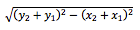
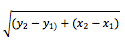
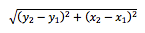
Given two points (x1, y1), (x2, y2) the distance between them is:
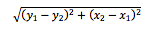
a)
b)
c)
d)
88.

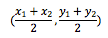
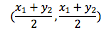
Which of the following is the correct midpoint formula given two endpoints (x1, y1) and (x2, y2)?
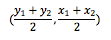
a)
b)
c)
d)
89.
Find the distance between the points (4, 3) and (0, 6).
a)
3
b)
4
c)
5
d)
7
90.
What is the midpoint between (3, -1) and (7, -5)
a)
(5, -2)
b)
(10, -6)
c)
(5, -3)
d)
(2, -2)
91.
What is the midpoint between (3, -1) and (8, -6)
a)
(11, -7)
b)
(-5.5, -3.5)
c)
(5.5, -3.5)
d)
(2, -2)
92.
Find the distance.
a)
7.1
b)
7.8
c)
8.7
d)
8.9
93.
What is the distance between the two points?
a)
6.3
b)
6.5
c)
6.7
d)
16
94.
Determine how to translate triangle ABC to triangle A'B'C'.
a)
right two, down five
b)
right two, down 9
c)
left two, up 9
d)
left two, down 5
95.
Determine where X' would be if you translated X 3 units to the left and 9 units down.
a)
(-4, 4)
b)
(-10, 2)
c)
(-4, -5)
d)
(-1, 5)
96.
Which answer shows a reflection across the y-axis?
a)
a
b)
b
c)
c
d)
d
97.
Find K' if the figure is reflected across the x-axis
a)
(4, 1))
b)
(-1, -4)
c)
(1, -4)
d)
(1, 4)
98.
Identify the transformation from C to D.
a)
90o Clockwise Rotation
b)
180o Rotation
c)
270o Clockwise Rotation
d)
360o Rotation
99.
The point Z(4, -2) is rotated 180 degrees about the origin.  What is the image of Z?
a)
Z'(2, 4)
b)
Z'(-4, 2)
c)
Z'(-2, -4)
d)
Z'(-4, -2)
100.
Translate the point A (-3, 4) right 5 and up 1
a)
(-2, 9)
b)
(-8, 5)
c)
(8, 3)
d)
(2, 5)
101.

Calculate m∠ABC.

a)

45°

b)

60°

c)

105°

d)

15°

102.

Calculate m∠DEF.

a)

180°

b)

60°

c)

120°

d)

80°

103.
a)

x = 6°

b)

x = 7°

c)

x = 12°

d)

x = 144°

104.
Find the value of ∠A.
a)
25 degrees
b)
30  degrees
c)
35 degrees
d)
90 degrees
105.

If m∠RST = (12x -1)°, m∠RSU = (9x -15)°,

and m∠UST = 53°, find each measure.

a)

x = 13

m∠RST = 155°

m∠RSU = 102°

b)

x = 3

m∠RST = 35°

m∠RSU = 12°

c)

x = 22

m∠RST = 263°

m∠RSU = 183°

d)

x = 8

m∠RST = 95°

m∠RSU = 57°

106.

 Find HIW\angle HIW  if  HIJ = 164°\angle HIJ\ =\ 164\degree  and  WIJ = 140°\angle WIJ\ =\ 140\degree  

a)

HIW = 304°\angle HIW\ =\ 304\degree  

b)

HIW=16°\angle HIW=16\degree  

c)

HIW=40°\angle HIW=40\degree  

d)

HIW=24°\angle HIW=24\degree  

107.
Find the perimeter of the large triangle.
a)
24
b)
36
c)
12
d)
54
108.
If the scale factor is greater than one, the new figure will be
a)
a reduction
b)
an enlargement
c)
a scale
d)
not proportional
109.
If the scale factor is less than one, the new figure will be
a)
an enlargement
b)
a reduction
c)
a scale factor
d)
bigger
110.

A ~ B. What is the scale factor of the dilation of A to B?

a)

43\frac{4}{3}

b)

34\frac{3}{4}

c)

3

d)

4

111.

ABC ~ XYZ. What is the scale factor of the dilation of ABC to XYZ?

a)

23\frac{2}{3}

b)

32\frac{3}{2}

c)

2

d)

3

112.
What similarity theorem would prove that these triangles are similar?
a)
SAS∼
b)
SSS∼
c)
AA∼
d)
Side Splitter
113.
What similarity theorem would you use to prove these triangles are similar?
a)
SAS∼
b)
SSS∼
c)
AA∼
d)

Not similar

114.
State the postulate that proves these triangles are similar.
a)
SSS
b)
AA
c)
SAS
d)
Not similar
115.

State the postulate that proves the triangles are similar.

a)
AA
b)
SAS
c)
SSS
d)
Not Similar
116.
How do these triangles appear to be similar?
(Hint: Look for non-labeled parts!)
a)
AA
b)
SAS
c)
SSS
d)
Not Similar
117.
Choose the similarity statement for the triangles.
a)
ΔMNL ∼ ΔOPQ
b)
ΔNOM ∼ ΔPQL
c)
ΔLMN ∼ ΔPQO
d)
ΔMLN ∼ ΔPQO
118.
Find side length X.
a)
16
b)
18
c)
2.4
d)
15
119.
Find side length X.
a)
30
b)
25
c)
15
d)
40
120.
Fill in the missing part of the proportion statements (left proportion): 
a)
VO
b)
EO
c)
DO
d)
IE
121.
Fill in the missing part of the proportion statements (right proportion): 
a)
VO
b)
EO
c)
DO
d)
IE
122.
Fill in the missing parts of the proportion statements (top left statement)
a)
LP
b)
AL
c)
YR
d)
ER
123.
Find the value of x
a)
14.7
b)
49.5
c)
22
d)
18
124.
Find the value of x
a)
11.1
b)
16
c)
36
d)
25
125.
Find the value of x
a)
14.4
b)
10
c)
15.625
d)
12.5
126.
Find the value of x
a)
5
b)
10
c)
12
d)
15