wayground logo

Free Printable Worksheets

Font size

S
M
L
XL
Worksheets

Physical Science Winter Benchmark

Total questions: 50

Worksheet time: 2hrs 40mins
Name
Class
Date
1.
The sum of kinetic energy and potential energy within a system is called
a)
thermal energy
b)
electrical energy
c)
mechanical energy
2.
Potential energy is
a)
stored energy
b)
moving energy
c)
the sum of all energy in the system
3.
Kinetic energy is
a)
stored energy
b)
moving energy
c)
the sum of all energy in the system
4.
Which of the following is not a type of potential energy?
a)
chemical
b)
elastic
c)
gravitational
d)
kinetic
5.
Where would a roller coaster have the greatest potential energy?
a)
at the top of a hill
b)
halfway up the hill
c)
at the bottom of the hill
6.
Two trucks have the same velocity but different masses. Truck #1 has a mass of 200 kg and Truck #2 has a mass of 500 kg. Truck# ________ has the most kinetic energy.
a)
1
b)
2
7.
When an object (like a ball) falls, some of its ___________ energy changes to___________ energy, due to the law of conservation of energy.
a)
kinetic, potential
b)
potential, kinetic
8.
This type of energy will be the highest at the bottom of a swing's path.
a)
kinetic
b)
potential
9.
This type of energy will be highest at the top of a swing's path.
a)
kinetic
b)
potential
10.
How much energy does a 50 kg rock have if it is sitting on the edge of a 15 m cliff? GPE=ham
a)
750 J
b)
7350 J
11.
If a toy helicopter is moving at 12 m/s, how much energy does the 3 kg toy have? KE=1/2mv2
a)
54 J
b)
216 J
12.
A small child weighs 60 N. If mommy left him sitting on top of the stairs, which are 10 m high, how much energy does the child have? GPE=ham
a)
600 J
b)
5880 J
13.
You are skateboarding on top of a small hill and take a break. You have 100 J of potential energy. If your mass is 80 kg, how high is the hill you are skating on? h=GPE/am
a)
0.128 m
b)
816.3 m
14.
Protons have ___________ electrical charge
a)
positive
b)
negative
15.
electrons have ___________ electrical charge
a)
positive
b)
negative
16.
Opposite charges __________ and like charges ____________.
a)
attract, repel
b)
repel, attract
17.
Charging by ____________ is the rearrangement of electrons on a neutral object caused by a nearby charged object.
a)
conduction
b)
induction
18.
___________ are materials that do not allow electric current to pass through easily.
a)
conductors
b)
insulators
19.
___________ is the accumulation of electrical charges on an object.
a)
static electricity
b)
voltage
20.
Current is usually the flow of _______________
a)
protons
b)
electrons
21.
Charges flow from ___________ voltage to ___________ voltage.
a)
high to low
b)
low to high
22.
The tendency for a material to oppose the flow of electrons is called ______________________.
a)
current
b)
resistance
23.
Making wires thinner, longer, or hotter ___________ the resistance.
a)
increases
b)
decreases
24.
Rubber
a)
conductor
b)
insulator
25.
Metal
a)
conductor
b)
insulator
26.
Plastic
a)
conductor
b)
insulator
27.
Styrofoam
a)
conductor
b)
insulator
28.
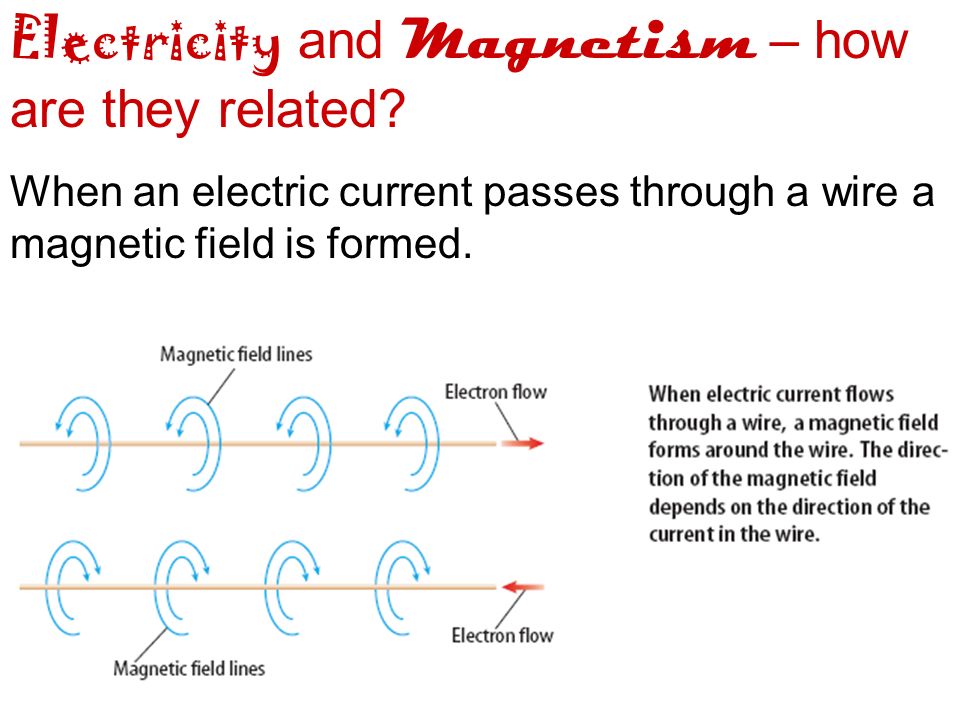
While electric current is flowing through a wire, what surrounds the wire?
a)
a magnetic field
b)
a glowing light
c)
neutrons
d)
protons
29.
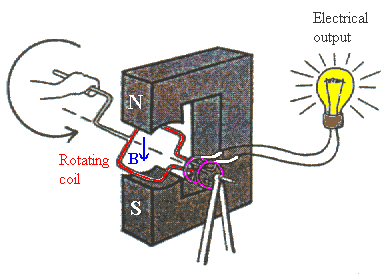
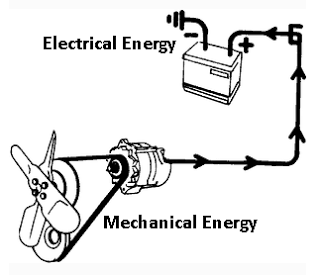
What is the transfer of electricity in a generator?
a)
Mechanical to Electrical 
b)
Physical to Potential 
c)
Electrical to Mechanical
d)
Yogurt to Light
30.
What is the transfer of electricity in a motor?
a)
chemical to mechanical 
b)
electrical to mechanical
c)
mechanical to electrical 
d)
physical to potential 
31.

What would happen if you broke a bar magnet into 8 pieces?

a)

You would have 8 half magnets

b)

You would have 4 complete magnets

c)

You would have 8 complete magnets

d)

They wouldn't be magnets anymore

32.

How are electromagnets different from permanent magnets?

a)

magnets can be turned on/off

b)

you can turn an electromagnet on/off

c)

magnets are more powerful

d)

magnets have a North and South pole

33.

Which kind of circuit only has one path for electricity to flow?

a)

Series

b)

Parallel

c)

Series and Parallel

34.

Which kind of circuit has more than one path for electricity to flow?

a)

Series

b)

Parallel

c)

Series and Parallel

35.

If a bulb is not working in a series circuit, what happens to the other bulbs?

a)

none will work

b)

the rest will work

36.

Hot coffee is stirred with a spoon, the spoon gets hot due to...

a)

Convection

b)

Radiation

c)

Conduction

37.

A chair is placed several feet from a fire in a fireplace. The fireplace has a glass screen. The side of the chair facing the fireplace gets warm because of...

a)

Convection

b)

Radiation

c)

Conduction

38.

A certain type of decorative lamp contains colored liquids. These liquids form globs that break off and rise to the top of the liquid. The globs rise due to...

a)

Convection

b)

Radiation

c)

Conduction

39.

Near the ceiling of a room the air is warmer. The warm air rises because of...

a)

Convection

b)

Radiation

c)

Conduction

40.

A college student holds the back of his hand near an iron to see if it is hot. Heat is transferred to his hand by...

a)

Convection

b)

Radiation

c)

Conduction

41.

A heater is placed under one corner of a water bed mattress. Warm water moves throughout he mattress because of..

a)

Convection

b)

Radiation

c)

Conduction

42.

The cause of weather systems on earth is...

a)

Convection

b)

Radiation

c)

Conduction

43.

An object at rest on op of a shelf is likely to have:

a)

No energy

b)

Gravitational potential energy

c)

Hydroelectric power

44.

Batteries are stores of:

a)

Chemical energy

b)

Electrical energy

c)

Light energy

45.

Energy is usefully transferred from a personal audio player as:

a)

Kinetic energy

b)

Thermal energy

c)

Sound energy

46.

A bus engine transfers chemical potential energy into ____ so that the bus moves.

a)

thermal energy

b)

gravitational potential energy

c)

electrical energy

d)

kinetic energy

47.
Energy transformations occur when...
a)
energy is created through conduction
b)
energy changes from one form to another
c)
two forces slide together that are touching
d)
a chemical reaction takes place
48.

The picture showing the energy conversion

Chemical → heat

is:

a)
b)
c)
d)
49.

The picture showing the energy conversion

Light → chemical

is:

a)
b)
c)
d)
50.

The picture showing the energy conversion

Chemical → light & heat

is:

a)
b)
c)
d)