wayground logo

Free Printable Worksheets

Font size

S
M
L
XL
Worksheets

8th Grade Phys Sci Review - S8P2

Total questions: 125

Worksheet time: 3hrs 56mins

Name
Class
Date
1.
The faster an object moves, the ________ kinetic energy it has. 
a)
more
b)
less
c)
none of the above
d)
all of the above 
2.
What would have the greatest kinetic energy?
a)
A car driving down a hill.
b)
A person running down a hill. 
c)
A ball rolling down a hill. 
3.
Which is the best example that something has kinetic energy?
a)
a. a car parked on a steep hill 
b)
b. a tennis ball rolling across the court
c)
c. a picture hanging on the wall 
d)
d. a piece of coal before it's burned 
4.

What two factors affect an object's kinetic energy?

a)

area and volume

b)

mass and weight

c)

weight and height

d)

mass and speed

5.

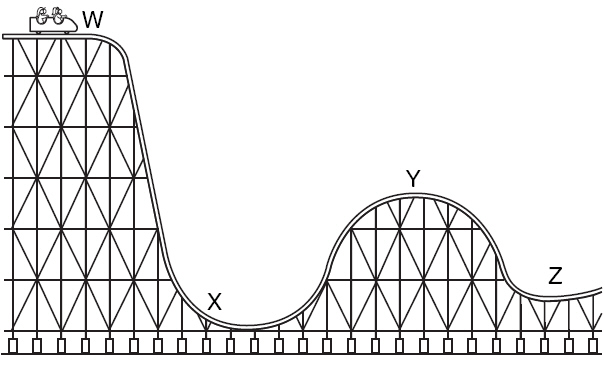
Where would this tossed baseball have the least amount of kinetic energy?

a)

point W

b)

point X

c)

point y

d)

point z

6.

Where would this tossed baseball have the greatest amount of kinetic energy?

a)

point W

b)

point X

c)

point y

d)

point z

7.

Increasing an object's mass will increase its kinetic energy.

a)

true

b)

false

8.

If all objects are moving as the exact same speed, which would have the greatest kinetic energy?

a)

tennis ball

b)

football

c)

notebook

d)

box of 20 textbooks

9.
As the velocity of an object decreases its KE will...
a)
increase
b)
decrease
c)
stay the same
10.
What kind of energy is in a rock at the edge of a cliff?
a)
Potential
b)
Kinetic
11.
What kind of energy is in a stretched rubber band?
a)
Potential
b)
Kinetic
12.
At which point is potential energy greatest?
a)
W
b)
X
c)
Y
d)
Z
13.
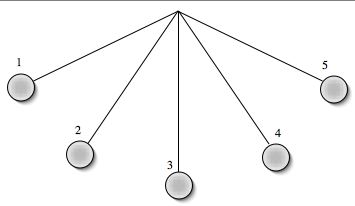
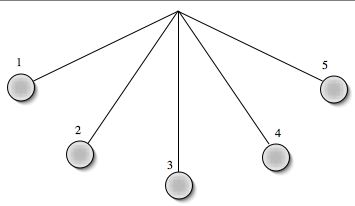
When a pendulum swings, at which point is kinetic energy highest?
a)
1
b)
2
c)
3
d)
4
14.
When a pendulum swings, at which point is potential energy at its greatest?
a)
1
b)
2
c)
3
d)
4
15.
Explain what happens to the potential energy of a rock as it falls off the side of a cliff.
a)
The kinetic energy decreases as the potential energy increases.
b)
The kinetic energy decreases as the potential energy decreases.
c)
The potential energy decreases as the kinetic energy increases.
d)
The potential energy decreases as the kinetic energy decreases. 
16.

Gravitational potential energy depends on the ________ and ________ of the object.

a)

Height (position)

b)

Mass

c)

Speed

d)

Friction

17.
What are the two factors that affect kinetic energy?
a)
time and energy
b)
power and mass
c)
mass and speed
d)
time and work
18.

Which is the Potential energy from least to the greatest on the stairs?

a)

D, C, B, A

b)

A, B, C, D

c)

C, B, A D

d)

D, A, B, C

19.
Wood, batteries, gasoline, and  food are all examples of ________________________.
a)
gravitational potential energy
b)
elastic potential energy
c)
chemical potential energy
d)
None of the above
20.
Energy stored in the height of an object is called ___________ potential energy.
a)
Elastic
b)
Chemical
c)
Gravitational
d)
Nuclear
21.
Energy stored in food and fuels
a)
Gravitational potential energy
b)
Chemical Potential Energy
c)
Elastic Potential Energy
d)
Energy
22.
Describe the energy in this picture.
a)
Gravitational Potential
b)
Kinetic
c)
Elastic Potential
d)
No Energy
23.
Describe the energy transformation in this picture.
a)
Potential to Kinetic
b)
Kinetic to Potential
c)
No transformation - it's all potential.
d)
No transformation - it's all kinetic.
24.
What happens to energy?
a)
It is created.
b)
It is destroyed.
c)
It is transformed.
d)
Nothing changes.
25.

Which point shows kinetic energy being transformed into potential energy?

a)

1

b)

2

c)

3

d)

4

e)

5

26.

Increasing an object's mass will increase its kinetic energy.

a)

true

b)

false

27.
_________ is a force that resists the sliding of two surfaces that are touching.
a)
Ficiton
b)
Friction
c)
Function
d)
Fashion 
28.
The energy transformation that takes place when a flashlight is turned on is...
a)
Chemical - electrical - light
b)
Chemical - light - electrical
c)
Electrical - thermal - light
d)
Nuclear - light - electrical
29.
The form of energy involved in eating a peanut butter and jelly sandwich can be transformed into riding a bike. What types of energy occur in this transformation?
a)
Nuclear - biomechanical
b)
Chemical - mechanical
c)
Potential - kinetic
d)
Electromagnetic - thermal
30.
The form of energy from the sun can be transformed into the energy needed for a tree to grow. What types of energy occur in this transformation?
a)
Electromagnetic - mechanical
b)
Potential - kinetic
c)
Light - chemical
d)
Nuclear - thermal
31.
A material that transfers heat very well is called a _________.
a)
insulator
b)
conductor
c)
radiator
d)
transistor
32.
A material that does not allow heat to transfer well is called a(n) _______.
a)
conductor
b)
blocker
c)
insulator
d)
blanket
33.
The spoon in this picture is an example of ______________.
a)

Radiation

b)

Conduction

c)

Currency

d)

Convection

34.
The water in this picture demonstrates an example of _________.
a)
Convection
b)
Conduction
c)
Radiation
d)
Insulation
35.

The energy of moving particles is called _____.

a)

sound energy

b)

thermal energy

c)

light energy

d)

mechanical energy

36.
A barefoot student steps on a hot concrete surface. Most of the heat transferred to the student’s skin by this contact is by the process of—
a)
convection
b)
conduction
c)
vaporization
d)
radiation
37.
The diagram to the right shows a solid iron bar that is being heated in a flame. The primary method of heat transfer in the solid iron bar is—
a)
convection
b)
conduction
c)
absorption
d)
radiation
38.
A student opens the top window and the bottom window in a hot room. What statement best describes the heat transfer occurring in the room?
a)
conduction
b)
radiation
c)
convection
d)
evaporation
39.

What is the main indication of conduction?

a)

direct touch

b)

currents in air or liquids

c)

heat waves/ light waves

d)

height above the ground

40.

What is the main indication of convection?

a)

direct touch

b)

currents in air or liquids

c)

heat waves or light waves

d)

velocity

41.

What is the main indication of thermal energy transfer by radiation?

a)

direct touch

b)

currents in ir or liquids

c)

electromagnetic waves/ light waves

d)

velocity

42.

Convection can take place in ____________.

a)

solids only.

b)

liquids only.

c)

liquids and gases only.

d)

solids, liquids and gases.

43.
In an ocean, warm water moves __________ and cold water moves ____________.
a)
Down, Up
b)
Up, Down
44.

What is an example of a convection current?

a)

Touching a hot spoon that was in a soup bowl.

b)

Feeling the suns rays on a nice summer day.

c)

Touching an iron skillet after cooking and feeling the heat.

d)

Movement of gas in a hot air balloon.

45.

Heat from a lamp is an example of _____________.

a)

radiation

b)

convection

c)

conduction

46.
What is the energy transformation?
a)
Kinetic to Mechanical and Electrical
b)
Chemical to Thermal and Electromagnetic (light)
c)
Electromagnetic to Chemical and Electrical
d)
Kinetic to Sound and Chemical
47.
What is the energy transformation?
a)
Nuclear to Electrical
b)
Mechanical to Electrical
c)
Electrical to Thermal
d)
Kinetic to Sound
48.

What is the energy transformation?

a)

Chemical to Electrical to Light

b)

Mechanical to Electrical to Light

c)

Electrical to Thermal to Mechanical

d)

Kinetic to Sound to Potential

49.

What energy transformations take place when a battery operated radio is in use?

a)

electrical to chemical to sound

b)

thermal to nuclear to electrical

c)

chemical to electrical to sound

d)

chemical to sound to thermal

50.

Which of the following transfers occurs when food is digested?

a)

Chemical to mechanical

b)

Mechanical to thermal

c)

Mechanical to solar

d)

Chemical to thermal

51.

Plants turn_______ energy into _______ energy for food.

a)

thermal, mechanical

b)

radiant, chemical

c)

electromagnetic, light

d)

potential, kinetic

52.

Which of the following device transforms electrical energy into mechanical energy?

a)

a fan

b)

a manually operated pencil sharpener

c)

an apple ipod

d)

a apple iPhone X

53.

What type of energy transformation in an electric hot plate is plugged in?

a)

electrical to light

b)

mechanical to electrical to light

c)

thermal to mechanical to light

d)

electrical to thermal

54.

A hairdryer converts-

a)

chemical to electrical

b)

electrical to thermal

c)

electrical to solar

d)

thermal to mechanical to light

55.

What type of energy transformation occurs when a hawk eats a mouse then uses the energy from the mouse to fly?

a)

mechanical to potential

b)

mechanical to chemical to thermal

c)

chemical to mechanical

d)

chemical to thermal to kinetic

56.

As the ball is dropped, the potential energy decreases while the kinetic energy increases however the amount of energy stays the same.

a)

True

b)

False

57.

What is changed to increase the potential energy of an object being dropped?

a)

Temperature

b)

Gravity

c)

Height

d)

Volume

58.

What happens as the ball on the pendulum goes from center to the right in the diagram?

a)

Kinetic energy increases while potential energy decreases

b)

Potential energy increases as kinetic energy decreases

c)

Potential energy increases as kinetic energy increases

d)

Potential and Kinetic energy is lost

59.

How does energy change?

a)

The cart has more kinetic energy at the top than when it is going down the hill.

b)

The cart has potential energy at the top while kinetic energy increases going down.

c)

The cart has potential energy that is lost going down the hill.

d)

The cart has kinetic energy at the top of the hill and no potential energy.

60.

A toy car is traveling up a ramp. What happens to the energy as it goes up the ramp?

a)

Kinetic energy increases while potential decreases.

b)

Potential energy increases while kinetic decreases.

c)

Both potential and kinetic energy increases.

d)

Both potential and kinetic energy decreases.

61.
When water falls through a dam and turns a turbine connected to a generator, electricity is produced. This electricity is often used to light our homes and offices. Which of the following shows the energy transformations that occurs?
a)
electrical → light → mechanical
b)
chemical → mechanical → electrical
c)
mechanical → chemical → light
d)
mechanical → electrical → light
62.
Electrical Energy is transferred to _____ Energy.
a)
Thermal
b)
Solar
c)
Electrical
d)
None
63.
Solar Energy is transferred to _____ Energy.
a)
Mechanical
b)
Solar
c)
Sound
d)
Electrical
64.
Which of the following shows an energy transformation from chemical energy to electrical to light energy?
a)
A bolt of lightning lights the night sky.
b)
A candle glows brightly in the dark.
c)
A fire in a fireplace lights up a room.
d)
A battery causes a flashlight to shine.
65.
People get energy from the food that they eat and transform that energy as they move. Which energy transformations occur as a student rapidly rubs the palms of his hands together?
a)
mechanical to thermal to electrical
b)
chemical to mechanical to thermal
c)
mechanical to chemical to sound
d)
chemical to sound to electrical
66.
A television works by transforming electrical energy into what other kinds of energy?
a)
Light, thermal, and sound
b)
Thermal, chemical, and solar
c)
Sound, mechanical, and electrical
d)
Light, chemical, and mechanical
67.

Vibrations produce _______ energy.

a)

chemical

b)

sound

c)

potential

d)

light

68.

Nuclear energy is stored in the ___ of an atom.

a)

proton

b)

neutron

c)

electron cloud

d)

nucleus

69.

Which of the following are ways that thrmal energy can be transferred? Choose all that apply.

a)

conduction

b)

radiation

c)

collision

d)

convection

70.

A window of a building is wide open. The temperature indoors is 23 degrees C, and the temperature outside is 15 degrees C. In which direction will thermal energy flow?

a)

From indoor to outdoor through the window

b)

From outdoor to indoor through the window

c)

Thermal energy will not flow.

71.

Draw the direction of heat transfer.

72.

Which way does heat transfer?

a)

From the less hot object to the hottest object

b)

From the coldest object to the colder

c)

From the cold to the warm

d)

From the hottest to the less hot (cooler) object

73.

When does heat transfer stop happening?

a)

When the temperatures of both objects are the same

b)

When energy is destroyed

c)

Never

d)

When energy is created

74.

Which of these would be an example of convection?

a)

Cooking popcorn on a stove

b)

Heat from a toaster warming a bagel

c)

Ironing a shirt

d)

A hot air balloon floating into the sky

75.

There are 3 main ways to transfer energy as heat: conduction - the transfer of heat through direct touching, convection - the transfer of heat by moving convection currents (usually liquid or gas), and radiation - the transfer of heat by electromagnetic waves.

What type of heat transfer is shown here?

a)

convection

b)

conduction

c)

radiation

d)

sun shining

76.

If this drink is sitting outside on a hot, sunny day, name two reason why the drink won't stay cold.

a)

radiation - from the sun is heating the glass

b)

conduction - the medium beneath the glass is heating

c)

convection - the air is moving in a circle pattern around

d)

conduction - the straw is heating up

77.

Classify: Which type of energy transfer is occurring at each lettered area? Indicate A, B, C order.

a)

conduction, convection, radiation

b)

conduction, radiation, convection

c)

convection, radiation, conduction

d)

convection, conduction, radiation.

78.

Walking on the hot sand on a beach is

a)

convection

b)

radiation

c)

conduction

79.

Boiling water moving in a circular motion is

a)

conduction

b)

radiation

c)

convection

80.

Feeling the heat from a stove burner without touching it is

a)

conduction

b)

radiation

c)

convection

81.

A ceiling fan forcing the warm air downward is

a)

conduction

b)

convection

c)

radiation

82.

Feeling heat from a campfire is

a)

convection

b)

conduction

c)

radiation

83.

Heat from the hood of a car when you touch it is

a)

convection

b)

radiation

c)

conduction

84.

Unscrewing a light bulb while it's still hot is

a)

radiation

b)

conduction

c)

convection

85.

Heat from the sun warming a swimming pool is

a)

convection

b)

radiation

c)

conduction

86.

Air in the atmosphere rising and falling is

a)

conduction

b)

radiation

c)

convection

87.
A battery converts what type of energy to another?
a)
electrical to chemical
b)
electrical to thermal
c)
mechanical to electrical
d)
chemical to electrical
88.
A boy skating downhill on a skateboard is transforming —
a)
potential energy into kinetic energy
b)
kinetic energy into potential energy
c)
thermal energy into potential energy
d)
kinetic energy into chemical energy 
89.
An apple hanging from the branch of a tree falls down.  How does its energy change as it falls?
a)
The kinetic energy of the apple converts to potential energy.
b)
The potential energy of the apple coverts to kinetic energy.
c)
The kinetic energy of the apple remains constant.
d)
The potential energy of the apple remains constant.
90.
A what point does the water have the most gravitational potential?
a)
A
b)
B
c)
C
d)
There is no gravitational potential
91.

Energy of moving parts

a)

electrical

b)

chemical

c)

mechanical

92.

Solar or light energy

a)

radiant

b)

chemical

c)

mechanical

93.

Energy stored in the bonds of chemical compounds

a)

potential chemical

b)

sound

c)

nuclear

94.

Energy caused by moving electrons

a)

radiant

b)

chemical

c)

electrical

95.

Energy caused by fusion or fission of atoms' nuclei

a)

mechanical

b)

nuclear

c)

chemical

96.

Wind

a)

mechanical energy

b)

thermal energy

c)

nuclear energy

d)

radiant energy

97.

Microwave

a)

sound energy

b)

radiant energy

c)

chemical energy

d)

mechanical energy

98.

Talking

a)

thermal energy

b)

radiant energy

c)

sound energy

d)

mechanical energy

99.

Lightning

a)

electrical energy

b)

nuclear energy

c)

sound energy

d)

chemical energy

100.
Kinetic energy depends on which two things?
a)
velocity and acceleration
b)
mass
c)
mass and momentum
d)
velocity and mass
101.
Which kind of energy does a battery have?
a)
kinetic 
b)
potential
c)
chemical
d)
heat
102.
Friction causes energy to be transformed from KE to what?
a)
GPE
b)
chemical
c)
thermal
d)
elastic
103.
The picture shows a microwave oven. As a microwave oven is operated, electrical energy is transformed into all of the following types of energy EXCEPT —
a)
solar
b)
electromagnetic/light
c)
thermal
d)
mechanical
104.
Energy is never
a)
transferred 
b)
lost, created or destroyed 
c)
converted
d)
wasted
105.
A plate is thrown in 2 meters in the air and has a weight of 10 N. What is the potential energy? 
a)
20 
b)
20 J
c)
12 J
d)
4 J
106.
Energy is defined as ___________________ . 
a)
Work
b)
Power
c)
The ability to do work
d)
N R G
107.
A cell phone battery dies.  It gets plugged into an electrical outlet to recharge. Which of the following energy transformations occur during the charging?
a)
mechanical to chemical
b)
electrical to solar
c)
chemical to light
d)
electrical to chemical
108.
A stretched out rubber band can be classified as all of the following except
a)
Elastic potential
b)
Kinetic
c)
Potential
109.
Energy that is produced by the internal motion of particles is called...
a)
light
b)
mechanical
c)
thermal
d)
chemical
110.
A stretched out rubber band can be classified as all of the following except
a)
Elastic potential
b)
Kinetic
c)
Potential
111.
Solar Energy is transferred to _____ Energy.
a)
Mechanical
b)
Solar
c)
Sound
d)
Electrical
112.
Mechanical Energy is transferred to _____ Energy.
a)
Solar
b)
Mechanical
c)
Electrical
d)
Potential
113.
What kind of energy is represented in the picture?
a)
Thermal
b)
Chemical
c)
Sound
d)
Nuclear
114.
Energy that is stored in bonds between atoms is:
a)
Mechanical energy
b)
Chemical energy
c)
Kinetic energy
d)
Nuclear energy
115.
A hot air balloon converts _____________ energy via ______________ energy into _______________ energy. 
a)
chemical; thermal; gravitational potential
b)
chemical; heat; electrical 
c)
kinetic; chemical; heat
d)
heat; nuclear; kinetic
116.

Which best explains why a wooden spoon can be used to stir hot soup on the stove?

a)

Wood is a good conductor of heat and transfers energy to the spoon.

b)

Wood is a poor conductor of heat and transfers energy to the spoon.

c)

Wood is a good conductor of heat and does not allow the transfer of energy to the spoon.

d)

Wood is a poor conductor of heat and does not allow the transfer of energy to the spoon.

117.
Which of the following is the best example of conduction?
a)
A light bulb warming a lampshade
b)
An egg cooking in a frying pan
c)
Water boiling in a pot
d)
Gases circulating in the atmosphere
118.

Which statement is true?

a)

The quicker a molecule moves, the colder it is.

b)

The slower a molecule moves, the warmer it is.

c)

The quicker a molecule moves, the warmer it is

d)

The movement of molecules don't affect temperature

119.
In heat transfer, heat always flows from the _______________ substance to the _______________ substance.
a)
Hotter to colder
b)
Colder to hotter
c)
Hotter to hotter
d)
Colder to colder
120.

Which is an example of radiation?

a)

boiling a pot of noodles for dinner

b)

getting hot from lying in the sun

c)

feeling warm while taking a shower

d)

burning yourself after touching a hot plate

121.

Why does an ice cube melt when dropped into hot liquid?

a)

The liquid absorbs heat from the ice.

b)

Heat from the liquid transfers to the ice.

c)

Heat from the ice transfers to the liquid.

d)

Cold from the ice transfers into the liquid.

122.
A crayon placed on a dark driveway in bright sunlight melted into a colorful puddle. What caused the crayon to melt?
a)
Solar radiation heated the driveway and then heat transferred to the crayon by conduction.
b)
Solar radiation heated the driveway and then heat transferred to the crayon by radiation.
c)
Solar convection heated the driveway and then heat transferred to the crayon by radiation.
d)
Solar convection heated the driveway and then heat transferred to the crayon by conduction.
123.
In heat transfer, heat always flows from the _______________ substance to the _______________ substance.
a)
Hotter to colder
b)
Colder to hotter
c)
Hotter to hotter
d)
Colder to colder
124.

What variable would you change to increase the kinetic energy of the rolling marble?

a)

Increase the length of the ramp

b)

Increase the height of the ramp

c)

Decrease the length of the ramp

d)

Decrease the height of the ramp

125.
The faster an object moves, the ________ kinetic energy it has. 
a)
more
b)
less
c)
none of the above
d)
all of the above