
 Worksheets
SCIENCE QUIZ 2
Total questions: 191
Worksheet time: 2hrs 7mins
The rougher the surface, the faster an object will travel over the surface.
True
False
Why are the soles of shoes and tyres of vehicles grooved?
To increase friction
To reduce friction
Why do gymnasts apply a coarse substance to their hands?


A rolling ball comes to a stop without any visible force stopping it. What is this invisible force stopping the ball from rolling indefinitely?
Friction
Fiction
Gravitational force
Weight
Friction is a force that opposes (a) motion between two bodies in contact.
Frictional force acts in the (a) direction to the force applied.
Frictional force acts ________ to the surface.
perpendicular
parallel
Frictional force depends upon:
A) Nature of both surfaces: Rough/smooth.
B) Force with which two surfaces are pressed together.
C) Area of surfaces in contact
D) All the above
Frictional force may arise due to:
A ) the roughness of surfaces
B) attraction between molecules of the two sliding surfaces.
Both A and B

RIGHT
LEFT

towards right
towards left
What are the four types of friction?
Pulling, Pushing, Rolling, and Sliding
Fluid, Sliding, Rolling and Static
Fluid, Pushing, Pulling, and Rolling
Pulling, Pushing, Static, and Sliding

Will these magnets repel or attract?
Repel
Attract

Will these magnets repel or attract?
Repel
Attract

Will these magnets repel or attract?
Repel
Attract
Give another example of Static Electricity.
Which picture is an example of conduction?


What is the unit for force?
Pound
Newton
Gram
Liter
A force is a (a) on an object
What do forces do when they act in the same direction?
shift to a different direction
cancel
combine
none of the above
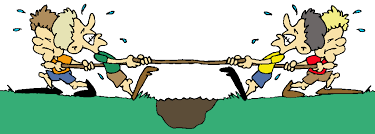
When two teams pull at a rope during tug-of-war and no one is moving what type of force is occurring?
balanced
unbalanced
friction
gravity
What affects friction? Choose all that apply
The weight of the object
The surface area of the two objects touching
The temperature of the object
How many objects are being used
The type of surface that the object is placed onto.
A big brown bat flies around the middle school looking for a meal to feast on, which type of friction is occurring as the bat is flying?
sliding friction
fluid friction
static friction
rolling friction
You are attempting to push a tapir from your path in the Brazilian rainforest but the tapir does not budge. What type of friction keeps the tapir in place?
sliding
fluid
rolling
static
A macaroni penguin glides through the water under your feet at the Indianapolis zoo. Which type of friction is acting on the penguin?
static
rolling
fluid
sliding
Look back in your notes to help with this question! What are two factors that affect gravity?
(a)
Which would create more friction?
carpet
metal
Which of these materials do you predict would have the MOST amount of friction
Metal
Tile
Sand Paper
Denim
Which of these best describes friction?
A rubbing force.
Something that is slippery.
Gravity.
Movement across a smooth surface.
Which motion has less friction
Sliding on grass
Sliding on ice
If you poured oil onto a wooden surface, the friction would ..
be decreased
be increased
remain the same

A ____________ is a push or a pull on an object.
friction
force
magnet
gravity

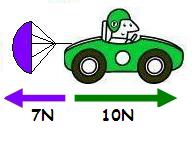
What is the net force?
3 N
3 N, right
17 N, right
3 N, left
TRUE or FALSE if you push a box across a surface like rough wood with a lot friction, it will NEVER stop
TRUE, as long as it doesn't run into something it will keep going and going and going
FALSE, it will stop very quickly
Friction _____________ motion
Works in the same direction as
Opposes
Has not effect on
Pulls against
Materials which allow electric current to pass through them are ______________
conductors
insulators
The path through which the electric current flows is _____________
current
circuit
The flow of electrons in a wire is called as_____________
circuit
current
(a) are good conductors of electricity.
Give two examples of insulators
Which one of the following solutions will not conduct electricity?
(a) lemon juice
(b) vinegar
(c) tap water
(d) vegetable oil
a
b
c
d
LED stands for
light emitting diode
light efficient diode
length emitting diode
light emitting device
Conduction of electricity in liquids occurs through electrons.
True
False
Sugar solution is a good conductor of electricity.
True
False
The electrode thats connected to the positive terminal of the battery is called a
anode
cathode
elctrode
When electricity is passed through tap water, the gases __________ and __________ are evolved.
(a)
An electric current can produce
heating effect only.
chemical effect only.
magnetic effect only.
chemical, heating, and magnetic effects.
When an electric current is passed through a conducting solution, there is a change in the colour of the solution. This indicates:
(a) the chemical effect of current.
(b) the heating effect of current.
(c) the magnetic effect of current.
(d) the lightning effect of current.
a
b
c
d
Name the effect of current responsible for the glow of bulb in an electric circuit.
magnetic effect of current
chemical effect of current
heating effect of current
the phenomenon of decomposition of an electrolyte when electricity is passed through is known as
conduction
coating
electrolysis
electrorefining
In an LED, the longer lead is attached to the (a) terminal of the battery and the shorter lead to the negative terminal.
Electroplating is a process whereby a metal surface is coated with a non-metal.
True
False
Electroplating is based on ___________of an electric current.
Physical effect
Chemical effect
Heating effect
Magnetic effect
Which is not a reason for metal plating?
decorative purposes
prevent rust and corrosion
to make the metal stronger
The electrode that contains the plating metal
Anode
Cathode
The electrode that contains the item to be electroplated
Anode
Cathode
Chromium corrodes easily.
True
False
Out of the following, which metal is used to electroplate iron to make it shining and rust resistant?
Gold
Chromium
Zinc
Tin
Which of these is plated on the iron to prevent it from chemically reacting with food?
Gold
Chromium
Tin
Zinc
Boojho’s uncle has set up an electroplating factory near his village. He should dispose off the waste of the factory
in the nearby river.
in the nearby pond.
in the nearby cornfield.
according to the disposal guidelines of the local authority.
The method of coating metals by immersing the metals in a liquid and then passing an electric current through the liquid is called ________
Electrolysis
Electroplating
Electropalting
Electroplation
Why do we add little dilute sulphuric acid to copper sulphate solution during electroplating?
to increase acidity
to increase conductivity
So that the colour becomes more prominent
to burn copper sulphate
Which of the following is not used for electroplating metal articles?
Nickel
Silver
Chromium
Sodium

If the fork is to be electroplated with silver metal, what electrolyte should be used?
Molten calcium chloride
Aqueous silver nitrate
Sodium chloride solution
Copper(II) sulphate solution
The conductors among the following are
Hydrochloric acid
Sugar solution
Vinegar
Salt water
Copper will form at which electrode
Positive
Negative
Neutral
Neither
Which of the following does not conduct electricity?
Sugar solution
Vinegar solution
Lemon juice solution
Caustic soda solution
Electroplating is based on ___________of an electric current.
Physical effect
Chemical effect
Heating effect
Magnetic effect
Adding common salt to distilled water makes it
Good Conductor
Poor Conductor
No change
Both A and B
An electrolyte is
a metal
a solution
a liquid that conducts electricity
none of these
Flow of electrons is called
Electrode
Electrolyte
Electric current
Electroplating
Electroplating prevents
electric current
chemical effect
lightening
rusting
Out of the following, which metal is used to electroplate iron to make it shining and rust resistant?
Gold
Chromium
Zinc
Tin
Boojho’s uncle has set up an electroplating factory near his village.
He should dispose off the waste of the factory
in the nearby river.
in the corn field
according to the disposal guidelines of the local authority.
in the nearby pond
Which one of the following solutions will not conduct electricity?
lemon juice
vinegar
tap water
vegetable oil

Which of the following solutions will not make the bulb in Fig 14.2 glow?
(a)
(b)
(c)
(d)
sodium chlorides
copper sulphate
silver nitrate
sugar solution in diluted water
LED stands for
light emitting diode
light efficient diode
length emitting diode
light emitting device
The phenomenon of decomposition of an electrolyte when electricity is passed through is known as:
conduction
coating
electrolysis
electrorefining
Substances that conduct electricity are called (a) .
A cation has (a) charge.
Distilled water when mixed with salts becomes a (a) conductor of electricity.
Light emitting diodes (LED) glow even when a (a) electric current flows through it.
Change in colour is an example of the (a) effect of current.
There are (a) wires attached to an LED.
In an LED, the longer lead is attached to the (a) terminal of the battery and the shorter lead to the negative terminal.
Most liquids that conducts electricity are solutions of acids, bases and salts.
True
False
The object to be electroplated is taken as the ____________ .
cathode
anode
electrode
none of these
Small amount of a mineral salt present naturally in water makes it a______________ of electricity.
insulator
conductor
both a and b
none of these
The electrode connected to the negative terminal of a battery is known as
anode
negative pole
cathode
electrolyte
When electricity is passed through tap water, the gases __________ and __________ are evolved.
(a)
An electric current brings about chemical changes in most conducting (a) (solids/liquids).
A cation has (a) charge.
When acidified water is electrolysed using carbon electrodes. What is produced at (+) and (-) electrodes.
(+) - Oxygen; (-) - Hydrogen
(+) - Oxygen; (-) - Carbon
(+) - Hydrogen (-) - Oxygen
To electroplate silver on Copper jewellery, the electrolyte that can be used is:
Copper Sulphate
Silver Nitrate
Ammonium Chloride
Sodium Chloride
Chromium corrodes easily.
True
False
sea water is an example of
bad conductor
strong electrolyte
weak electrolyte
none of these
An electrolyte is a
solid that conducts electricity.
liquid that conducts electricity and breaks up chemically in the process.
liquid that does not conduct electricity.
solid that does not conduct electricity.
On passing electricity through copper sulphate solution.
copper is formed at anode.
copper is formed at cathode
oxygen is formed at anode.
hydrogen is formed at cathode.
In which of these is current not conducted by electrons?
copper
aluminium
tap water
mercury

See the figure given below and select the correct statements regarding polymers.
1. Figure (X) shows structure of a monomer while figure (Y) shows structure of a polymer.
2. Small boxes in the structure represent monomers that are joined to give a polymer.
3. Figure (X) shows structure of a linear polymer while (Y) shows structure of a cross-linked polymer.
1 and 2 only
1 and 3 only
2 and 3 only
All are correct.
Read the given statements and mark the appropriate answer.
Statement 1: Fabric made from this polyester does not get wrinkled easily.
Statement 2: Polyester is a natural fibre.
Both statements 1 and 2 are true and
statement 2 is the correct explanation
of statement 1.
Both statements 1 and 2 are true
but statement 2 is not the correct
explanation of statement 1.
Both statements 1 and 2 are false.
Statement 1 is true and statement 2
is false.
Atul was climbing mountain and he wondered about the strength of rope in his hand which was stronger than a steel wire. This rope would have been made up of:
Polyester
Nylon
Rayon
Cotton
Nylon is obtained by
Treatment of wood pulp.
Mixing coal, air and water.
Solidifying water.
Mixing acids and bases.
Which of the following is not a blended fibre?
Terrycot
Terrylene
Polycotton
Terywool
The first synthetic fibre formed from a natural material wood pulp is
acrylic
rayon
nylon
polyester
A fibre which is as soft as wool is
rayon
nylon
polyester
acrylic
Necklace : bead :: polymer : ________.
Monomer
Dimer
Tetramer
Trimer
Main source of raw material for producing synthetic fibre is :
CNG
LPG
Refined oil.
Petroleum
Which one of the following can be semi-synthetic fibre?
Nylong
Rayon
Acrylic
PET
The long-chained polymers made by linking several ester units is called
polythene
polyester
polypropene
polystyrene
Which of the following will soak less water?
Nylon
Silk
Wool
Cotton
We should not wear synthetic clothes while cooking in the kitchen or in a laboratory.
True
False
A polymer is a chain of many small units joined together which are called (a) .
From which part of sheep is wool made from?
Skin
Toes
Fleece
All the above
A large single unit combined by many small units
Polyester
Polymer
Terrycot
Polywool
Where was silk fibre discovered?
France
Germany
India
China
Rayon is obtained from?
(a)
Rayon is a natural fibres
True
False
Rayon is mixed with (a) to make bedsheets
Carpets are made from?
Rayon and Cotton
Cotton and Wool
Rayon and Wool
Wool
Nylon was prepared from ____________
Coal and Oil
Coal, Water and Air
Coal and Water
Coal and Mixture of whatever and oil
Nylon is
Strong
Dull
Elastic
Hard to wash
Tents are made from
Rayon
Plastic
Polyester
Nylon

Which type of Plastic is this?
Thermoplastic
Thermosetting plastic
Property of Polyster
Wrinkly
Lustrous
Crisp
All of these
Type of Polyester
Terelane
Nylon
Rayon
Acrylic
Polyester is cheaper than Arcylic
True
False
Thermoplastics
Melamine
Baketile
Floor tiles
PVC
Is plastic biodegradable
Yes
No
Type of Plastic in which oil and Water do not stick
(a)
Which substance give heat and light after combustion
Flame
Fuel
Combustion
None of these
Coal burns with ____________________________
Flame
Only glow
Both flame and glow
None of these
Burning of charcoal in a closed room will produce
Carbon dioxide
Nitrogen dioxide
Carbon monoxide
Sulphur dioxide
The substances which have very low ignition temperature will
Catch fire easily
Will not catch fire
Catch fire after some time
None of these
Ignition temperature is
Lowest temperature at catch fire
Higher temperature at catch fire
Any temperature
1000 C
Combustion is a
Natural process
Chemical process
Physical process
None of these processes
When magnesium ribbon burnt it produce
Magnesium hydroxide
Magnesium oxide
Magnesium chloride
Magnesium sulphate
Which one of the following is fuel of our body?
Petrol
Diesel
Water
Food
Which one of the following is combustible?
Iron nail
Glass
Stone pieces
Paper
In the presence of water, ignition Temperature of paper is-
Decrease
Increase
Remain constant
None of these
Which of the following is inflammable Substances?
Petrol
Wood
Paper
Straw
Fire extinguisher-
Raise up temperature of fuel
Bring down the temperature of fuel
Cut off the supply of air
None of these
Which is the hottest part in the flame of the candle
Yellow
Wax part
Black
Blue
Good fuel is
Readily available
Cheap
Burn easily in air
All of these
Ideal fuel has ____________ calorific value
Zero
Low
Moderate
High
Speed of light in a given medium is the indicator of its________.
Refractive index
Optical density
Dispersion
None of these
What is the relation between refractive index and the optical density?
More refractive index more is the density.
More refractive index less is the density
Less refractive index more is the density
No relation between refractive index and optical density
The ratios of the speeds of light in a given pair of media gives us________.
Absolute refractive index
Relative refractive index
Optical density
None of these
How the pond appears to be, when it is seen from outside?
Seems Deeper
Seems shallower
Seems very deep
No change is there
What is the relation between angle of incidence and angle of refraction when light goes from optically rarer to denser
Angle I is equal to angle r
Angle I is greater than angle r
Angle I is less than angle r
No relation between these angles
What we call the final ray coming out of the glass slab?
Incident ray
Refracted Ray
Reflected ray
Emergent Ray
Prisms usually have___________ faces.
Square
Triangular
Rectangular
Circular
How many colours does the white light consist of?
5
6
7
8
Dispersion of light referred to as________.
Bending of light
Splitting of light in seven colours
Splitting of light in primary colours
Bouncing back of light
What is the reason of splitting of white light?
Change of speed of all colours
Breaking down of colours
Falling obliquely on the surface
Falling on the normal of the surface
Which colour has the maximum speed in the prism?
Violet
Yellow
Orange
Red
Which colour bends the maximum in the prism?
Violet
Indigo
Red
Green
Why the rainbow forms in the nature?
Because of refraction
Because of dispersion
Because of reflection
Because of colours
What we call the portion of a transparent refracting medium bounded by two surfaces?
Glass
Mirror
Lens
Beads
Which spherical lens is also known as converging lens?
Double convex lens
Double concave lens
Plano concave
None of these
Which type of medium is needed for refraction of light?
Transparent
Translucent
Opaque
None of these
Name the phenomenon happens when light rays falls on a shining or polished surface.
Refraction of light
Reflection of light
Dispersion of light
None of these
what we call the phenomenon when a light ray changes its direction when passing from one transparent medium to another transparent medium?
Reflection of light
Refraction of light
Dispersion of light
None of these
Which condition is needed for a light ray to bend in a transparent medium?
It should fall perpendicularly
It should fall on a normal
It should fall obliquely
None of these
How the coin appears to be when it is there in the beaker containing water?
It come upwards
It appears to be raised
No change in its position
Coin becomes larger
What is the speed of light in vacuum?
2 lakh kilometres per second
5 lakh kilometre per second
4 lakh kilometre per second
3 lakh kilometre per second
How the speed of light changes when it travels from optically rarer to optically denser medium?
No change in its speed
Slow down
Get faster
Double of the previous speed
When the Ray of light get fasten up?
Moving from optically rarer to denser
Moving from optically denser to rarer
Travelling on the path of normal
Never fasten up
What is the unit of refractive index?
Metre per second
Metre per second square
Kilometre per second
No units
In absolute refractive index we compare the speed of light of a medium with the speed of light in__________.
Water
Glass
Vacuum
Diamond

