
 Worksheets
Quiz 1 Revision LO1+ LO2.1, 2.2
Total questions: 111
Worksheet time: 1hrs 27mins
Which of the following is a state of matter that can be both a gas and a liquid?
solid
plasma
condensate
liquid
Which state of matter has no definite shape?
gas
liquid
solid
plasma
Atoms are closely packed together
solid
liquid
solid and gas
gas
At what temperature does water change from a liquid to a solid state?
0 degrees Celsius
100 degrees Celsius
-10 degrees Celsius
25 degrees Celsius
Explain the concept of density.
Mass per unit volume
Volume per unit mass
Density per unit area
Volume per unit time
Particles have the ability to move freely and glide past each other
solid
liquid
gas
plasma
At what temperature does water change into a gas state?
50 degrees Celsius
75 degrees Celsius
100 degrees Celsius
125 degrees Celsius

What state of matter do these molecules exist in?
liquid
solid
gas

What state of matter do these molecules exist in?
liquid
solid
gas

What state of matter do these molecules exist in?
liquid
solid
gas
What are the different phases of matter?
Anything that has mass.
Solids, liquids, and gases.
Types of animals.
When two substances combine and produce a new substance, it is known as a ___________________________.
Mixing problem
Boiling point
Chemical reaction
If an object changes states from a liquid to a gas, from getting warmer, what happened?
The object evaporated.
The object solidified.
The object expanded.
When something changes states from a gas to a liquid, after it gets warmer, what happened?
The object evaporated.
The object condensed.


Table salt (NaCl) is considered as ______.
compound
homogenous mixture
element
heterogeneous mixture
Has a definite shape, mass, and volume
solid
liquid
gas
matter
Has a definite mass and volume, but not a definite shape
solid
liquid
gas
ice
Has neither a definite shape or volume
solid
liquid
gas
water
How many states of matter are there?
1
2
3
10
Liquids take the shape of their
container
mass
matter
water
Mass is the amount of ______ an object has.
shape
volume
mass
matter
The three basic properties of matter are ______, ______, and ______.
atoms, shape, water
solids, liquids, gases
solids, water, oxygen
mass, shape, volume
All matter is made up of very tiny particles called
air
atoms
matter
particles

What state of matter is this
solid
liquid
gas
Which state of matter has particles (atoms) that are very close together
solid
liquid
gas
Which state of matter has particles that are very far apart from each other
solid
liquid
gas
Which state of matter flows easily
solid
liquid
gas
When an ice cube ______, it becomes a liquid.
Condensation
Evaporation
Freezes
Melts
When water gets heated, it becomes water vapor through which process
Condensation
Evaporation
Freezing
Melting
When water vapor changes back into a liquid, which process does it go through
Condensation
Evaporation
Freezing
Melting
When you put water in the freezer and it becomes a solid, it goes through which process
Condensation
Evaporation
Freezing
Melting
Which of the following is NOT true about solids?
Take the shape of their container
Have definite volume
Molecules are arranged close to each other
Molecules are arranged in regular, repeating patterns
Which of the following is TRUE about gases?
Their molecules are tightly arranged close to each other
Their molecules cannot move around each other
have no definite volume or shape
Their molecules are arranged in regular, repeating patterns
Which of the following particles is neutral?
Electrons
Cations
Neutrons
Protons
Which of the following particles is positive charge??
Electrons
Cations
Neutrons
Protons

Which of the following is true?
An atom of an element can never change its number of protons.
An atom of an element can never change its number of electrons.
An element can never change its number of neutrons.
None of the above

.
Subatomic particles that are neutral in charge
Nucleus
Electrons
Protons
Neutrons
Subatomic particles with a negative charge
Electrons
Neutrons
Protons
Quarks
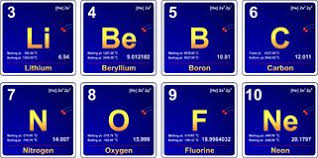

Determine the number of neutron for element Cu
63
29
34
92

Protium, deuterium and tritium are_______________
Molecules
Isotopes
Mixtures
Compounds
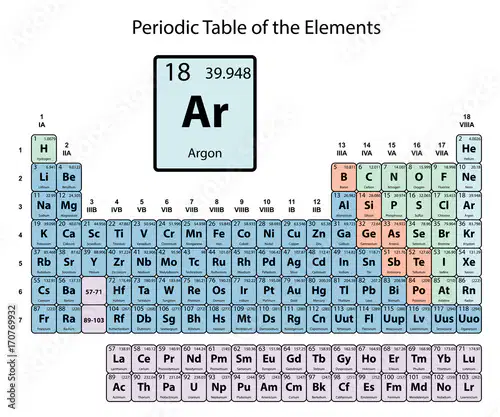
Argon (Z=18)
What mean the symbol for Z?
Argon is element located at group 18
Nucleon number for Argon is 18
Location Argon is 18th at periodic table
Argon has 18 proton number

What is the atomic number (Z) for Beryllium (Be)?
2
4
5
6

The atomic mass of K
35
36
38
39

The Atomic mass of B
9
10
11
12

Which is the sum of the protons and neutrons in an atom?
atomic number
average atomic mass
mass number
atomic mass unit

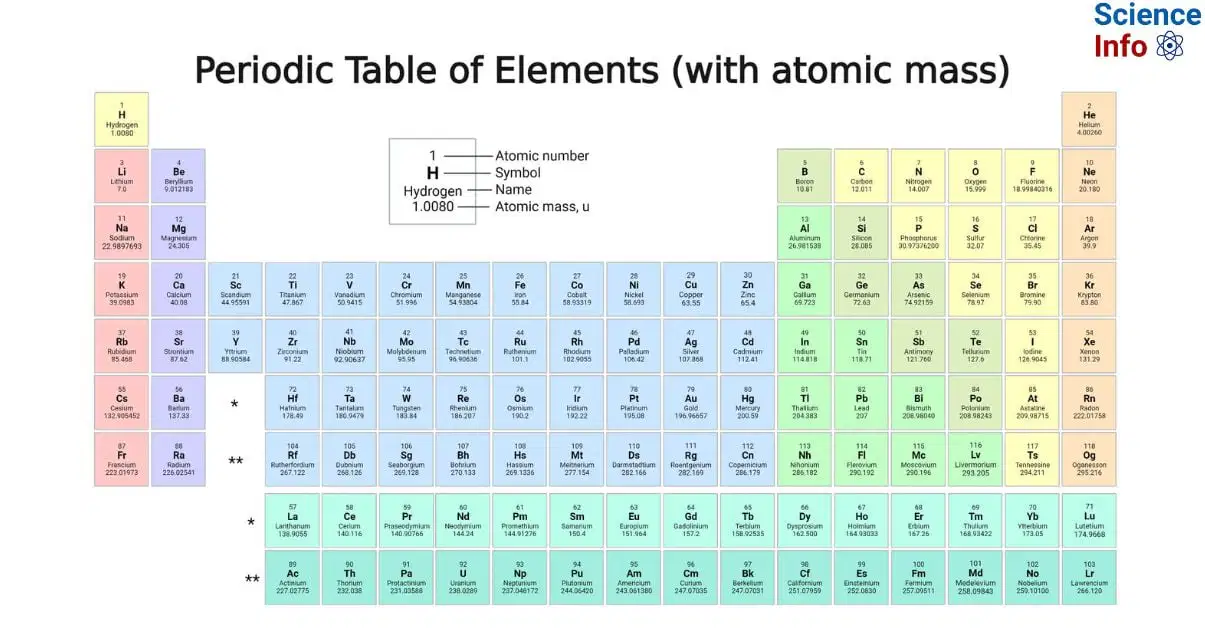
Chlorine (Cl) has a mass number (A) of 35 and atomic number (Z) of 17. Find the number of neutron (N).
35
52
18
17
What is the correct definition for isotopes?
atoms with the same number of protons and neutrons
Atoms with the same number of protons but different number of neutrons
Atoms with the same number of neutrons but different number of protons
Atoms with no mass

What is the difference between these 3 Lithium isotopes?
no difference
they have the same atomic number
they have the same mass number and atomic number
they have different mass numbers

What is the mass number of the element shown?
15
7
8
0

Which of the subatomic particles is the lightest weight


gravel and sand
Homogeneous
Heterogeneous

Element
Compound
Homogeneous Mixture
Heterogeneous Mixture

Element
Compound
Homogeneous Mixture
Heterogeneous Mixture

Why kind of mixture is this? (the sugar in the tea)
Heterogeneous
Homogenous
Element
Compound

Element
Compound
Homogeneous Mixture
Heterogeneous Mixture
A molecule is created when the same _________ is bonded together. For example: C10
Element
Compound
Homogeneous Mixture
Heterogeneous Mixture

What is CO2 and example of?
element
molecule
compound

What happens when there is a physical change?
NO new substance is formed
There is the same kind of matter after the change
Only the texture, size or state of matter changed
all acorrect
Which of the following is an example of physical change?
cutting paper
breaking glass
melting ice
all are correct
A chemical change occurs when ___________.
a new matter is formed
when there is change in texture
when there is NO change in the type of matter
none of these
Spoiling food is an example of:
chemical change
physical change
no change

Dissolving salt in water.
Chemical Change
Physical Change

Physical or Chemical Change? Iron rusting
Physical Change
Chemical Change

Is this a physical or chemical change?
Physical
Chemical

How many valence electrons does carbon have?
4
14
6
7

This is a Bohr Diagram of Aluminum. How many valence electrons does Aluminum have?
3
4
5

How many electrons can a d sublevel hold?
14
10
2
6

How many orbitals does an f sublevel have?
1
3
5
7
Which rule states that each lower energy level must be filled first
Aufbau
Pauli exclusion
Hunds
Heisenberg Uncertainty Principle

Which of these is the ground-state electron configuration for an atom of fluorine (atomic number = 9)?
1s2 2s2
1s2 2s2 2p5
1s2 2s2 2p3
1s2 2s2 2p4


Which electron configuration shows a violation of Hund's Rule?
A only
A, B and C
C and A
A, B and D

