
 Worksheets
cells and microscopes
Total questions: 98
Worksheet time: 1hrs 9mins
To control what enters and leaves the cell.
To break down food to release energy for the cell.
To control all activities of the cell.
To produce food for the cell using the sun's energy.
vacuoles
virus
What is NOT found in animal cells?
cytoplasm

Nucleus
surrounds the cell; controls what enters/leaves cell: holds the cell together
cytoplasm
What is the "brain" or control center of the cell?
Lysosome
Nucleus
Mitochondria
Cell Wall
What is the part of the cell that supports and protects plant cells?
Vacuole
Cell Wall
Lysosomes
Endoplasmic Reticulum
What is the storage center of the cell?
Vacuole
Chloroplasts
Ribosomes
Endoplasmic
What is the gel-like fluid in a cell that aids in movement and gives the cell structure?
Mitochondria
Cytoplasm
Ribosomes
Vacuole
What is the organelle that takes in sunlight and uses it for photosynthesis to give the cell energy?
Nucleus
Cell Membrane
Mitochondria
Chloroplasts
What is the part of the cell that acts like a screen letting water and oxygen in and waste out?
Nucleus
Endoplasmic Reticulum
Vacuole
Cell Membrane


Cell Membrane
The basic unit of a living thing is a ________________.
cell
cytoplasm
nucleus
cell membrane
Which one of the following statements is wrong?
Most cell activities take place in the cytoplasm.
Our traits are determined by the genes found in our nucleus.
The cell membrane allows all substances to enter or leave the cell.
The cytoplasm is a jelly-like substance.
The purpose of the cytoplasm is to ______________ .
have a cell boundary
control activities in the cell
provide a medium for cell reactions to occur
control materials entering and leaving the cell

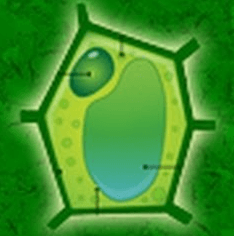
The diagram shows an _____________________.
plant cell
animal cell
red blood cell
cheek cell
We can see cells more clearly by using ________?
a glass slide
a magnifying glass
binoculars
a microscope
The purpose of the nucleus is to ___________.
have a cell boundary
control activities in the cell
provide a medium for cell reactions to occur
control materials entering and leaving the cell
Tick the organelles found in both plant and animal cells.
nucleus
mitochondria
chloroplast
cell membrane
All animal cells look the same
True
False


When was the microscope invented?
1950
1519
1590
1915

What should you clean the microscopes with
Lens Paper
Kimwipes
Tissue
water

Find the total magnification
Eyepiece: 10X
Objective lens: 55X
(a)
Which of the following should you NOT do when handling a microscope?
Only use lens paper for cleaning
Carry with one hand
Always store covered
Be careful of cords
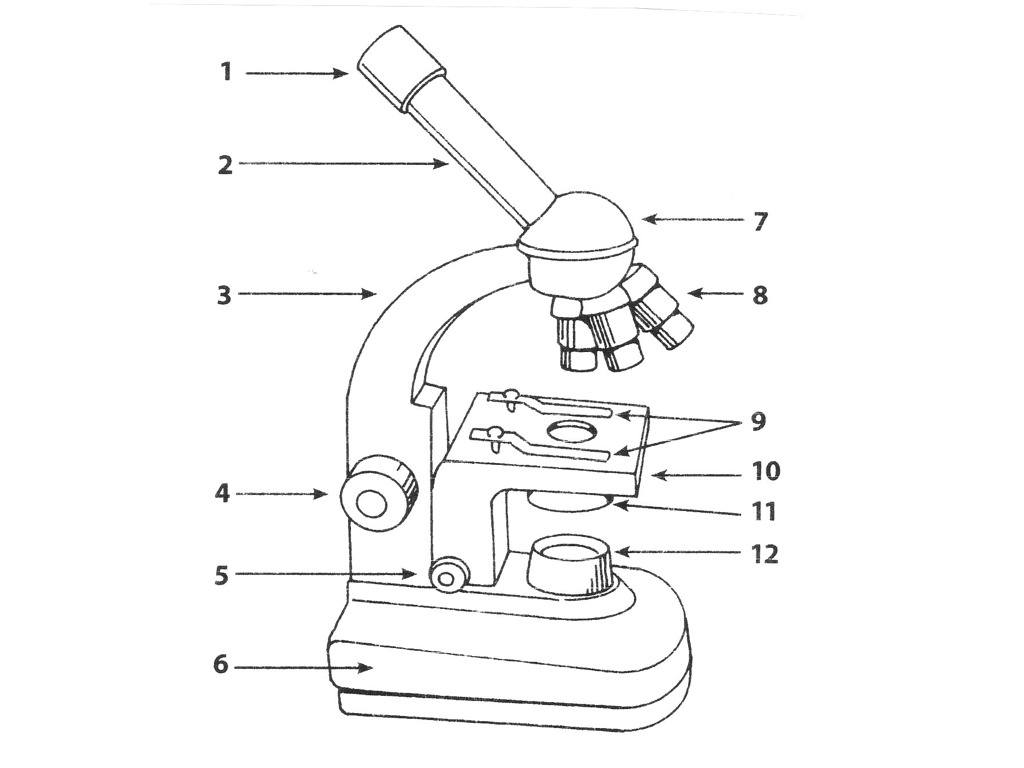

What piece holds the microscope slide in place ?
Base
Diaphragm
Stage Clips
Stage
Moves the body tube or stage up or down for focusing.
Fine Adjustment Knob
Arm
Diaphragm
Coarse Adjustment Knob
Contains the lens you look through.
Low-power Objective
High-power Objective
Eyepiece
Diaphragm

Which is not a type of microscope?
Light microscope
Nuclear microscope
Electron microscope


A light microscope slide is made from ....
a cover slip
one drop of water
a thick slice of specimen
a thin slice of specimen

Electron microscope and light microscopes are different. Which is true ?
Electron microscopes show more detail
Electron microscopes were invented before light microscopes
Electron microscopes can magnify more

when you lower the cover slip on to the slide you want...
to trap zero air bubbles
to trap lots of little air bubbles
to trap one big air bubble

if you want to improve the magnification of a small image so it is larger you would ...
remove the eye piece lens
turn the adjustment knob
change the objective lens
increase the light level

You can swap the objective lenses. Changing the x10 objective lens to the x40 will ...
decrease the magnification
increase the magnification
make no difference to the magnification
if you want to improve the focus of a fuzzy image so it is sharper you would ...
change the eye piece lens
turn the adjustment knob
change the objective lens
increase the light level

Which kind of microscope gives the most magnified and most detailed images?
electron microscope
light microscope

(a)
Who was the first scientist to use a microscope, and visualize a microorganism.
Robert Craft
Antonie van Leeuwenhoek
Matthias Schleiden
Robert Hooke
Which of the following is maximum magnification of Transmission Electron Microscope?
30 000X
2000X
100 000X
1000X

