
 Worksheets
Investigation 7 Test
Total questions: 26
Worksheet time: 13mins
Mountains form on land
when plates converge or collide together
when plates diverge or pull away from each other
when plates slip past each other
when earthquakes shake the plates
When Earth's plates move they can:
uplift into mountains
subduct under other plates to form trenches
both answers are correct
neither answer is correct
What mountain range runs through Pennsylvania?
The Himalayas
The Rocky Mountains
The Appalachian Mountains
The Alps
Plate interactions are so slow that it is very difficult to see changes or feel the movement.

What type of mountains form when plates converge or collide together as pictured?
fault block
folded
dome
plateau

What type of mountains form when the crust breaks pushing rocks up or down in blocks rather than folds?
dome
volcano
fault block
folded

What type of mountain forms when magma pushes below rocks uplifting them?
folded
dome
fault block
plateau
Rocks that change due to heat and pressure are
metamorphic rocks
sedimentary rocks
igneous rocks
all the above
Metamorphic rocks are formed from other rocks which are called
source rocks
false rocks
true rocks
none of the above
Foliation means that the minerals in rocks have_____ due to heat and pressure.
layered
separated
disappeared
all of the above
Which rock is a metamorphic rock since it contains foliation?

Rock A

Rock B
Which rock below is an example of a metamorphic rock?
limestone
obsidian
marble
sandstone
Which mountains form when magma erupts and piles on Earth's surface?
folded
plateau
volcanic
fault block
What mountains form when large flat-topped rocks have bee uplifted ahigh above the crust?
volcanic
plateaus
folded
fault-block
Rocks can be recycled and transformed into other kinds of rocks.
true
false
The process of changing rocks from one type of rock to another through weathering, erosion, deposition, heat and pressure, and melting is
magma
rock cycle
lava
cementation

The image represents two continental plates colliding. What type of boundary is this an example of?

The image shows two plates separating from each other. What type of boundary is this an example of?

The image shows two plates moving past each other. What type of boundary is this an example of?
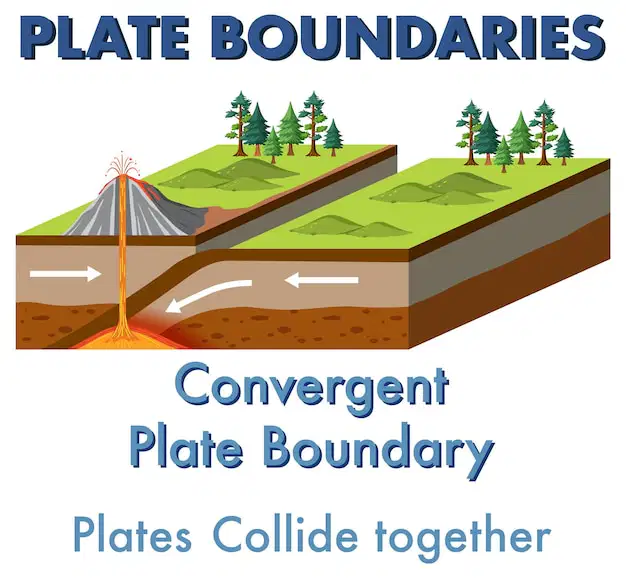
What forms at convergent boundaries?
mountains
volcanoes
trenches
all the above
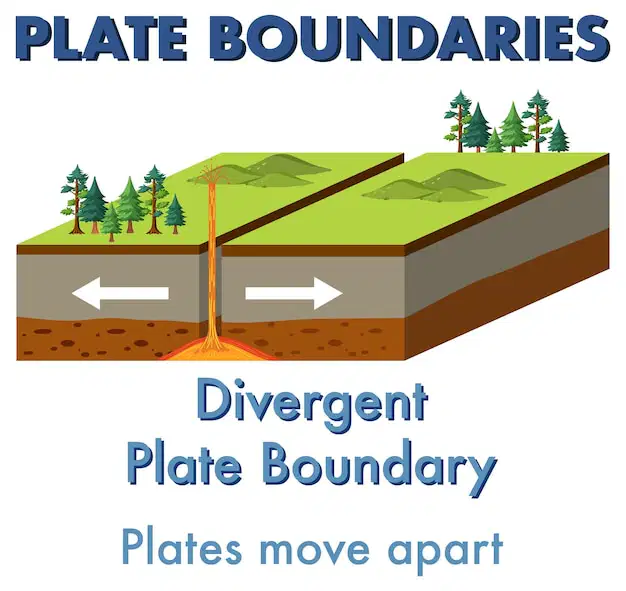
What forms at a divergent boundary?
mountains
trench
valley
all the above
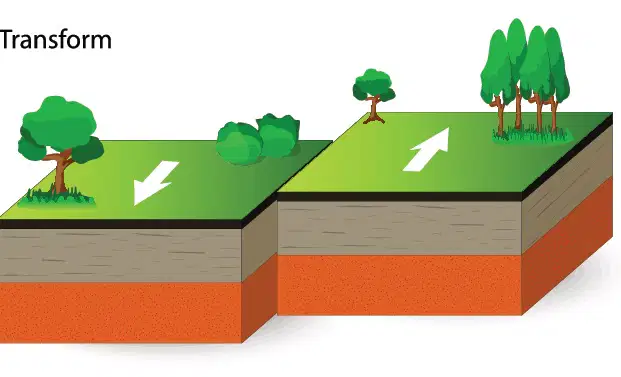
What may occur at transform boundaries?
mountains
trench
valley
earthquakes
The ______ Ocean gets smaller every year.
Arctic
Pacific
Atlantic
Indian
The ______ Ocean gets larger every year.
Atlantic
Pacific
Indian
Arctic
What causes the Pacific Ocean to get smaller?
seafloor spreading
subduction
tsunamis
volcanoes
What causes the Atlantic Ocean to get larger each year?
subductions
volcanoes
tsunamis
new seafloor (seafloor spreading)

