
 Worksheets
Q001
Total questions: 20
Worksheet time: 10mins
What is the primary function of a stock exchange?

Real Estate Transaction

Trading Stocks and Securities

Agricultural Commodities Trading

Currency Exchange
What is the primary function of the Central Depository in a country's financial market?
a) Facilitating the issuance of new securities
b) Regulating stock exchanges
c) Holding securities in electronic form and facilitating their transfer
d) Providing loans to investors
NSCCL becomes the legal counterparty to the net settlement obligations of every member. This principle is called ______.
'Gross settlement’
‘settlement fulfillment’
‘obligation guarantee’
‘novation'
At the end of the trade cycle, the trades are _______ to determine the obligations of the trading members to deliver securities/funds as per the settlement schedule.
Grossed
Aggregated
Netted
Offset
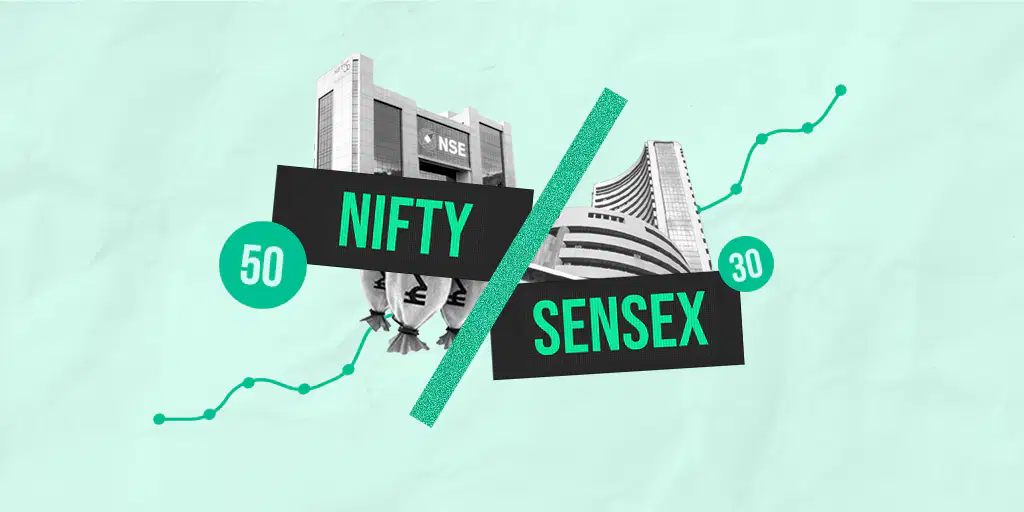
NIFTY and SENSEX are calculated based on ____________.
Authorised share capital
Free-Float capitalisation
Market capitalisation
Paid-up capital
a/an ___________ stock is the stock of a large, well established and financially sound company that has operated for many years.
Defensive
PSU
Penny
Blue-chip
The first computerised stock exchange in India : ________.
Bombay Stock Exchange (BSE)
Multi Commodity Exchange (MCX)
National Stock Exchange (NSE)
Over-the-Counter Exchange of India (OCTEI)
An index option is a ____
Debt Instrument
Derivative Product
Cash Market Product
Money Market Instrument
The purchase of a share in one market and the simultaneous sale in a different market to benefit from price differentials is known as ____________.
Mortgage
Hedging
Arbitrage
Speculation
Margins in 'Futures' trading are to be paid by _______.
Only the buyer
Only the seller
Both the buyer and the seller
The clearing corporation
Oldest Stock Exchange in the world is _______.

AMSTERDAM STOCK EXCHANGE

BSE

NEW YORK STOCK EXCHANGE

EURONEXT- PARIS STOCK EXCHANGE
Selling short a stock means ___________.
Seller does not own the stock he is supposed to deliver
Seller has to deliver the stock within a short time
Seller want to square off his buy position
Seller has gross buy position but net sell position in the stock

What does IPO stand for?
a) Internal Profit Organization
b) Initial Public Offering
c) International Public Order
d) Investor Profit Opportunity
What is the term for the price at which shares are initially offered to the public during an IPO?
a) Market Price
b) Face Value
c) Offer Price
d) Strike Price
What is the process called when the demand for shares in an IPO exceeds the number of shares available for sale?
a) Oversubscription
b) Underwriting
c) Liquidation
d) Dilution

What is a market order in the stock market?
A) An order to buy or sell a security at the current market price.
B) An order to buy or sell a security at a specified price
C) An order to buy or sell a security only when the market is closed
D) An order to buy or sell a security with a delay of 24 hours.
Which type of order allows investors to specify a price at which they want to buy or sell a security?
A) Market order
B) Limit order
C) Stop order
D) Stop-limit order
What is market liquidity?
A) The ease with which an asset can be converted into cash without affecting its price.
B) The total market capitalization of a stock.
C) The volume of trading in a market on a given day.
D) The difference between the bid and ask prices of a security.
What is the primary function of market makers in a financial market?
A) To regulate market activity and prevent price manipulation.
B) To facilitate trading by providing liquidity and matching buy and sell orders.
C) To set the prices of financial instruments.
D) To conduct regulatory audits of financial institutions.
What type of trading involves buying and holding assets for an extended period, often years, with the expectation that they will increase in value?
a) Day Trading
b) Swing Trading
c) Position Trading
d) Scalping

