
 Worksheets
23/24- Life Science Midterm REVIEW
Total questions: 40
Worksheet time: 25mins
Name
Class
Date
1.

What are components that you can find in all cells?
a)
cell wall, cell membrane, nucleus
b)
cell membrane, cytoplasm, nucleus
c)
cell membrane, cytoplasm, DNA
d)
mitochondria, nucleus, cell wall
2.

What are the cells that do not have a nucleus? They are very simple.
a)
prokaryotic
b)
eukaryotic
c)
unicellular organism
d)
multicellular organism
3.

A _____________is the smallest building block of life.
a)
cell
b)
organelle
c)
atom
d)
molecule
4.

What types of cells are in both plants and animals? They have a nucleus to store DNA.
a)
prokaryotic
b)
eukaryotic
c)
unicellular organism
d)
multicellular organism
5.

A plant cell is different from an animal cell because on the outside of a plant cell it has a _______ for support and protection.
a)
cell membrane
b)
cell wall
c)
nucleus
d)
bones
6.

This organelle that can be found in autotrophs only. In the plant cell it is where photosynthesis takes place. It uses sunlight to make glucose (food for the plant).
a)
mitochondria
b)
ribosome
c)
chloroplast
d)
vacuole
7.
Since a bacteria cell has a nucleus, it must be prokarytoic.
a)
True
b)
False
8.

What are organisms that make their own food called?
a)
heterotrophs
b)
consumers
c)
autotrophs
d)
organisms
9.
An example of an autotroph is :
a)
dog
b)
grass
c)
lion
d)
deer
10.

What are organisms called that feed on other organisms called?
a)
heterotroph
b)
autotroph
c)
organisms
d)
hungry
11.
An example of a heterotroph is:
a)
grass
b)
tree
c)
flower
d)
crocodile
12.

Decide whether the organisms are an autotroph or a heterotroph. Choose the correct answer.
a)
autotroph
b)
heterotroph
13.

Homeostasis is the
a)
maintenance of our cells
b)
maintenance of our water intake
c)
maintenance of stable internal conditions of our bodies
d)
maintenance of stable outer conditions of our bodies
14.

A microscope is an instrument that.
a)
makes faraway objects look closer.
b)
makes small objects appear larger.
c)
decreases the size of small objects.
d)
increases the size of small objects.
15.
A thin flat piece of glass used to hold objects for examination is called a ___
a)
sheet
b)
slide
c)
cover slip
d)
objective
16.
When you focus on a new specimen, always begin with
a)
low power and coarse adjustment.
b)
low power and fine adjustment
c)
high power and coarse adjustment
d)
high power and fine adjustment
17.
What piece is a larger knob usually found on either the body tube or the arm and it is used to focus the image under low power?
a)
Aperture
b)
Fine adjustment Knob
c)
Diaphragm
d)
Coarse adjustment knob
18.
If I have the objective lens set at 10x and my eyepiece is 10x, what is the total magnification of the microscope?
a)
10x
b)
40x
c)
400x
d)
100x
19.
Which knob makes the stage move up and down?
a)
fine focus knob
b)
coarse adjustment knob
c)
stage knob
d)
objective lens knob
20.

What is this tool used for?
a)
Safety
b)
Measurement
c)
Fun
d)
Observation
21.
This lab tool is used to observe and magnify objects we cannot see with our eyes.
a)
Microscope
b)
hand lens
c)
thermometer
d)
graduated cylinder
22.
What are the 3 reasons scientists use tools?
a)
safety. measurement, data
b)
thermometer, ruler, beaker
c)
safety, measurement, observation
d)
safety, observation, fun
23.

Which 2 units of measure can be found on a ruler?
a)
centimeters, degrees
b)
inches, centimeters
c)
milliliters, millimeters
d)
liters, pounds
24.
What do a worm, bear, fish, and lion have in common?
a)
they all have fur
b)
they all have 4 legs
c)
they are all living things
25.
You can only see microorganisms with a microscope.
a)
True
b)
False
26.
Microorganisms come in many shapes and sizes.
a)
True
b)
False
27.
Which of the following are types of microorganisms?
a)
bacteria
b)
virus
c)
fungi
d)
all of the above
28.
Microorganisms can be found everywhere, even inside you.
a)
True
b)
False
29.
The products or outputs of photosynthesis are
a)
water and glucose
b)
oxygen and glucose
c)
water and sunlight
d)
carbon dioxide and glucose
30.
Photosynthesis is the process in which
a)
plants create energy
b)
plants transfer light energy into chemical energy
c)
plants take in oxygen
d)
plants store water
31.
Which type of cell has the ability to convert light energy to create glucose (food) for an organism?
a)
animal cell
b)
plant cell
c)
unicellular
d)
multicellular
32.
The organelle where photosynthesis takes place in an autotroph is called _______.
a)
chlorophyll
b)
cell wall
c)
cytoplasm
d)
chloroplast
33.
The part of the plant where most photosynthesis takes place is the
a)
stem
b)
roots
c)
leaves
d)
flower
34.
The ingredients needed for photosynthesis to occur are
a)
sunlight, oxygen, and glucose
b)
sunlight, food, water
c)
water, carbon dioxide, and glucose
d)
water, light energy, and carbon dioxide
35.
What are the building blocks that all living things are made of?
a)
atoms
b)
protons
c)
cells
d)
bacteria
36.

What makes plants green?
a)
chloroplasts
b)
mitochondria
c)
chlorophyll
d)
green oreos
37.
Which of the following is an example of an organelle?
a)
a. the skull
b)
b. mitochondria
c)
c. the heart
d)
d. a cell
38.
a simple sugar that plants make for food
a)
stomata
b)
glucose
c)
chlorophyll
d)
photosynthesis
39.
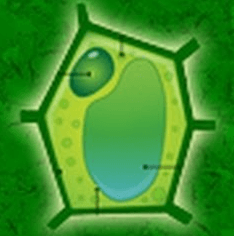
A rigid layer that lies outside the cell's membrane is...
a)
Cytoskeleton
b)
Cilia
c)
Cell Wall
d)
Flagella
40.

How many people added hot sauce to their food on Monday?
a)
40
b)
20
c)
70
d)
80
100 %

