
 Worksheets
Final Exam Review
Total questions: 80
Worksheet time: 46mins


Which civilizations used the 365 day calendar based on the sun
Aztecs and Mayans
Incas and Aztecs
Mayans and Toltecs
Navajo and Incas
What was the name of the Aztec capital?
Tikkal
New York
Tenochtitlan
Olmec
What is one of the most important crops grown in the Americas?
Maize
Squash
Tomatoes
Rice
Where is Mesoamerica?
South America
Artic
Mexico into Central America
North America

During the Renaissance, there was a revival of interst in
perspective
humanism
Greek and Roman Civilizations
individual achievement

What is one way European society changed thanks to the printing press?
People quit the feudal system to find work else where
People began reading books in their vernacular
Literacy declined during the Renaissance
People began writing scripts for movies
Why was the Printing press so important during the Renaissance?
It helped spread his ideas of Humanists
People began printing newspapers in America
People began writing mean articles about Kings
The bible was only printed in Latin

What economic change occurred during the Renaissance that allowed for the flourishing of the art?
Introduction of paper money
People began to Barter again
The Governments of Europe paid to educate Artists
Growth of a wealthy Merchant Class that became patrons the Arts

Why did the Renaissance begin in Italy?
Italians were better Catholics
Italy had better means of transportation
Italy sat in the middle of the Silk Road
Extreme wealth that Italians made from trade

What did Enlightenment thinkers question that people previously took for granted?
Traditional authority
The teachings of the Catholic Church
The right of Kings to rule over common people without their say
All of the above
What did Enlightenment thinkers base their questions and thinking on? What did they use to question tradition?
Faith
Reason
Math
Nachos
The theory that an agreement to exchange some freedoms for protection exists between the people and their ruler or government - if the government breaks this agreement, the people have a right to rebel
Human rights
Divine right of Kings
Social welfare
Social contract
This enlightenment philosopher argued strongly in favor of free speech as a human right, and criticized intolerance and oppression, especially that of the Catholic Church
John Locke
Voltaire
Thomas Hobbes
Olympe de Gouges
This philosopher firmly believed that life, liberty and property were natural rights of all people. He inspired the Declaration of Independence
Thomas Hobbes
Voltaire
John Locke
Baron de Montesquieu
This philosopher was the first to propose two major features of modern American government - Separation of powers and Checks & Balances
Thomas Hobbes
Baron de Montesquieu
Olympe de Gouges
John Locke


factories
The term laissez-faire roughly translates to mean
leave alone
resist
freedom
control
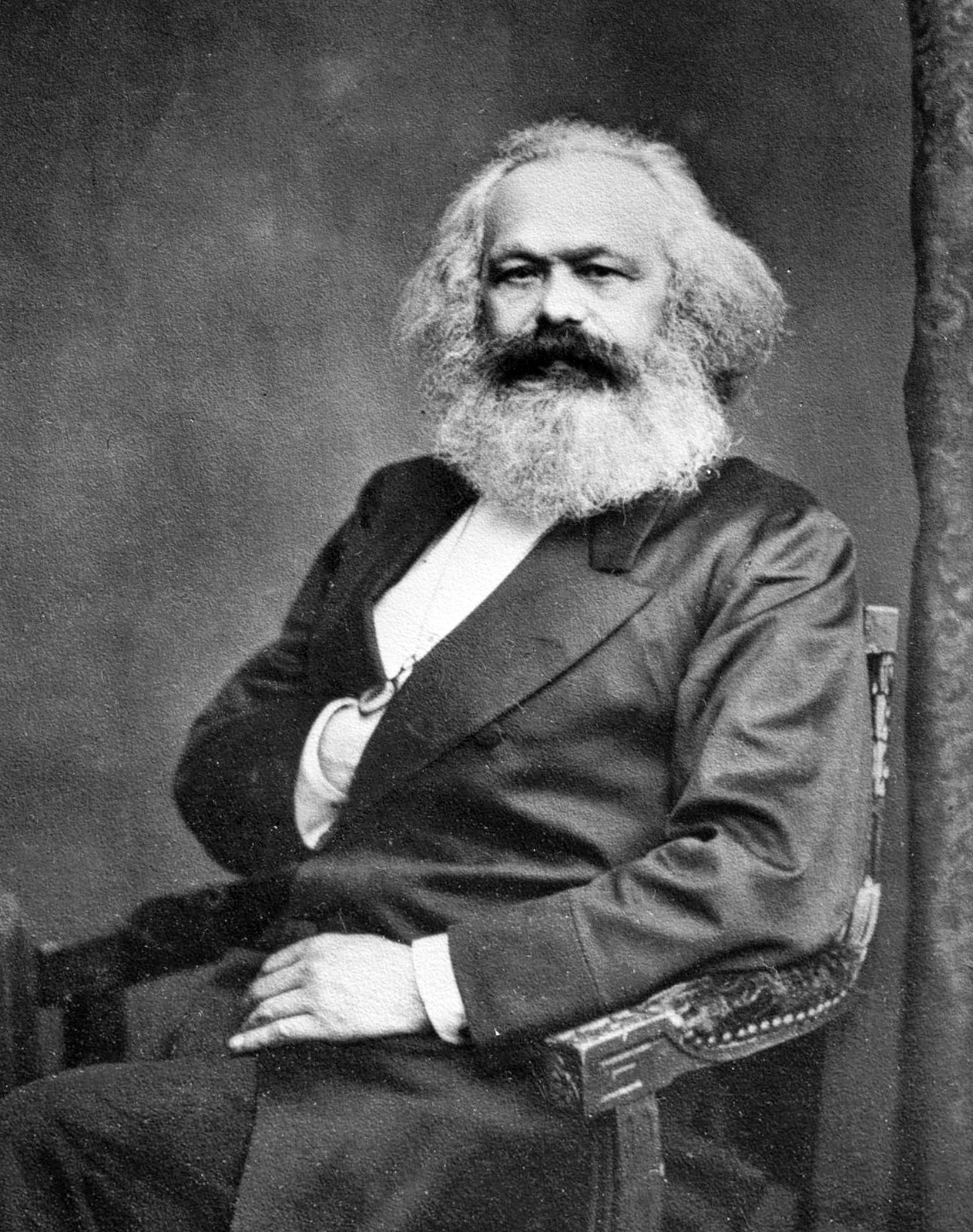
Karl Marx spelled out how he believed that workers should rise up against factory owners, outlining the basic principles of
capitalism
socialism
communism
command economies
Why was England the site of the beginnings of the Industrial Revolution?
England was the most powerful nation in the world
It wasn't; history has unfairly given England credit for the Industrial Revolution
England had an abundance of natural resources such as coal, iron ore, and waterways where water wheels and steam engines could be built
England was centrally located to many areas like France, Germany, Spain, and Ireland, giving them an advantage to bring in resources and talent from many places
After the Scramble for Africa, what percent of Africa was controlled by European nations?
5%
15%
25%
90%
Which of the following was NOT a political motivation for imperialism?
national pride
medical research
prestige
security
Why was Africa so valuable to European nations?
advanced ships and weapons
valuable raw materials and resources
vast land for farming
tourism
Why did the Age of Imperialism and the Scramble for Africa begin?
European populations were growing at an unsustainable rate
African kingdoms invited European nations to govern their land
European nations wanted raw materials and markets for finished goods
East Asian nations needed new routes to the Americas
Which of the following is a social reason for European Imperialism?
access to new markets
racist beliefs that Europeans were superior to other people
desire for cheap labor
need to compete with other nations
Which of the following is the best example of how imperialism increased tensions in Europe in the years before World War I?
Increased competition between European countries
the Balkan wars
Glorified tales of the military
Led to distrust because of uneasy alliances
What impact did rapid-fire machine guns have on the course of the war?
They gave Germany a strong technological advantage on the Eastern Front.
They contributed to high casualty rates by allowing troops to attack targets miles away.
They supported Allied offensives by allowing troops to move into "no-man's land."
They helped prolong the stalemate because they made it difficult for troops to advance.
What did Lenin's Russian Revolution accomplish?
Lenin succeeded in creating a democracy in Russia.
Lenin was defeated and czarist rule strengthened.
The creation of the first communist state.
Russia re-joined the war on the side of Germany.
The assassination of Archduke Franz Ferdinand could best be used to describe which cause of WWI?
extreme nationalism
economic rivalry
the alliance system
militarism
What was Germany's war plan to win WWI early?
The Quarterback Sneak
Operation Anthropoid
Operation Desert Storm
The Schlieffen Plan
“There were vast stretches of mud, of fields once cultivated, but now scarred with pits ... rusty barbed wires. The roads were rivers of clay. They were lined with dugouts, cellars, and caves.” —Richard Harding Davis, war correspondent
This passage describes the impact of
total war.
poison gas
trench warfare
the use of airplanes during WWI
The chief goal of the League of Nations was to?
enforce the Treaty of Versailles.
end imperialism.
prevent future wars.
create a united European state
What was Woodrow Wilson’s plan for resolving WWI?
The Schlieffen Plan
The Fourteen Points
Armistice
Reparations
This was used to spread ideas, promote causes, or damage opposing causes.
Propaganda
Reparations
Military
Airplanes
What event changed the role of the US and led to us declaring war and sending troops into battle?
attack on Pearl Harbor
Lend-Lease Act
Operation Torch
The Munich Pact incorporated this policy
Isolationism
Neurality
Appeasement
What is Genocide?
prejudice, racism, hatred against Jews
systematic attempt to eliminate an entire race
organized attack on Jewish homes and businesses
What do Adolf Hitler, Benito Mussolini, and Joseph Stalin all have in common?
they are Communist dictators
they are Fascist rulers
they are Totalitarian dictators
Britain and France had this policy toward Nazi Germany
neutrality
appeasement
isolationism
What is the name of the treaty that ended WWI?
Paris Peace Treaty
Treaty of Paris
Treaty of Versailles
Treaty of London
Who is responsible for the ethnic genocide of the Jewish people during WWII?
Winston Churchill
Adolf Hitler
Benito Mussolini
Joseph Stalin
The United States ended WWII with the atomic bombing of which 2 cities?
Nagasaki and Hiroshima
Dallas and San Antonio
Germany and Japan
Berlin and Paris

During the Cold War, what bill did the U.S. Congress pass to provide financial assistance to western European countries?
Truman Doctrine
Open Door Policy
Marshall Plan
Domino Theory

What policy implemented in the Cold War said the U.S. would give military aid to a country that needed to resist communism?
Marshall Plan
Truman Doctrine
Domino Theory
Open Door Policy
which describes terrorism the best
ISIS
your mom making you clean your room
the unlawful use of violence and intimidation, especially against civilians, and the pursuit of political ends
squeaky shows
What occurred on 9/11? Be specific
osama bin ladin was killed and shot to death
4 coordinated attacks in the us from al qaeda
IRA stole money from us
What was the main goal of terrorist groups in the 20th century?
to slaughter innocent people
to gain or maintain political power
to assassinate world leaders
to disrupt the civil order

Jerusalem is a holy city for which group of people?
Christians
Jews
Muslims
all of these people

What did the 1947 UN Partition Plan call for?
a Jewish state
an Arab state
Jerusalem as an international area
all of these

What language is primarily spoke among Palestinians?
Arabic
English
Hebrew
French

Which of the following is not a piece of disputed land/territory in Israel?
East Jerusalem
Golan Heights
West Bank
Gaza Strip

Why has the Israeli government been building a wall around the perimeter of the West Bank?
To increase security in Israel.
To keep the peace between Palestinians and Israelis.
To prevent Palestinians in the West Bank from accessing Jerusalem.
People living in the West Bank requested construction of the wall.

