Wayground logo

Free Printable Worksheets

Font size

S
M
L
XL
Worksheets

Nuclear Chemistry Review Part 1

Total questions: 41

Worksheet time: 1hrs 2mins

Name
Class
Date
1.
Which type of radiation has the greatest penetrating power?
a)
Alpha
b)
Beta
c)
Gamma 
d)
Microwaves
2.
The nuclear process occurring at a nuclear power plant.
a)
Nuclear fusion
b)
Nuclear fission
c)
Combustion
d)
Multiplication
3.
The technetium-99 isotope has a half-life of 6.0 hours. If 100.0 mg were injected into a patient how much remains after 18 hours?
a)
33.0 mg
b)
12.5 mg
c)
.33 mg
d)
15.8 mg
4.

What happens to the atomic number during alpha decay? BE CAREFUL!!!

a)

The atomic number decreases by 4

b)

The atomic number increases by 1

c)

The atomic number decreases by 2.

d)

The atomic number stays the same.

5.

Arrange in order of increasing ability to penetrate matter.

a)

Beta, gamma, alpha

b)

Alpha, gamma, beta

c)

Gamma, beta, alpha

d)

Alpha, beta, gamma

6.
Balance the following equation:
146C --> 0-1e + ________
a)
145B
b)
146C
c)
147N
d)
42He
7.

In the symbol 167N what the 7 stand for?

a)

Mass number

b)

Atomic number

c)

Atomic mass

d)

Number of neutrons

8.
The half life of Thorium-234 is 24 days. What fraction of the element remains after 96 days
a)
1/2
b)
1/4
c)
1/8
d)
1/16
9.
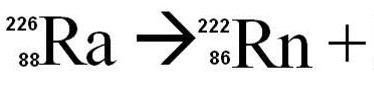
Complete the nuclear equation and determine the type of decay that is occurring in this reaction. 
a)
alpha
b)
beta
c)
gamma
d)
none
10.
Two or more nuclei combine to form one larger nucleus in the process of nuclear _____.
a)
Fusion
b)
Fission
c)
Tracing
d)
Decay
11.

During nuclear fission, a nucleus _________.

a)

grows

b)

divides

c)

shrinks

d)

combines with another

12.

What is the term for an ongoing series of nuclear reactions?

a)

fission

b)

chain reaction

c)

fusion

d)

nuclear

13.

What are found in the nucleus of an atom?

a)

protons and electrons

b)

electrons and neutrons

c)

protons, neutrons, and electrons

d)

protons and neutrons

14.
The time taken for half of an amount of radioactive atoms to decay.
a)
Nuclear fusion
b)
Full-life
c)
Dead time
d)
Half-life
15.
Arrange in order of increasing ability to penetrate matter.
a)
Beta, gamma, alpha
b)
Alpha, gamma, beta
c)
Gamma, beta, alpha
d)
Alpha, beta, gamma
16.
Complete the sentence: As time passes the level of radiation produced by a radioactive material...
a)
Decreases
b)
Increases
c)
Remains constant
17.
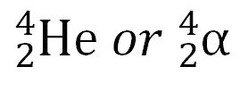
What do these symbols represent?
a)
alpha particle
b)
beta particle
c)
neutron
d)
gamma ray
18.

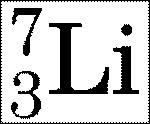
How many protons are in this atom?

a)

3

b)

4

c)

6

d)

10

19.
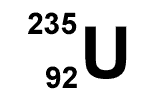
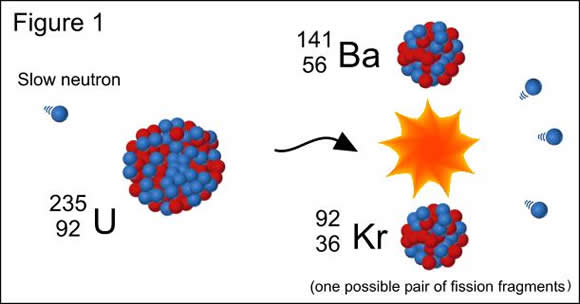
How many neutrons are in this isotope of Uranium?
a)
235
b)
92
c)
327
d)
143
20.
What is the mass number of at isotope that has 20 protons, 21 neutrons and 18 electrons?
a)
18
b)
20
c)
21
d)
41
21.
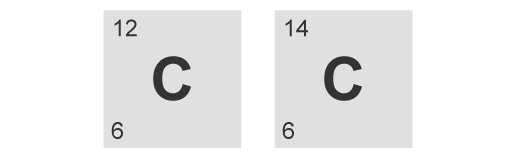
How are these isotopes different?
a)
Different atomic numbers
b)
Different number of protons
c)
Different number of neutrons
d)
Different number of electrons
22.

What is meant by the statement that 3215P has a half life of 14 days

a)

It takes 7 days to go down to 50% radioactivity each time

b)

It takes 14 days to go down to 50% radioactivity each time

c)

After 14 days it starts to become less radioactive

d)

It takes 14 days to go up by 50% radioactivity each time
23.
Which process involves the joining of small nuclei?
a)
Beta decay
b)
Alpha decay
c)
Nuclear fission
d)
Nuclear fusion
24.
Which process produces alpha particles?
a)
Alpha decay
b)
Beta decay
c)
Gamma decay
d)
Nuclear fusion
25.
Which process produces beta particles?
a)
Alpha decay
b)
Beta decay
c)
Gamma decay
d)
Nuclear fusion
26.
Which process involves the splitting of large nuclei?
a)
Beta decay
b)
Alpha decay
c)
Nuclear fission
d)
Nuclear fusion
27.
The time taken for half of an amount of radioactive atoms to decay.
a)
Nuclear fusion
b)
Full-life
c)
Dead time
d)
Half-life
28.
The nuclear process occurring at a nuclear power plant.
a)
Nuclear fusion
b)
Nuclear fission
c)
Combustion
d)
Multiplication
29.
Arrange in order of increasing ability to penetrate matter.
a)
Beta, gamma, alpha
b)
Alpha, gamma, beta
c)
Gamma, beta, alpha
d)
Alpha, beta, gamma
30.
Complete the sentence: As time passes the level of radiation produced by a radioactive material...
a)
Decreases
b)
Increases
c)
Remains constant
31.
How many protons are in this atom?
a)
3
b)
4
c)
6
d)
10
32.
How many neutrons are in this isotope of Uranium?
a)
235
b)
92
c)
327
d)
143
33.
What sort of shield will block gamma rays?
a)
skin
b)
paper
c)
aluminum
d)
thick lead
34.
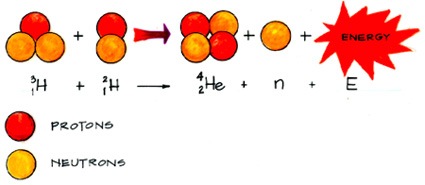
Which nuclear process is shown in the picture?
a)
fission
b)
fusion
c)
alpha decay
d)
beta decay
35.
In a neutral atom, the number of protons always equals
a)
the number of neutrons.
b)
the number of electrons.
c)
the mass number.
d)
the average atomic mass.
36.

What is meant by the statement that 3215P has a half life of 14 days

a)

It takes 7 days to go down to 50% radioactivity each time

b)

It takes 14 days to go down to 50% radioactivity each time

c)

After 14 days it starts to become less radioactive

d)

It takes 14 days to go up by 50% radioactivity each time

37.
The time taken for half of an amount of radioactive atoms to decay.
a)
Nuclear fusion
b)
Full-life
c)
Dead time
d)
Half-life
38.
The technetium-99 isotope has a half-life of 6.0 hours. If 100.0 mg were injected into a patient how much remains after 18 hours?
a)
33.0 mg
b)
12.5 mg
c)
.33 mg
d)
15.8 mg
39.
A nuclear reaction where a nucleus splits into two smaller nuclei is... 
a)
Fission
b)
Fusion
c)
Gamma decay
d)
Beta decay
40.
What would two different isotopes of an atom have in common?
a)
Number of neutrons 
b)
Number of protons
c)
Atomic weight 
d)
Atomic mass
41.
In what part of an atom can protons be found? 
a)
Inside the electrons
b)
Inside the neutrons 
c)
Inside the atomic nucleus 
d)
 Inside the electron shells