
Font size
 Worksheets
Taxonomy, Keys & Nomeclature
Total questions: 20
Worksheet time: 20mins
Geology
Biology
Taxonomy
Chemistry
Carl Linnaeus was what kind of scientist?
Anatomist
Botonist
Paleontologist
Physicist
The 8 levels of classification, broadest to most specific (top to bottom).
Domain, Genus, Family, Order, Class, Phylum, Kingdom, Species
Domain, Species, Kingdom, Genus, Phylum, Family, Class, Order
Domain, Kingdom, Phylum, Class, Order, Family, Genus, Species
Order, Kingdom, Species, Domain, Phylum, Family, Class, Genus
Members of this kingdom are multicellular , heterotrophic and most can move (except the sponge).
Plantae
Protista
Animalia
Achaebacteria
fungi
plantae
animalia
eubacteria
Latin & English
Class & order
Kingdom & species
Genus & species
Scientists use the scientific name of organisms to prevent________ while sharing information with other scientists.
understanding
confusion
double naming
communication

Hypsibius
dujardini
water
tardigrade
Tool used by a taxonomist to identify an unknown organism by it's physical features is a:
dichotomous key
binomial nomenclature
scientific name
binomial key
physical features
weather patterns
environment
diet
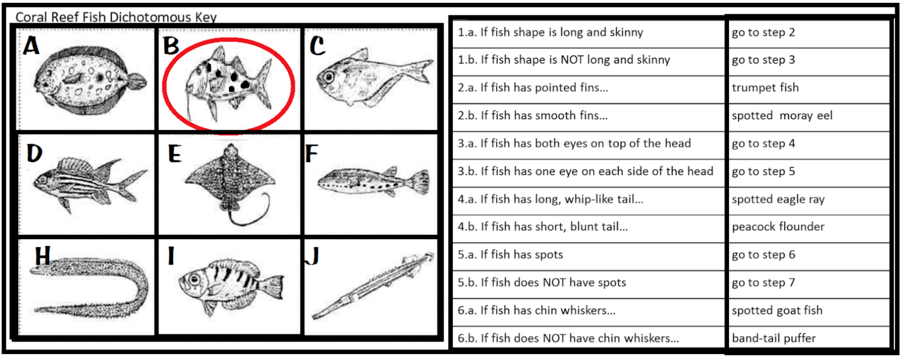
band-tail puffer
spotted goat fish
peacock flounder
trumpet fish
What does the Latin prefix "bi" or "di" mean?
1
2
3
4
Means "two name naming" system.
binomial nomenclature
dichotomous key
classification
evolutionary relationships
Scientist who created the classification system we still use today.
Carl Linnaeus
Aristotle
John Ray
Charles Darwin

Which of the following is the correct way to write the scientific name of a house cat?
Felis Domesticus
felis domesticus
Felis domesticus
felis Domesticus

Carl Linnaeus did not know about _______ when he created the standards of taxonomy.
evolution
similarities of structures
differences of anatomical structures
clades
1a
2a
1b
the number of the organism you are identifying

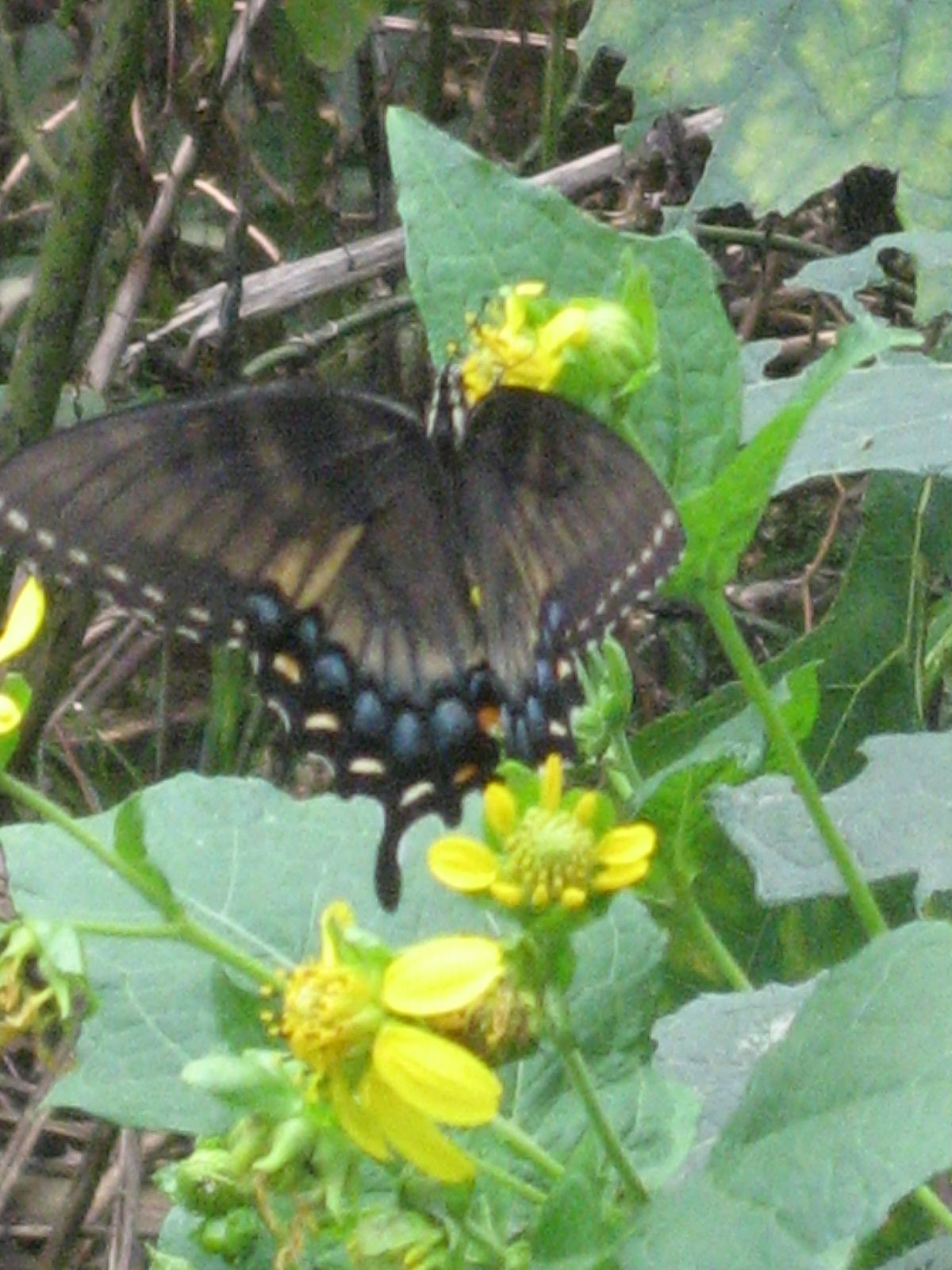
Butterflies usually are identified by the colors and patterns on their wings. Butterflies have four wings: The two wings near the butterfly’s head are “forewings” while the wings near the butterfly’s tail are “hindwings.” You can use the following dichotomous key to identify four common butterfly species in North America.
Based on the key, what species of butterfly is shown below?
Papilio glaucus
Papilio polyxenes
Danaus plexippus
Colias philodice
Carl Linnaeus had a personal motto. Write it below!
(a)
Carl Linnaeus wrote a classification catalog entitled (called)...
Origin of the Species
Il Principia
Big Ole Book of Things
Systema Naturae

