
Font size
 Worksheets
Topic 3 (sem 2): Direct Current
Total questions: 40
Worksheet time: 56mins
If the resistor are connected in parallel in a circuit which one has the highest current?
R1 < R2 < R3 < R4
R1
R2
R3
R4
If the length of the wire is doubled and its area of cross section is decreased to half, then its resistance
Increased by 4 times
Increased by 2 times
will become half of its initial value
Remains the same
What happens to the resistance of a resistor when the temperature is increased?
Increases
decreases
stay the same
vary randomly


For the graph shown in the figure, what physical quantity does the slope of the graph represent for ohmic material?
power
resistivity
resistance
1/(resistance)
electromotive force is______?
work done to by the source to drive a unit charge around a complete circuit.
amount of light produced by a bulb
amount of heat produced by a resistor
amount of force produced by an electric motor
How do you calculate total resistance in a parallel circuit?
R1 + R2 + R3
R1 - R2 - R3
1/R1 +1/R2 + 1/R3 = 1/RT
R1 = R2 = R3
How to you calculate the total resistance in a series circuit?
R1 + R2+ R3
R1 - R2 - R3
1/R1 + 1/R2 + 1/R3
R1 = R2 = R3
The SI unit for Electromotif force (emf) is
JC-1
VA-1
ΩA-1
VC-1
Which circuit diagram represents the correct way to measure the current in a resistor?


Which circuit can be used to determine the electromotive force of a battery?


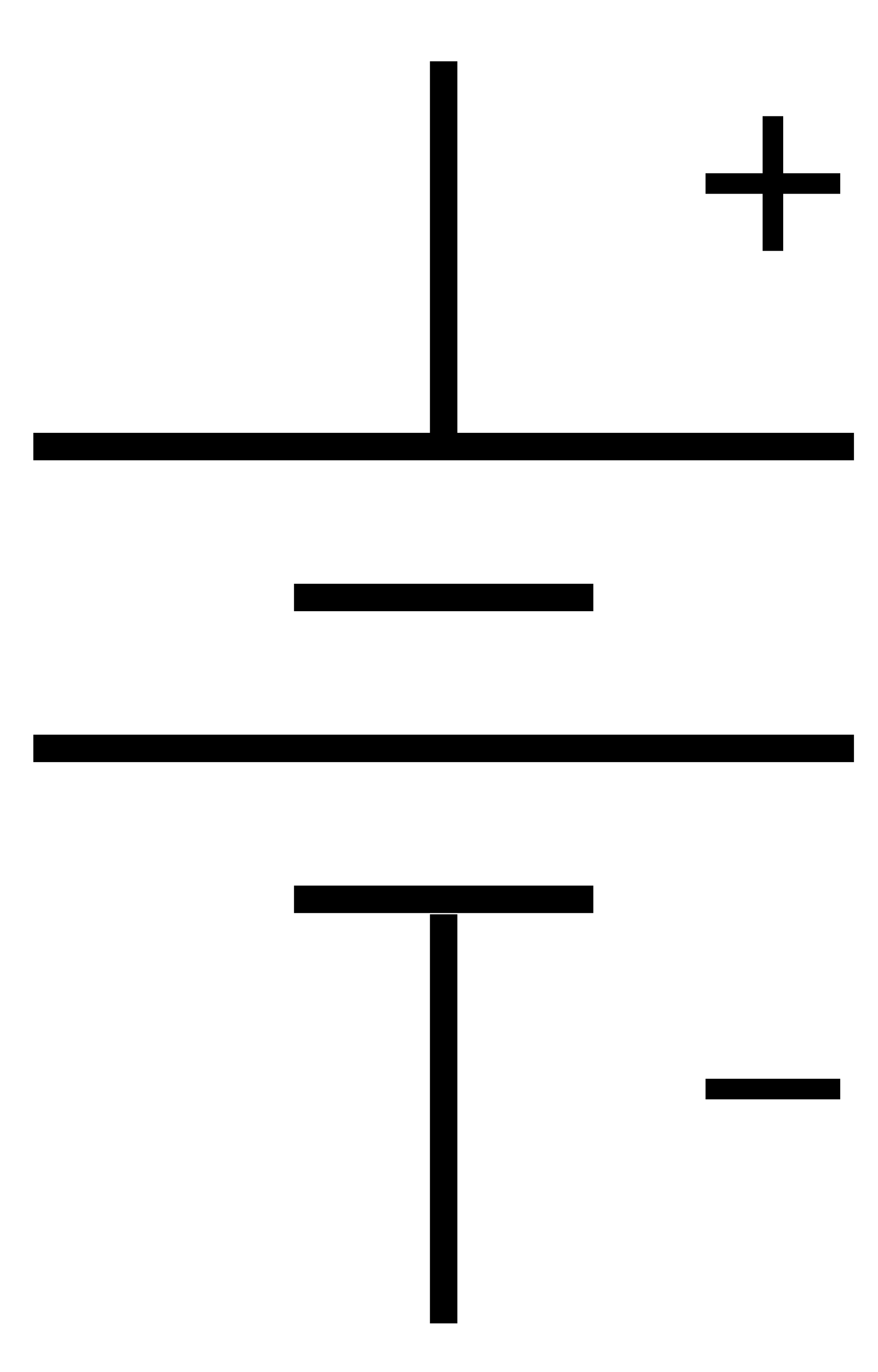
Conventionally, current is described as flowing from the ................ terminal of a battery to the ................ terminal.
Negative.....negative
Negative....positive
Positive......negative
Positive....positive
Effective resistance increases when in .............. circuit.
Parallel
Series
Open
Closed
Effective resistance decreases when in .............. circuit.
Parallel
Series
Open
Closed
Current entering and leaving a point in a circuit should be
equal
decreasing
increasing
variable
"The total current in a parallel circuit equals the sum of the individual branch currents."
Ohm's Law
Kirchhoff's Voltage Law
Kirchhoff's Current Law
Bolen's Law
"The sum of all voltage drops in a series circuit equals the total applied voltage." This is know as what?
Ohm's Law
Kirchhoff's Voltage Law
Kirchhoff's Current Law
Bolen's Law

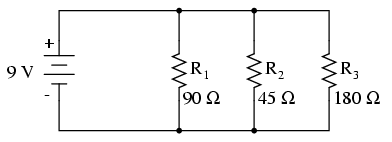
For the circuit shown, the resistances are R1 > R2 > R3. What is true about the current through each resistor?
I1 = I2 = I3
I1 > I2 > I3
I1 > I3 > I2
I1 < I3 < I2
Kirchhoff's 1st law deals with
current in circuit
voltage in circuit
e.m.f in circuit
voltage in circuit and e.m.f in circuit
Power, P equals ...
IV
ER
I2R
V2R
Joules per second
Voltage per second
Current per second
Resistor per second
Which one is true about potential divider
It consists one fixed resistor
It's resistors are connected in parallel to suply
It's resistors connected in series to suply
It's resistors connected in series and parallel to suply
A potentiometer is a device used for
measuring potential energy
measuring resistance
comparing potential difference
comparing potential energy
Factor which does not affect the resistance
Type of material
Length of material
Mass of the material
Area of the material
What is internal resistance?
The resistance inside the cell that increases with more current drawn from the cell
The resistance inside the cell that decreases with more current drawn from the cell
The resistance inside the cell that remains constant as the current drawn from the cell changes
The resistance inside each component which increases as more resistances are added in series
What is the principle of potentiometer ?
V is proportional to L, when steady current flows through a wire of uniform area of cross section at constant temperature
Deflection in G is proportional to current
Resistance is proportional to length
Resistance is inversely proportional to area of cross section
What is the use of a potentiometer? (can be more than 1)
1. comparison of emf's of two primary cells
2. finding internal resistance of a cell
3. can be used as a variable resistor
Finding current & Voltage in complex circuit
ρ has a unit of ..........
Ω
Ωm
Ωm2
Ωm3
we use Aρl to find .........
P
I
ρ
R

R1 has much higher resistance than R2. The Potential difference (p.d) across R1 will be...?
lower than the p.d across R2
the same as the p.d across R2
greater than the p.d across R2
Not enough information to say
Which statement is FALSE about electricity?
Electric current is defined as the rate of charge flow
The resistance will increase when the temperature increase
The electric current decreases when the resistance increases
The resistivity increases when the length of the conductor increases

