wayground logo

Free Printable Worksheets

Font size

S
M
L
XL
Worksheets

Clason US History Midterm

Total questions: 100

Worksheet time: 2hrs 31mins

Name
Class
Date
1.

The middle passage was apart of what trading system

a)

Triangular Trade

b)

African Trade

c)

Square Trade

d)

Gold Mine Trade

2.

The middle passage was apart of what trading system

a)

Triangular Trade

b)

African Trade

c)

Square Trade

d)

Gold Mine Trade

3.

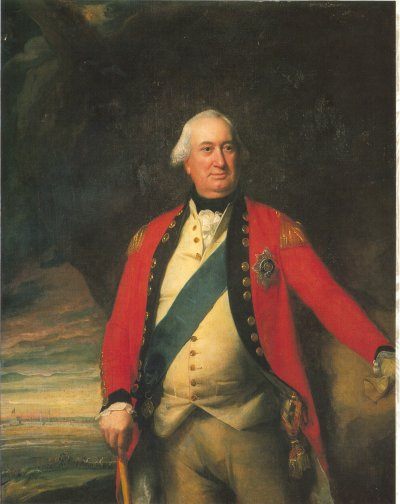
Which factor most contributed to the creation of Mayflower Compact, Virginia House of Burgesses, & Fundamental Orders of Connecticut?

a)

Opportunity to trade with American Indians

b)

The distance from Great Britain

c)

The doctrine of the Church of England

d)

The economic system of mercantilism

4.

The motivations for establishing the Jamestown colony was

a)

GOD - obtaining religious freedom

b)

GOLD - obtaining riches

c)

GLORY - becoming more powerful

5.

The motivation for establishing the Plymouth colony was

a)

GOD - obtaining religious freedom

b)

GOLD - obtaining riches

c)

GLORY - becoming more powerful

6.
Which crops were grown by colonists living in the Southern region?
a)
Corn, cotton, tobacco, and indigo
b)
Grains like wheat and rye
c)
Watermelon, apples, and peaches
7.
Which colonists were farmers and plantation owners who grew cotton and tobacco?
a)
New England
b)
Southern
c)
Mid-Atlantic
8.

The climate and geography in the Southern Colonies was perfect for...

a)

fame and fortune

b)

mining gold and silver

c)

whaling

d)

growing cash crops

9.
 Why did the Pilgrims create the Mayflower Compact?
a)
 to show that they opposed representative government.
b)
to establish an orderly community
c)
 to reinforce the laws of England in the new colony
d)
 to guarantee universal religious tolerance in the colony
10.

This created a temporary border at the Appalachian Mountains, restricting the movement of the colonists

a)

Appalachian Line of 1769

b)

Proclamation of 1763

c)

Northwest Ordinance of 1767

d)

Colonial Border of 1763

e)

Treaty of Paris 1763

11.

The British king, King George III, issued a proclamation stating colonists could not claim or buy land west of the Appalachian Mountains. They could not explore it or hunt on it either. He stated that the land in this region was to be used by Native Americans only. How did colonists feel about this proclamation.

a)

They felt the King had the Power and Authority to issue the proclamation.

b)

They felt the King DID NOT t have the Power OR Authority to issue the proclamation.

c)

They felt the King had the Power to issue the proclamation but NOT the Authority.

d)

They felt betrayed by the King.

e)

Both answers C and D

12.

What was stated in the Proclamation of 1763?

a)

Colonists were BANNED from settling west of the Appalachian Mountains.

b)

The Proclamation ended the French and Indian War.

c)

Colonists were ENCOURAGED to begin settling west of the Appalachian Mountains.

d)

The Proclamation proclaimed independence for the American colonists.

13.
Why was the Boston Tea Party an important event in History?
a)
It signaled the opening of the British colony of Massachusetts
b)
It was a major event leading up to the American Revolution.
c)
The first shot in the Revolutionary War was fired at the Boston Tea Party
d)
It was a celebration of British Law and the colonies` loyalty to the king
14.

Who was the main author of the Declaration of Independence?

a)

Roger Sherman

b)

John Adams

c)

Benjamin Franklin

d)

Thomas Jefferson

15.
The French and Indian War was was fought between the
a)
French and the Indians
b)
Indians and the Spanish
c)
French and British against the Indians
d)
The French and Indians against the British and the colonists.
16.
Why were many colonists angry about the Proclamation of 1763?
a)
They were unhappy because they could not settle on new lands.
b)
They wanted to travel all the way west to California.
c)
They wanted to share the land with the Native Americans.
d)
They wanted their money back for the land.
17.
As a result of the cost of the war, what did King George III do to the colonists?
a)
Killed them
b)
Removed them from the land in the colonies just like the Indians.
c)
Imposed taxes to pay for the war
d)
Paid for the war out of his own pocket
18.

What did the Stamp Act tax?

a)

mail brought into America

b)

legal documents and newspapers

c)

sugar and molasses

d)

tea

19.

Why was the Declaration of Independence written?

a)

to explain why the colonies were separating from Great Britain

b)

the start the American Revolution

c)

to offer a peace settlement to Great Britain.

d)

to instruct how a county wins its freedom.

20.

Who used the phrase "No Taxation without Representation"

a)

The American colonists

b)

The British Soldiers

c)

The French cavalry

d)

The Spanish colonists

21.

Patriots wanted to

a)

govern themselves

b)

be governed by Spain

c)

be governed by England

d)

be governed by France

22.

Loyalists remained loyal to

a)

The Americans

b)

The King of England

c)

The King of France

d)

The King of Spain

23.
In order to pay for the French and Indian War, England had to raise ______________.
a)
troops
b)
crops
c)
revenue
d)
an army
24.
What is revenue?
a)
Incoming favors from mechants
b)
An economic protest
c)
A boycott of goods.
d)
Incoming money from taxes
25.

Who started the Boston Massacre?

a)

The colonists

b)

The soldiers

c)

No one is really sure

26.

What was thrown at soldiers to start the Boston Massacre?

a)

Manure

b)

Snowballs

c)

Paper

d)

Hay

27.

This writing was published during the American Revolution and paved the way for the Declaration of Independence.

a)

Rights of man

b)

The American Crisis

c)

Common Sense

28.

According to the introductory ideas, what message was Paine trying to get across to his readers?

a)

It is easy to love your country in times of peace.

b)

It is difficult to support your county in times of war.

c)

We each much decide if we feel war is needed.

d)

We must join the war to fight for our freedom.
29.
First Battle of the American Revolution 
a)
Saratoga 
b)
Valley Forge 
c)
Lexington and Concord 
d)
Yorktown
30.
The French began to support the Americans after this battle
a)
Lexington and Concord
b)
Yorktown
c)
Saratoga
d)
Treaty of French 
31.
Soldiers froze here because of the harsh winter
a)
Paris
b)
Valley Forge
c)
Rio Grande Valley 
d)
Yorktown 
32.
What year does the American Revolution end?
a)
1776
b)
1783
c)
1607
d)
1738
33.
Who was the opponent at Valley Forge?
a)
Winter, starvation, disease
b)
British
c)
French
d)
Indians
34.
Which battle is considered the Turning Point of the American Revolution?
a)
Battle of Trenton
b)
Battle of Saratoga
c)
Lexington & Concord
d)
Battle of Bunker Hill
35.
General Cornwallis surrenders to General Washington during this battle 
a)
Yorktown
b)
Lexington and Concord
c)
Saratoga
d)
Bunker Hill
36.
Which battle ended the American revolution?
a)
Battle of Lexington and Concord
b)
Battle of Saratoga
c)
Battle of Yorktown
d)
Battle of Trenton
37.
What was the name of the treaty signed that ended the war?
a)
Treaty of Americans
b)
Treaty of Revolutionary
c)
Treaty of Peace
d)
Treaty of Paris
38.
 Who  was the leader of the Continental Army?
a)
a. Benedict Arnold
b)
b. King George III
c)
c. Paul Revere
d)
d. George Washington
39.
Why was the Battle of Yorktown significant (important)?
a)
It demonstrate how smart the Continental Army was
b)
It showed that Washington could lead his troops well
c)
The last battle of the War of Independence
d)
It was the battle that made King George loose his mind
40.
What is the name of the first written plan of government in America?
a)
Constitution
b)
Treaty of Paris
c)
Declaration of Independence
d)
Articles of Confederation
41.
In order to change (amend) the Articles of Confederation,  __________ out of 13 states had to agree. 
a)
9
b)
10
c)
13
d)
15
42.
In the Articles of Confederation, where was most of the government power placed?
a)
The States
b)
The National Government
c)
The Continental Congress
d)
The Legislative Branch
43.
The weaknesses of the Articles of the Confederation led to an effort to create a new _____________.
a)
Proclamation of 1763
b)
Constitution
c)
Declaration of Independence
d)
Treaty of Paris 1783
44.

The Articles created a _____ national government.

a)

strong

b)

weak

45.
Under the Articles of Confederation, most of the power was where?
a)
Legislative branch
b)
the president
c)
the states
d)
national government
46.
This picture shows which weakness of the Articles?
a)
no common currency
b)
no executive branch
c)
no power to tax
d)
one vote for each state
47.
Who led the farmers against the government of Massachusetts?
a)
Daniel Shays
b)
the Government
c)
all of the farmers were leaders
d)
Thomas Hobbes
48.
Which is a weakness of the Articles of Confederation?
a)
Congress couldn't collect taxes
b)
Weak central government
c)
Provided for no common currency
d)
All of the these
49.
For any changes to the Articles or new laws Congress needed ______ 13 states to agree.
a)
all
b)
7 of the
c)
6 of the
d)
10 of the
50.
Daniel Shays' rebellion showed that:
a)
the government under the Articles of Confederation could not keep control of its citizens
b)
the government should be able to defend our citizens from Great Britain again
c)
the government needs to protect the citizens from Native American attacks
51.

In the Virginia Plan representation in congress was based on population. Which states favored this plan?

a)

Small States

b)

Large States

c)

Southern States

d)

Northern States

52.
Which compromise combined aspects of the Virginia and New Jersey plans to make small and large states satisfied?
a)
the Commerce Compromise
b)
the Three-Fifths Compromise
c)
the Just Compromise
d)
the Great Compromise
53.

The Senate will have equal representation for each state. The House of Representatives will be based on ... ?

a)

Money

b)

Slaves

c)

Population

d)

It will also be equal

54.
One issue that was hotly debated at the Constitutional Convention, was the question of representation. Another issue was-
a)
the U.S.-Canadian border
b)
Slavery
c)
the Treaty of Paris
d)
Women's Rights
55.
Under the Three-Fifths compromise, which individuals counted as 3/5 of a free person when a census was taken?
a)
women
b)
Native Americans
c)
slaves
d)
children
56.
A major weakness under the Articles of Confederation was-
a)
Congress could not negotiate treaties
b)
Congress could print money
c)
Congress did not have the power to raise money or enforce laws
d)
Congress established the Northwest Ordinance
57.

In the New Jersey Plan, states received equal representation in congress. Which states favored this plan?

a)

Small States

b)

Large States

c)

Northern States

d)

Southern States

58.

What was the name of the Rebellion where, Farmers/soldiers rebelled after not being paid for fighting in the American Revolution and then lost their farms?

a)

Shay's Rebellion

b)

Slave Rebellion

c)

American Revolution

d)

Szechuan Chicken

59.

What did the Constitution replace?

a)

Bill of Rights

b)

The Emergency Exit Plan

c)

Mayflower Compact

d)

Articles of Confederation

60.

Which group supported a strong government?

a)

Anti-Federalists

b)

Federalists

61.

What settled the debate between the Virginia Plan (big state) and the New Jersey plan (small state)?

a)

The Three Fifths Compromise

b)

Batman

c)

The Great Compromise

d)

The American Revolution

62.

Who is considered the Father of the Constitution?

a)

James Madison

b)

George Washington

c)

Pocahontas

d)

Thomas Jefferson

63.

Which plan thought all states should have equal say in the government, no matter their size?

a)

Virginia Plan

b)

Florida Plan

c)

New Jersey Plan

d)

George Washington

64.

Who are the Federalists?

a)

People who supported the Constitution

b)

People who were against the Constitution

c)

People who wanted to add the Bill of Rights to the Constitution

d)

People who supported the Articles of Confederation

65.

Federalists wanted....

a)

a weak central (national) government

b)

a strong central (national) government

c)

a Bill of Rights

d)

strong state government

66.

What series of essays were written by Hamilton, Jay, and Madison to convince people to ratify the Constitution?

a)

Federalist Papers

b)

Common Sense

c)

Antifederalist Papers

d)

The American Crisis

67.

These group of people were called the ______ and they didn't support the ratification of the Constitution

a)

Federalists

b)

Whip Party

c)

Independent Party

d)

Antifederalists

68.

The Antifederalists wanted

a)

a strong central (national) government

b)

weak state government

c)

weak central (national) government

d)

to deny the Bill of Rights

69.

Did the Antifederalists support adding the Bill of Rights to the Constitution?

a)

no

b)

yes

70.

Did the Antifederalists support adding the Bill of Rights to the Constitution?

a)

no

b)

yes

71.

What is Popular Sovereignty?

a)

Ruled by the people

b)

Ruled by the states

c)

Ruled by a king

d)

Ruled by laws

72.

How does the Preamble start?

a)

For life, liberty and the pursuit of happiness

b)

In order to form

c)

We the people

d)

The people of the United States

73.

Which branch of government has 2 houses?

a)

Legislative

b)

Executive

c)

Judicial

74.

Which branch of government is the president the head of?

a)

Legislative

b)

Executive

c)

Judicial

75.

Which branch has the power to impeach?

a)

Legislative

b)

Executive

c)

Judicial

76.

A government in which citizens rule through elected representatives is called a

a)

monarchy

b)

republic

c)

theocracy

d)

sovereignty

77.

What keeps any one branch of government from gaining too much power?

a)

voting on a bill

b)

the executive branch

c)

vetoing

d)

checks and balances

78.

What is the Bill of Rights?

a)

the preamble to the U.S. Constitution

b)

the first seven articles of the U.S. Constitution

c)

the first five amendments to the U.S. Constitution

d)

the first ten amendments to the U.S. Constitution

79.

Citizens elect senators to serve in Washington, D.C.

a)

popular sovereignty

b)

republicansim

c)

federalism

d)

limited government

80.

Congress can impeach judges and the president

a)

separation of powers

b)

checks and balances

c)

federalism

d)

republicanism

81.

State governments can pass marriage laws within their state.

a)

federalism

b)

republicanism

c)

limited government

d)

separation of powers

82.

The court can declare a law unconstitutional

a)

checks and balances

b)

separation of powers

c)

federalism

d)

limited government

83.

The executive branch enforces the law.

a)

separation of power

b)

limited government

c)

popular sovereignty

d)

federalism

84.
Which branch enforces the law and includes the president?
a)
Executive Branch
b)
Legislative Branch
c)
Judicial Branch
d)
Constitiutional Branch
85.
Which branch makes the laws and includes Congress?
a)
Executive Branch
b)
Legislative Branch
c)
Judicial Branch
d)
Constitiutional Branch
86.
Which branch interprets the laws and includes the Supreme Court?
a)
Executive Brnach 
b)
Legislative Branch
c)
 Judicial Branch
d)
Constitutional Branch
87.
Anti-federalists wanted a Bill of Rights added to the constitution to help protect...
a)
Individual Rights
b)
State Rights
c)
Slavery
d)
The Articles of Confederation
88.
Which Amendment protects a persons right to cruel and unusual punishments?
a)
Amendment 1
b)
Amendment 8
c)
Amendment 10
89.
Amendment 1 protects a person's right to
a)
A trial by jury in civil cases
b)
Right to beat arms
c)
Freedom of Assembly, Press, Speech, Religion and Petition
90.
Which Amendment protects a persons right to a speedy trial? 
a)
Amendment 4
b)
Amendment 6
c)
Amendment 8
91.
Amendment 4 protects a person's right to?
a)
Bear Arms
b)
More rights than are in the Constitution
c)
No unreasonable search and seizures
92.
In his farewell address, Washington warned of:  
a)
Avoiding entanglement with foreign affairs, avoid political parties 
b)
Avoid political parties, aquiring slaves
c)
Avoiding entanglement with foreign affairs, trading goods
d)
Trading goods, acquiring slaves
93.
What was the significance of the Whiskey Rebellion? 
a)
To tax whiskey
b)
Demonstrated the U.S. government’s power to enforce laws
c)
To create more whiskey
d)
Demonstrated the Supreme Court's power to create new laws
94.
What was the significance of the Louisiana Purchase?
a)
Doubled the size of the United States
b)
Finished the war between Spain and France
c)
Provided a place for the French to plant crops
d)
Tripled the size of the United States
95.
Define the significance of Decision of Marbury v. Madison:
a)
Marbury got the position he wanted
b)
Madison had the power to enforce trade between states
c)
created a balance of power among the three branches of government
d)
Gave the executive branch all the power
96.
Marbury v. Madison created:
a)
the Supreme Court's right to declare a law unconstitutional
b)
the right to vote
c)
the ability to regulate trade between countries 
d)
the right to pout until you get what you want
97.
After the War of 1812 led to ___X___ which led the increase of U.S. Manufacturing:
a)
Increase of British goods
b)
More slavery
c)
A reduction in taxes
d)
Decrease of British Goods
98.
The effect of trade restrictions with the British, impressment of American Sailors was:
a)
Mexican-American War
b)
War of 1218
c)
War of 1812
d)
Whiskey Rebellion
99.

Why is the year 1803 significant to U.S. history?

a)

Congress passed the Naturalization Act

b)

The United States doubled in size

c)

England declared war on the United States

d)

Washington wrote his "Farewell Address"

100.

Why did Monroe establish this Doctrine?

a)

He wanted to have a war.

b)

He wanted to let Europe know that the United States would not allow them to regain power in the Americas.

c)

He wanted to gain power for himself.

d)

He wanted to welcome the British with open arms