
Font size
 Worksheets
Fossils Review - Quizizz Game
Total questions: 23
Worksheet time: 23mins
If you know the age of a rock, you know the relative age of the _________________ that was found inside.
sticky tar
fossil
amber
ice
Which of the following would be an example of absolute age?
Fossil A is older than Fossil B
Fossil A and Fossil B are the same age
Fossil A is 10 million years old


What are the oldest fossils and why?
B, C- because they are closest to the top
A, B- because they are closest to the bottom
They are all the same age- because they are all found on layer 2
A, B- because they are found closest to the top
Which of the following can be learned by using the fossil record?
When organisms changed or evolved
when organisms appeared on Earth
when organisms became extinct
All the above
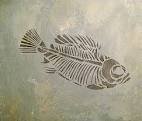
If scientists found this fossil in a desert, what could they infer?
what fish are like today
that this fish lacked oxygen
that water once covered the area where this fossil was found

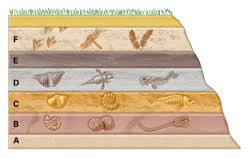
When did fossil A become extinct?
Layer 1
Layer 2
Layer 3
Layer 4

Organisms D and C clearly lived in an aquatic (water) environment. Organism A does not look like it lived in the water. What is the most likely explanation for this?
The fossil in layer A died on land and was carried to the water
The fossils in layer C and D did not live in the same location as the fossil in layer A
The environment changed over a long period of time. It used to be under water, but is not anymore

If you found an index fossil in a layer of rock in Montana and a similar fossil in a layer of rock in Texas, you would know that:
the fossils and rock layers are the same age
the fossils from Montana are older
the fossils from England are older
none of the above
How do most fossils form?
An insect becomes trapped in amber.
An entire organism becomes frozen in ice.
A dead organism becomes buried in sediment.
A dead organism becomes buried in tar.
What evidence is most important when using relative dating?
the half-life of a radioactive element
the position of sediment in petrified rock
the types of minerals in a petrified fossil
the position of fossils in sedimentary rock layers

Which rock layer most likely contains fossils of the oldest organisms?
1
2
3
4
ALL organisms become fossils when they die.
True
False
Which of the following is an example of relative age
Fossil A is older than Fossil B
Fossil A is about 10 million years old
Fossil B is 2 million years old
450 million year old rocks contain fossils of jawless fish. 400 million year old rocks contain fossils of jawless fish AND fish with jaws. What does this evidence suggest?
fish with jaws appeared earlier in the fossil record
fish with jaws and jawless fish appeared at the same time in the fossil record
jawless fish appeared first in the fossil record
fish with jaws no longer exist
Which conditions might lead to fossil formation? (Choose 3)
Decomposition
Getting buried quickly by sediment
getting trapped in a tar pit
getting eaten by another animal
making a footprint in mud

