
 Worksheets
Classwork 1
Total questions: 18
Worksheet time: 31mins
Name
Class
Date
1.
What does the word BISECT mean?
a)
To cut something into more than five pieces.
b)
It is a plane with two sets of wings.
c)
A shape that has three sides.
d)
To cut something into two congruent pieces or in half.
2.
If Q is between P and R, then PQ +QR=PR
a)
Segment Addition postulate
b)
Definition of Midpoint
c)
Addition Property of equality
d)
Transitive Property
3.
If AB=CD then AB+EF = CD + EF
a)
Division property of equality
b)
Addition Property of equalilty
c)
Transitive property of equality
d)
Substitution
4.

The angle relationship shown is -
a)
complementary angles
b)
supplementary angles
c)
vertical angles
d)
adjacent angles
5.

∠1 and ∠3 can best be described as -
a)
complementary angles
b)
supplementary angles
c)
vertical angles
d)
adjacent angles
6.

What type of angle is shown?
a)
acute
b)
obtuse
c)
right
d)
straight
7.

What type of angle is shown?
a)
acute
b)
obtuse
c)
right
d)
straight
8.

What type of angle is shown?
a)
acute
b)
obtuse
c)
right
d)
straight
9.
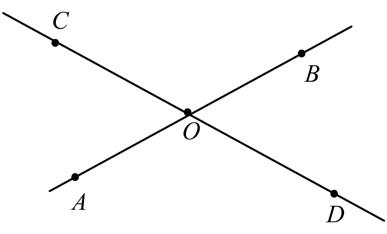
Which are pairs of adjacent angles?
a)
∠COB & ∠DOA
b)
∠AOD & ∠AOC
c)
∠COB & ∠AOD
d)
∠BOD & ∠AOC
10.
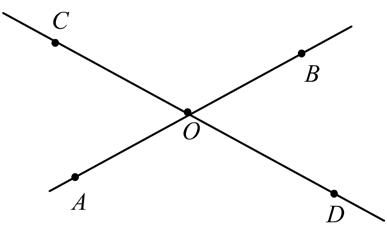
Which are pairs of vertical angles?
a)
∠COB & ∠COA
b)
∠AOD & ∠AOC
c)
∠COB & ∠AOD
d)
∠BOD & ∠AOD
11.
What is the supplement angle to 42°?
a)
48°
b)
138°
c)
100°
d)
Not possible
12.
What is the complement angle to 30°?
a)
60°
b)
30°
c)
150°
d)
230˚
13.
What are complementary angles?
a)
Angles that add up to 180°
b)
Angles that add up to 90°
c)
Angles that are equal to each other
d)
Angles that are opposite of each other when lines intersect.
14.
What are supplementary angles?
a)
Angles that add up to 180°
b)
Angles that add up to 90°
c)
Angles that are equal to each other
d)
Angles that are opposite of each other when lines intersect
15.
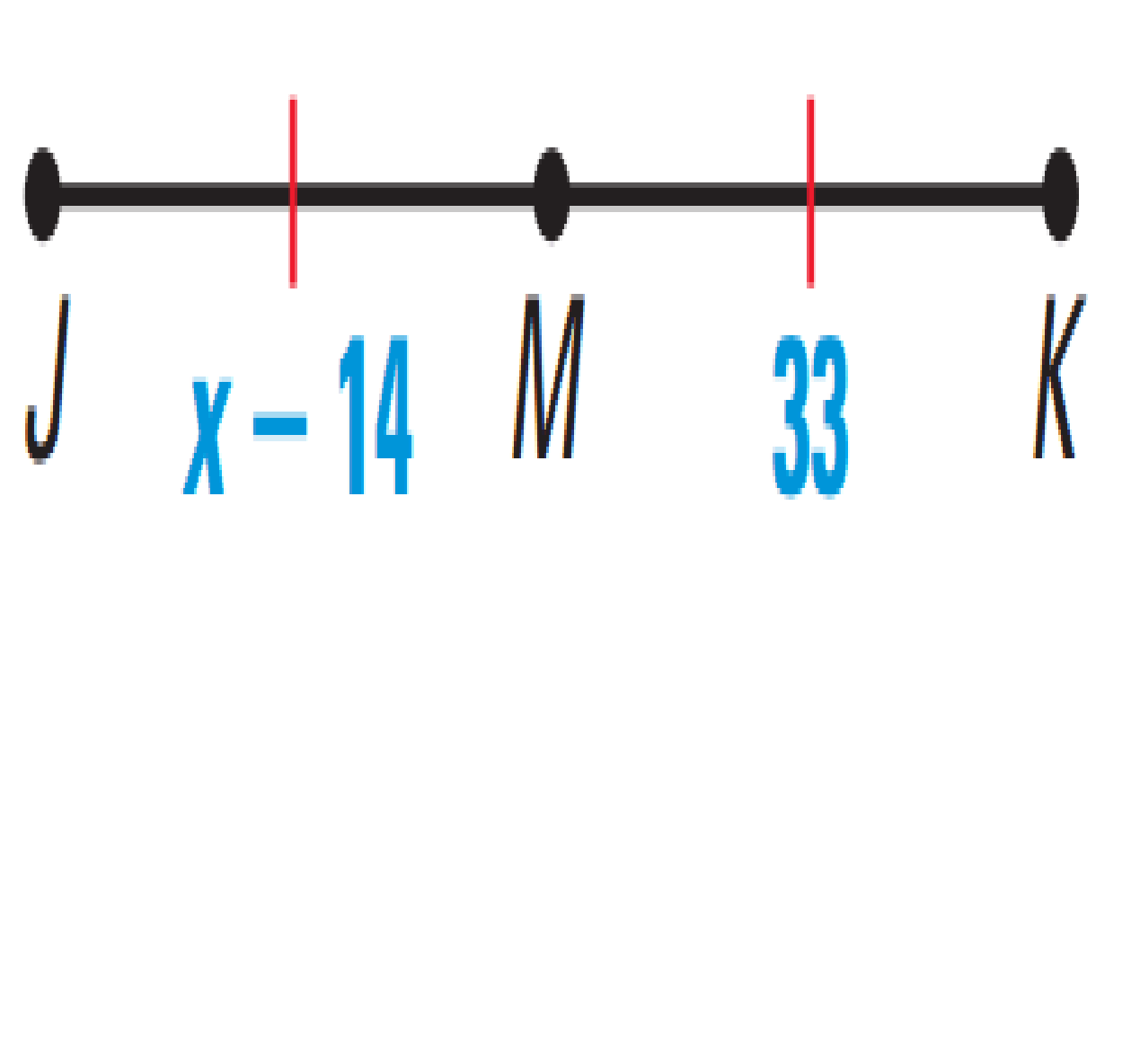
Find the value of x.
a)
x=47
b)
x=19
c)
x=33
d)
x= -47
16.

The angle relationship shown is -
a)
complementary angles
b)
supplementary angles
c)
vertical angles
d)
angle bisector
17.
If AB=CD then AB+EF = CD + EF
a)
Division property of equality
b)
Addition Property of equalilty
c)
Transitive property of equality
d)
Substitution
18.
If Q is between P and R, then PQ +QR=PR
a)
Segment Addition postulate
b)
Definition of Midpoint
c)
Addition Property of equality
d)
Transitive Property
100 %

