wayground logo

Free Printable Worksheets

Font size

S
M
L
XL
Worksheets

Physics quiz

Total questions: 143

Worksheet time: 1hrs 27mins

Name
Class
Date
1.

Energy due to motion

a)

nuclear

b)

kinetic

c)

potential

d)

mechanical

2.

A disturbance that transfers energy from one place to another, but does not transfer matter

a)

kinetic

b)

potential

c)

wave

d)

sound

3.

Energy stored in and released from the bonds between atoms

a)

radiant

b)

thermal

c)

electric

d)

chemical

4.

stored energy

a)

nuclear

b)

radiant

c)

potential

d)

kinetic

5.

energy stored in and released from the nucleus of an atom

a)

kinetic

b)

potential

c)

chemical

d)

nuclear

6.

The combined potential & kinetic energy in a system

a)

kinetic

b)

nuclear

c)

mechanical

d)

thermal

7.

the ability to cause change

a)

kinetic

b)

energy

c)

potential

d)

wave

8.

the total kinetic and potential energy of the particles that make up an object

a)

nuclear

b)

mechanical

c)

thermal

d)

radiant

9.

energy carried by electromagnetic waves

a)

radiant

b)

thermal

c)

sound

d)

mechanical

10.

energy carried by sound waves

a)

mechanical

b)

thermal

c)

sound

d)

light

11.

energy carried in an electric current

a)

mechanical

b)

kinetic

c)

radiant

d)

electric

12.

UV rays (radiant energy) & sound energy are carried by what?

a)

matter

b)

energy

c)

waves

d)

light

13.

Which is the following is an example of a nuclear energy?

a)

a kite in a tree

b)

a ball rolling down a hill

c)

atomic bomb

d)

a car rolling down a hill

14.

You get this type of energy from the food you eat

a)

electric

b)

kinetic

c)

chemical

d)

gravitational potential energy

15.

What does gravitational potential energy depend on?

a)

mass & speed

b)

weight & height

c)

mass & distance/ height above earth

d)

speed & height

16.

The more speed an object has, the __________ kinetic energy is has.

a)

less

b)

more

c)

same

17.

What type of energy am I feeling if my coffee cup gets warm?

a)

kinetic

b)

thermal

c)

potential

d)

sound

18.

Which of the following is an example of radiant energy?

a)

UV Rays

b)

sound energy

c)

energy in food

d)

energy in a battery

19.

Kinetic energy depends on what?

a)

just mass

b)

mass & distance

c)

weight & speed

d)

mass & speed

20.

A wave transfers what?

a)

matter

b)

mass

c)

energy

21.
Energy stored in the bonds between atoms
a)
chemical energy
b)
mechanical energy
c)
kinetic energy
d)
nuclear energy
22.
Energy stored in an atom's nucleus
a)
chemical energy
b)
mechanical energy
c)
kinetic energy
d)
nuclear energy
23.
Energy stored in a flexed or compressed object
a)
gravitational potential energy
b)
mechanical energy
c)
kinetic energy
d)
elastic potential energy
24.
Energy of motion
a)
gravitational potential energy
b)
mechanical energy
c)
kinetic energy
d)
elastic potential energy
25.
Potential energy due to gravity
a)
gravitational potential energy
b)
mechanical energy
c)
kinetic energy
d)
elastic potential energy
26.
Energy in the form of waves that can move through space
a)
gravitational potential energy
b)
electromagnetic energy
c)
sound energy
d)
elastic potential energy
27.
Energy in the form of waves that move through a medium like air or water
a)
gravitational potential energy
b)
electromagnetic energy
c)
sound energy
d)
elastic potential energy
28.
Energy of moving electrons
a)
electrical energy
b)
electromagnetic energy
c)
sound energy
d)
mechanical energy
29.
Energy of vibrating particles
a)
electrical energy
b)
thermal energy
c)
sound energy
d)
mechanical energy
30.
Kinetic energy + potential energy
a)
electrical energy
b)
thermal energy
c)
sound energy
d)
mechanical energy
31.
Stored energy
a)
electrical energy
b)
kinetic energy
c)
potential energy
d)
mechanical energy
32.
The ability to do work
a)
energy
b)
kinetic energy
c)
potential energy
d)
mechanical energy
33.
"For every action, there is an equal and opposite reaction."
a)
Newton's 1st Law
b)
Newton's 2nd Law
c)
Newton's 3rd Law
d)
Newton's 4th Law
34.
Force = Mass x Acceleration
a)
Newton's 1st Law
b)
Newton's 2nd Law
c)
Newton's 3rd Law
d)
Newton's 4th Law
35.
"An object in motion (or at rest) will to stay in motion (or at rest) until an outside force acts upon it."
a)
Newton's 1st Law
b)
Newton's 2nd Law
c)
Newton's 3rd Law
d)
Newton's 4th Law
36.
The tendency of an object to resist changes in its motion is...
a)
inertia
b)
force
c)
acceleration
d)
velocity
37.
Any push or pull on an object.
a)
force
b)
velocity 
c)
inertia
d)
momentum
38.
The force that opposes motion between two surfaces in contact with each other.
a)
inertia
b)
friction
c)
momentum
d)
gravity
39.
The force of attraction between all matter.
a)
inertia
b)
friction
c)
net force
d)
gravity
40.
A force that opposes motion between a surface in contact with the atmosphere.
a)
air resistance
b)
gravity
c)
momentum
d)
terminal velocity
41.
When all the forces on an object are equal and opposite, & the net force is zero, that's...
a)
balanced forces
b)
unbalanced forces
c)
terminal velocity
d)
reaction forces
42.
Mass x acceleration = ?
a)
force
b)
inertia
c)
momentum
d)
velocity
43.
A magician pulls a tablecloth out from under dishes and glasses on a table without disturbing them.
a)
Newton's 1st Law
b)
Newton's 2nd Law
c)
Newton's 3rd Law
44.
A person not paying attention while skateboarding hits a rock. The skateboard stops...they don't.
a)
The Law of Inertia
b)
The Law of Acceleration
c)
The Law of Conservation of Momentum
45.
Pushing a child on a swing is easier than pushing an adult on the same swing, because the adult has more mass and requires more force to accelerate.
a)
Newton's 1st Law
b)
Newton's 2nd Law
c)
Newton's 3rd Law
46.
A student leaves a pencil on a desk and the pencil stays in the same spot until another student picks it up.
a)
Law of Inertia
b)
Law of Acceleration
c)
Law of Conservation of Momentum
47.
This person bought coffee and put it on the seat next to them. If they stopped quickly and the coffee spilled which law would that represent?
a)
Newton's 1st Law
b)
Newton's 2nd Law
c)
Newton's 3rd Law
48.

Which EM waves have the longest wavelength?

a)

radio

b)

x-rays

c)

ultraviolet

d)

gamma rays

49.

Which EM waves have the shortest wavelength?

a)

radio

b)

x-rays

c)

ultraviolet

d)

gamma rays

50.

Which EM waves are invisible? (more than one correct answer)

a)

radio

b)

visible

c)

ultraviolet

d)

gamma rays

51.

Which EM waves are have a SHORTER wavelength than visible?

a)

radio

b)

none

c)

infrared

d)

x-rays

52.

Which EM waves are have the lowest frequency?

a)

radio

b)

none

c)

infrared

d)

x-rays

53.

Which EM waves are have the highest energy & are the most dangerous?

a)

radio

b)

gamma rays

c)

infrared

d)

x-rays

54.

Which color waves have the lowest frequency?

a)

red

b)

yellow

c)

green

d)

violet

55.

Which color waves have the shortest wavelength?

a)

red

b)

yellow

c)

green

d)

violet

56.

What happens to frequency when wavelength decreases?

a)

stays the same

b)

decreases

c)

increases

d)

There is no relationship between wavelength & frequency.

57.

Which type of electromagnetic wave travels fastest through a vacuum?

a)

radio

b)

gamma rays

c)

visible light

d)

They all travel at the same speed.

58.

The diagram shows a person observing a thunderstorm located several kilometers away. The person hears the thunder several seconds after seeing the lightning. Which statement accurately explains the difference in observations of sound and light by the observer?


a)

Human eyes see light faster than their ears can hear sound.

b)

The medium the waves are traveling through is different for each type of wave.

c)

Light waves travel faster than sound waves.

d)

Sound waves travel faster than light waves.

59.

The picture below shows a ringing bell inside a vacuum jar. As air is pumped from the vacuum jar, the sound level of the ringing bell will decrease until it can no longer be heard.

This happens because air must be present in the jar in order for

a)

sound to be transferred

b)

electricity to flow through the wires

c)

the rubber to seal the jar

d)

the bell clanger to vibrate

60.

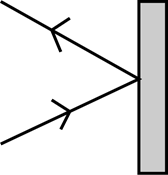
The diagram below shows a light ray. In this diagram, the light ray is being

a)

 transmitted

b)

absorbed

c)

reflected

d)

refracted

61.

The diagram below shows a pencil in a glass of water. When viewed from the side, the pencil appears to be broken. What process causes this to happen?

a)

absorption

b)

evaporation

c)

reflection

d)

refraction

62.

What do electromagnetic waves NOT need to transfer energy?

a)

matter

b)

speed

c)

wavelength

d)

frequency

63.
Waves move ___ through vibrations
a)
Energy
b)
Matter
c)
Mass
d)
Weight
64.
Longitudinal waves are ______.
a)
Parallel
b)
Perpendicular
c)
Crazy
65.
Transverse waves are ___.
a)
Parallel
b)
Perpendicular
c)
Weird
66.

The highest point on a wave is:

a)

the crest

b)

the trough

c)

the top

d)

the coast

67.
What kind of wave is pictured below?
a)
compressional wave
b)
transverse wave
c)
sound wave
d)
mechanical wave
68.

You can't hear sounds in outer space because there is no

a)

medium

b)

light

c)

energy

d)

heat

69.

All waves carry ________ as they travel from one place to another.

a)

matter

b)

space

c)

energy

d)

water

70.
Which part of the wave is shown at letter E?
a)
trough
b)
crest
c)
resting point
d)
amplitude
71.
Any material that a wave travels through is called a ____________________.
a)
vibration
b)
compression
c)
medium
d)
crest
72.
In longitudinal waves, the parts where the coils are spread apart are called what?
a)
rarefactions
b)
compressions
c)
mechanicals
d)
longitudes
73.
In what type of wave does the medium move perpendicular to the movement of the wave?
a)
Transverse
b)
Longitudinal
c)
Electromagnetic
d)
Radio
74.
In a longitudinal wave, the parts where the coils are close together are called what?
a)
longitudes
b)
rarefactions
c)
compressions
d)
contractions
75.
Which travels faster, light or sound?
a)
light
b)
sound
76.
What type of wave move a slinky back and forth?
a)
longitudinal
b)
transverse
77.
Which type of wave does sound travel in?
a)
Transverse
b)
Longitudinal
78.
Which answer best explains what causes a wave?
a)
Shaking
b)
Potential energy
c)
Light
d)
Vibrations
79.
What kind of wave is pictured?
a)
Transverse
b)
Longitudinal
c)
surface
d)
none of the above
80.

What does a wave carry from place to place?

a)

energy

b)

matter

c)

people

81.

A wave that can travel through matter and empty space is a:

a)

electromagnetic wave

b)

longitudinal wavy

c)

transverse wave

82.

Which are properties of a mechanical wave?

a)

can be longitudinal or transverse

b)

can move through space

c)

must have matter to move

d)

carries energy

83.
When light shines through a prism it creates a ________________
a)
colors
b)
ROY G. BIV
c)
spectrum
d)
electromagnetic wave
84.
Material that allows light to pass through allowing you to see "clearly" to the other side
a)
opaque
b)
translucent
c)
transparent
85.
Wax paper or a foggy window is an example of what type of material. 
a)
transparent
b)
translucent
c)
opaque
86.
The illustration shows a light ray striking an object.
In the illustration, the light ray striking the object is-
a)
absorbed
b)
stopped
c)
reflected
d)
refracted
87.
What do we call this tool that separates white light into the colors of the Visible Spectrum?
a)
tuning fork
b)
prism
c)
microscope
d)
graduated cylinder
88.
What is the saying that can help you remember the order of the visible spectrum?
a)
ROYGBIV
b)
RYOBIVG
c)
ROBVIG
d)
RIBYOG
89.
What is light?
a)
waves
b)
energy
c)
the sun
d)
a source
90.
Sound is caused by....
a)
molecules
b)
vibrations
c)
people
d)
space
91.
Sound does not travel in space because
a)
Space is too far away.
b)
There is no matter in space.
c)
Space is the final frontier
d)
Space has planets.
92.
What medium (solid, liquid, gas) does sound travel fastest through?
a)
solid
b)
liquid
c)
gas
93.
Sound is a form of? 
a)
energy
b)
pitch
c)
volume
94.
Sound travels FASTEST through which of these materials?
a)
Air
b)
Empty space
c)
Metal
d)
Water
95.
Current is...
a)
moving protons
b)
moving electrons
c)
measured in volts
d)
measured in ohms
96.
current is measured in....
a)
volts
b)
amps
c)
watts
d)
mph
97.
The two types of current are...
a)
AC/DC
b)
Alternating Current
c)
Direct Current
d)
All of the above
98.
Voltage is simply defined as...
a)
what 'pushes' electrons
b)
what 'stops' electrons
c)
moving electrons
99.
In the U.S most electrical outlets supply a voltage of....
a)
240 Volts
b)
120 Volts
c)
100 watts
d)
60 amps
100.
Resistance is...
a)
What "slows down" electrons
b)
What "speeds up" electrons
c)
Moving electrons
d)
What "pushes" electrons
101.
Good conductors are _______ resistors
a)
bad
b)
good
102.
Good insulators are _______ resistors
a)
good
b)
bad
103.
What characteristics impact resistance of a material?
a)
Thickness 
b)
Temperature
c)
Length
d)
All of these
104.
If the voltage stays the same, but the resistance goes up, the current will....
a)
increase (speed up)
b)
decrease (slow down)
c)
stay the same
105.
If the current increases it could be because of...
a)
increasing voltage
b)
decreasing resistance
c)
both
106.
A 120 w light bulb uses more ____________ than a 60 w light bulb.
a)
thermal energy
b)
electrical energy
107.
A light bulb is an example of a _______.
a)
current
b)
resistor
c)
battery
108.
Electrical energy is converted to _______ energy in a hair dryer.
a)
heat 
b)
light
109.
If you turn on all of the lights in your house, the electric meter measuring Kilowatt-hours outside your home will read a ________ value than if the lights are off.
a)
higher
b)
lower
110.

Solar Energy is created by what?

a)

Moon

b)

Sun

c)

Wind

d)

Water

111.

Solar Cells convert light into electricity?

a)

True

b)

False

112.

Someone wants to put solar panels on their house. They live in a location where it is cloudy a lot and their house is shaded by trees. Should this person be putting solar panels on their house?

a)

Yes

b)

No

113.

Does the size of the solar panel affect how much sun light is taken in?

a)

Yes

b)

No

c)

It depends if the panel is made from something else

d)

It doesn't matter

114.

Plants need what to do photosynthesis just like solar panels?

a)

Food absorbed from ground

b)

Sun's energy

c)

Food broken down

d)

Minerals from the soil

115.

Cons (Disadvantages) of using Solar Energy include:

SELECT ALL THAT APPLY

a)

It's Renewable

b)

Expensive to Install

c)

It is not a constant source of energy

d)

All the Above

116.

Pro (Advantages) of using solar energy include:

SELECT ALL THAT APPLY

a)

Renewable

b)

Expensive to Install

c)

Produces no pollution during its operation

d)

Expensive to store energy

117.

Energy from the sun is called ..................

a)

Geothermal

b)

Solar

c)

Hydroelectric

118.
Is solar energy renewable?
a)
no
b)
yes
119.
What is the cost per acre for a solar farm?
a)
$5,000
b)
$36,000
c)
$42,000
d)
$500,000
120.
What percentage has solar energy grown annually?
a)
40%
b)
30%
c)
50%
d)
45%
121.
Solar Energy Can Power A Calculator
a)
False
b)
True
c)
Yellow
122.
Why is solar energy considered a renewable energy source?
a)
You can get money back from the government if you put solar panels on your house
b)
Solar energy is cheaper than fossil fuels
c)
The sun's energy will not run out for billions of years
d)
Solar energy can be used to recharge batteries
123.

What is the most abundant resource on Earth?

a)

Wind Power

b)

Water Power

c)

Solar Power

d)

The Power of Grayskull

124.

Why are fossil fuels more widely used than solar energy?

a)

Solar energy is harder to find.

b)

Fossil fuels are much cheaper.

c)

Fossil fuels are more abundant.

d)

The sun's energy can never be harnessed.

125.

Photovoltaic cells convert sunlight into

a)

Heat

b)

Motion

c)

Light

d)

Electricity

126.
What does this tool measure?
a)
weight
b)
meters
c)
mass
d)
force
127.
Any object with mass has gravity.
a)
True
b)
Sometimes
c)
False
d)
Never
128.
As distance between two objects increase the pull of gravity 
a)
Increases
b)
Decreases
c)
Stays the same
129.
As mass increases, what happens to gravitational force?
a)
increases
b)
decreases
c)
stays the same
d)
i don't know
130.
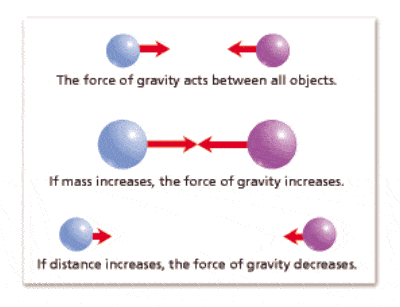
Which model has greater gravitational attraction (if any)
a)
Model A
b)
Model B
c)
Both Model A and Model B (same gravity)
131.
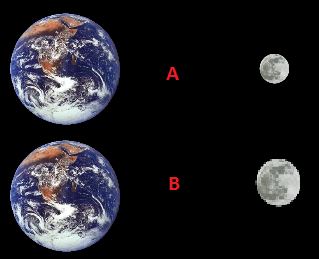
Which system has the greater gravitational attraction between the two objects (if any)?
a)
System A
b)
System B
c)
Same gravitational attraction fro System A and System B
132.
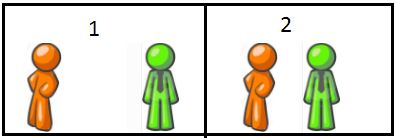
Which System has the greater gravitational pull between the two objects?
a)
System 1
b)
System 2
c)
Same: there is no gravitational attraction between the two objects
133.
As mass increases, what happens to gravitational force?
a)
increases
b)
decreases
c)
stays the same
d)
i don't know
134.
Which of the following will not change in different gravitational fields?
a)
wieght
b)
force
c)
mass
d)
pounds
135.
Two factors effecting the magnitude of the force of gravity between 2 objects are...
a)
mass and distance 
b)
mass and matter
c)
distance and weight 
d)
weight and mass
136.
If Earth's mass was cut in half, what would happen to your mass?
a)
increase because gravitational force increases
b)
decrease because gravitational force decreases
c)
decrease because gravitational force increases
d)
nothing, mass is not affected by gravitational force
137.
Any object with mass has gravity.
a)
True
b)
Sometimes
c)
False
d)
Never
138.
The force of gravity acting on an object is the object's ______.
a)
mass
b)
matter
c)
weight 
d)
friction 
139.
Which of the following never changes no matter where in the universe?
a)
weight
b)
force
c)
mass
d)
pounds
140.
What is the SI unit used to measure force? 
a)
pounds 
b)
grams 
c)
newtons 
d)
friction
141.
The amount of matter in an object is 
a)
pressure
b)
weight
c)
mass
d)
force
142.
A person would weigh less on on the Moon than on the Earth because . . .
a)
Moon has more mass, and therefore more gravity
b)
Moon has less mass, and therefore more gravity
c)
Moon has more mass, and therefore less gravity
d)
Moon has less mass and therefore less gravity
143.
The farther apart two objects are, the __ their gravity.
a)
weaker
b)
stronger
c)
more equal

Similar Resources on Wayground