Worksheets
ECHEM Finals 23
Total questions: 50
Worksheet time: 33mins
When a proton is converted to a neutron, the atomic number decreases by 1 and the number of neutrons increases by 1.
Positron Emission
Electron Capture
Beta Emission
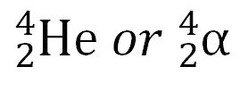
Alpha Emission
When the mass number decreases by four and the atomic number decreases by two.
Positron Emission
Electron Capture
Beta Emission
Alpha Emission
It increases the number of protons while decreasing the number of neutrons.
Positron Emission
Electron Capture
Beta Emission
Alpha Emission
Other nuclei are unstable because they have too few neutrons relative to the number of protons. These nuclei increase their stability by converting a proton to a neutron.
Positron Emission
Electron Capture
Beta Emission
Alpha Emission
I - Nuclei that have an atomic number greater than 83 are radioactive.
II - These nuclei have both too many neutrons and too many protons to be stable.
Both statements are incorrect
Both statements are true
Only the FIRST statement is true
Only the SECOND statement is true
During nuclear decay, if the atomic number decreases by one but the mass number is unchanged, the radiation emitted is
a positron
an alpha particle
a beta particle
a proton
is the time required for one-half of the nuclei in a radioisotope sample to decay to products.
Counter Strike
Half-Life
Quake 2
Castle Wolfenstein
Uranium compounds are found in rocks and in soils that form from these rocks. How can these uranium compounds lead to a buildup of radon in homes and other buildings?
As the uranium compounds in the soil beneath homes and buildings decay, radon is produced and seeps into the structure.
As the uranium compounds in the soil beneath homes and buildings evolves into itself, radon is produced and seeps into the structure.
As the uranium compounds in the soil beneath homes and buildings decay, radon is produced and does not seep into the structure.
Which of the following always changes when transmutation occurs?
# of e-
A
z
# of n0
to get the number of neutrons
e- + p+
A + z
A - z
# of n0 + A
I - The neutron-to-proton ratio in a radioisotope determines the type of decay that occurs.
II - After each half-life, half of the original radioactive atoms have decayed into atoms of the same element.
Both statements are incorrect
Both statements are true
Only the FIRST statement is true
Only the SECOND statement is true
I - The neutron-to-proton ratio in a radioisotope determines the type of decay that occurs.
II - After each half-life, half of the original radioactive atoms have decayed into atoms of a new element.
Both statements are incorrect
Both statements are true
Only the FIRST statement is true
Only the SECOND statement is true
I - Transmutation can occur by radioactive decay, or when particles bombard the nucleus of an atom.
II - After each half-life, half of the original radioactive atoms have decayed into atoms of a new element.
Both statements are incorrect
Both statements are true
Only the FIRST statement is true
Only the SECOND statement is true
an attractive force that acts between all nuclear particles that are extremely close together, like protons and neutrons in a nucleus
band of stability
nuclear force
positron
Geiger Counter
Describe COHESION.
Water molecules attracted to other substances.
Water molecules climbing upwards against the force of gravity.
Water molecules dissolving many substances because of its polarity.
Water molecules attracted to other water molecules.


any substance that interferes with the hydrogen bonding between water molecules and thereby reduces surface tension; soaps and detergents are surfactantsany substance that interferes with the hydrogen bonding between water molecules and thereby reduces surface tension; soaps and detergents are examples of these
Adhesion
cohesion
surface tension
surfactant

In ice, how many hydrogen bonds can be formed between one hydrogen atom of a water molecule and the oxygen in surrounding water molecules?
(a)
The hydrologic cycle is:
Convection, conduction, condensation, Radiation
Evaporation, Transpiration, Condensation, Precipitation, Runoff
Rain, Sunshine, Condensation, Flood
begins at the Earth's surface and extends up to 4-12 miles (6-20 km) high. This is where we live. As the gases in this layer decrease with height, the air become thinner. Therefore, the temperature in the troposphere also decreases with height. As you climb higher, the temperature drops from about 62°F (17°C) to -60°F (-51°C). Almost all weather occurs in this region.
troposphere
stratosphere
Mesosphere
Thermosphere
This atmospheric layer absorbs most of the damaging ultraviolet sunlight (UV-B)
troposphere
stratosphere
Mesosphere
Thermosphere
This layer of the atmosphere would still feel very cold to our skin because of the extremely thin air. The total amount of energy from the very few molecules in this layer is not sufficient enough to heat our skin.
troposphere
stratosphere
Mesosphere
Thermosphere
It is _____ to breath on top of a mountain than at sea level because there are ______ oxygen molecules at the summit.
easier / more
harder / more
easier / less
harder / less
These are the pollutants that are emitted directly from the sources such as volcanic eruptions, combustion of fossil fuel, etc. These include nitrogen oxide, sulphur oxide, etc.
Primary
Secondary
Tertiary
Quaternary
This pollution results in neurological and behavioral disorders in humans. Insomnia, memory loss, headaches, and tremors are some of the symptoms.
Mercury
Acetomenophryl
Sulfur
Nitrogen
If you feel the heat in the handle of a cooking pot, that heat was transferred to the handle by:
Convection
Conduction
Radiation
The brief cloud that forms when you exhale on a cold winter day was formed because of:
Precipitation
Convection
Evaporation
Condensation
If your employees have a company email address, make sure that everyone gets an email outlining safety standards at least once a month. Another way is mailing a newsletter to the address of every employee; you can include one with their pay stub as well.
Send an Email or Newsletter
Post Signage Throughout the Workplace
Hold Meetings (Toolbox Talks)
Take Pictures of Safe Actions
Require Appropriate Training
Place a sign where employees punch in, in break rooms, around equipment and any other high frequent areas. Be creative! Use video and other mediums to help reinforce standards.
Send an Email or Newsletter
Post Signage Throughout the Workplace
Hold Meetings (Toolbox Talks)
Take Pictures of Safe Actions
Require Appropriate Training
A picture is worth a thousand words. Make it perfectly clear what the expectations are by taking pictures of employees demonstrating proper practices. Include these in your newsletters and emails.
Send an Email or Newsletter
Post Signage Throughout the Workplace
Hold Meetings (Toolbox Talks)
Take Pictures of Safe Actions
Require Appropriate Training
To ensure that everyone is getting the message, hold small-group meetings that are mandatory for all employees. Make Toolbox Talks a part of the daily routine to review and discuss safety standards.
Send an Email or Newsletter
Post Signage Throughout the Workplace
Hold Meetings (Toolbox Talks)
Take Pictures of Safe Actions
Require Appropriate Training
I. A HOT WORK permit must be obtained prior to beginning HOT.work by welders and contractors before beginning a job.
II. A HOT WORK permit is not necessary if just burning and grinding is being done on a job.
Both Statemets are Correct
Both Statements are Incorrect
Only the 1st statement is true
Only the 2nd statement is true
I. Contractors are not required to obtain HOT WORK permits.
II. 35 feet is a good safe distance for covered combustibles to be away from HOT WORK.
Both Statemets are Correct
Both Statements are Incorrect
Only the 1st statement is true
Only the 2nd statement is true
I. The employee or contractor will obtain a HOT WORK permit from his supervisor and must determine if conditions are safe and have a fire watch if necessary.
II. HOT WORK is permitted in explosive atmospheres, around hazardous tanks and equipment.
Both Statemets are Correct
Both Statements are Incorrect
Only the 1st statement is true
Only the 2nd statement is true
I. The following protective measures can be used: damp sand on floors, protective shields, or fire resistant coverings while Hot Work is taking place.
II. Fully charged and operable fire extinguishers and/or hose lines shall be available and ready.
Both Statemets are Correct
Both Statements are Incorrect
Only the 1st statement is true
Only the 2nd statement is true
I. The fire watch does not have to be trained in fire extinguishing and is not responsible for sounding an alarm in the event of a fire.
II. The HOT WORK permit shall be posted at the job site, and the supervisor shall retain the permit for three (3) days.
Both Statemets are Correct
Both Statements are Incorrect
Only the 1st statement is true
Only the 2nd statement is true