
 Worksheets
2nd Quarter Science Check-In Review
Total questions: 55
Worksheet time: 2hrs 34mins
What can cause a moving object to increase its speed in a forward direction?
a force pushing on the object from the opposite direction
force that moves continuously in the same direction as object
an increase in the mass of the object
A pencil falls off of a desk. What moves the pencil toward the floor?
mass
friction
gravity
speed
4 cars are at the starting line of a race. Which car will require the most force to start moving?
car with mass of 1200 kilograms
car with mass of 1500 kilograms
car with mass of 1700 kilograms
car with mass of 2000 kilograms
A model car travels 20 meters in 15 seconds. How many meters will it travel in 45 seconds?
0.4m
25m
30m
60m
A swimmer is moving at a speed of 2.0 meters/second. When will they hit 100 meters?
20 minutes
50 minutes
100 minutes
200 minutes

If a ball rolls from point A to point B, in what direction is it rolling?
northward
eastward
westward
southward
Which will most likely stop an object in motion?
mass
acceleration
force
Which is the force that pulls a ball to the ground after being dropped?
friction
air resistance
gravity

Which is a correct statement about the object shown in Graph W?
The object speeds up during the trip.
The object slows down during the trip.
The object travels at a constant speed during the trip.
What was the average speed of a car that traveled 180 miles in 3 hours? (speed = distance÷time)
55 mph
60 mph
180 mph
540 mph
How can the speed of an object best be determined?
distance traveled divided by time it took to travel
time it took to travel divided by distance traveled
distance traveled divided by speed traveled
speed traveled divided by distance traveled
Which best describes the rate at which an object changes its position over time?
force
distance
speed
direction
A ball was rolling fast and then slowed. Which most likelycaused the ball to slow?
heat
friction
momentum
wind
Which best describes the force of gravity?
a puling force
a pushing force
change in mass
change in speed
What causes your skin to feel warm when it is in the sun on a summer day?
Particles in the atmosphere reflect energy from the Sun downward
The Sun radiates energy that passes through space & the atmosphere to your skin.
Hot particles from the Sun still carry some heat when they reach your skin.
The solar wind carries heated air from the Sun’s atmosphere to Earth’s surface.
Which best describes the flow of heat?
A. From a larger object to a smaller object
From a cooler object to a warmer object
From a warmer object to a cooler object
From a warmer object to a warmer object
People sitting around a campfire are able to feel the heat from the fire.
How are the people able to feel the heat form the fire without touching the fire?
A. The heat from the fire travels through the ground & heats the ground around the people.
B. The heat from the fire is conducted through air molecules to the people.
C. The heat from the fire rises in the air and then settles around the people.
D. The heat from the fire radiates from the fire to the people.
You hold a bowl of hot soup that warms your hands; this is
A. Radiation
B. Conduction
C. Convection
D. Conviction
Steam from a hot bowl of soup warms your face as you lean over it; this is
A. Radiation
B. Conduction
C. Convection
D. Conviction
Why is it better to have a cooking pot with a plastic handle instead of a metal handle?
A. Plastic looks better than metal.
B. . Plastic is not a good conductor of heat
C. Plastic washes easier than metal.
D. Plastic is a good conductor of heat
Jim wakes up early in the morning and walks from his carpeted bedroom to the tiled kitchen. Which BEST describes why, despite being the same temperature, the tile floor feels cooler to his feet than the carpet?
A. Tile is a better conductor of heat and transfers heat away from his skin.
B. Carpet is a bad conductor of heat and transfers heat to his skin.
C. Tile is a poor conductor of heat and transfers heat to his skin.
D. The tile and carpet are the same temperature
Raegan wants to determine the best material to make a new type of cookware. What type of material should she choose?
A. A material that conducts heat evenly.
B. A material that can be easily bent into shape.
C. material that does not transmit electricity
D. A material that will remain cool to the touch.
Serenity wants to keep drinks cold during an afternoon sports game. Which container would MOST LIKELY keep her drinks cold for several hours?
A Plastic, because it will conduct heat.
B. Metal, because it will conduct heat.
C. Plastic, because it will insulate from heat.
D. Metal, because it will insulate from heat.
What is another name for Heat energy?
Conductor
Radiation
Convection
Thermal

At which point is potential energy greatest?
W
X
Y
Z


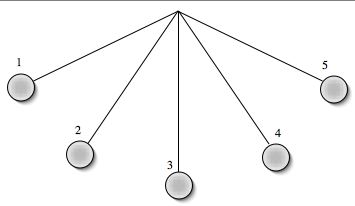

An object falling from 50m will have ___________ potential than an object falling from
30m.
greater
less
equal

A diver just before she dives off the 30m platform.
potential energy
kinetic energy

A bobsled is moving at its fastest speed around the final
turn.
potential energy
kinetic energy

A baseball just before being released by the pitcher.
potential energy
kinetic energy

A golf ball as it gains height after being hit by the driver.
potential energy
kinetic energy

A swimmer in the middle of a 50 m race.
potential energy
kinetic energy
A girl sliding down a slide
Kinetic Energy
Potential Energy
Dominos stand up on the floor
Potential Energy
Kinetic Energy

When two or more substances combine, but it does not form anything new like salt and pepper or trail mix
Chemical
Matter
mixture
volume

anything that has mass and takes up space
matter
density
volume
mass
involves how a substance will interact with something else
physical change
chemical change
chemical property
physical property
A change that does not result in a new substance
chemical property
chemical change
physical propert
physical change

a misture in which one substance dissolves in another
solution
density
matter
volume

the amount of space an object takes up
mass
volume
density
matter

the amount of mass per unit of volume
density
volume
matter
mass
the amount of matter in an object
mass
matter
volume
density
when one or more substances combine to make something new
chemical property
chemical change
physcial change
mixture
a characteristic that you can observe directly or measure with a tool such as mass, size, shape, color, texture, and volume
chemical property
physical property
chemical change
physical change

