
 Worksheets
AP Gov - Unit 2 Legislative & Executive Branches Review
Total questions: 40
Worksheet time: 20mins
Which of the following statements about gerrymandering is true?
It has been banned by United States Supreme Court decisions starting with Baker v. Carr
It was used traditionally to maintain urban control of the House of Representatives.
It can be used by a political party to draw boundary lines to control as many districts as possible.
It guarantees greater constituency control over elected representatives.
All of the following are ways that the legislative branch can check the powers of the executive branch EXCEPT:
Congress may pass a law declaring a presidential action unconstitutional.
The Senate may refuse to approve a presidential appointment.
Congress may override a presidential veto.
Congress may remove the president through its impeachment and conviction powers.
Which of the following is an example of congressional oversight?
Assisting constituents with particular problems
Holding hearings for review of an executive agency's activities
Reporting campaign contributions to the Federal Election Commission
Conducting ethics investigations of congressional leadership
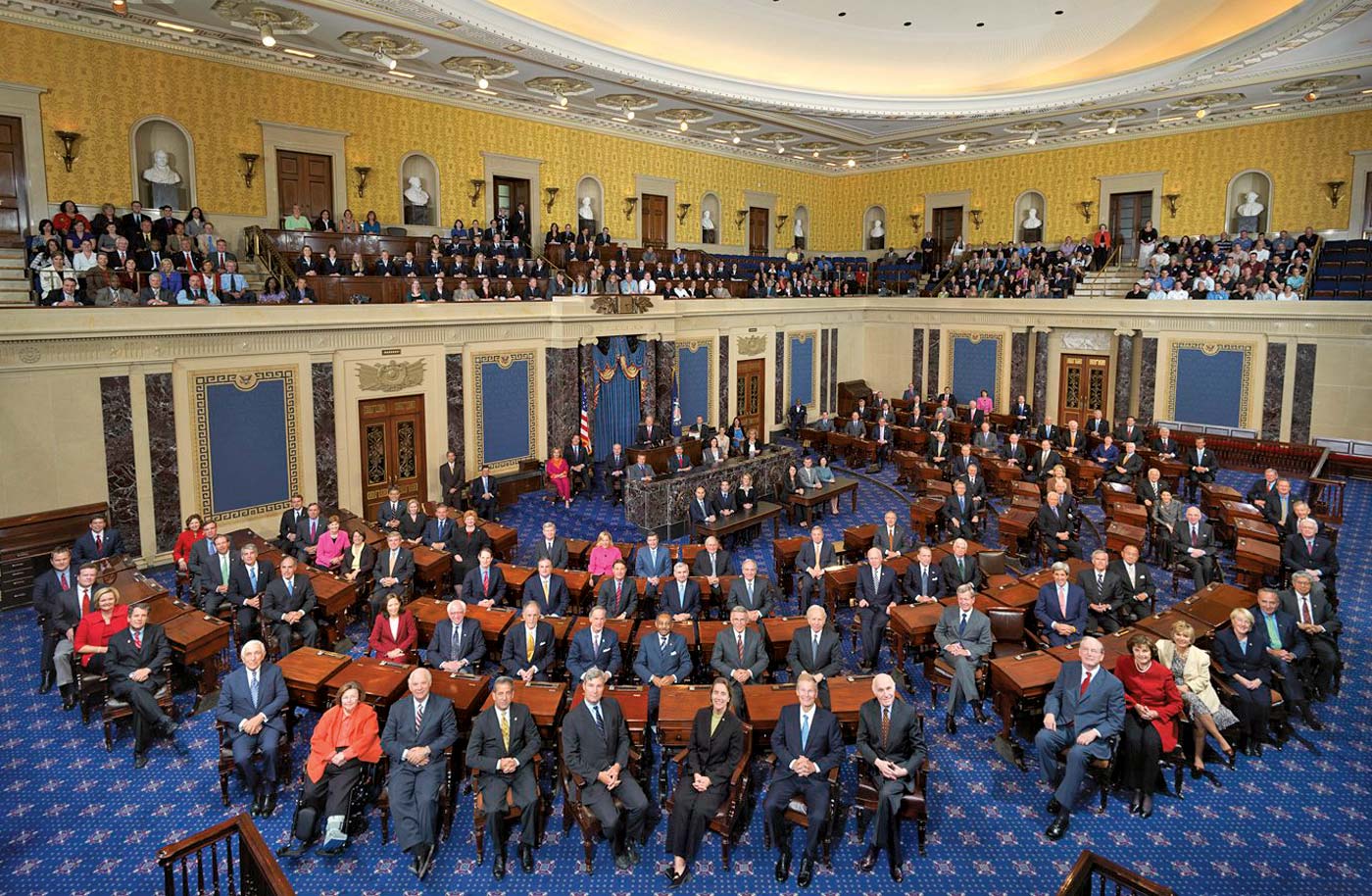
After a national census has been taken, changes in population distribution cause the changing of congressional seats among the states. This effect is commonly called
Congressional redistricitng
Apportionment
Gerrymandering
Repportionment
What article of the U.S. Constitution deals with the Executive Branch?
Article I
Article II
Article III
Article IV
What president spurred the creation of the 22nd amendment (presidential term limits?

Theodore Roosevelt

Franklin D. Roosevelt

John F. Kennedy

Woodrow Wilson
What is a "bicameral legislature" composed of?
One governing body/chamber
Two governing bodies/chambers
One head body with a sub-chamber
The President and the heads of each chamber
What article of the U.S. Constitution deals directly with the Legislative Branch?
Article I
Article II
Article III
Article IV
Which of the following is NOT an example of an expressed power?
Declaring war
Coining money
Borrowing money
Creating the IRS to collect taxes
How many members are in the House of Representatives?
100
335
435
535
How many years is a Representative's term?
2 years
4 years
6 years
8 years
How long is a Senator's term?
2 years
4 years
6 years
8 years

What is the name of the head of the House of Representatives?
House Leader
Speaker of the House
President
Majority Leader
Constitutional checks and balances, especially applied to the president are designed to:
Provide for a balanced budget
Ensure that the states do not become too powerful
Ensure efficient government
Minimize the threat of tyranny from any branch of government
All of the following are presidential powers EXCEPT the authority to:
Negotiate treaties
Veto legislation
Nominate cabinet members
Declare war
If Congress adjourns during the ten days the president has to consider a bill passed by both houses of Congress, but which the president has not yet signed, what is the result?
Line-item veto
Legislative veto
Executive veto
Pocket veto
Which of the following statements about the rules of procedure in the House and Senate is correct?
The rules in each chamber are determined by the majority whip
The rules are specified in Article I of the Constitution
The rules can be changed by the President during a national emergency
The House operates more by formal rules while the Senate operates more on informal understandings.
Which of the following identifies the formal procedure for ending a filibuster?
Oversight
Logrolling
Pocket veto
Cloture
Of the following, which is the most powerful figure in Congress?
The Chair of the House Ways and Means Committee
The Majority Whip of the House
The Chair of the Senate Finance Committee
The Speaker of the House

How many Senators in the US Senate?
27
100
435
500
Who is the leader of the Senate?
Speaker of the House
Vice President of the United States
Chief Justice of the Supreme Court
The President

What part of congress approves judges?
The Senate
The House of Representatives
The Supreme Court
The Executive Branch
Where does a filibuster take place?
The House of Representatives
The Senate
Both Houses of Congress
Neither House of Congress
What is the term for an international agreement between the president and another country, which does NOT require the consent of the Senate?
Treaty
Diplomatic Agreement
Executive Agreement
Foreign Agreement
What is the term for a presidential order to the executive branch that carries the force of law?
Executive Order
Executive Command
Proclamation
Declaration
What is the term for a presidential statement upon signing a bill into law, which explains how a president’s administration intends to interpret the law?
Executive Assent
Judicial Opinion
Signing Statement
Executive Statement
What is the term for the president’s annual message to a joint session of Congress, which includes recommended legislation and evaluations of the nation’s top priorities and economic health?
Status Update
State of the Union
State of the Republic
Executive Update
What is the term for a president’s formal proposal of a candidate to fill a position, such as a cabinet member or Supreme Court justice.
Nomination
Appointment
Hiring
Acquirement
What term refers to an indirect veto, which the president can use by neither signing or vetoing a bill passed by Congress fewer than 10 days before it adjourns.
Hidden Veto
Slight of Hand
Pocket Veto
Executive Veto
Developments in __________ have drastically increased the communicative power of the Presidency and politicians at large.
Medicine
Technology
Where in the U.S. Constitution do you find the following statement?
"All legislative powers herein granted shall be vested in a congress of the United States, which shall consist of a Senate and a House of Representatives."
The preamble
Article I, section 1
The Bill of Rights
The 2nd Amendment
According to Article I, Section 7 of the Constitution, "All bills for raising revenue shall originate in the House of Representatives." This is commonly referred to as what?
power of the purse
money snachers
confirmation power
executive power
Federalist #70 relates mostly to which branch of government?
The Executive
The Judiciary
The Legislature
The States
In Federalist #70, Hamilton argued for the importance of ______.
a strong singular executive
a strong plural executive
a weak singular executive
a weak plural executive
Federalist #70 talks repeatedly about the importance of ______ in the executive branch.
energy
juice
substance
caution
Opened the door to equal protection challenges to redistricting and the development of the "one person, one vote" doctrine by ruling that challenges to redistricting did not raise "political questions" that would keep federal courts from reviewing such challenges
Baker v. Carr
Shaw v. Reno
Gideon v. Wainwright
Marbury v. Madison
Legislative redistricting must be conscious of race and ensure compliance with the Voting Rights Act of 1965, but race may not be the sole rationale behind redistricting decisions
Baker v. Carr
Shaw v. Reno
Mc Donald v. Chicago
Citizens United v. Federal Election Commission

