
NEW
Font size
S
M
L
XL
 Worksheets
CA 2 Review
Total questions: 44
Worksheet time: 26mins
Name
Class
Date
1.
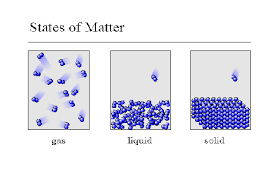
At higher temperatures
a)
particles in an object have less energy
b)
particles in an object move faster
c)
a gas contracts
2.
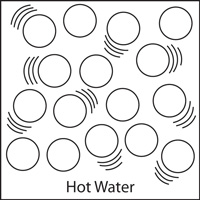
The speed of the molecules determines the _____.
a)
volume
b)
density
c)
pressure
d)
temperature
3.
Thermal energy is...
a)
heat energy.
b)
the energy of motion
c)
energy of nuclear processes.
d)
an indication of physical change.
4.
Temperature and the motion of particles are proportional
a)
True
b)
False
5.
Which of the following is not true about the Kinetic Molecular Theory?
a)
All matter is made of particles
b)
Only some particles are in constant motion.
c)
The amount of motion is proportional to the temperature.
d)
Solids, liquids, and gases differ in their freedom of motion.
6.
5. What is it called when a solid turns directly into a gas?
a)
Sublimation
b)
Condensation
c)
Liquid
7.
Change from Gas to Solid is called........
a)
Sublimation
b)
Deposition
c)
Fusion
d)
condensation
8.

As substance goes from D to E what happens to the distance between the particles?
a)
particles get closer together
b)
particles disappear
c)
particles get far apart
9.

At what point does this substance finish melting?
a)
B
b)
C
c)
D
d)
E
10.
Even though thermal energy is continuously added during the phase change melting, what stays constant?
a)
Time
b)
Thermal Energy
c)
Temperature
11.

Which line segment demonstrates evaporation occurring?
a)
B-C
b)
C-D
c)
D-E
d)
E-F
12.
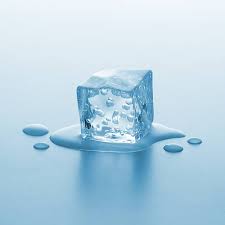
When a substance melts, the kinetic energy _____________.
a)
decreases
b)
stays the same
c)
increases
d)
decreases then increases
13.
What takes place when a liquid changes to a gas?
a)
condensation
b)
melting
c)
evaporation
d)
freezing
14.
What takes place when a solid changes to a liquid?
a)
condensation
b)
melting
c)
evaporation
d)
freezing
15.
What takes place when a liquid changes to a solid?
a)
condensation
b)
melting
c)
evaporation
d)
freezing
16.
What takes place when a gas changes to a liquid?
a)
melting
b)
freezing
c)
evaporation
d)
condensation
17.
What takes place when a solid changes to a liquid?
a)
condensation
b)
freezing
c)
melting
d)
evaporation
18.
Evaporation is what kind of change?
a)
Endothermic
b)
Exothermic
19.
Condensation and raining are examples of what?
a)
Exothermic
b)
Endothermic
20.
When you freeze water, it turns to ice. What kind of change is this?
a)
Physical
b)
Chemical
21.
When you freeze water, it turns to ice. What process is this?
a)
Exothermic
b)
Endothermic
22.
Molecules in cold things move more _________
than in hot things.
than in hot things.
a)
quickly
b)
slowly
c)
happily
d)
merrily
23.
In heat transfer, heat always flows from the _______________ substance to the _______________ substance.
a)
Hotter to colder
b)
Colder to hotter
c)
Hotter to hotter
d)
Colder to colder
24.
Which statement is true?
a)
The quicker a molecule moves, the colder it is.
b)
The slower a molecule moves, the warmer it is.
c)
The quicker a molecule moves, the warmer it is
d)
The movement on molecule don�t affect its temperature
25.
What is a substance that does NOT conduct heat well?
a)
Conductor
b)
Insulator
c)
Convector
d)
Radiator
26.
What is a substance that DOES conduct heat well?
a)
Conductor
b)
Insulator
c)
Convector
d)
Radiator
27.
What is the total amount of kinetic energy in a substance?
a)
Potential energy
b)
Kinetic energy
c)
Thermal energy
d)
Temperature
28.
What is the transfer of kinetic energy from one substance to another?
a)
Heat
b)
Energy
c)
Thermal energy
d)
Temperature
29.

If an object has particles that are moving very quickly, the object 's temperature is probably _____.
a)
cold
b)
slow
c)
big
d)
hot
30.

You're holding hands with your best friend. Your friend's hands are REALLY warm and yours are really cold. After a few minutes, this has changed. How might you explain what happened?
a)
The cold energy from your hand transferred to your friend's hand through conduction.
b)
The heat energy from your friend's hand transferred to your hand through conduction.
c)
The cold energy from your hand transferred to your friend's hand through convection.
d)
The heat energy from your friend's hand transferred to your hand through convection.
31.

The following diagram shows water in contact with an ice cube and warmer air.
Which way will energy flow?
a)
From the air to the water
b)
From the water to the air
c)
From the ice cube to the air
d)
From the ice cube to the water
32.

Which direction is heat flowing in the picture?
a)
from the hand to the ice
b)
from the ice to the hand
c)
heat is not being transferred
d)
there is no way to tell
33.
What is the smallest?
a)
worm
b)
molecule
c)
galaxy
d)
atom
34.
When two atoms bond they make a
a)
Element
b)
Molecule
c)
Cell
d)
Photosynthesis
35.
O2 is a(n)...
a)
Element
b)
Molecule
c)
Compound
d)
Crystal
36.
A recipe for a chemical substance is called a ________ _________.
a)
coefficent
b)
chemical formula
c)
chemical symbol
d)
subscript
37.
H2O2← ?
This number tells the number of atoms present.
This number tells the number of atoms present.
a)
coefficient
b)
molecule
c)
subscript
d)
atom
38.
→2H2O
This number tells how many molecules are in a chemical equation.
This number tells how many molecules are in a chemical equation.
a)
coefficient
b)
subscript
c)
compound
d)
element
39.
2H2O
How many Hydrogen atoms are present?
How many Hydrogen atoms are present?
a)
2
b)
4
c)
1
d)
10
40.
How many TOTAL atoms are in CO₂?
a)
1
b)
2
c)
3
d)
6
41.

What is this?
a)
atom
b)
element
c)
compound
42.
The chemical formula C6H12O6 contains how many carbon?
a)
6
b)
12
c)
1
d)
0
43.
What is the chemical formula for water?
a)
H3O
b)
H2O2
c)
H2O3
d)
H2O
44.
The chemical formula C6H12O6 contains how many carbon?
a)
6
b)
12
c)
1
d)
0
Reset

