Wayground logo

Free Printable Worksheets

Font size

S
M
L
XL
Worksheets

3.0 Review Exponents and Logs

Total questions: 56

Worksheet time: 42mins

Name
Class
Date
1.

Simplify.  4x3⋅2x34x^3\cdot2x^3  

a)

 6x96x^9  

b)

 8x98x^9  

c)

 6x66x^6  

d)

 8x68x^6  

2.

Simplify.  x5y6xy2\frac{x^5y^6}{xy^2}  

a)

 x4y8x^4y^8  

b)

 x4y4x^4y^4  

c)

 1x4y4\frac{1}{x^4y^4}  

d)

 x4y4\frac{x^4}{y^4}  

3.

Simplify.  x9⋅x−7x^9\cdot x^{-7}  

a)

 x−63x^{-63}  

b)

 x−16x^{-16}  

c)

 x2x^2  

d)

 x−2x^{-2}  

4.

Write in exponential form: 8 x 8 x 8 x 8 x 8

a)

85

b)

88

c)

8 x 8 x 8 x 8 x 8

d)

8

5.

What is the BASE in the exponential below?

43

a)

4

b)

3

c)

43

d)

64

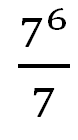
6.
Simplify the expression.
a)
76
b)
7-5
c)
1/75
d)
75
7.
According to exponent rules, when we multiply exponential expressions we _______ the exponents.
a)

add

b)

subtract

c)

multiply

d)

divide

8.

 34×3−33^4\times3^{-3}  

a)

 3−73^{-7}  

b)

 3123^{12}  

c)

 373^7  

d)

 313^1  

9.
According to exponent rules, when we raise an exponential expression to a power we _______ the exponents.
a)

divide

b)

multiply

c)

add

d)

subtract

10.
(52)3
a)
56
b)
55
c)
57
d)
58
11.

Simplify the expression. Use positive exponents only.  a12a7\frac{a^{12}}{a^7}  

a)

 1a5\frac{1}{a^5}  

b)

 a127a^{\frac{12}{7}}  

c)

 a19a^{19}  

d)

 a5a^5  

12.
Simplify the expression.
(xy)7
a)
x7y7
b)
xy7
c)
xy14
d)
x7/y7
13.

Power to a power: (a3b6c)3(a^3b^6c)^3  

a)

abc

b)

a9b9c3a^9b^9c^3  

c)

a9b18c3a^9b^{18}c^3  

14.

Apply the Product Property  

a)

(−10xy4)\left(-10xy^4\right)  

b)

−10x5y7-10x^5y^7  

c)

−10x3y7-10x^3y^7  

15.

Apply the Quotient Property  6x3y714x2y4\frac{6x^3y^7}{14x^2y^4}  

a)

  3xy37\frac{3xy^3}{7}  

b)

6x4y27xy\frac{6x^4y^2}{7xy}  

c)

3x4y117\frac{3x^4y^{11}}{7}   

16.

Negative (2x−3)−2\left(2x^{-3}\right)^{-2}  

a)

2−2x−42^{-2}x^{-4}  

b)

x64\frac{x^6}{4}  

c)

4x64x^6  

d)

2x−52x^{-5}  

17.

Power of a Product: (x2y3)2⋅(xyz2)(x^2y^3)^2\cdot(xyz^2)  

a)

x5y7z2x^5y^7z^2  

b)

x2y7z2x^2y^7z^2  

c)

x7yzx^7yz  

18.

Power of a Quotient (3a2bc3)3\left(\frac{3a^2b}{c^3}\right)^3  

a)

6a5bc6\frac{6a^5b}{c^6}  

b)

27a6b3c9\frac{27a^6b^3}{c^9}  

c)

9a2b3c6\frac{9a^2b^3}{c^6}  

19.
Logarithmic functions are the inverse of...
a)
Linear Functions
b)
Exponential Functions 
c)
Quadratic Functions 
d)
Polynomial Functions 
20.
The common logarithm has what base?
a)
10
b)
0
c)
e
d)
-e
21.
Evaluate logb(b)
a)
-1
b)
0
c)
1
d)
b
22.

Condense

log⁡5−log⁡4\log5-\log4  

a)

log⁡(5−4)\log\left(5-4\right)  

b)

log⁡(45)\log\left(\frac{4}{5}\right)  

c)

log⁡(54)\log\left(\frac{5}{4}\right)  

d)

log⁡(5−4)\log\left(5^{-4}\right)  

23.

Write the expression as a single logarithm.

log⁡39+log⁡324\log_39+\log_324  

a)

log⁡3(924)\log_3\left(\frac{9}{24}\right)  

b)

log⁡39+24\log_39+24  

c)

log⁡3249\log_324^9  

d)

log⁡39⋅24\log_39\cdot24  

24.

Simplify: log⁡73+log⁡76\log_73+\log_76  

a)

log⁡79\log_79  

b)

log⁡7(12)\log_7\left(\frac{1}{2}\right)  

c)

log⁡718\log_718  

d)

undefined 

25.

What is the expression as a single logarithm?

log⁡27−log⁡29\log_27-\log_29  

a)

log⁡27−9\log_27-9  

b)

log⁡2(79)\log_2\left(\frac{7}{9}\right)  

c)

log⁡27⋅9\log_27\cdot9  

d)

log⁡2(97)\log_2\left(\frac{9}{7}\right)  

26.
Write as a single log: log 12 + 2 log x
a)
log (12 + 2x)
b)
log (14x)
c)
log (12 * 2x)
d)
log (12x2)
27.
Write the expression as a single logarithm.   Then simplify if possible.
log 6 - log 3 + 2 log 7
a)
log 98
b)
log 78
c)
log 56
d)
log 45
28.
Condense the following logarithm: 3 log2 x + 2 log2 y – 4 log2 z 
a)
log2 x3y2∕z4
b)
log2 x3y2z4
c)
log2 xyz9
d)
9log2 xyz
29.

Expand the log: log(4x)

a)

log4-logx

b)

log4+logx

c)

4logx

d)

xlog4

30.

Expand the logarithm.

log⁡4y2z3\log_4y^2z^3  

a)

6log⁡4yz6\log_4yz  

b)

2log⁡4y + 3log⁡4z2\log_4y\ +\ 3\log_4z  

c)

2log⁡4y−3log⁡4z2\log_4y-3\log_4z  

d)

6log⁡4y+log⁡4z6\log_4y+\log_4z  

31.

Expand the log


log(x7)

a)

log(7x)

b)

log7+logx

c)

xlog7

d)

7logx

32.

Expand the log: log(3x)2

a)

2log(3+x)

b)

2log3+logx

c)

log3+2logx

d)

2(log3+logx)

33.

Expand the log⁡Expand\ the\ \log  

log⁡(2x2yz4)\log_{ }\left(\frac{2x^2y}{z^4}\right)  

a)

log2+2logx+logy+4logz

b)

log2+2logx+logy-4logz

c)

2log(2xy)-4logz

d)

2log2x+logy-4logz

34.

Expand the log⁡Expand\ the\ \log  

log⁡(m3n)\log\left(\frac{m^3}{n}\right)  

a)

logm-log3-logn

b)

3logm+logn

c)

3logm-logn

d)

3log(m-n)

35.

Use the change of base rule to rewrite this problem:

log364

a)

log(64)/log(3)

b)

log(3)/log(64)

36.

Use the change of base rule to rewrite this problem:

log575

a)

log(75)/log(5)

b)

log(5)/log(75)

37.

Solve the log by using change of base

log432

a)

8

b)

5/2

c)

2/5

d)

3/2

38.

Use the Change of Base Formula to evaluate the expression.

log⁡927\log_927  

a)

32\frac{3}{2}  

b)

23\frac{2}{3}  

c)

13\frac{1}{3}  

d)

3

39.

Use the Change of Base Formula to evaluate the expression.

log⁡412\log_412  

a)

1425\frac{14}{25}  

b)

2514\frac{25}{14}  

c)

100179\frac{100}{179}  

d)

179100\frac{179}{100}  

40.
Write logb(xy) as two logs
a)
logbx+logby
b)
logbx-logby
c)
logbx*logby
d)
logbx/logby
41.
Write logb(x/y) as two logs
a)
logbx-logby
b)
logbx+logby
c)
logbx*logby
d)
logbx/logby
42.
Rewrite logb(xn)
a)
nlogbx
b)
(logbx)n
c)
xnlogbx
d)
logb(xn)
43.
When a logarithm has division inside of it, it expands using ________________.
a)
Addition
b)
Subtraction
c)
Multiplication
d)
Division
44.

When you have a log expression with a number in front of it, we really need to ___________ .

a)

make the number an exponent at the end of the log expression.

b)

multiply it with the log expression.

c)

add it to the log expression.

d)

subtract it from the log expression.

45.

When you have two log expressions separated by a minus sign (-), we really need to ___________ them to simplify into one log expression.

a)

add

b)

subtract

c)

multiply

d)

divide

46.

When you have two log expressions separated by a plus sign (+), we really need to ___________ them to simplify into one log expression.

a)

add

b)

subtract

c)

multiply

d)

divide

47.
Is the pictured graph growth, decay, or linear or none?  
a)
Exponential Growth
b)
Exponential Decay
c)
Linear
d)
None
48.

If the decay rate is 20%, which of the following represent the decay factor?

a)

0.2

b)

0.8

c)

1.2

d)

1.8

49.

If the growth rate is 80%, what is the growth factor?

a)

0.2

b)

0.8

c)

1.2

d)

1.8

50.

How do you know that this was exponential decay? f(x)= 25 ( 0.20)xf\left(x\right)=\ 25\ \left(\ 0.20\right)^x  

a)

Because the 25 was bigger than one

b)

Because the 0.20 was bigger than one

c)

Because the 25 was less than one

d)

Because the 0.20 was less than one

51.

f(x)=a(1+r)xf\left(x\right)=a\left(1+r\right)^x

In the exponential growth formula (above), what does aa represent?

a)

Rate of growth

b)

Initial amount

c)

Number of time intervals

d)

The exponential growth function

52.

f(x)=a(1+r)xf\left(x\right)=a\left(1+r\right)^x

In the exponential growth formula (above), what does rr represent?

a)

Rate of growth

b)

Initial amount

c)

Number of time intervals

d)

The exponential growth function

53.

f(x)=a(1+r)xf\left(x\right)=a\left(1+r\right)^x

In the exponential growth formula (above), what does xx represent?

a)

Rate of growth

b)

Initial amount

c)

Number of time intervals

d)

The exponential growth function

54.

f(x)=a(1+r)xf\left(x\right)=a\left(1+r\right)^x

In the exponential growth formula, a positive value for rr means what?

a)

f(x)f\left(x\right) is increasing

b)

f(x)f\left(x\right) is decreasing

c)

The initial value is large

d)

f(x)f\left(x\right) has changed since its initial value

55.

f(x)=a(1+r)xf\left(x\right)=a\left(1+r\right)^x

In the exponential growth formula, a negative value for rr means what?

a)

f(x)f\left(x\right) is increasing

b)

f(x)f\left(x\right) is decreasing

c)

Nothing, because rr  cannot have a negative value

56.

f(x)=a(1+r)xf\left(x\right)=a\left(1+r\right)^x

Which of these BEST explains why a negative value of rr causes f(x)f\left(x\right) to decay?

a)

Taking a negative number to larger powers causes the intial value to decrease.

b)

A negative value of rr means that the quantity (1+r)\left(1+r\right) is less than one, and repeated multiplication by a number less than one causes decay.

c)

Negative values are the opposite of positive values, so if positive rr causes growth, negative should cause decay.

d)

Negative values are the spawn of Satan.