
NEW
Font size
 Worksheets
Chem Unit Part 1 (Properties/Basics)
Total questions: 53
Worksheet time: 53mins

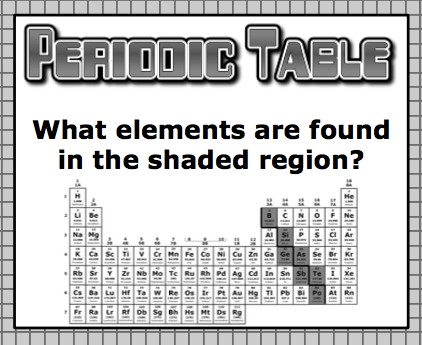
Which elements are to the right of the zig zag?
metals
nonmetals
metalloids

Sulfur is considered:
malleable
brittle
ductile
a good conductor
ductile means...
can be made into wire
can be bent or hammered
can light up a light bulb
it's shiny
Substances that can be hammered into thin sheets are:
metals
nonmetals
both metals and nonmetals

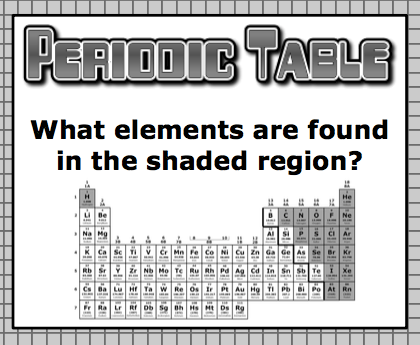
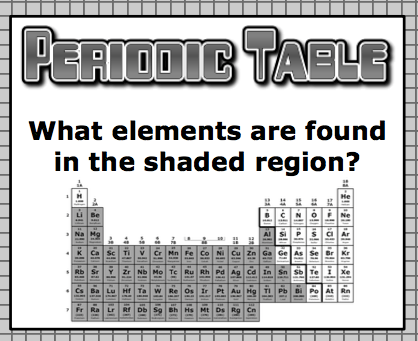
Which elements are to the LEFT of the zigzag?
metals
nonmetals
metalloids


Which item on this element square is the chemical symbol?
Copper
29
Cu
63.546
The ability to be made into thin sheets is referred to as...
density
solubility
malleability
electrical conductivity
The ability to conduct electric current is referred to as...
density
solubility
malleability
electrical conductivity
The relationship between mass and volume is referred to as...
density
solubility
malleability
electrical conductivity
The ability of a substance to dissolve is referred to as...
density
solubility
malleability
electrical conductivity
A change in the form of a substance that does not change its identity is referred to as a...
Physical property
Chemical property
Physical change
Chemical change
A characteristic that can be observed or measured such as color, state, or hardness is referred to as a...
Physical property
Chemical property
Physical change
Chemical change
If you poured three liquids (that do not mix completely) into a cup, how could you tell which one is the densest liquid?
The liquid that is floating on top is the densest liquid.
The liquid that settles to the bottom is the densest liquid.
The liquid with the deep red color is the densest liquid.
There is no way to tell which liquid is densest from the description.
What happens to a solid object with a density that is less than water when it is placed in water?
The object sinks about halfway into the water.
The object displaces a quantity of water greater than its volume.
The object settles to the bottom of the water.
The object floats on top of the water.
Which of the following is NOT an example of a physical change?


What kinds of changes in substances are always physical changes?
changes of state from solid to liquid to gas and back
changes that result in new substances being formed
changes that alter the identity of the substances
changes that alter the density of the substances
When the temperature of matter increases the particles (usually)...
speed up and move closer
speed up and move farther apart
slow down and move closer together
slow down and move farther apart
The number of valence shell electrons increases across the...
group
period
cluster
periodic table
_____________ has the largest atomic radius
Onganesson (118)
Francium (87)
Hydrogen (1)
Fluorine (9)
Which of the following is the simplest form of matter?
molecules
nanoparticles
atoms
simple substances

