
 Worksheets
Africa's History H1a-c
Total questions: 70
Worksheet time: 51mins
a feeling of pride in ones country
nationalism
human rights
geography
colonization
The meeting to divide up African countries among European countries was called the
Treaty of Versailles
Berlin Conference
Yalta Conference
First Continental Conference
The competition between European countries to take over African countries became known as the ___________________
Egg Scramble
Scramble for Africa
Rush for Africa
Dog Pile for Africa
Europeans were able to take over Africa so easily because of
advanced weapons
the steam engine
telegraph
all of the above
What is "white mans burden"?
the idea that Europeans needed to make Africans be more like them
the stress that white men have
the name of a tv show
the idea that Africans needed to teach Europeans how to be more like them

Which European country controlled western Africa areas like the former Mali kingdom?
Britain
Germany
France
Sweden

Which European country succeeded in controlling vast areas of Africa, from the North in Egypt to South Africa?
Britain
Germany
Netherlands
Portugal

What term, which used the slogan “Africa for Africans”, describes the idea in which all of Africa should united for a common cause?
Apartheid
Pan-Africanism
Negritude
Swahili

What massive event in the late 1930’s and 1940’s weakened colonial powers, and led to the start of decolonization?
Cold War
development of global air travel
the Industrial Revolution
World War II

As a result of colonial rule, most African nations had
artificial boundaries that included many rival ethnic groups.
the basic foundations for democratic rule.
many valuable natural resources that could be sold on the world market.
a strong sense of national identity.
What type of colonial government, used mostly by the British, left traditional local rulers in place?
direct rule
indirect rule
communism
republic
What event greatly spurred European Imperialism in Africa?
WWII
The African Slave Trade
The Industrial Revolution
The voyage of Christopher Columbus
Europeans wanted to civilize the African people.
A new place to build houses.
A new place to educate their children
For natural resources, cheap labor, and trade markets.
Because the weather was nice.
Number ONE negative impact of European Imperialism of Africa:
selling weapons to African countries; led to arms race.
Economic barriers to trade; hurt African's ability to export goods.
Encouraged rapid industrialization; led famine when Africans stopped farming.
Ignoring existing boundaries; led to territorial disputes, civil war, and other issues still today.
Emphasized the unity and strength of Africans on the continent and people of African descent around the world is called ______________?
Nationalism
Civil War
Pan-African Movement
Independence movement
Nigeria's independence from Britain was _______________, whereas, Kenya's was ______________.
Violent, peaceful
Peaceful, violent
Quick, slow
Slow, quick
Strong pride in one's nation, enough so that you want self-rule is ______________________?
Nationalism
Civil War
Pan-African movement
Independence movement
________________________ movements occur because people in a country seek independence from another power.
Pan-Africanist
Nationalist
Imperialist
Colonial
The main goal of Pan-Africanism was to...
End any support for the African National Congress
Immediately overthrow all the ruling governments in Africa.
Get all Africans to become members of the United Nations.
Get Africans to think of themselves as one people and work together.
Kenya and Nigeria were both colonized by the ___________ and gained their independence in ______________.
Belgians; the 1960s
British; the 1950s
British; the 1960s
French; the 1960s
There was much conflict in Nigeria because
It was split into two colonies with the south receiving better treatment
Workers went on a national strike over wages
Segregation laws known as Apartheid were put into effect
There was a major famine which crippled the economy
The Mau Mau were...
A group that believed force was the only way to win Kenyan rights and independence from the British.
A group of students that believed peace was the only way to win Kenyan rights and independence from the British
A group that believed force was the only way to win Nigerian rights and independence from the British.
A group of students that believed peace was the only way to win Nigerian rights and independence from the British
The idea that peoples of African descent have common interests and should be unified is known as:
Nationalism
Imperialism
Pan-Africanism
Communism
Which country gained independence from Great Britain by creating political parties and electing their own government?
Kenya
Nigeria
Ethiopia
Liberia
Which country used violent attacks on colonists and colonial supporters to gain independence from Great Britain?
Nigeria
Kenya
Liberia
Ethiopia
Africans were able to make an impact in their fight against colonial powers
after World War I
after World War II
after Vietnam War
after 1990
The Mau Mau were
a group of pacifists from Kenya
a group of rebel fighters from Kenya
a group of rebel fighters from Nigeria
A group of pacifists from Nigeria
African nations struggled after independence because African economies were dependent on the European country that colonized them.
True
False
African nations struggled after independence because violence broke out between rival ethnic and religious groups living together.
True
False
African nations struggled after independence because many new leaders lacked experience in running a new country.
True
False
African countries were able to gain independence from European colonizers...
by using only violence
by using only non-violence
by using a mixture of violence and non-violence
they did not gain independence
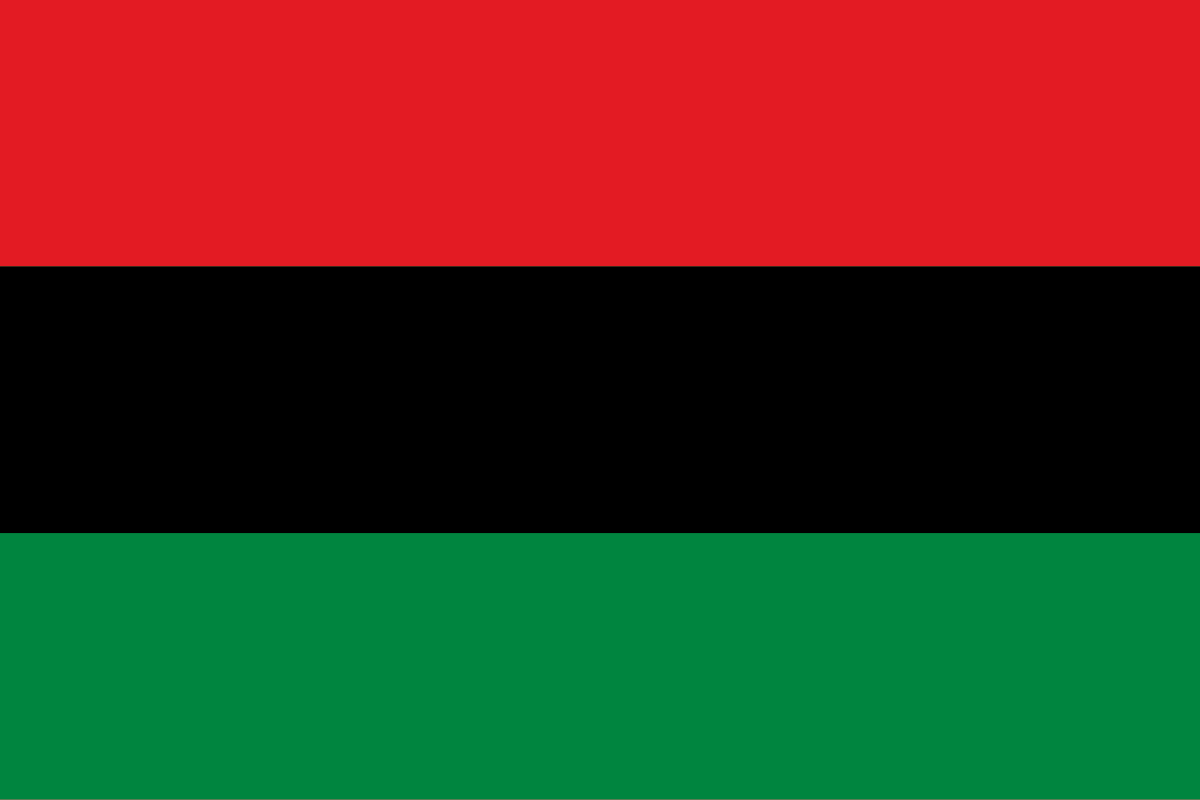
Which movement does this flag best represent?
Nationalism
Imperialism
Pan-Africanism
Colonialism
What is the correct chronological order of events?
Colonization --> Pan Africanism --> Independence
Independence --> Colonization --> Pan Africanism
Pan Africanism --> Independence --> Colinization
they all happened simultaneously

What African country achieved its independence with peaceful protest because of unfair British taxes, but ended up in civil war after their independence in 1960?
Kenya
Nigeria
Sudan
Egypt

What African country had rebel fighters against the British called the Mau Mau, who's military uprisings influenced the British to grant the country independence in 1963?
Kenya
Nigeria
Sudan
Algeria

What did the Berlin Conference accomplish?
Setting war with the African people
Setting up trade with Africa
Partitioning the land of African
Creating negotiations
Who was a staunch supporter of Pan Africanism who eventually became Kenya's president?
Nnamdi Azikiwe
Joseph Kenyatta
Marcus Garvey
Martin Luther King
Which African country was founded by former American slaves?
Kenya
Ethiopia
Liberia
Nigeria

Free from Colonial rule or other unjust rulers
Pan-Africanism
Apartheid
Nationalism
Independence

What event does this image depict?
The slave trade
The Berlin Conference
Pan-Africanism
The Berlin Treaty
What does partition mean?
Export
Dominate
Own
Divide
In which decade did the largest number of African nations gain independence?
1940s
1950s
1960s
1970s
What is the apartheid system?
A democratic government system
A system that brought equality to all races
A system of laws that segrated the races in South Africa
A dictator type of government system
Which group of people held the power during apartheid?
Asians
White South Africans
Non whites of South Africa
Black South Africans
Who was arrested and went to jail for leading protest against apartheid law?
F.W. deKlerk
Gandhi
Martin Luther King
Nelson Mandela
What organization was formed to gain equal right for black Africans in South Africa?
African National Congress
The African Union
United Nations
League of Nations
How did the United States react to Nelson Mandela's conviction in 1964?
They restricted trade with South Africa.
They promoted South African goods
They supported the conviction
What year did South Africa have it's first free election open to all races?
2012
1999
1994
2002
Which president in South Africa brought apartheid to an end?
Nelson Mandela
Jomo Kenyatta
F.W. deKlerk
JF Kennedy
Which happened FIRST?
Mandela is sent to prison
Apartheid became a law
Mandela joined African National Congress
Which happened FIRST?
Mandela and deKlerk wrote a new constitution
Mandela joins the African National Congress
Mandela went to prison
The former official South African policy of separating people according to race. It gave most of the political and economic power to white South Africans.
Slums
Nelson Mandela
Poverty
Apartheid
The separation of one group of people from another. It can involve laws that require different groups to use different facilities and live in separate areas based on their ethnic group.
Ethnic Group
Segregation
Multiracial
Poverty
In South Africa, a poor urban settlement where blacks were forced to live during apartheid
Townships
Segregation
Apartheid
Multiracial
The term Afrikaans refers to:
People who are of British descent
People who are of Indian descent
People who are of Dutch descent
People who are of African descent
The political party that introduced Apartheid was:
African Party
Dutch Nationalism Party
National Party
National Independence Party
How many years was Nelson Mandela imprisoned for?
15 years
19 years
23 years
27 years


The policy of apartheid lasted for approximately 50 years in which African country?
Letter A
Letter B
Letter C
Letter D
How did the world react to South Africa's system of apartheid?
Boycotts and embargos were set up again South Africa
Support for the system of Apartheid flourished
South Africa could sell and trade with anyone
None of the above
Which describes FW de Klerk's role in ending apartheid in South Africa?
He lifted bans that were rooted in racial segregation and freed the leader of the ANC
A system of laws that brought equality to races
He forced millions of people to leave their impoverished homelands
He stated the National Party in South Africa

